
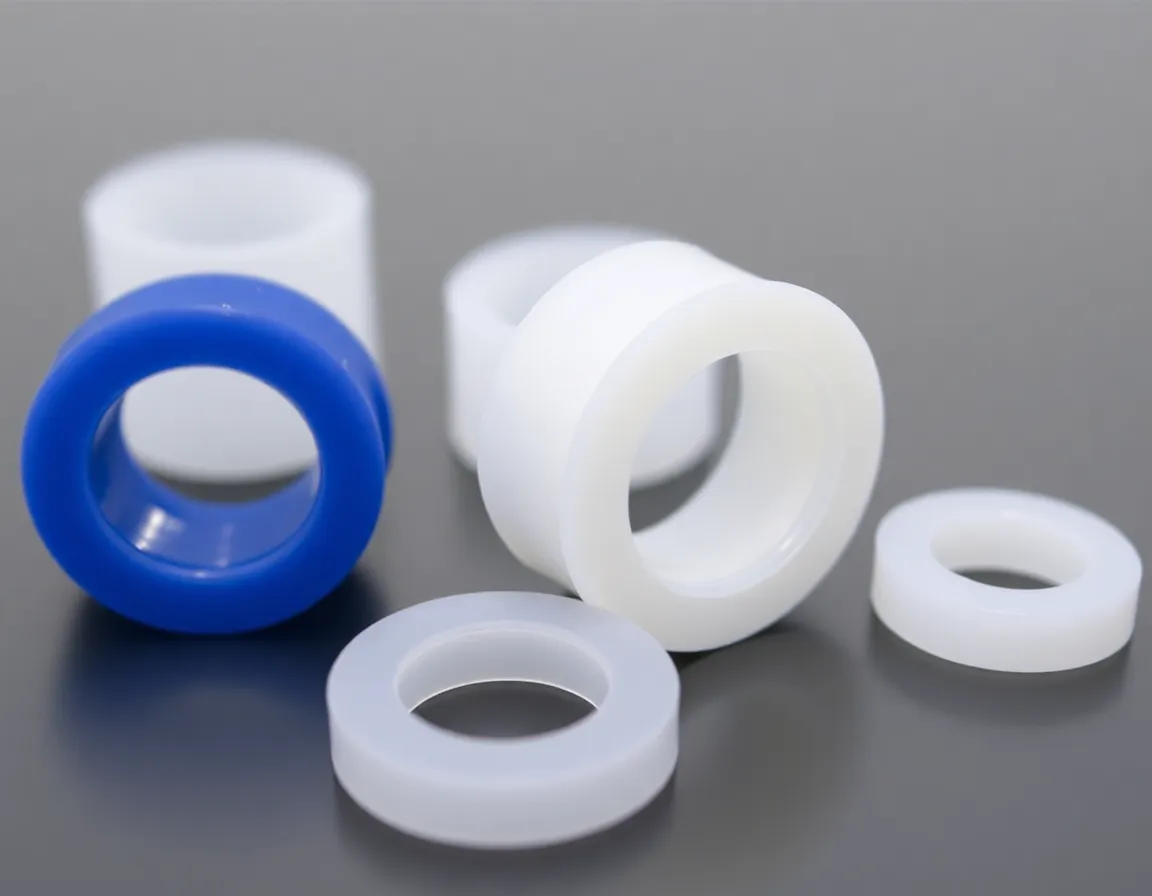
Understanding Plastic Wear Parts Machining
In the world of industrial manufacturing, wear parts are the unsung heroes that keep machinery running smoothly. These components—bearings, gears, rollers, guides, seals, and bushings—are subjected to constant friction, abrasion, and chemical exposure. Traditionally, metals like steel, bronze, and cast iron have dominated this space. However, a quiet revolution is taking place: plastic wear parts machining is increasingly proving that engineered polymers can outperform metal in some of the most demanding environments.
Plastic wear parts machining refers to the precision manufacturing of components from high-performance engineering plastics using CNC machining, turning, milling, and other subtractive processes. Unlike injection molding, which requires expensive tooling and long lead times, machining plastic wear parts allows for tight tolerances, rapid prototyping, and the production of complex geometries in small to medium batch sizes. The result is a category of components that are lighter, corrosion-resistant, self-lubricating, and—in many cases—significantly more durable than their metal counterparts.
This article explores why plastic wear parts are displacing metal in critical applications, which materials deliver the best performance, and the best practices for machining them effectively.
Why Plastic Wear Parts Can Outlast Metal
The idea that plastic can outlast metal may seem counterintuitive. After all, metals are generally harder and stronger. But wear resistance is not simply a function of hardness. It depends on friction coefficients, chemical compatibility, weight, and the ability to absorb shock and vibration. In these areas, engineered plastics often have a decisive advantage.
Self-Lubrication and Low Friction
Many high-performance plastics, such as PTFE (polytetrafluoroethylene), PEEK (polyether ether ketone), and UHMW-PE (ultra-high-molecular-weight polyethylene), exhibit inherently low coefficients of friction. This means they can operate without external lubrication, reducing maintenance requirements and eliminating the risk of lubricant contamination. In food processing, pharmaceutical manufacturing, and cleanroom environments, this self-lubricating property is invaluable. Metal parts, by contrast, typically require grease or oil, which can attract debris and degrade over time.
Corrosion and Chemical Resistance
Metals rust, oxidize, and corrode. Even stainless steel can pit and fail in the presence of chlorides or aggressive acids. Engineering plastics are naturally immune to oxidation and can be selected to resist a wide range of chemicals, solvents, and cleaning agents. In chemical processing plants, wastewater treatment facilities, and marine environments, plastic wear parts routinely outlast metal components by a factor of three to five.
Weight Reduction and Inertia
Plastic wear parts are typically 70–85% lighter than equivalent metal parts. This weight reduction lowers inertia in moving assemblies, reduces energy consumption, and decreases load on supporting structures. In high-speed machinery, lighter components translate to less vibration, quieter operation, and reduced wear on adjacent parts.
Shock Absorption and Noise Damping
Metals transmit vibration and impact energy. Plastics absorb it. In applications involving repetitive impact—such as conveyor guides, star wheels, and cam followers—plastic parts dampen noise and protect more expensive metal components from shock damage. This characteristic alone can extend the service life of an entire machine.
Key Engineering Plastics for Wear Part Machining
Not all plastics are created equal. The materials used for wear parts machining must combine mechanical strength, dimensional stability, thermal resistance, and tribological performance. The following are the most widely specified engineering plastics for this purpose.
PEEK (بولي إيثر إيثر كيتون)
PEEK is the gold standard for high-performance plastic wear parts. It retains excellent mechanical properties at temperatures up to 250°C (482°F), resists nearly all common chemicals, and exhibits outstanding wear resistance. PEEK is often reinforced with carbon fiber or glass fiber to further enhance its stiffness and load-bearing capacity. It is commonly machined into bearings, seals, piston rings, and valve components for aerospace, oil and gas, and semiconductor applications.
UHMW-PE (Ultra-High-Molecular-Weight Polyethylene)
UHMW-PE offers exceptional abrasion resistance—often superior to steel on a weight-to-weight basis. It has the highest impact strength of any thermoplastic and a very low friction coefficient. It is widely used for conveyor wear strips, guide rails, chute liners, and star wheels in food and beverage packaging. Its low moisture absorption and FDA compliance make it ideal for sanitary environments.
PTFE (Polytetrafluoroethylene)
PTFE has the lowest coefficient of friction of any solid material, making it ideal for sliding and sealing applications. It is chemically inert and operates across a broad temperature range (-200°C to 260°C). Because pure PTFE is relatively soft and prone to creep, it is typically compounded with fillers such as bronze, carbon, or glass fiber for wear part machining.
Nylon (PA) and Acetal (POM)
Nylon and acetal are cost-effective workhorses for medium-duty wear parts. They offer good mechanical strength, machinability, and fatigue resistance. Acetal, in particular, has excellent dimensional stability and low moisture absorption, making it suitable for precision gears, bushings, and rollers. Glass-filled nylon grades provide enhanced stiffness and wear resistance for higher-load applications.
PPS (Polyphenylene Sulfide) and PEI (Polyetherimide)
These high-temperature engineering plastics bridge the gap between standard nylons and PEEK. PPS offers excellent chemical resistance and dimensional stability at elevated temperatures, while PEI provides high strength and rigidity. Both are machinable and suitable for wear components in automotive, electrical, and industrial equipment.
Applications Where Plastic Wear Parts Excel
The shift from metal to plastic wear parts is not limited to a single industry. The unique properties of engineered polymers make them suitable for a broad spectrum of applications.
- معالجة الأغذية والمشروبات: Conveyor guides, wear strips, star wheels, and chute liners made from UHMW-PE and acetal resist abrasion, withstand frequent washdowns, and comply with FDA and EU food-contact regulations.
- مناولة المواد: Plastic idler rollers, chain guides, and wear pads reduce noise and protect conveyor belts in mining, packaging, and logistics operations.
- Pumps and Valves: PEEK and PTFE components such as bushings, seals, and valve seats resist chemical attack and operate without lubrication in aggressive fluid-handling systems.
- السيارات والطيران: Lightweight plastic gears, thrust washers, and bearing cages reduce weight and inertia while providing reliable performance in high-temperature environments.
- المعدات الطبية والمخبرية: Machined PEEK and PTFE parts offer biocompatibility, chemical resistance, and the ability to be sterilized repeatedly without degradation.
- تصنيع أشباه الموصلات: High-purity PEEK and PPS components resist plasma and chemical etching processes while minimizing particle generation.
Best Practices for Machining Plastic Wear Parts
Machining plastics is not the same as machining metal. The thermal, mechanical, and chemical differences require specific techniques to achieve tight tolerances and optimal surface finishes. The following best practices are essential for producing high-quality plastic wear parts.
اختيار الأداة وهندستها
Use sharp, polished carbide tooling with high positive rake angles and generous clearance. Dull tools generate heat and cause melting or smearing. For reinforced plastics like glass-filled PEEK or nylon, diamond-coated tooling may be necessary to resist abrasion. Ensure chip clearance is adequate to prevent recutting and heat buildup.
Controlling Heat
Plastics have low thermal conductivity, so heat generated during machining does not dissipate quickly. Excessive heat can cause dimensional distortion, surface melting, and residual stress. Use high cutting speeds, moderate feeds, and abundant coolant or air blast to keep the workpiece cool. Never allow the tool to dwell in the cut.
Managing Stress and Dimensional Stability
Machining induces internal stresses that can cause parts to warp after cooling. To minimize this, use stress-relieved stock material, take light finishing passes, and avoid removing large amounts of material in a single pass. For tight-tolerance parts, rough machine, stress-relieve, and then finish machine. Allow parts to stabilize at room temperature before final inspection.
التثبيت والتجهيز
Plastics are softer and more compressible than metals. Excessive clamping force can deform the workpiece, leading to inaccurate machining and residual stress. Use fixtures with large contact areas and controlled clamping pressure. Vacuum fixtures and custom soft jaws are often preferable to standard vises.
Surface Finish and Inspection
Achieving a smooth surface finish is important for wear resistance, as rough surfaces accelerate material loss. Use sharp tools, appropriate feeds and speeds, and finishing passes with light depth of cut. Inspect parts using non-contact measurement methods where possible, and account for the material's thermal expansion coefficient when interpreting dimensional results.
الخاتمة
Plastic wear parts machining represents a powerful alternative to traditional metal components. By selecting the right engineering plastic—whether PEEK for extreme environments, UHMW-PE for abrasion resistance, or acetal for cost-effective precision—manufacturers can achieve longer service life, reduced maintenance, lower weight, and improved chemical resistance. The key to success lies in understanding both the material properties and the machining practices required to preserve them. When properly specified and precision machined, plastic wear parts do not simply compete with metal—they often outlast it.