
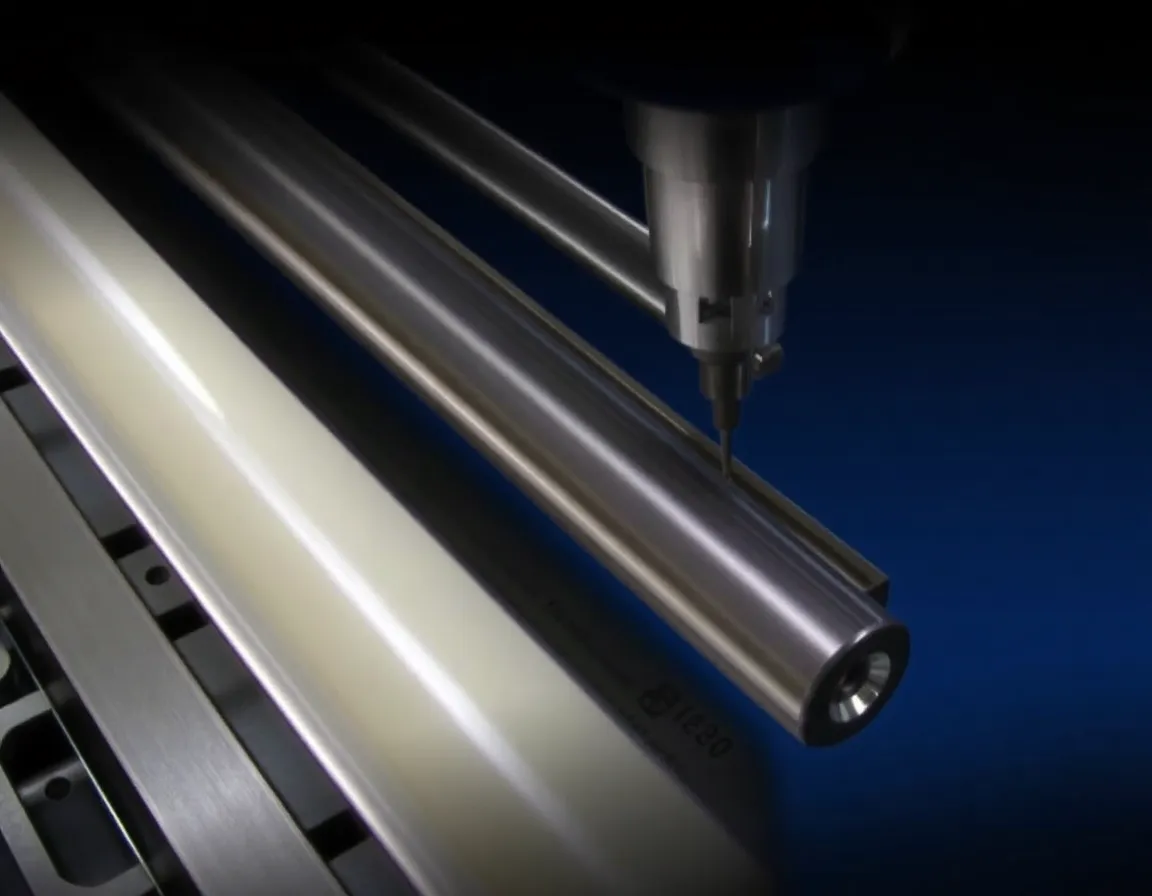
Nylon rollers are workhorse components in modern industry, found in everything from conveyor systems and printing presses to packaging lines and material handling equipment. Their popularity stems from an exceptional combination of properties: low weight, high strength, excellent abrasion resistance, quiet operation, and the ability to run without lubrication in many applications. However, achieving a nylon roller that performs reliably over millions of cycles requires more than simply turning a piece of stock plastic on a lathe. Nylon behaves differently from metals in almost every respect—it deflects, it absorbs moisture, it generates heat under friction, and it can chip or melt if machined incorrectly. This article provides a comprehensive guide to nylon roller machining, covering the material's characteristics, the tools and techniques that produce the best results, and the best practices that separate a good roller from a great one.
Understanding Nylon as a Machining Material
Before touching a cutting tool, it is essential to understand what makes nylon unique among engineering materials. Nylon—most commonly grades such as PA6, PA66, and cast nylon (MC nylon)—is a semi-crystalline thermoplastic. It offers outstanding mechanical toughness, good fatigue resistance, and a natural lubricity that makes it ideal for rolling contact applications. Cast nylon, in particular, is often preferred for rollers because it can be produced in large diameters and exhibits lower internal stress than extruded stock.
Key Properties That Influence Machining
Several material characteristics directly affect how nylon should be machined:
- Thermal sensitivity: Nylon softens at relatively low temperatures (around 75–100°C for many grades). Excessive friction during machining can cause the material to melt, smear, or gum up on the tool.
- Elasticity and deflection: Nylon is far more flexible than metal. It deflects away from cutting tools, which can lead to chatter, poor surface finish, and dimensional inaccuracy if feeds and speeds are not adjusted.
- Moisture absorption: Nylon absorbs moisture from the air, swelling slightly in the process. A roller machined to tight tolerance in a humid shop may shrink or grow when it reaches its service environment.
- Low thermal conductivity: Heat generated at the cutting edge does not dissipate quickly, so it concentrates in the cut zone—making effective chip evacuation and cooling critical.
Tooling and Setup for Nylon Roller Machining
The right cutting tools and machine setup are the foundation of successful nylon machining. Because nylon cuts more like hard wood or soft brass than like steel, tools designed for plastics outperform general-purpose metalworking tools.
Cutting Tool Selection
For turning nylon rollers, use sharp, high-speed steel (HSS) or polished carbide inserts with a positive rake geometry. A high positive rake angle (typically 10–20 degrees) reduces cutting forces and helps the tool slice through the material rather than push it away. Tools should have generous clearance angles and a sharp edge—dull tools rub against the nylon, generating heat and producing a rough, torn surface. For drilling the bore of a roller, use drills with a sharp point and polished flutes; brad-point or plastic-specific drills reduce the risk of the material grabbing the bit. When parting off finished rollers, use a narrow, sharp parting blade with ample side clearance to prevent binding.
Workholding Considerations
Nylon compresses under clamping pressure, so workholding must be carefully managed. Over-tightening a chuck can distort a hollow roller blank, causing it to spring back out of tolerance after machining. Use soft jaws, wide contact pads, or a collet system that distributes clamping force evenly. For long rollers, support the workpiece with a tailstock or steady rest to minimize deflection during turning. Always machine rollers with generous stock allowance and take light finishing passes to relieve stresses introduced by the roughing operation.
Speeds, Feeds, and Machining Technique
Getting speeds and feeds right is where most nylon machining problems are won or lost. The governing principle is simple: cut fast enough to produce a clean chip, but not so fast that friction melts the material.
Recommended Parameters
As a starting point for turning nylon rollers, use surface speeds in the range of 300–600 feet per minute (90–180 m/min) with relatively high feed rates—0.005–0.015 inches per revolution (0.12–0.38 mm/rev). High feed rates are counterintuitively beneficial with plastics: they ensure the tool takes a genuine chip rather than rubbing, which keeps heat generation low. Depth of cut should be moderate, typically 0.05–0.15 inches (1–4 mm) for roughing, with a light 0.01–0.02 inch (0.25–0.5 mm) finishing pass. For drilling, use lower speeds (around 100–200 feet per minute) and clear chips frequently to prevent packing and heat buildup.
Cooling and Chip Evacuation
Compressed air is the preferred coolant for nylon machining. It cools the cut zone and, just as importantly, blasts chips away from the tool edge. Flood coolant can be used, but water-based coolants may cause nylon to absorb moisture; if flood cooling is necessary, use a light oil-based or synthetic coolant and allow parts to stabilize afterward. Never allow chips to accumulate and recirculate under the tool—this is the most common cause of melted, gummy finishes on nylon rollers.
Finishing and Surface Quality
A sharp tool, high feed rate, and light finishing pass typically yield a smooth, glass-like finish on nylon with no additional work. If polishing is required—for example, on roller faces that contact delicate materials—use fine abrasive paper (400 grit or finer) with light pressure and keep the part moving to avoid heat buildup. Avoid excessive polishing, which can round edges and alter critical dimensions.
Managing Dimensional Stability and Stress
Nylon rollers often must hold tolerances of a few thousandths of an inch while spinning at speed or carrying load. Two factors threaten that accuracy: internal stress and moisture absorption.
Stress Relief and Machining Sequence
Extruded and cast nylon stock carries internal stresses from manufacturing. When material is removed from one side of a blank, those stresses rebalance and the part can bow or ovalize. Best practice is to rough-machine the roller oversize, allow it to rest (ideally 24 hours, or stress-relieve it thermally per the material supplier's recommendations), then perform finish machining. For large-diameter or thin-wall rollers, rough and finish in multiple stages with rest periods between them.
Accounting for Moisture and Thermal Expansion
Nylon's coefficient of thermal expansion is roughly ten times that of steel, and moisture-related dimensional change can add another 0.5–2 percent depending on grade and environment. Machine rollers in a temperature-controlled area, allow blanks to acclimate to shop conditions before final machining, and specify tolerances that account for the service environment. When a roller must mate with a steel shaft, remember that the nylon hub will expand and contract far more than the shaft—design an appropriate interference fit and consider operating temperature when specifying it.
Applications and Best Practices in the Field
Nylon rollers excel in conveying, guiding, tensioning, and load-bearing roles. Common applications include conveyor idlers and return rollers, guide rollers in printing and packaging machinery, cable and wire guides, and rollers for food-processing equipment (where food-grade nylon grades are specified). In each case, machining quality directly affects service life: a roller with a poor surface finish will wear faster, run noisier, and shed material onto the product being conveyed.
To get the best results in production, follow these best practices:
- Use sharp, plastic-specific tooling and replace or resharpen edges before they dull.
- Keep feeds high and speeds moderate to produce clean chips and minimize frictional heating.
- Evacuate chips aggressively with air blast and never let them recirculate under the tool.
- Rough, rest, then finish to relieve internal stresses and hold tolerances.
- Control the environment—machine and inspect in stable temperature and humidity conditions.
- Deburr carefully with sharp hand tools or light abrasives, avoiding heat-generating methods.
- Inspect with the service environment in mind, allowing parts to stabilize before final measurement.
Nylon roller machining rewards attention to detail. The material is forgiving in many ways—it is soft, fast-cutting, and kind to tooling—but it punishes carelessness with melted finishes, creeping dimensions, and rollers that fail prematurely in service. By selecting sharp positive-rake tooling, running high feeds with effective chip evacuation, sequencing roughing and finishing to manage stress, and controlling the shop environment, machinists can consistently produce nylon rollers that run smooth, quiet, and true for millions of revolutions. Whether you are turning a single replacement idler or setting up a production cell for thousands of rollers, these principles form the foundation of perfect results.