
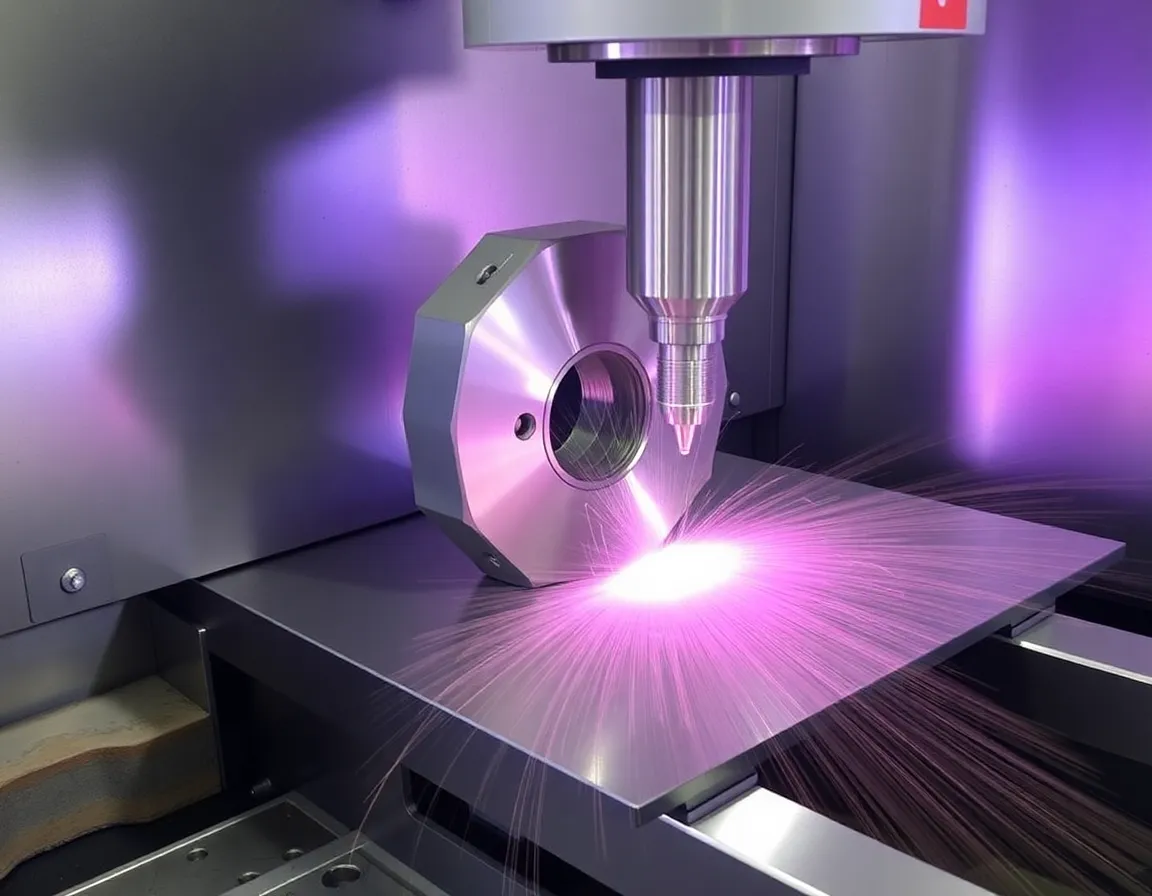
Введение в обработку стали на станках с ЧПУ
Обработка стали на станках с ЧПУ— это субтрактивный производственный процесс, в котором используется технология компьютерного числового программного управления (ЧПУ) для точного удаления материала со стальной заготовки. Этот высокоавтоматизированный процесс превращает исходную стальную заготовку — такую как прутки, слитки или плиты — в готовые компоненты с исключительной точностью, повторяемостью и качеством поверхности. В отличие от ручной обработки, обработка на станках с ЧПУ relies на предварительно запрограммированном программном обеспечении и коде (обычно G-коде) для управления движением режущих инструментов, шпинделей и рабочих столов.
Сталь как материал представляет уникальные challenges и преимущества при обработке на станках с ЧПУ. Она известна своей прочностью, долговечностью и износостойкостью, что делает её основой отраслей от автомобилестроения и аэрокосмической промышленности до строительства и медицинских изделий. Однако её твёрдость и вязкость также означают, что она требует мощных станков, специализированных режимов резания и тщательного планирования процесса. В этой статье подробно рассматривается мир обработки стали на станках с ЧПУ, исследуются её принципы работы, соображения по материалам, преимущества, области применения и лучшие практики для достижения оптимальных результатов.
Как работает обработка стали на станках с ЧПУ
В основе обработки стали на станках с ЧПУ лежит бесшовная интеграция цифрового проектирования и физического производства. Процесс можно разбить на несколько ключевых этапов, каждый из которых критически важен для обеспечения качества деталей и эффективности обработки.
1. CAD-моделирование и проектирование
Каждая обработанная деталь начинается с цифрового чертежа. Инженеры используют Computer-Aided Design (CAD)программное обеспечение, такое как SolidWorks, AutoCAD или Fusion 360, для создания 3D-модели нужного компонента. Эта модель определяет все геометрические особенности, допуски и чистоту поверхности. Для стальных деталей проектировщики должны учитывать свойства материала, такие как тепловое расширение и твёрдость, которые влияют на конечные размеры.
2. Программирование CAM
После того как CAD-модель завершена, она импортируется в Computer-Aided Manufacturing (CAM)программное обеспечение. CAM-программа анализирует геометрию и генерирует траектории движения инструмента, которым будет следовать станок с ЧПУ. Этот этап включает выбор подходящих режущих инструментов (например, концевых фрез, свёрл, метчиков), определение частоты вращения шпинделя (об/мин), подачи (мм/мин) и глубины резания. Для стали CAM-программисты часто должны использоватьтрохоидальное фрезерованиеилиадаптивную очисткустратегии для управления тепловыделением и износом инструмента. Результатом является файл G-кода — последовательность буквенно-цифровых команд, которые интерпретирует станок.
3. Настройка станка и закрепление заготовки
Стальная заготовка должна быть надёжно закреплена на столе станка с ЧПУ. Распространённые методы закрепления включают тиски, патроны, прижимы и специальные приспособления. Для стали, жёсткость имеет первостепенное значение. Любая вибрация или смещение во время резания могут привести к плохой чистоте поверхности, поломке инструмента или неточности размеров. Операторы также устанавливают соответствующие режущие инструменты в инструментальный магазин или шпиндель станка, обеспечивая их правильную балансировку и затяжку.
4. Операции обработки
После настройки станка и загрузки G-кода начинается обработка. Контроллер ЧПУ считывает код и подаёт команды осям (X, Y, Z, а иногда и поворотным осям) на точное перемещение инструмента или заготовки. Распространённые операции для стали включают:
- Торцевое фрезерование: Создание плоских, гладких поверхностей на верхней части заготовки.
- Peripheral Milling:Cutting along the edges to create contours, slots, and pockets.
- Сверление и нарезание резьбы:Creating holes and internal threads, often requiring specialized cobalt or carbide drills for steel.
- Turning (on CNC lathes):Rotating the steel workpiece against a stationary cutting tool to create cylindrical features.
- Растачивание:Enlarging and finishing existing holes to tight tolerances.
Throughout the process, a coolant or cutting fluidis typically applied to reduce heat, lubricate the cutting zone, and flush away chips. For steel, high-pressure coolant systems are often used to prevent chip welding and thermal damage.
5. Inspection and Quality Control
After machining, the steel part is inspected to verify it meets the specified tolerances. This may involve manual tools like calipers and micrometers, or advanced metrology equipment such as coordinate measuring machines (CMMs) and laser scanners. For critical aerospace or medical components, in-process inspection is often performed to catch deviations early.
Key Benefits of Steel CNC Machining
Steel CNC machining offers a distinct set of advantages that make it indispensable for modern manufacturing. These benefits go beyond simple material removal.
Exceptional Strength and Durability
Steel is inherently strong. CNC machined steel parts can withstand high loads, impact, and extreme temperatures without deforming or failing. This makes them ideal for structural components, gears, shafts, and heavy machinery parts. When compared to aluminum or plastics, steel offers superior fatigue resistanceand longevity.
High Precision and Tight Tolerances
CNC technology allows for tolerances as tight as ±0.001 inches (or ±0.025 mm) on steel parts. This level of precision is essential for components that must fit together perfectly, such as engine pistons, bearing housings, and hydraulic manifolds. The repeatability of CNC machines ensures that every part in a production run is identical.
Versatility Across Steel Grades
Steel is not a single material but a family of alloys. CNC machining can handle a wide spectrum, from low-carbon steels (like 1018) that are easy to machine, to high-alloy tool steels (like D2 or H13) that are extremely hard and wear-resistant. This versatility allows manufacturers to select the exact steel grade for the application, balancing cost, machinability, and performance.
Excellent Surface Finish
With proper tooling and parameters, CNC machining can produce steel parts with surface finishes as fine as Ra 0.4 µm(mirror-like) or better. This reduces or eliminates the need for secondary finishing operations like grinding or polishing, saving time and cost. Good surface finish also improves corrosion resistance and aesthetic appeal.
Complex Geometries and Features
Multi-axis CNC machines (4-axis and 5-axis) can machine complex undercuts, angled holes, and contoured surfaces in a single setup. This capability is crucial for creating intricate steel components used in aerospace, medical implants, and custom tooling.
Common Applications of Steel CNC Machining
The combination of strength, precision, and versatility means steel CNC machined parts are found in nearly every industrial sector. Below are some of the most prominent applications.
- Автомобильная промышленность: Engine blocks, transmission gears, crankshafts, suspension components, and brake calipers. Steel’s ability to handle high stress and cyclic loading is critical here.
- Аэрокосмическая отрасль и оборона:Landing gear components, turbine discs, structural brackets, and weapon system parts. These require stringent certifications and often use high-strength alloy steels like 4340 or 300M.
- Медицинские изделия:Surgical instruments, orthopedic implants (e.g., hip stems), and dental tools. Stainless steels like 316L and 17-4 PH are favored for their biocompatibility and corrosion resistance.
- Нефтегазовая отрасль:Valve bodies, pump components, drill bits, and wellhead equipment. These parts must resist high pressures, corrosive environments, and abrasive wear.
- Промышленное оборудование:Gears, shafts, bushings, molds, and dies. Steel CNC machining is the go-to method for producing replacement parts and custom tooling for manufacturing lines.
- Construction and Infrastructure:Heavy equipment components (excavator arms, bulldozer blades), structural connectors, and fasteners.
Best Practices for Steel CNC Machining
To achieve optimal results when machining steel, machinists and engineers must follow a set of proven guidelines. These practices help extend tool life, maintain accuracy, and improve productivity.
Select the Right Cutting Tool Material
For most steel machining, carbide toolsare the standard due to their hardness and heat resistance. For harder steels (e.g., stainless or tool steels), consider usingcermet,ceramic, илиCBN (cubic boron nitride)inserts. Coated tools (e.g., TiAlN, AlTiN, or TiCN coatings) provide additional wear resistance and reduce friction. Always match the tool geometry to the operation—for example, use variable helix end mills to reduce chatter in deep slotting.
Optimize Cutting Parameters
Steel requires a balance between material removal rate and tool life. Key parameters include:
- Spindle Speed (RPM): Generally lower than for aluminum. High speeds can cause excessive heat and tool wear. Use manufacturer recommendations as a starting point.
- Feed Rate (mm/min):Too slow can cause rubbing and work hardening; too fast can break tools. For steel, a chip load of 0.05–0.15 mm/tooth is common.
- Depth of Cut (DOC):Shallow radial depths (e.g., 5-10% of tool diameter) with high axial depths are often used to manage heat and chip evacuation.
Prioritize Rigidity and Vibration Control
Vibration (chatter) is the enemy of steel machining. It ruins surface finish, breaks tools, and damages the machine. Ensure the workpiece is clamped securely with minimal overhang. Use short tool holdersиhydraulic or shrink-fit chucksfor maximum rigidity. If chatter persists, reduce cutting speed or adjust the toolpath to avoid resonant frequencies.
Effective Chip Management
Steel produces long, stringy chips that can entangle tools and cause heat buildup. Use chip breakerson inserts, high-pressure coolant directed at the cutting zone, and peck drilling cycles for deep holes. For stainless steels, which are prone to work hardening, it is critical to maintain a consistent chip thickness and avoid dwell marks.
Use Appropriate Coolant and Lubrication
While some steels can be machined dry, most benefit from flood coolant or mist lubrication. Coolant reduces thermal expansion, prevents chip welding, and flushes chips away. For high-speed machining of hardened steels, minimum quantity lubrication (MQL)is sometimes used. In all cases, ensure the coolant concentration and cleanliness are maintained to prevent bacterial growth and tool corrosion.
Consider Post-Machining Treatments
After machining, steel parts may require stress relief to remove residual stresses induced by cutting. This is especially important for large or complex parts. Other common post-processes include deburring, shot peening (to improve fatigue life), and surface coating (e.g., black oxide, nickel plating, or DLC coating) for enhanced corrosion or wear resistance.
Заключение
Обработка стали на станках с ЧПУremains a foundational technology in modern manufacturing, enabling the production of components that are strong, precise, and reliable. From the initial CAD design to the final inspection, every step requires careful consideration of the material's properties and the machining dynamics. By understanding the working principles, leveraging the unique benefits, and adhering to best practices—such as selecting proper tooling, optimizing parameters, and controlling vibration—engineers and machinists can unlock the full potential of steel. Whether for a prototype bracket or a high-volume production run of gears, steel CNC machining delivers the performance and durability that industries worldwide depend on. As technology advances with smarter CAM algorithms, better cutting tool materials, and more rigid machine tools, the capabilities of steel CNC machining will only continue to expand, driving innovation across all sectors.