
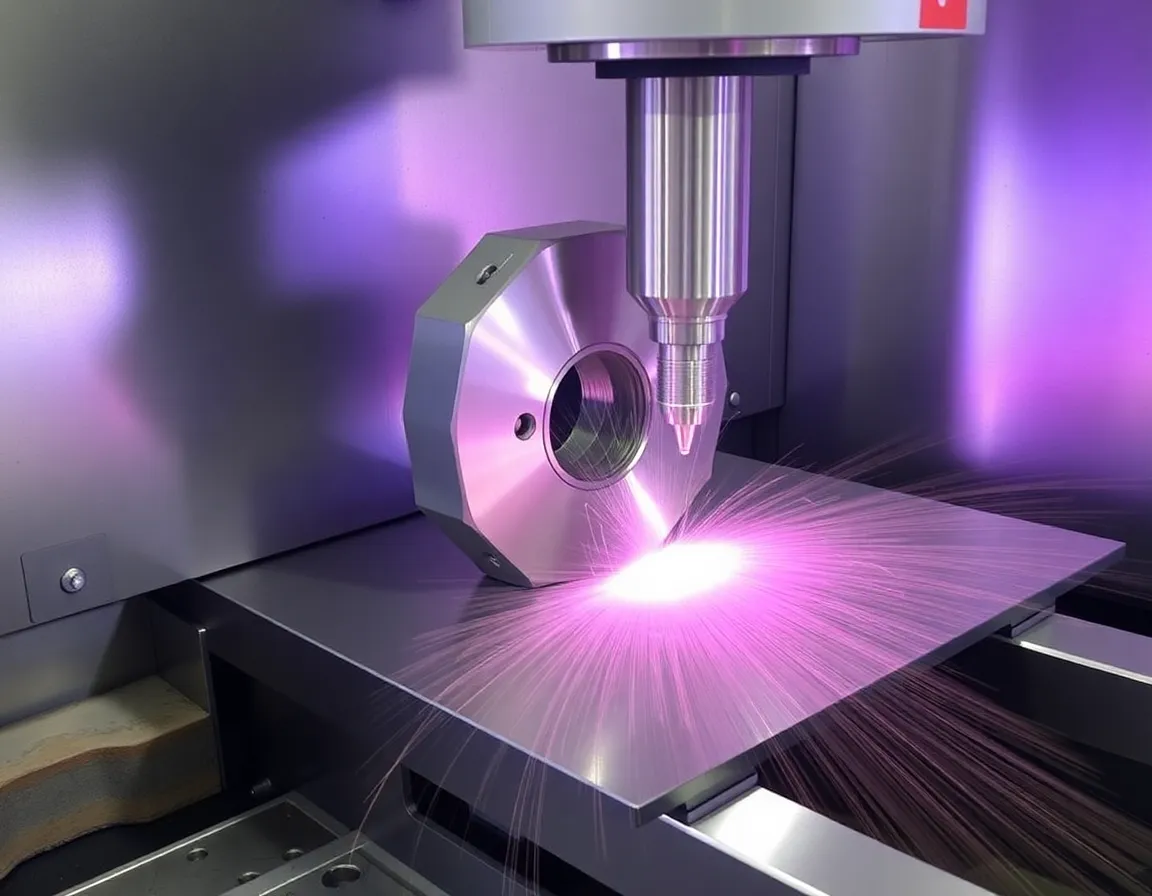
Introduction to Steel CNC Machining
Steel CNC machiningis a subtractive manufacturing process that utilizes computer numerical control (CNC) technology to precisely remove material from a steel workpiece. This highly automated process transforms raw steel stock—such as bars, billets, or plates—into finished components with exceptional accuracy, repeatability, and surface finish. Unlike manual machining, CNC machining relies on pre-programmed software and code (typically G-code) to dictate the movement of cutting tools, spindles, and worktables.
Steel, as a material, presents unique challenges and advantages in CNC machining. It is renowned for its strength, durability, and wear resistance, making it a cornerstone of industries ranging from automotive and aerospace to construction and medical devices. However, its hardness and toughness also mean that it requires robust machine tools, specialized cutting parameters, and careful process planning. This article delves deep into the world of steel CNC machining, exploring its working principles, material considerations, benefits, applications, and best practices for achieving optimal results.
How Steel CNC Machining Works
The core of steel CNC machining lies in the seamless integration of digital design and physical production. The process can be broken down into several key stages, each critical for ensuring part quality and machining efficiency.
1. CAD Modeling and Design
Every machined part begins as a digital blueprint. Engineers use Computer-Aided Design (CAD)software, such as SolidWorks, AutoCAD, or Fusion 360, to create a 3D model of the desired component. This model defines all geometric features, tolerances, and surface finishes. For steel parts, designers must account for material properties like thermal expansion and hardness, which influence final dimensions.
2. CAM Programming
Once the CAD model is finalized, it is imported into Computer-Aided Manufacturing (CAM)software. The CAM software analyzes the geometry and generates the toolpaths that the CNC machine will follow. This step involves selecting appropriate cutting tools (e.g., end mills, drills, taps), defining spindle speeds (RPM), feed rates (mm/min), and depth of cut. For steel, CAM programmers must often usetrochoidal millingoradaptive clearingstrategies to manage heat generation and tool wear. The output is a G-code file—a series of alphanumeric commands that the machine interprets.
3. Machine Setup and Workholding
The steel workpiece must be securely mounted to the CNC machine's table. Common workholding methods include vises, chucks, clamps, and custom fixtures. For steel, rigidity is paramount. Any vibration or movement during cutting can lead to poor surface finish, tool breakage, or dimensional inaccuracy. Operators also install the appropriate cutting tools into the machine’s tool changer or spindle, ensuring they are properly balanced and tightened.
4. Machining Operations
With the machine set up and the G-code loaded, the machining begins. The CNC controller reads the code and commands the axes (X, Y, Z, and sometimes rotary axes) to move the tool or workpiece precisely. Common operations for steel include:
- Face Milling: Creating flat, smooth surfaces on the top of the workpiece.
- Peripheral Milling:Cutting along the edges to create contours, slots, and pockets.
- Drilling and Tapping:Creating holes and internal threads, often requiring specialized cobalt or carbide drills for steel.
- Turning (on CNC lathes):Rotating the steel workpiece against a stationary cutting tool to create cylindrical features.
- Boring:Enlarging and finishing existing holes to tight tolerances.
Throughout the process, a coolant or cutting fluidis typically applied to reduce heat, lubricate the cutting zone, and flush away chips. For steel, high-pressure coolant systems are often used to prevent chip welding and thermal damage.
5. Inspection and Quality Control
After machining, the steel part is inspected to verify it meets the specified tolerances. This may involve manual tools like calipers and micrometers, or advanced metrology equipment such as coordinate measuring machines (CMMs) and laser scanners. For critical aerospace or medical components, in-process inspection is often performed to catch deviations early.
Key Benefits of Steel CNC Machining
Steel CNC machining offers a distinct set of advantages that make it indispensable for modern manufacturing. These benefits go beyond simple material removal.
Exceptional Strength and Durability
Steel is inherently strong. CNC machined steel parts can withstand high loads, impact, and extreme temperatures without deforming or failing. This makes them ideal for structural components, gears, shafts, and heavy machinery parts. When compared to aluminum or plastics, steel offers superior fatigue resistanceand longevity.
High Precision and Tight Tolerances
CNC technology allows for tolerances as tight as ±0.001 inches (or ±0.025 mm) on steel parts. This level of precision is essential for components that must fit together perfectly, such as engine pistons, bearing housings, and hydraulic manifolds. The repeatability of CNC machines ensures that every part in a production run is identical.
Versatility Across Steel Grades
Steel is not a single material but a family of alloys. CNC machining can handle a wide spectrum, from low-carbon steels (like 1018) that are easy to machine, to high-alloy tool steels (like D2 or H13) that are extremely hard and wear-resistant. This versatility allows manufacturers to select the exact steel grade for the application, balancing cost, machinability, and performance.
Excellent Surface Finish
With proper tooling and parameters, CNC machining can produce steel parts with surface finishes as fine as Ra 0.4 µm(mirror-like) or better. This reduces or eliminates the need for secondary finishing operations like grinding or polishing, saving time and cost. Good surface finish also improves corrosion resistance and aesthetic appeal.
Complex Geometries and Features
Multi-axis CNC machines (4-axis and 5-axis) can machine complex undercuts, angled holes, and contoured surfaces in a single setup. This capability is crucial for creating intricate steel components used in aerospace, medical implants, and custom tooling.
Common Applications of Steel CNC Machining
The combination of strength, precision, and versatility means steel CNC machined parts are found in nearly every industrial sector. Below are some of the most prominent applications.
- Automotive Industry: Engine blocks, transmission gears, crankshafts, suspension components, and brake calipers. Steel’s ability to handle high stress and cyclic loading is critical here.
- Aerospace and Defense:Landing gear components, turbine discs, structural brackets, and weapon system parts. These require stringent certifications and often use high-strength alloy steels like 4340 or 300M.
- Medical Devices:Surgical instruments, orthopedic implants (e.g., hip stems), and dental tools. Stainless steels like 316L and 17-4 PH are favored for their biocompatibility and corrosion resistance.
- Oil and Gas:Valve bodies, pump components, drill bits, and wellhead equipment. These parts must resist high pressures, corrosive environments, and abrasive wear.
- Industrial Machinery:Gears, shafts, bushings, molds, and dies. Steel CNC machining is the go-to method for producing replacement parts and custom tooling for manufacturing lines.
- Construction and Infrastructure:Heavy equipment components (excavator arms, bulldozer blades), structural connectors, and fasteners.
Best Practices for Steel CNC Machining
To achieve optimal results when machining steel, machinists and engineers must follow a set of proven guidelines. These practices help extend tool life, maintain accuracy, and improve productivity.
Select the Right Cutting Tool Material
For most steel machining, carbide toolsare the standard due to their hardness and heat resistance. For harder steels (e.g., stainless or tool steels), consider usingcermet,ceramic, orCBN (cubic boron nitride)inserts. Coated tools (e.g., TiAlN, AlTiN, or TiCN coatings) provide additional wear resistance and reduce friction. Always match the tool geometry to the operation—for example, use variable helix end mills to reduce chatter in deep slotting.
Optimize Cutting Parameters
Steel requires a balance between material removal rate and tool life. Key parameters include:
- Spindle Speed (RPM): Generally lower than for aluminum. High speeds can cause excessive heat and tool wear. Use manufacturer recommendations as a starting point.
- Feed Rate (mm/min):Too slow can cause rubbing and work hardening; too fast can break tools. For steel, a chip load of 0.05–0.15 mm/tooth is common.
- Depth of Cut (DOC):Shallow radial depths (e.g., 5-10% of tool diameter) with high axial depths are often used to manage heat and chip evacuation.
Prioritize Rigidity and Vibration Control
Vibration (chatter) is the enemy of steel machining. It ruins surface finish, breaks tools, and damages the machine. Ensure the workpiece is clamped securely with minimal overhang. Use short tool holdersandhydraulic or shrink-fit chucksfor maximum rigidity. If chatter persists, reduce cutting speed or adjust the toolpath to avoid resonant frequencies.
Effective Chip Management
Steel produces long, stringy chips that can entangle tools and cause heat buildup. Use chip breakerson inserts, high-pressure coolant directed at the cutting zone, and peck drilling cycles for deep holes. For stainless steels, which are prone to work hardening, it is critical to maintain a consistent chip thickness and avoid dwell marks.
Use Appropriate Coolant and Lubrication
While some steels can be machined dry, most benefit from flood coolant or mist lubrication. Coolant reduces thermal expansion, prevents chip welding, and flushes chips away. For high-speed machining of hardened steels, minimum quantity lubrication (MQL)is sometimes used. In all cases, ensure the coolant concentration and cleanliness are maintained to prevent bacterial growth and tool corrosion.
Consider Post-Machining Treatments
After machining, steel parts may require stress relief to remove residual stresses induced by cutting. This is especially important for large or complex parts. Other common post-processes include deburring, shot peening (to improve fatigue life), and surface coating (e.g., black oxide, nickel plating, or DLC coating) for enhanced corrosion or wear resistance.
Conclusion
Steel CNC machiningremains a foundational technology in modern manufacturing, enabling the production of components that are strong, precise, and reliable. From the initial CAD design to the final inspection, every step requires careful consideration of the material's properties and the machining dynamics. By understanding the working principles, leveraging the unique benefits, and adhering to best practices—such as selecting proper tooling, optimizing parameters, and controlling vibration—engineers and machinists can unlock the full potential of steel. Whether for a prototype bracket or a high-volume production run of gears, steel CNC machining delivers the performance and durability that industries worldwide depend on. As technology advances with smarter CAM algorithms, better cutting tool materials, and more rigid machine tools, the capabilities of steel CNC machining will only continue to expand, driving innovation across all sectors.