The Heart of Modern Power: Machined Turbine Blades
In the relentless pursuit of efficiency, power, and reliability in aerospace, energy, and industrial sectors, the turbine stands as a pinnacle of engineering achievement. At the core of every high-performance turbine—whether propelling a jet across continents or generating electricity for a city—lies a set of components where perfection is not an aspiration but a requirement: the blades. While various manufacturing methods exist, precision machining has emerged as a critical, often indispensable, process for producing turbine blades that deliver peak performance under the most extreme conditions imaginable. This article delves into the world of machined turbine blades, exploring the intricate processes, unparalleled benefits, and vital applications that define this advanced manufacturing discipline.
The Anatomy of a Critical Component
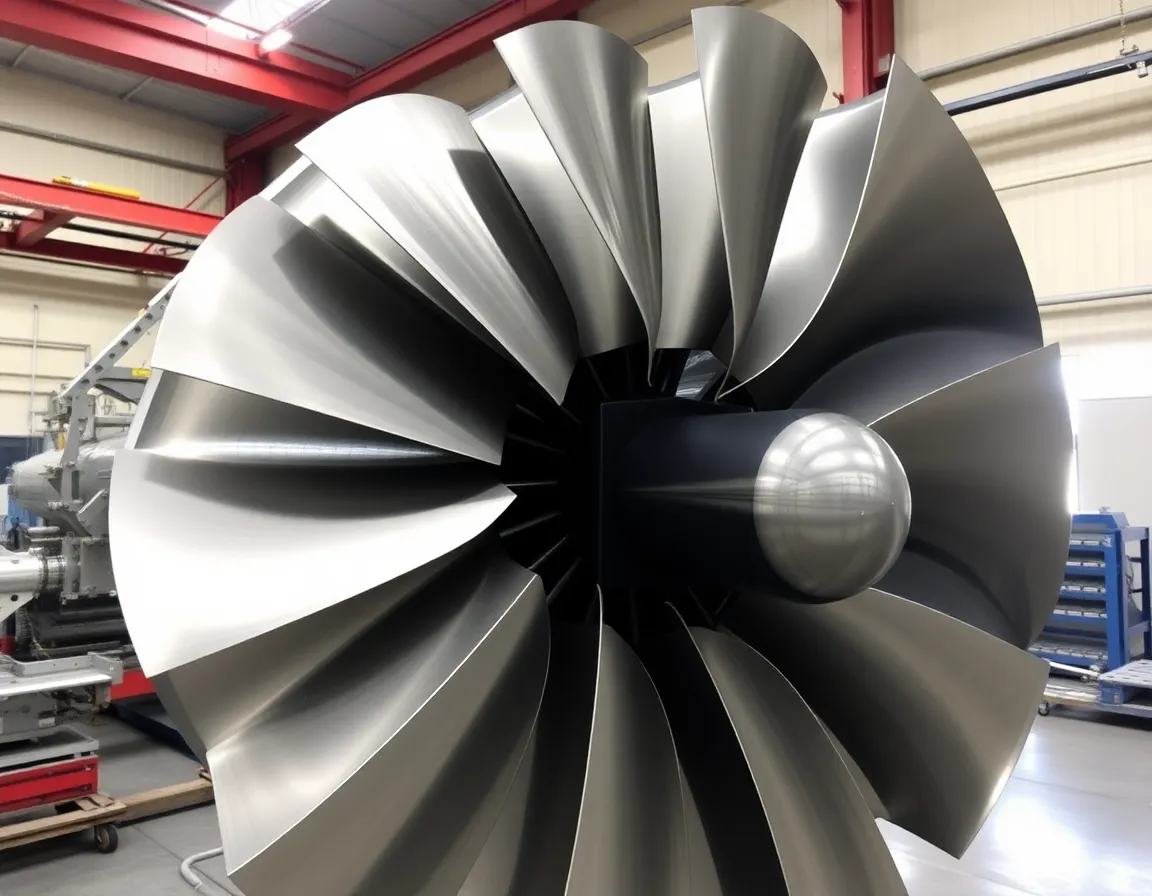
A turbine blade is a masterpiece of thermodynamic and mechanical design. Its primary function is to extract energy from a high-temperature, high-pressure fluid (gas or steam) and convert it into rotational motion. To survive this hostile environment, blades must embody a complex set of contradictory properties: they must be incredibly strong yet lightweight, resistant to extreme heat and corrosion, and aerodynamically perfect. They often feature intricate internal cooling channels, complex airfoil contours, and ultra-secure root attachments. This is where precision machining, particularly 5-axis CNC (Computer Numerical Control) machining, separates itself from casting and other forming techniques.
From Billet to Blade: The Machining Process
The journey of a machined turbine blade typically begins with a solid billet of high-performance alloy, such as a nickel-based superalloy like Inconel or a titanium alloy. These materials are chosen for their strength at elevated temperatures but are notoriously difficult to machine. The process is a symphony of digital design and mechanical precision:
- Digital Blueprinting & CAM Programming: The blade's 3D CAD model is translated into machine instructions (G-code) using CAM software. This program dictates every movement of the cutting tool, often involving millions of lines of code to define the complex geometry.
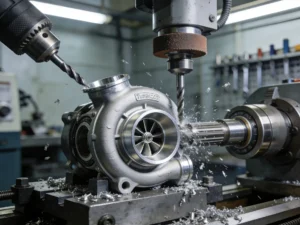
- 5-Axis CNC Machining: The billet is mounted on a 5-axis machining center. Unlike 3-axis machines, 5-axis machines can rotate the workpiece and tilt the cutting tool simultaneously. This allows the tool to approach the material from virtually any angle, enabling the creation of the blade's twisted airfoil shape, precise leading and trailing edges, and the platform and root features in a single, coherent setup.
- Creating Internal Complexity: For blades requiring internal cooling channels, techniques like plunge EDM (Electrical Discharge Machining) or deep-hole drilling are employed. EDM uses electrical sparks to erode material, allowing for the creation of complex, non-linear internal passages that would be impossible with traditional drilling.
- Finishing & Surface Enhancement: After roughing and finishing cuts, blades undergo critical finishing processes. This includes precision grinding for tighter tolerances, abrasive flow machining to polish internal channels, and often shot peening to induce beneficial compressive stresses on the surface, enhancing fatigue life.
Why Machine? The Compelling Advantages
Choosing machining over investment casting or forging for turbine blades is a decision driven by uncompromising demands for performance, flexibility, and quality.
Unmatched Geometric Freedom and Precision
5-axis CNC machining offers designers unparalleled freedom. It can produce blades with more aerodynamically efficient, complex contours, sharper leading edges for reduced drag, and more intricate root forms like fir-tree or dovetail designs that ensure perfect load distribution within the disk. Tolerances are held to astonishing levels, often within microns, ensuring each blade is a perfect match for its neighbors, critical for balance and vibration control.
Superior Material Integrity
While casting can introduce defects like porosity or grain boundary weaknesses, machining starts with a wrought billet known for its homogeneous, fine-grained structure. This results in blades with superior mechanical properties, including higher fatigue strength, better fracture toughness, and more consistent performance across an entire batch. The absence of casting-related defects is a significant reliability advantage.
Flexibility for Prototyping and High-Mix Production
Machining is ideal for prototyping new blade designs. Changes can be made in the CAD model and implemented immediately without the need for expensive and time-consuming new mold or die creation. This accelerates R&D cycles dramatically. Furthermore, for applications like industrial gas turbines or specialized aerospace projects where volumes may be lower but customization is high, machining provides an economically viable route to production without sacrificing quality.
Enhanced Surface Finish and Feature Integration
The surface finish of a machined blade is typically superior to an as-cast surface. A smoother finish reduces aerodynamic losses and provides a better substrate for thermal barrier coatings (TBCs). Additionally, features like inspection holes, instrumentation ports, and specific balancing pads can be integrated directly into the machining program with high precision.
Applications: Where Machined Blades Dominate
The use of machined turbine blades spans industries where failure is not an option and efficiency gains are measured in millions of dollars.
- Aerospace Jet Engines: While high-pressure turbine blades in the hottest section are often single-crystal castings, many other critical rotating and static blades within the compressor and turbine sections—especially in military, business jet, and advanced commercial engines—are precision machined. Their strength and reliability are paramount.
- Industrial Gas Turbines (IGTs) for Power Generation: IGTs value longevity and maintainability. Machined blades, with their superior material integrity, offer extended service intervals and reduced risk of unplanned outages. They are common in earlier stages of the turbine where temperatures are slightly lower but durability is key.
- Oil & Gas Turbo-Expanders and Compressors: In pipelines and processing plants, turbines operate continuously for years. Machined blades provide the robustness needed for such duty cycles, handling a variety of process gases reliably.
- Marine Propulsion: Naval vessels and high-performance ships use gas turbines for propulsion. The salty, corrosive environment demands components with excellent fatigue and stress-corrosion cracking resistance, a hallmark of machined components from high-quality alloys.
- High-Performance Racing Turbochargers: The tiny, ultra-high-speed turbines in racing turbochargers push materials and manufacturing to the limit. CNC machining is often the only method capable of producing the necessary shapes and tolerances from the strongest materials for these applications.
Best Practices and Future Horizons
Producing a world-class machined turbine blade is not merely about having a 5-axis machine. It is an ecosystem of excellence.
Best Practices in the Machining Cell
- Advanced Tooling: Utilizing polycrystalline diamond (PCD) or cubic boron nitride (CBN) tools to cut abrasive superalloys, and implementing sophisticated tool wear monitoring systems.
- Rigorous Workholding: Designing custom fixtures that provide absolute stability and precise location for the workpiece throughout the aggressive machining process.
- In-Process Metrology: Integrating touch probes and laser scanners on the machine tool to measure critical features mid-process, allowing for automatic compensation and ensuring the part is "right the first time."
- Thermal Management: Controlling the temperature of the workpiece, tool, and machine environment is critical to maintaining dimensional stability when working with heat-resistant alloys.
The Future: Hybrid Manufacturing and Digital Twins
The frontier of turbine blade manufacturing lies in hybridization. Additive manufacturing (3D printing) is increasingly used to build up near-net-shape blade forms, complete with internal channels, which are then finish-machined to achieve the final, high-precision surfaces and edges. This combines the geometric freedom of additive with the surface quality and accuracy of machining. Furthermore, the concept of the digital twin—a virtual replica of the machining process—allows for simulation and optimization of every cut, predicting and preventing potential errors before metal is ever touched, pushing quality and efficiency to new heights.
Conclusion
Precision machining for turbine blades represents the intersection of advanced materials science, digital manufacturing, and uncompromising engineering. It is a process born from the need to conquer extremes—of temperature, pressure, and force. By transforming solid billets of cutting-edge alloys into aerodynamic wonders with microscopic accuracy, machining provides the performance, reliability, and flexibility that modern turbine technology demands. As the push for greater efficiency and lower emissions continues to intensify across aviation and energy sectors, the role of the exquisitely machined turbine blade will only become more central, literally and figuratively driving innovation forward.