The Unseen Edge: Defining Tight Tolerance Wire EDM
In the high-stakes world of advanced manufacturing, where a single micron can separate success from failure, Precision Wire Electrical Discharge Machining (Wire EDM) stands as a pivotal technology. Moving beyond standard EDM capabilities, tight tolerance Wire EDM refers to the specialized application of the process to achieve and consistently hold dimensional accuracies within exceptionally small ranges, typically within ±0.0002" (5 microns) and often down to ±0.0001" (2.5 microns) or even sub-micron levels under optimal conditions. This is not merely machining; it is a controlled erosion at the atomic level, enabling the production of complex, fragile, and ultra-precise components that are impossible to create with traditional mechanical methods.
The pursuit of such tolerances transcends simple measurement. It represents a holistic commitment to mastering every variable in the machining ecosystem—from thermal stability and wire dynamics to sophisticated CNC path control and post-process metrology. It is the manufacturing equivalent of a master watchmaker's art, applied to industries where performance is non-negotiable.
The Mechanics of Microscopic Erosion
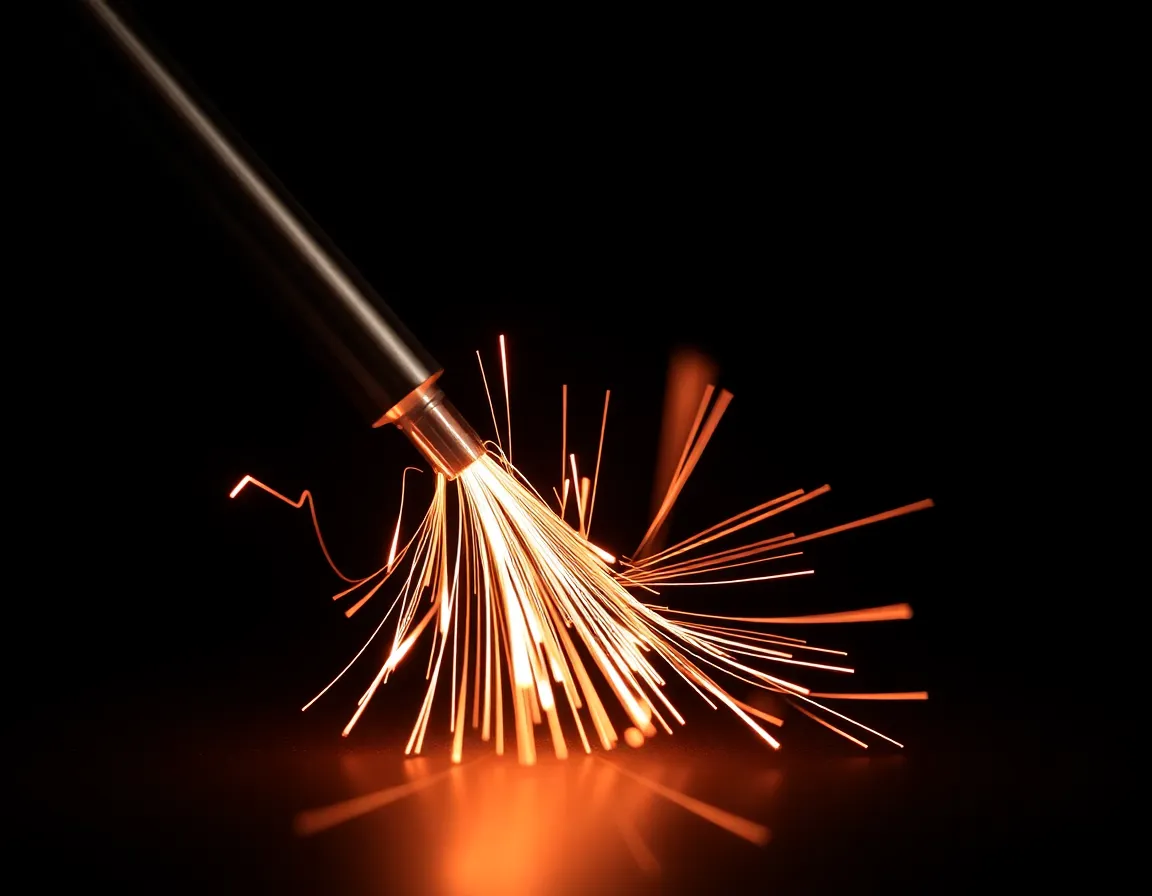
At its core, all Wire EDM operates on the principle of thermal electrical discharge. A thin, precisely spooled wire electrode (typically brass, coated, or stratified) is fed through the workpiece, which is submerged in deionized water. A powerful electrical potential is created between the wire and the conductive workpiece, causing a series of controlled sparks that vaporize microscopic particles of material. The deionized water serves as a coolant and flushing agent, carrying away debris and ensuring consistent sparking conditions.
What Makes "Tight Tolerance" Different?
Achieving micron-level tolerances requires elevating this basic process to an exact science. Key differentiators include:
- Advanced Machine Architecture: Machines are built with thermally symmetric frames, often from polymer concrete or stabilized metals, to resist expansion from ambient temperature fluctuations. Linear motors and direct-drive, frictionless encoders provide positional feedback and movement accuracy measured in nanometers.
- Wire Technology and Control: Using ultra-fine wires (down to 0.02mm diameter) is just the start. Precision wire guides with exceptional concentricity, constant tension systems, and anti-vibration wire drives ensure the wire acts as a perfectly stable cutting tool. The ability to program and control the wire's "skew" or tilt with extreme accuracy is also critical for maintaining tolerances on tapered surfaces.
- Multi-Pass Cutting Strategies (Roughing & Finishing): Tight tolerance work almost exclusively employs multiple cutting passes. A roughing pass removes the bulk of material, leaving a small, consistent stock allowance (e.g., 0.001"-0.002"). Subsequent finishing passes, with progressively lower power settings and sometimes even finer wires, then skim this remaining stock away. Each finishing pass removes less material but produces a more accurate, better-finished surface. The final "skim" might remove only microns of material, which is where the ultimate tolerance is achieved.
- Environmental and Process Control: The machining environment is critical. Temperature-controlled coolant (±0.5°C or better) and often a temperature-controlled room (±1°C) are mandatory to prevent thermal growth in the part and machine. High-filtration systems maintain dielectric purity, as conductive particles can cause erratic sparking and dimensional inaccuracy.
Why Microns Matter: Benefits and Transformative Applications
The investment in tight tolerance Wire EDM is justified by its unparalleled benefits, which unlock new possibilities in engineering and design.
Vantaggi principali
- Machining the "Unmachinable": It can shape hardened tool steels, carbides, exotic alloys, and conductive ceramics after heat treatment, eliminating distortion risks from post-hardening machining.
- Zero Mechanical Stress: As a non-contact process, there is no tool pressure, making it ideal for delicate, thin-walled, and fragile components that would deflect or break under conventional cutting forces.
- Exceptional Geometric Complexity: It can produce intricate profiles, sharp inside corners, and micro-features with aspect ratios impossible for milling tools.
- Superior Surface Integrity: Multi-pass finishing can produce very fine surface finishes (often better than Ra 0.1 µm), reducing or eliminating the need for secondary polishing, especially in blind cavities.
Critical Applications
These benefits make tight tolerance Wire EDM indispensable across leading-edge industries:
- Aerospace & Turbine Engines: Manufacturing cooling holes in turbine blades, fuel system components, and lightweight structural frames with exacting tolerances for safety and efficiency.
- Medical Device Manufacturing: Producing biocompatible implants with complex bone-in-growth surfaces, micro-surgical tools, and components for diagnostic equipment like MRI and CT scanners.
- Precision Tooling & Molds: Creating intricate extrusion dies, micro-injection mold cavities, and stamping dies with perfect shut-off surfaces and minimal bench work. This includes progressive dies where the fit between punch and die is measured in microns.
- Semiconductor & Electronics: Fabricating parts for wafer handling, test sockets, and micro-connectors. The process is also used to create EDM electrodes for producing plastic molds for micro-components.
- Automotive (High-Performance & EV): Machining components for fuel injection systems, transmission parts, and sensors in traditional vehicles, as well as intricate laminations and motor components in electric vehicles.
Mastering the Craft: Best Practices for Consistent Results
Consistently hitting micron-level tolerances is a discipline. It requires adherence to a stringent set of best practices from job planning to final inspection.
Pre-Process Planning
Success is determined before the first spark fires. Comprehensive planning includes:
- Material Knowledge: Understanding the metallurgical composition, heat treatment state, and residual stresses within the blank is vital. Stress-relieving the material prior to machining is often necessary.
- Strategic Workholding: Using precision-ground fixtures and vices, and planning cuts so the part remains securely held without distortion. Magnetic workholding is often preferred for thin parts.
- Path Programming & Kerf Compensation: CAD/CAM programming must account for the precise wire diameter and spark gap (kerf) for each cutting pass. Advanced software can compensate for wire deflection and predict thermal effects.
In-Process Execution
Vigilance during the machining cycle is non-negotiable.
- Stabilization: Allowing the machine and coolant to reach thermal equilibrium before starting a critical job. Some machines feature "warm-up" cycles.
- Wire Management: Ensuring fresh, high-quality wire is used for finishing passes. Monitoring wire tension and feed speed for consistency.
- Flushing Optimization: Using dedicated flush cups or submersed machining with aggressive filtration to ensure a clean spark gap, especially in deep cuts or intricate details.
Post-Process Verification
Measuring at the micron level requires metrology that exceeds the tolerance of the machining process itself.
- Controlled Thermal Equalization: Parts must be cleaned and allowed to return to a standard measurement temperature (e.g., 20°C / 68°F) before inspection.
- Advanced Metrology Tools: Use of high-precision coordinate measuring machines (CMMs), optical comparators with digital readouts, and laser scanning systems is standard. The measurement uncertainty of the tool must be a fraction of the part tolerance.
- Documentation & Traceability: Maintaining detailed records of machine parameters, environmental conditions, and inspection results for each job is essential for quality control and process refinement.
Conclusion: The Pinnacle of Subtractive Manufacturing
Precision Wire EDM for tight tolerances is more than a manufacturing process; it is an enabling technology that pushes the boundaries of design and material science. By mastering the interplay of electrical energy, mechanical precision, and environmental control, it allows engineers to realize components with accuracies that were once the domain of theoretical design. As industries continue to demand smaller, stronger, and more complex parts—from life-saving medical implants to the engines that power exploration—the role of this microscopic erosion process will only grow more central, proving that in the quest for perfection, every single micron truly counts.