
L'ispezione del primo articolo per i pezzi lavorati a CNC è un punto di controllo per il rilascio in produzione, non un rapporto cerimoniale. Conferma che il disegno, il materiale, il programma, l'attrezzatura, l'attrezzatura di fissaggio, la sequenza di lavorazione, il percorso di finitura e il metodo di ispezione hanno prodotto un pezzo rappresentativo che soddisfa i requisiti concordati. Un primo articolo conforme supporta la decisione di proseguire; non garantisce che ogni pezzo successivo rimarrà conforme.
La distinzione è importante per gli acquirenti esteri. Un fornitore può realizzare un campione eccellente tramite regolazioni aggiuntive, selezione manuale o un setup temporaneo. La vera domanda è se il pezzo ispezionato rappresenta il processo previsto per l'ordine. Questa guida spiega cosa dovrebbe dimostrare la FAI, quando dovrebbe essere ripetuta, cosa deve contenere il rapporto e come gli acquirenti possono definire un punto di approvazione senza creare ritardi inutili.
La questione del rilascio viene prima del modulo di ispezione
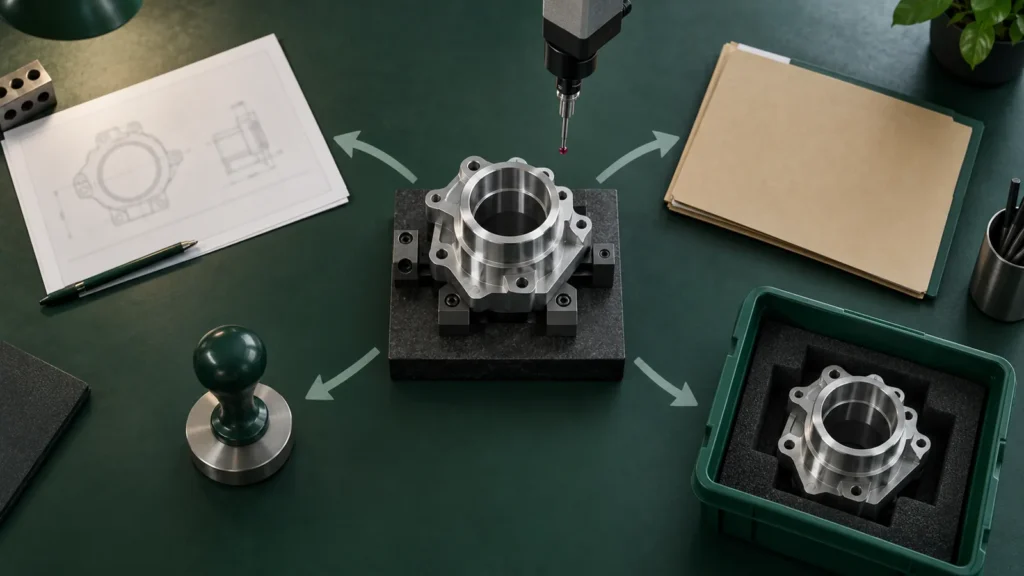 Prima di scegliere un modello, decidi cosa attende la produzione. In un progetto, il fornitore può proseguire dopo l'approvazione interna del primo pezzo. In un altro, la macchina deve fermarsi finché l'acquirente non esamina un rapporto dimensionale. Per un programma regolamentato, il cliente può richiedere un rapporto formale di ispezione del primo articolo con moduli specifici e documentazione di supporto.
Un'istruzione di rilascio utile specifica quattro cose:
Prima di scegliere un modello, decidi cosa attende la produzione. In un progetto, il fornitore può proseguire dopo l'approvazione interna del primo pezzo. In un altro, la macchina deve fermarsi finché l'acquirente non esamina un rapporto dimensionale. Per un programma regolamentato, il cliente può richiedere un rapporto formale di ispezione del primo articolo con moduli specifici e documentazione di supporto.
Un'istruzione di rilascio utile specifica quattro cose:
Senza queste regole, “FAI richiesto” può significare qualsiasi cosa, da una fotografia e tre misurazioni a un pacchetto completo di responsabilità delle caratteristiche. L'ambiguità influisce sul preventivo, sui tempi di ispezione, sulla programmazione delle macchine e sulla pianificazione delle consegne.
Cosa deve preservare un primo articolo rappresentativo
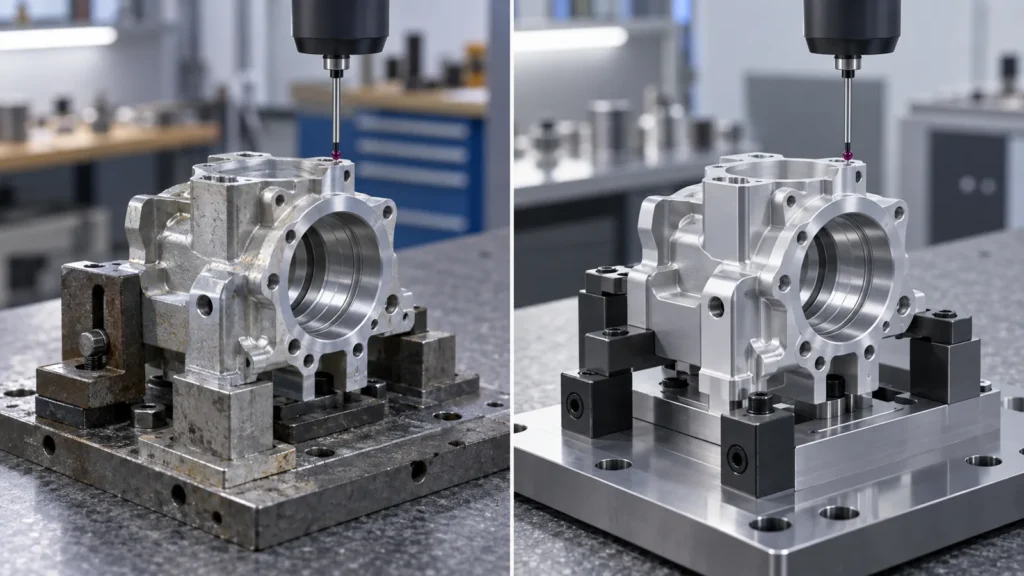 Il primo articolo dovrebbe essere realizzato nelle condizioni di produzione che si prevede di convalidare. Se il campione utilizza materiale diverso, un'attrezzatura diversa, un programma prototipo, un utensile temporaneo o un fornitore alternativo di finitura, il suo risultato potrebbe non supportare il rilascio del lotto pianificato.
Per i prototipi CNC che non proseguiranno in produzione, un controllo dimensionale limitato può essere sufficiente. Per la produzione ripetitiva, il primo articolo dovrebbe catturare la definizione del processo a cui gli ordini futuri possono fare riferimento. La sequenza produttiva più ampia è spiegata nella Guida al processo di lavorazione CNC.
L'FAI dovrebbe considerare più delle sole dimensioni
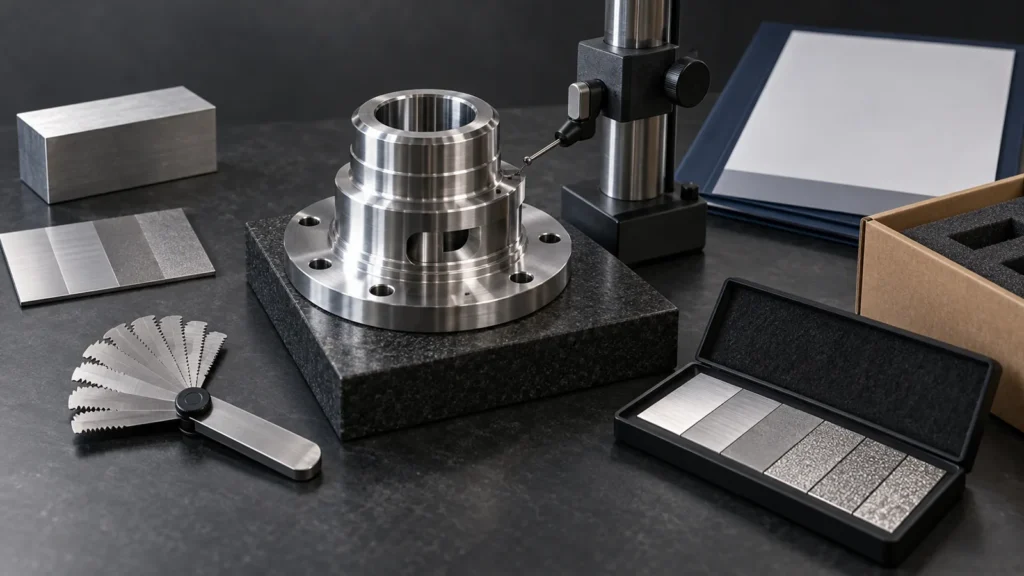 Un report dimensionale può mostrare valori nominali, tolleranze e risultati misurati, ma le dimensioni sono solo una parte della conformità. Il disegno può anche controllare materiale, trattamento termico, finitura superficiale, stato dei bordi, filettature, marcatura, pulizia, assemblaggio, prove speciali e imballaggio.
Un pacchetto di primo articolo pronto per l'acquirente può includere, quando richiesto. Questo è particolarmente importante quando il ciclo include post-lavorazione per parti CNC, perché l'evidenza finale deve collegare la condizione lavorata, il processo esterno e la parte rilasciata.
Un report dimensionale può mostrare valori nominali, tolleranze e risultati misurati, ma le dimensioni sono solo una parte della conformità. Il disegno può anche controllare materiale, trattamento termico, finitura superficiale, stato dei bordi, filettature, marcatura, pulizia, assemblaggio, prove speciali e imballaggio.
Un pacchetto di primo articolo pronto per l'acquirente può includere, quando richiesto. Questo è particolarmente importante quando il ciclo include post-lavorazione per parti CNC, perché l'evidenza finale deve collegare la condizione lavorata, il processo esterno e la parte rilasciata.
- a ballooned drawing or characteristic list tied to report rows;
- actual dimensional results rather than pass/fail alone;
- material grade, condition, heat or batch reference, and applicable certificate;
- special-process certificates linked to the correct part and revision;
- inspection equipment or method identification where contractually required;
- photographs or visual acceptance evidence for appearance-critical areas;
- records of approved deviations and the authority that accepted them.
The report should not imply that a characteristic was verified when the supplier only reviewed a certificate or copied a drawing value. Measured results, certificate evidence, visual checks, functional gauges, and supplier declarations answer different questions and should be identified accordingly.
When a new or partial FAI becomes necessary
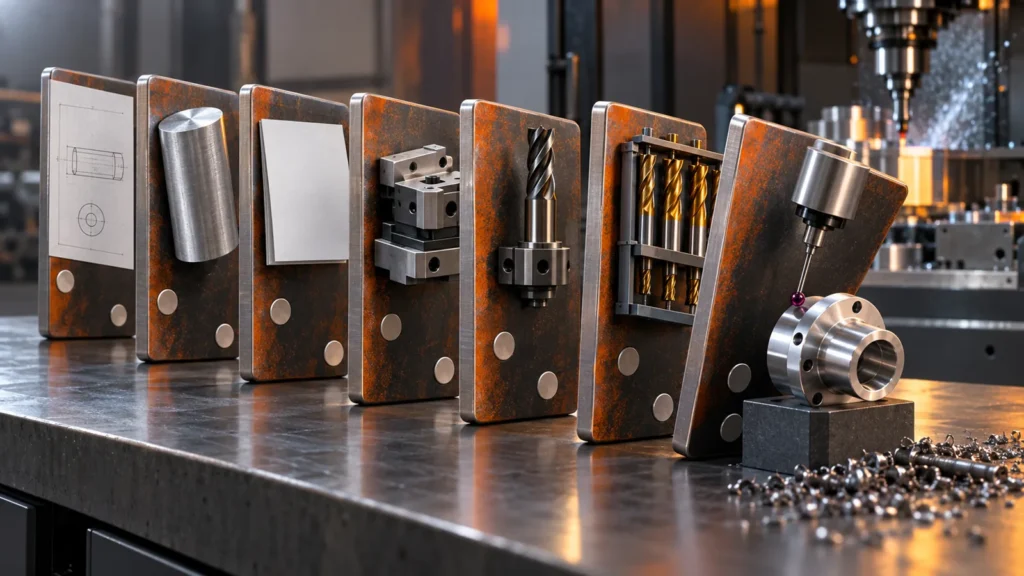 A first article is not permanently valid just because a part number has been produced before. A change can invalidate all or part of the earlier evidence. The required response depends on customer rules, the drawing, the purchase order, and the effect of the change.
Common triggers include:
A first article is not permanently valid just because a part number has been produced before. A change can invalidate all or part of the earlier evidence. The required response depends on customer rules, the drawing, the purchase order, and the effect of the change.
Common triggers include:
A partial or delta FAI can be appropriate when only defined characteristics are affected. However, the rationale must be recorded. “Only the title block changed” and “the datum scheme changed” are not equivalent events. The affected-feature review should consider downstream dimensions, setups, inspection alignment, and documentation—not just the redlined line.
The approval decision needs three separate answers
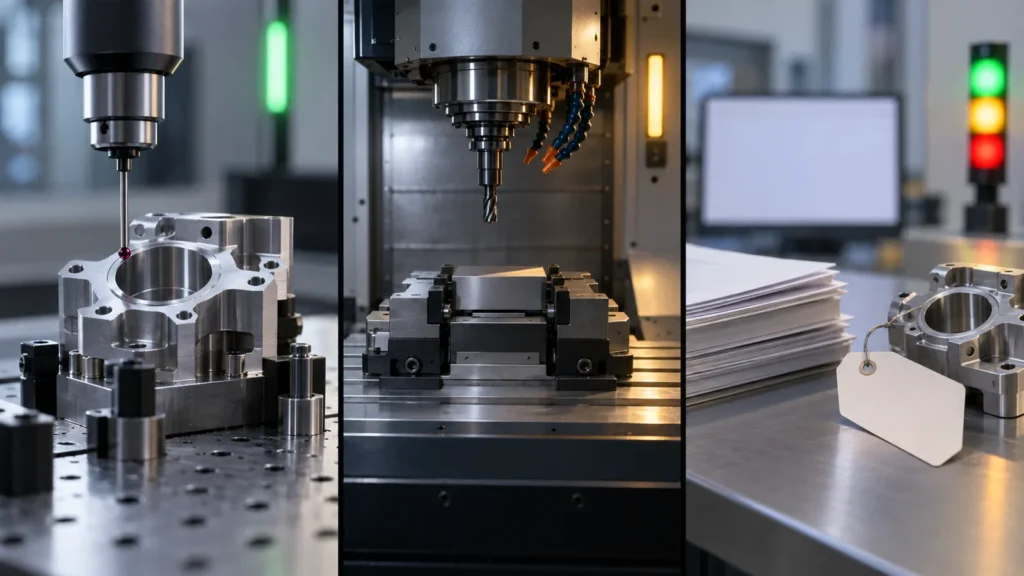 A strong review does not reduce the result to a single green box. It separates product conformity, process readiness, and document completeness.
A part can be dimensionally acceptable while its material record is missing. A report can be perfectly formatted while the machined feature fails. A first article can pass while the continuing process remains vulnerable to tool wear or thermal drift. Keeping the three answers separate makes the release decision more precise.
Make the report reviewable, not merely complete
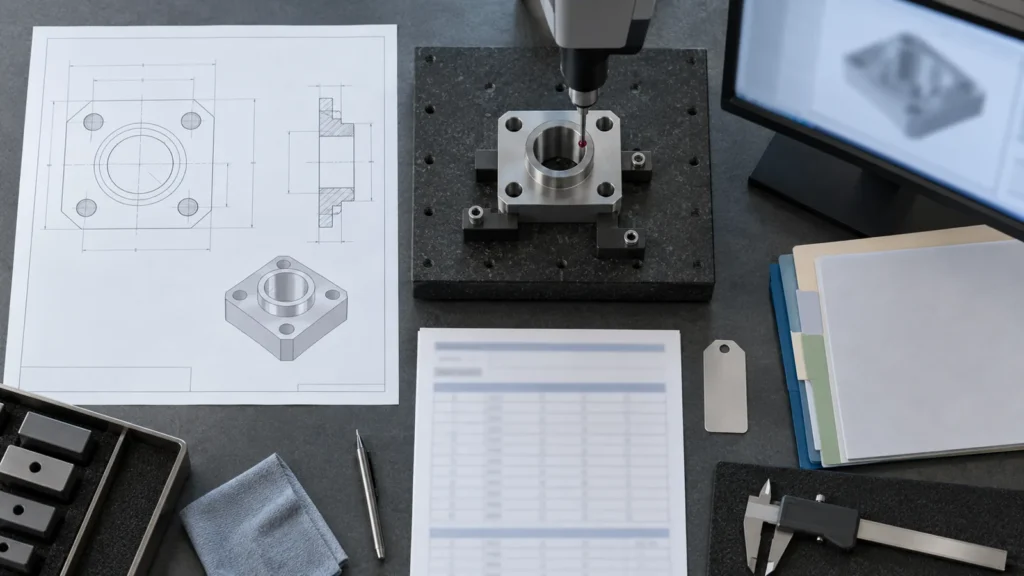 A first article package can contain all the necessary files and still be difficult to approve. The buyer should not have to guess whether “Item 27” refers to a drawing dimension, a note, or a surface requirement. Use a stable characteristic numbering system that connects the ballooned drawing, result sheet, certificates, and any approved deviations.
Actual values should retain their units and suitable resolution. Where a characteristic is verified by a functional gauge, certificate, visual standard, or test rather than a variable measurement, identify that evidence type. A blanket “OK” can hide whether the supplier measured the condition or simply confirmed that a document existed. For CMM results, preserve the datum alignment and feature naming needed to interpret the report.
File names should also carry useful identity: part number, revision, FAI status, and submission date or sequence. If the buyer returns comments, revisions should be controlled so that an obsolete result sheet is not combined with a corrected drawing. A concise cover index can list every required deliverable and its status. This small step shortens review time more effectively than sending one unstructured archive with dozens of ambiguously named files.
A first article package can contain all the necessary files and still be difficult to approve. The buyer should not have to guess whether “Item 27” refers to a drawing dimension, a note, or a surface requirement. Use a stable characteristic numbering system that connects the ballooned drawing, result sheet, certificates, and any approved deviations.
Actual values should retain their units and suitable resolution. Where a characteristic is verified by a functional gauge, certificate, visual standard, or test rather than a variable measurement, identify that evidence type. A blanket “OK” can hide whether the supplier measured the condition or simply confirmed that a document existed. For CMM results, preserve the datum alignment and feature naming needed to interpret the report.
File names should also carry useful identity: part number, revision, FAI status, and submission date or sequence. If the buyer returns comments, revisions should be controlled so that an obsolete result sheet is not combined with a corrected drawing. A concise cover index can list every required deliverable and its status. This small step shortens review time more effectively than sending one unstructured archive with dozens of ambiguously named files.
 FAI delays often begin before machining. The supplier receives a CAD model without a controlled drawing, a drawing with conflicting revisions, an undefined cosmetic requirement, or a request for “full inspection” without a required format. The inspection team then waits for clarification after the machine is already scheduled.
At RFQ stage, provide the drawing and revision, identify critical characteristics, define the first-article quantity, state whether buyer approval is required before continuation, and list required documents. If a specific template, portal, or naming convention is mandatory, include it before quotation. If the project only needs a limited first-piece report, say so explicitly.
The supplier should respond with questions about inaccessible features, datum interpretation, measurement method, destructive tests, post-processing sequence, and any characteristic that cannot be verified as drawn. These questions are evidence of planning, not a sign that inspection is weak. Jucheng’s quality capabilities page provides general context, while the order-specific inspection and reporting scope should be agreed from the actual drawing.
FAI delays often begin before machining. The supplier receives a CAD model without a controlled drawing, a drawing with conflicting revisions, an undefined cosmetic requirement, or a request for “full inspection” without a required format. The inspection team then waits for clarification after the machine is already scheduled.
At RFQ stage, provide the drawing and revision, identify critical characteristics, define the first-article quantity, state whether buyer approval is required before continuation, and list required documents. If a specific template, portal, or naming convention is mandatory, include it before quotation. If the project only needs a limited first-piece report, say so explicitly.
The supplier should respond with questions about inaccessible features, datum interpretation, measurement method, destructive tests, post-processing sequence, and any characteristic that cannot be verified as drawn. These questions are evidence of planning, not a sign that inspection is weak. Jucheng’s quality capabilities page provides general context, while the order-specific inspection and reporting scope should be agreed from the actual drawing.
After approval, control the process—not just the report
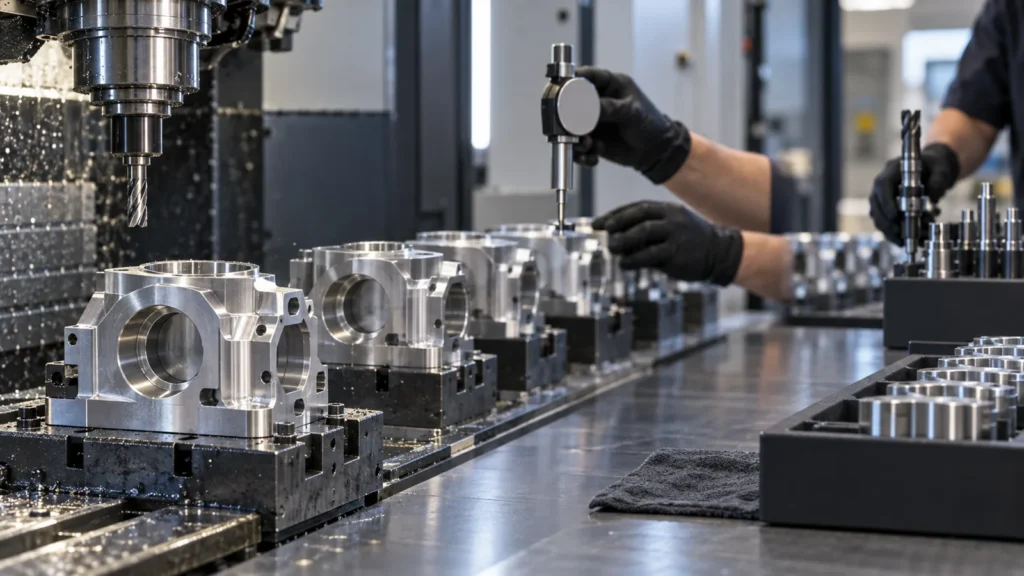 FAI is strongest when it becomes the baseline for production rather than a document filed away. Critical dimensions should be connected to an in-process or final inspection frequency. Tool-life risks, setup-dependent features, distortion-sensitive geometry, and post-process dimensional changes should have defined checkpoints and reactions.
This is where FAI and ongoing CNC machining quality control separate. The first article confirms a representative starting point. Process control monitors whether later output remains consistent with that starting point. For larger or repeated batches, capability evidence may be more meaningful than repeatedly celebrating one conforming sample.
FAI is strongest when it becomes the baseline for production rather than a document filed away. Critical dimensions should be connected to an in-process or final inspection frequency. Tool-life risks, setup-dependent features, distortion-sensitive geometry, and post-process dimensional changes should have defined checkpoints and reactions.
This is where FAI and ongoing CNC machining quality control separate. The first article confirms a representative starting point. Process control monitors whether later output remains consistent with that starting point. For larger or repeated batches, capability evidence may be more meaningful than repeatedly celebrating one conforming sample.
First article inspection FAQs

Is the first machined piece automatically the first article?
No. The first article should represent the defined production process. A setup piece or trial made with temporary tooling may be useful for adjustment but may not be suitable for formal approval.
Does FAI require every dimension to be measured?
It depends on the applicable customer, standard, drawing, and purchase-order requirements. Some formal programs require accountability for all design characteristics; other commercial orders use an agreed critical-feature report.
Can production continue before buyer approval?
Only if the agreed release rule allows it. The purchase order should state whether the supplier may continue after internal approval or must wait for written customer authorization.
Does a passing FAI prove the whole batch is good?
No. It proves that the inspected representative article met the defined scope. Batch conformity and process stability require continuing controls, sampling, or capability evidence appropriate to the order.
The practical rule is simple: define what the first article must prove before production begins. A clear release point, representative process, characteristic-linked report, and documented reaction plan turn FAI from paperwork into a useful manufacturing decision.