Introduction: The Reign of Aluminum in Modern Manufacturing
In the world of precision manufacturing, aluminum stands as a material of unparalleled importance. Its unique combination of light weight, strength, corrosion resistance, and conductivity makes it a cornerstone for industries ranging from aerospace to consumer electronics. However, the true potential of this versatile metal is unlocked through the precision of Computer Numerical Control (CNC) machining. The synergy between aluminum's material properties and CNC's digital precision has revolutionized how we design and produce complex, high-tolerance parts. This article delves into the world of precision aluminum CNC machining, exploring its processes, overwhelming benefits, diverse applications, and the best practices that ensure optimal results.
Understanding Aluminum CNC Machining: The Process
CNC machining is a subtractive manufacturing process where pre-programmed computer software dictates the movement of factory tools and machinery. For aluminum, this process involves removing material from a solid block (or billet) to create a custom-designed part with extreme accuracy.
How It Works: From Digital Blueprint to Physical Part
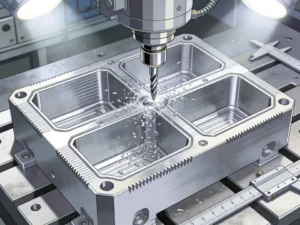
The journey begins with a 3D Computer-Aided Design (CAD) model. This digital blueprint is then translated into a set of instructions (G-code) for the CNC machine via Computer-Aided Manufacturing (CAM) software. The CNC machine—typically a mill, lathe, or router—then executes these instructions with robotic precision. Cutting tools, such as end mills and drills, rotate at high speeds to shear away aluminum material, following toolpaths that sculpt the final component. Coolants are often used to manage heat, prevent tool wear, and achieve a superior surface finish. The entire process is automated, repeatable, and capable of producing geometries that would be impossible or prohibitively expensive with manual machining.
Suitable Aluminum Alloys for CNC Machining
Not all aluminum is created equal. The choice of alloy is critical and depends on the required balance of strength, machinability, corrosion resistance, and weight. Common choices include:
- 6061: The most widely used general-purpose alloy. It offers excellent weldability, good strength, and superior corrosion resistance, making it ideal for automotive frames, brackets, and structural components.
- 7075: Known for its very high strength, comparable to many steels. It is primarily used in high-stress aerospace and military applications but is less corrosion-resistant than 6061.
- 2024: Valued for its high strength-to-weight ratio and excellent fatigue resistance, often used in aircraft structures.
- 5052: Offers the highest strength of the non-heat-treatable alloys and outstanding corrosion resistance, especially in marine environments.
- MIC-6 & 6061-T651: These are cast aluminum tooling plates known for exceptional stability and flatness, perfect for precision fixtures and base plates.
The Multifaceted Benefits of CNC Machining for Aluminum Parts
The marriage of CNC technology and aluminum yields a compelling array of advantages that explain its dominance in precision manufacturing.
Précision et répétabilité inégalées
CNC machines operate with tolerances as tight as ±0.001 inches (0.025mm) or even finer. This level of precision is consistent across a production run of one part or one million. Once a program is verified, every subsequent part is a perfect copy, eliminating human error and ensuring interchangeability and perfect fit in assemblies.
Superior Complexity and Design Freedom
CNC machining can produce highly complex geometries that are impractical with other methods. Intricate contours, deep cavities, precise threads, and undercuts can all be achieved in a single setup or with automated tool changers. This allows designers to consolidate multiple components into a single, complex aluminum part, reducing assembly time and potential failure points.
Excellent Material Properties and Surface Finish
Unlike processes that melt metal (like casting), CNC machining works with wrought or cast aluminum stock, which retains its excellent grain structure and mechanical properties. Furthermore, CNC-machined parts can achieve a superb surface finish directly off the machine. Secondary processes like anodizing, powder coating, or polishing can further enhance appearance, corrosion resistance, and durability.
Speed and Efficiency from Prototype to Production
CNC machining offers remarkable flexibility in production volume. It is the gold standard for rapid prototyping, allowing functional aluminum prototypes to be produced in days. This same efficiency scales seamlessly to low, medium, and even high-volume production runs without the need for expensive molds or tooling, making it highly cost-effective for many applications.
Material Efficiency and Sustainability
While subtractive, modern CNC practices are surprisingly material-efficient. Nesting software optimizes the layout of parts on raw material stock to minimize waste. Furthermore, the aluminum chips (swarf) produced are 100% recyclable. This closed-loop recyclability, a hallmark of aluminum, significantly reduces the environmental footprint of the manufacturing process.
Key Applications Across Industries
The benefits of precision aluminum CNC machining translate into critical applications across virtually every advanced industry.
Aérospatiale et défense
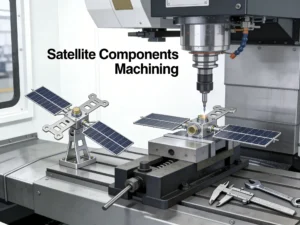
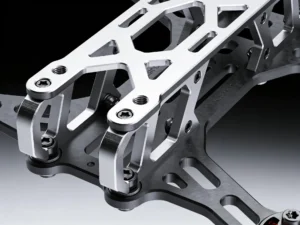
Here, the high strength-to-weight ratio of alloys like 7075 is paramount. CNC machining produces lightweight, robust, and reliable components such as aircraft fuselage brackets, engine mounts, drone frames, and satellite components, where failure is not an option.
Automobile et sport automobile
From performance engine blocks and cylinder heads to suspension components and custom brackets, CNC aluminum parts reduce vehicle weight (improving efficiency and performance) while maintaining structural integrity. Electric vehicle battery enclosures and heat sinks are also increasingly CNC-machined.
Electronics and Telecommunications
Aluminum's excellent thermal conductivity makes it ideal for heat sinks and enclosures that protect sensitive electronic components. CNC machining creates precise fins for maximum heat dissipation and tight-tolerance housings for devices like routers, servers, and smartphones.
Medical and Life Sciences
The medical industry relies on CNC-machined aluminum for surgical instruments, diagnostic device housings, and components for imaging equipment like MRI and CT scanners. The process ensures the sterility-compatible smooth surfaces and extreme precision required for life-critical applications.
Robotique et automatisation
Robotic arms, end-effectors, and automation frames benefit from aluminum's stiffness and light weight, allowing for faster movement and reduced inertia. CNC machining allows for the integration of complex sensor mounts and cable pathways directly into the structural components.
Best Practices for Optimal Aluminum CNC Machining
To fully leverage the advantages of the process, adhering to established best practices is essential.
Conception pour la fabricabilité (DFM)
Engage with your machining partner early. Design parts with realistic tolerances, avoid excessively deep pockets, specify appropriate internal corner radii (to match standard tool sizes), and consider how the part will be fixtured. Good DFM reduces cost, machining time, and potential errors.
Selecting the Right Tooling and Parameters
Using sharp, high-quality carbide tools designed for aluminum is crucial. Optimizing spindle speeds, feed rates, and depth of cut prevents material galling (where aluminum sticks to the tool), ensures efficient chip evacuation, and extends tool life. Using compressed air or proper coolants is vital for managing chips and heat.
Strategic Fixturing and Workholding
A part is only as precise as its hold. Using vises, custom fixtures, or vacuum tables to securely and rigidly clamp the aluminum workpiece prevents vibration and movement, which are the enemies of precision and surface finish.
Post-Processing Considerations
Plan for necessary secondary operations. Deburring removes sharp edges. Vibratory tumbling can improve finish. For enhanced properties, consider:
- Anodisation : Increases surface hardness and corrosion resistance; allows for color dyeing.
- Chromate Conversion Coating (Alodine): Provides corrosion resistance and improves paint adhesion.
- Powder Coating: Offers a durable, thick, and decorative colored finish.
Conclusion: The Foundation of Innovation
Precision aluminum CNC machining is far more than just a manufacturing process; it is a fundamental enabler of modern innovation. By providing an unmatched combination of design freedom, material excellence, and digital accuracy, it allows engineers and designers to push the boundaries of what is possible. From the vehicles we drive and the planes we fly in to the life-saving medical devices and the technology that connects our world, precision-machined aluminum parts form the hidden, high-performance backbone of our advanced society. As CNC technology continues to evolve with advancements in automation, multi-axis capabilities, and smarter software, its partnership with aluminum will undoubtedly continue to shape the future of manufacturing.