
Introducción: La precisión detrás del sonido
Cuando escuchamos música o la banda sonora de una película, experimentamos un evento emocional y sensorial. Rara vez consideramos el intrincado ballet mecánico que ocurre dentro del gabinete del altavoz para crear esa experiencia. Sin embargo, la claridad de un vocalista, el golpe de un bombo y la delicada decadencia de un platillo no son meramente productos de señales eléctricas y magnetismo. Están fundamentalmente moldeados por objetos físicos: componentes mecanizados con asombrosos niveles de precisión. La búsqueda del sonido de alta fidelidad es, en gran medida, una búsqueda de la perfección mecánica. Cada vibración, cada resonancia y cada distorsión no deseada está influenciada por la geometría, la masa y la rigidez de las piezas del altavoz. Este artículo profundiza en el mundo crítico y a menudo pasado por alto del mecanizado de componentes para altavoces, explorando cómo la ciencia de la fabricación precisa se traduce directamente en el arte de la reproducción del sonido.
¿Qué es el mecanizado de componentes para altavoces? Definición del proceso central
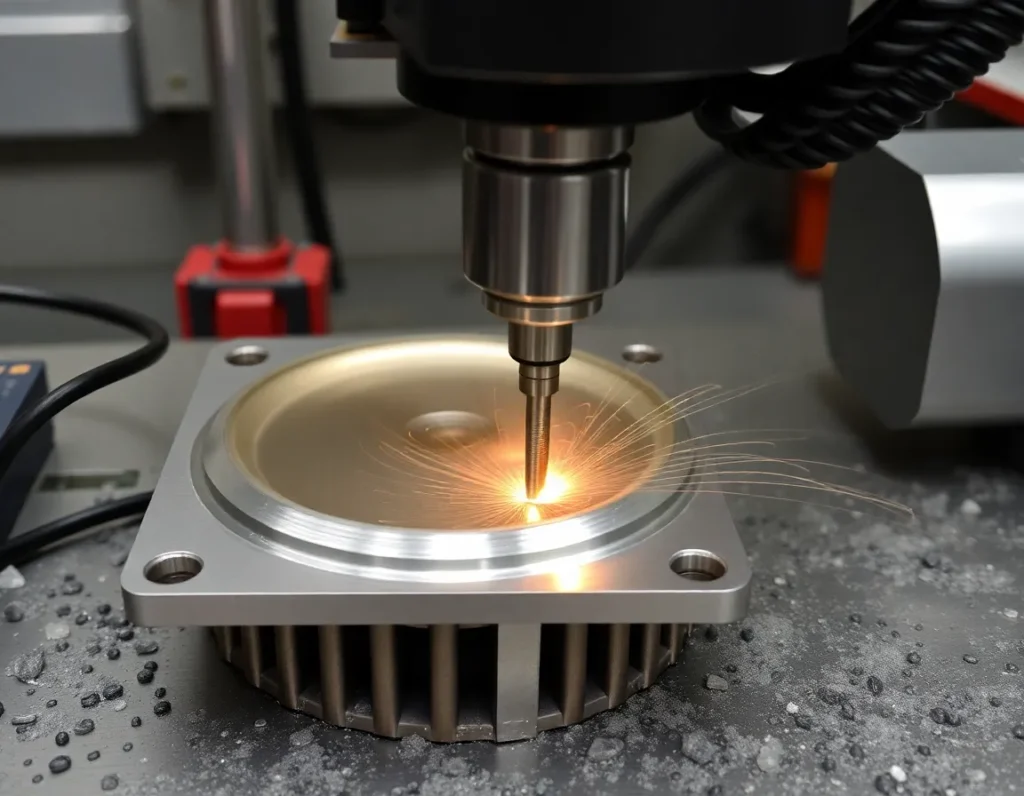
El mecanizado de componentes para altavoces es el proceso de fabricación especializado de crear las piezas estructurales y funcionales críticas de un controlador de altavoz y su ensamblaje utilizando técnicas controladas de eliminación de material. Va más allá del simple estampado o moldeo para emplear métodos avanzados controlados por computadora que logran tolerancias dimensionales exigentes, acabados superficiales superiores y geometrías complejas inalcanzables por otros medios. En esencia, este proceso consiste en transformar materias primas —bloques de aluminio, tochos de acero o piezas en bruto de material compuesto— en componentes acústicamente inertes y mecánicamente estables.
El objetivo no es solo fabricar una pieza que encaje, sino fabricar una que se comporte de manera predecible bajo las exigencias extremas de la reproducción de audio. Un controlador de altavoz es una bomba neumática de alta velocidad, con su diafragma acelerando y desacelerando violentamente para crear ondas sonoras. Cualquier imperfección en sus partes móviles (como la bobina móvil o el diafragma) o en sus estructuras fijas (como el conjunto del imán y la canasta) introduce distorsión, coloración y pérdida de energía. El mecanizado proporciona el control necesario para minimizar estos defectos. Abarca una serie de operaciones, desde el corte y el taladrado hasta el fresado y el torneado, todas guiadas por diseños digitales para garantizar que cada componente del altavoz, desde el disipador de calor más masivo hasta el separador más pequeño, contribuya a la pureza sonora en lugar de restarle calidad.
La anatomía de un altavoz: componentes clave que requieren mecanizado de precisión
Para comprender dónde es esencial el mecanizado, primero debemos diseccionar las piezas clave de un controlador de altavoz dinámico. Cada una desempeña un papel distinto, y cada una se beneficia de la precisión que ofrece el mecanizado.
Canasta o bastidor
La canasta es la base esquelética que mantiene todo en una alineación precisa. Una canasta mal fabricada puede flexionarse o resonar, absorbiendo energía y enturbiando el sonido. Las canastas mecanizadas, a menudo de aleaciones de aluminio, proporcionan una rigidez absoluta y una estabilidad dimensional perfecta para los puntos de montaje de la araña, la bobina móvil y el conjunto del imán. Esto garantiza que la bobina móvil permanezca centrada en el entrehierro magnético durante todo su recorrido, un factor crítico para la linealidad y la baja distorsión.
Pieza polar, placa superior y conjunto del imán
Este trío forma el corazón del sistema motor. La pieza polar (centro del entrehierro) y la placa superior (que forma el entrehierro exterior) deben tener superficies excepcionalmente lisas y paralelas para crear un campo magnético uniforme. Cualquier irregularidad puede hacer que la bobina móvil experimente una fuerza magnética variable, lo que provoca distorsión. El mecanizado de estas piezas a partir de hierro dulce o acero con tolerancias estrictas garantiza un entrehierro perfectamente simétrico y consistente. El propio imán, aunque normalmente no es mecanizado por los fabricantes de altavoces, está alojado dentro de una estructura mecanizada que a menudo actúa como disipador de calor, extrayendo energía térmica de la bobina móvil.
Formador y carrete de bobina móvil
Esta es la forma cilíndrica sobre la cual se enrolla el alambre de la bobina móvil. Debe ser increíblemente ligera y, a la vez, capaz de soportar altas temperaturas sin deformarse. Aunque materiales como el Kapton son comunes, los controladores de alto rendimiento suelen utilizar formadores de aluminio o titanio mecanizados. El mecanizado permite paredes ultrafinas y uniformes que minimizan la masa (mejorando la respuesta transitoria) a la vez que proporcionan una excelente conductividad térmica para disipar el calor de la bobina.
Diafragmas (conos y cúpulas)
Para tweeters y controladores de medios de gama alta, el propio diafragma puede ser mecanizado. Los tweeters de cúpula metálica, fabricados en aluminio, titanio o berilio, a menudo se conforman mediante sofisticados procesos de mecanizado y conformado para lograr una geometría perfecta y con resonancias controladas. De manera similar, los conos de aluminio macizo o de materiales compuestos para controladores de medios se mecanizan a partir de una pieza en bruto para crear una superficie rígida y pistónica que evita los modos de rotura comunes en los conos moldeados de papel o plástico.
Guías de onda y bocinas
En los controladores de compresión y los tweeters cargados con guía de onda, la trayectoria acústica es crítica. La geometría de una bocina o guía de onda controla directamente la dispersión, la respuesta en frecuencia y la eficiencia. Estos componentes, con sus curvas complejas, a menudo exponenciales, requieren un mecanizado de precisión para garantizar que sus superficies sean perfectamente lisas y que sus formas coincidan exactamente con el diseño acústico, evitando reflexiones y difracciones no deseadas.
La importancia de los materiales: metales, aleaciones y compuestos en la fabricación de altavoces
La elección del material es inseparable del proceso de mecanizado, ya que cada sustancia aporta propiedades acústicas y mecánicas únicas al componente final.
El aluminio y sus aleaciones
El aluminio, caballo de batalla de los componentes mecanizados para altavoces, ofrece una excelente relación resistencia-peso, buena maquinabilidad y características de amortiguación naturales. Aleaciones como la 6061-T6 son preferidas para cestas, piezas polares y diafragmas. Son lo suficientemente rígidas como para resistir la deformación, lo suficientemente ligeras como para no impedir el movimiento, y pueden mecanizarse hasta obtener un acabado fino que amortigua las resonancias.
Acero y hierro dulce
Utilizados principalmente para piezas del circuito magnético (piezas polares, placas superior e inferior), el acero de bajo carbono y el hierro dulce se eligen por su alta permeabilidad magnética. Canalizan eficientemente el flujo magnético desde el imán hacia el entrehierro. Mecanizar estos materiales hasta obtener un acabado liso es crucial para evitar distorsiones del campo magnético y garantizar un ajuste perfecto dentro del conjunto.
Titanio
El titanio es apreciado por su excepcional resistencia, ligereza y alto punto de fusión. A menudo se utiliza para formadores de bobina móvil y diafragmas de cúpula en controladores de muy alto rendimiento. Aunque es más difícil y costoso de mecanizar que el aluminio, sus propiedades permiten piezas móviles increíblemente robustas y ligeras, mejorando la capacidad de manejo de potencia y la extensión de altas frecuencias.
Berilio
El berilio, cumbre de los materiales para diafragmas para muchos, tiene la mayor relación rigidez-peso de todos los metales. Un tweeter de cúpula de berilio puede fabricarse extremadamente fino y ligero, manteniéndose perfectamente pistónico mucho más allá del rango audible, eliminando las distorsiones por rotura. Sin embargo, su mecanizado es un proceso altamente especializado y peligroso que requiere controles estrictos, lo que refleja su estatus premium.
Advanced Composites and Polymers
Materials like carbon fiber-reinforced composites, ceramics, and high-temperature polymers are increasingly used. While often molded, high-end applications may involve machining these materials to final shape. A carbon-fiber composite basket, for instance, might be machined after molding to achieve perfect mounting hole alignment and surface flatness, combining the damping of composite with the precision of machining.
Core Machining Techniques: CNC Milling, Turning, and Advanced Fabrication
The precision demanded by high-fidelity audio is achieved through a suite of computer-controlled machining technologies.
Fresado CNC
Computer Numerical Control (CNC) milling is the most prevalent technique. A rotating cutting tool moves along multiple axes (3, 4, or 5) to remove material from a solid block. This is ideal for creating complex, non-rotationally symmetric parts like speaker baskets, horn bodies, and intricate motor structures. Multi-axis CNC mills can produce the complex curves of a waveguide in a single, seamless operation, ensuring acoustic continuity. The process allows for the creation of strategic reinforcing ribs in a basket to maximize stiffness while minimizing weight, a design freedom impossible with stamping.
Torneado CNC
Used for parts with rotational symmetry, CNC turning holds a workpiece on a spinning chuck while a stationary cutting tool shapes it. This is the primary method for manufacturing voice coil formers, pole pieces, and various spacers and sleeves within the magnet assembly. Precision turning achieves the exact inner and outer diameters required for the voice coil to fit perfectly into the magnetic gap with just the right clearance. Live tooling on advanced CNC lathes can also mill flats or drill holes, allowing a part to be completed in one setup.
Torneado tipo suizo
For extremely small, high-precision components like those found in micro-drivers or high-frequency tweeters, Swiss-style lathes are employed. These machines provide exceptional accuracy and surface finish on tiny diameters, essential for maintaining balance and minimizing moving mass in miniature drivers.
Advanced Fabrication: EDM and Laser Cutting
Electrical Discharge Machining (EDM) is used for creating intricate details or working with extremely hard materials. A wire or electrode erodes the material with electrical sparks, allowing for the production of complex shapes in hardened steel with no tool pressure. This might be used for a particularly intricate top plate design. Laser cutting, meanwhile, offers a high-precision method for cutting thin materials, such as creating precise shims or custom gaskets that ensure perfect sealing and alignment in the final assembly.
The common thread across all these techniques is digital control. The machining process begins with a Computer-Aided Design (CAD) model, which is translated into toolpaths that guide the machine with micron-level accuracy. This digital-to-physical chain ensures that the theoretical acoustic design is realized faithfully in the physical component, setting the stage for the critical relationship between machining tolerances and sound quality.
Tolerances and Acoustics: How Machining Precision Directly Impacts Sound Quality
The journey from a digital design to a physical speaker component is a story of managing microscopic imperfections. In mecanizado de componentes para altavoces, the relationship between mechanical tolerances and acoustic performance is not just important—it is fundamental. Every thousandth of an inch, or micron, of deviation from the ideal design has a direct and audible consequence. This is because speakers are transducers that convert precise mechanical motion into sound waves; any unintended movement, resonance, or air leak acts as noise, distorting the intended signal.
Consider the voice coil and magnet assembly, the engine of the speaker. The voice coil must sit perfectly centered within the magnetic gap, a space often only a millimeter or two wide. If the machined components of the motor structure—the top plate, pole piece, and back plate—have even slight dimensional inconsistencies, the coil can rub against the sides. This causes distortion, a scratching sound, and ultimately failure. Furthermore, the symmetry of the magnetic field is dictated by the concentricity and surface finish of these parts. Imperfect machining can create an uneven magnetic field, leading to non-linear motor force that manifests as harmonic distortion, muddying the clarity of the music.
For enclosures and baffles, precision is about rigidity and sealing. A poorly machined driver mounting surface, with uneven flatness or imprecise screw holes, prevents a perfect seal between the speaker frame and the cabinet. This allows air to leak, compromising the efficiency and accuracy of the bass response, as the back wave from the driver escapes and cancels out desired frequencies. Similarly, the internal bracing and joints of a high-end wooden or metal enclosure must be machined to tight tolerances to ensure they fit together without gaps. Any looseness becomes a source of resonant vibration, where the cabinet itself starts to “sing” along with the driver, adding its own colored, boomy, or ringing sound to the output. The goal of precision machining here is to create an acoustically inert platform, so the only sound heard is from the driver’s intentional movement.
Even components like the speaker frame (basket) play a critical role. A frame machined from a single billet of aluminum must be perfectly rigid to hold the motor structure and diaphragm in stable alignment. If it flexes under the powerful forces of the driver, the geometry changes dynamically with the music, introducing intermodulation distortion. The tolerances on the mounting land, where the diaphragm attaches, directly affect the consistency of the crucial surround and spider compliance, altering the speaker’s damping and frequency response.
Ultimately, the pursuit of high-fidelity sound is a pursuit of eliminating these unintended mechanical artifacts. The precision achieved through advanced machining techniques translates directly into lower distortion, tighter bass, clearer midrange, and more detailed highs. It is the difference between hearing the recording and hearing the speaker.
The Role of Computer-Aided Design (CAD) and Simulation in Modern Speaker Machining
Before a single piece of metal is cut, the modern speaker component exists in a virtual world of exacting detail and predictive analysis. Computer-Aided Design (CAD) and sophisticated simulation software form the indispensable digital foundation for all precision mecanizado de componentes para altavoces. This digital front-end transforms acoustic theory into manufacturable reality and de-risks the entire production process.
CAD software is the starting point, where engineers create fully defined 3D models of every component. This goes far beyond simple shapes. A driver’s motor structure model will include not just dimensions but also material properties, specifying the grade of aluminum or the type of steel alloy. The model defines every fillet, every draft angle for molding, and every critical tolerance zone. This digital master becomes the single source of truth, from which all machining toolpaths are derived. Crucially, CAD allows for the design of components that would be impossible to draft or machine manually, such as complex curved waveguides for tweeters or optimized, skeletal aluminum baskets that maximize strength while minimizing mass and resonance.
The true power of this digital workflow is unlocked through simulation. Finite Element Analysis (FEA) is used extensively to simulate mechanical performance. Engineers can apply virtual forces to a basket design to see where it might flex, or analyze the thermal characteristics of a motor structure to predict voice coil temperature under high power. This allows for iterative optimization—strengthening a weak point or removing unnecessary material—long before a costly prototype is made.
Equally important is acoustic simulation. Tools based on Boundary Element Method (BEM) or other computational models can predict how a driver’s magnetic field will behave, how the diaphragm will break up at certain frequencies, or how a horn’s geometry will direct sound waves. By simulating the interaction between the driver and a virtual enclosure, engineers can predict bass response, port tuning, and internal standing waves. This virtual prototyping saves immense time and cost, enabling the exploration of dozens of design variations to find the optimal acoustic performance.
The seamless link between CAD and Computer-Aided Manufacturing (CAM) is the final step. The approved 3D model is imported into CAM software, where toolpaths are programmed. The software automatically calculates the most efficient cutting routes, tool selection, spindle speeds, and feed rates for the chosen material. It can simulate the entire machining process to detect potential collisions or errors. This digital thread ensures that the precision conceived in the design phase is faithfully and efficiently executed on the CNC machine floor, closing the loop from virtual ideal to physical perfection.
Quality Control and Testing: Ensuring Acoustic and Mechanical Performance
Precision machining and sophisticated design mean little without rigorous verification. A comprehensive quality control (QC) and testing regimen is the final, critical gatekeeper in speaker manufacturing, ensuring that every component not only looks perfect but also performs to its exact acoustic and mechanical specifications. This process bridges the gap between machining completion and final assembly.
QC begins with dimensional inspection. While CNC machines are highly accurate, they are not infallible. Critical components are sampled, and often 100% inspected, using high-precision metrology tools. Coordinate Measuring Machines (CMMs) use a sensitive probe to measure the physical geometry of a part and compare it directly to the original CAD model, verifying tolerances to within microns. For simpler but equally critical checks, laser micrometers and optical comparators are used to confirm diameters, thicknesses, and concentricity. A voice coil former’s diameter, for example, is checked at multiple points to ensure it will glide freely in the magnetic gap.
Material and structural integrity are also tested. Hardness testers verify that heat-treated steel parts have achieved the desired strength. X-ray or ultrasonic inspection might be used on critical cast or welded components to check for internal voids or cracks that could lead to failure. For enclosure panels, tap tests and resonance analysis can identify areas of unwanted vibration before the box is fully assembled.
The ultimate test, however, is acoustic. Driver units undergo rigorous electro-acoustic testing in anechoic or specially designed test chambers. They are mounted on standardized fixtures, and a suite of measurements is taken using precision microphones and analyzers. Key performance indicators include:
- Thiele-Small Parameters: Fundamental electrical and mechanical properties like resonant frequency (Fs), total Q (Qts), and equivalent compliance volume (Vas). These must match the design spec to ensure the driver will perform as predicted in the intended enclosure.
- Frequency Response: Measuring the output level across the audible spectrum to verify flatness, bandwidth, and the absence of sharp peaks or dips caused by machining or assembly flaws.
- Distortion Analysis: Using specialized equipment to measure Total Harmonic Distortion (THD) and Intermodulation Distortion (IMD) at various power levels. Excess distortion can directly point to issues like magnetic field asymmetry, voice coil rub, or diaphragm breakup.
- Impulse Response and Waterfall Plots: Assessing how quickly a driver starts and stops moving. A clean, fast decay indicates good damping and a lack of lingering resonances in the cone, surround, or basket.
This data is not just for pass/fail grading. It is fed back to the design and machining teams, creating a continuous improvement loop. A consistent deviation in a measured parameter might lead to a tweak in the CAD model or an adjustment of a machining tolerance. In this way, quality control is the guardian of the brand’s sonic signature, ensuring that every unit that leaves the factory delivers the precise auditory experience the engineers intended.
Resumen de puntos clave
The creation of high-performance loudspeakers is a profound synthesis of art and precision engineering, where the quality of sound is inextricably linked to the quality of manufacturing. This deep dive into the processes behind speaker components reveals several critical takeaways.
First, mecanizado de componentes para altavoces is far more than simple metalworking; it is a discipline dedicated to achieving micron-level accuracy in parts like motor structures, frames, and enclosures. This precision is non-negotiable, as even minute deviations directly cause audible distortion, resonance, and loss of fidelity.
Second, the choice of materials—from aluminum and steel alloys to advanced composites—is made with specific acoustic and mechanical goals in mind, such as rigidity, damping, and magnetic efficiency. The machining process must then be tailored to work with these materials effectively.
Third, modern manufacturing relies on a suite of advanced techniques, primarily CNC milling, turning, and specialized processes like EDM. These are all governed by digital instructions, ensuring repeatability and complexity that manual methods cannot match.
Fourth, the entire endeavor is built upon a digital foundation. CAD allows for the creation of perfect 3D models, while FEA and acoustic simulation enable virtual testing and optimization, saving vast resources and pushing the boundaries of design.
Finally, this precision is meaningless without verification. A robust regime of dimensional inspection, material testing, and, most importantly, comprehensive electro-acoustic measurement ensures that every component performs to its theoretical potential. From the magnetic gap to the listening room, every step in the machining and testing process is a deliberate effort to eliminate unwanted mechanical noise, allowing the purity of the musical signal to shine through.
Preguntas frecuentes (FAQ)
Why can’t speaker parts be made with simple casting or stamping? Why is precision machining necessary?
While casting and stamping are cost-effective for mass-market speakers, they lack the precision and material integrity needed for high-fidelity sound. Cast parts often have porous surfaces and less consistent dimensions, while stamped metal can flex and resonate. Precision machining from solid billets or high-quality blanks guarantees exact tolerances, superior rigidity, and excellent surface finishes. This control over the final shape and properties is essential for minimizing distortion and ensuring the driver’s motor and suspension systems behave exactly as designed.
How do tighter tolerances in machining actually improve sound quality?
Tighter tolerances improve sound quality by reducing nonlinearities—the enemy of accurate sound reproduction. For example, a perfectly concentric motor structure creates a uniform magnetic field, so the force on the voice coil is consistent throughout its travel, reducing harmonic distortion. A perfectly flat driver mounting surface ensures an airtight seal with the cabinet, preventing bass cancellation. A precisely machined diaphragm assembly moves with perfect piston-like motion, avoiding breakup that colors the sound. In essence, tighter tolerances remove unintended mechanical “noise” from the system.
What is the most challenging speaker component to machine, and why?
The motor structure assembly—particularly the top plate, pole piece, and back plate—is often considered the most challenging. These components must be machined to extreme tolerances for concentricity, flatness, and inner diameter to create the precise, symmetrical magnetic gap for the voice coil. They are often made from hardened magnetic steels that are difficult to machine without specialized tools. Any error here directly causes voice coil rub, a major source of distortion and driver failure.
Can you hear the difference between a machined speaker component and a cast one?
In a critical listening environment with high-quality amplification and source material, yes, an attentive listener can often hear a difference. Speakers with machined components typically exhibit lower distortion, especially at higher volumes, resulting in cleaner bass, clearer vocal reproduction, and more detailed high frequencies. The sound may be described as more “controlled,” “transparent,” or “effortless.” The difference is often in the subtle details and the lack of harshness or blurring during complex musical passages.
How has computer simulation changed speaker design and machining?
Simulation has revolutionized the field by moving much of the trial-and-error process from the physical workshop to the computer. Engineers can now:
- Virtually test dozens of basket geometries for rigidity and resonance before making one.
- Predict magnetic field strength and flux distribution to optimize motor design.
- Model diaphragm behavior to prevent breakup modes.
- Simulate entire speaker system responses in virtual enclosures.
This not only accelerates development and reduces prototype costs but also enables the design of more optimized, high-performance components that would be impossible to develop through physical experimentation alone. The resulting optimized designs are then executed with precision through CNC machining.
What quality control check is most telling of a well-machined speaker driver?
While all checks are important, a comprehensive distortion analysis (THD/IMD measurement) across the driver’s frequency range and at multiple power levels is perhaps the most revealing. Consistently low distortion figures, particularly at higher output levels, are a strong indicator of excellent machining quality. They suggest a perfectly symmetrical motor, a centered voice coil with no rub, a rigid and well-damped diaphragm, and a stable suspension—all direct results of precise component manufacturing and assembly.