
You have a critical component design that calls for titanium grade 5 machining. The material is specified, the tolerances are tight, and now you face a decision that could make or break your project timeline and budget. Should you work with a local machine shop that claims titanium expertise? Or should you look offshore to a specialized provider? And how do you separate genuine capability from marketing claims when it comes to Ti-6Al-4V CNC machining?
This guide cuts through the noise. Drawing from real discussions on machining forums, technical reviews, and hands-on shop floor experience, we will walk through exactly what to look for in a titanium Grade 5 machining partner. By the end, you will have a clear framework for evaluating suppliers and a strong understanding of why Jucheng has become a trusted name in precision CNC titanium machining.
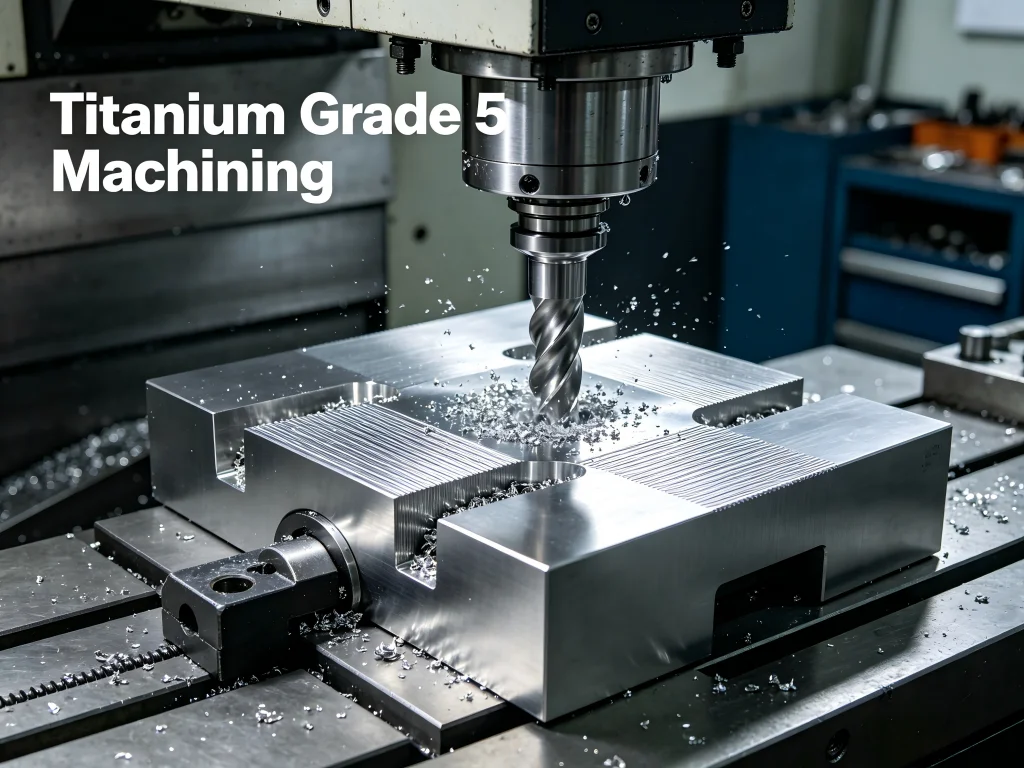
Why Titanium Grade 5 Demands a Different Approach
Before we dive into supplier selection, it is worth understanding what makes titanium Grade 5—also known as Ti-6Al-4V—such a uniquely challenging material to machine. This is not your standard aluminum or steel job. The alloy combines 6% aluminum and 4% vanadium, giving it an exceptional strength-to-weight ratio, outstanding corrosion resistance, and biocompatibility that makes it invaluable across aerospace, medical, automotive, and marine applications.
However, these same properties create significant machining difficulties. As one technical review notes, the alloy’s “poor machinability can be associated with its characteristics like high strength at elevated temperature, stronger chemical reactivity with tool materials, low specific heat, and low modulus of elasticity”. In simpler terms: titanium Grade 5 work-hardens aggressively, retains heat at the cutting edge, and wears down tooling much faster than conventional materials.
One Reddit user with hands-on experience put it this way: “Grade 5 titanium combines high strength with low thermal conductivity and aggressive work-hardening, making it one of the most demanding alloys to machine”. Another machinist on a forum observed that while titanium is not “especially challenging,” the real difference comes down to “the running speed (for same precision work)”—meaning the equipment and expertise of the shop matter enormously.
This is precisely why choosing the right CNC machining partner for titanium Grade 5 is not a commodity decision. It is a strategic partnership that directly affects your part quality, lead times, and total cost of ownership.
Understanding the Titanium Grade Landscape
To make an informed decision, you need to understand where Grade 5 fits within the broader titanium family. This knowledge will also help you evaluate whether a supplier truly understands titanium metallurgy or is simply treating it like any other metal.
Grade 5 vs. Grade 3: What’s the Difference?
A common point of confusion among procurement professionals is the distinction between commercially pure titanium grades and alloyed grades. Titanium Grade 3 is an unalloyed, high-strength titanium product with excellent corrosion resistance and good weldability. It is stronger than Grades 1 and 2 but still falls into the commercially pure category.
Titanium Grade 5, by contrast, is an alloy containing 6% aluminum and 4% vanadium. It offers significantly higher strength, fatigue resistance, and specialized application capabilities. While both materials share about 90% of their average alloy composition in common, their performance characteristics are quite different. Grade 5 is often called the “workhorse” of the aerospace industry for good reason.
For CNC machining, this difference matters enormously. Grade 3 machines more predictably, with lower tool wear and less heat generation. Grade 5 requires specialized cutting parameters, rigid tooling, and advanced cooling strategies. A shop that claims expertise in titanium Grade 5 machining should be able to articulate these differences and adjust their approach accordingly.
Grade 5 vs. Grade 6: Hardness and Application
Another comparison worth understanding is titanium Grade 5 vs. Grade 6. Grade 6, also known as Ti-5Al-2.5Sn, is an alpha-type titanium alloy with medium strength and excellent weldability. It cannot be heat-treated and strengthened, unlike Grade 5, which responds well to heat treatment.
In terms of hardness, Grade 6 typically registers around 320 Brinell and 36 Rockwell C. Grade 5 offers comparable hardness but with higher overall strength and fatigue resistance. The key takeaway for procurement decisions: Grade 5 is the go-to choice when you need the absolute best combination of strength, weight, and corrosion resistance, while Grade 6 might be suitable for applications requiring good weldability at elevated service temperatures up to 480°C.
The Critical Factors in Selecting a Titanium Grade 5 Machining Partner
Now that we have established what makes titanium Grade 5 unique, let us turn to the practical question: how do you evaluate a CNC machining supplier for this demanding material?
Equipment and Capability
Not all CNC machines are created equal when it comes to titanium Grade 5 machining. The material’s low thermal conductivity means heat builds up rapidly at the cutting zone. Without adequate spindle power, rigid construction, and advanced coolant delivery, you will see excessive tool wear, poor surface finish, and dimensional inaccuracies.
Look for a shop that operates a substantial fleet of modern CNC equipment. A provider with 150+ machines, as Jucheng maintains, has the capacity to dedicate specific cells to titanium Grade 5 work while maintaining production flexibility. This scale also indicates the financial stability to invest in the latest machining technology.
Beyond quantity, consider the types of machines available. 5-axis machining capability is particularly valuable for complex titanium components, as it reduces the number of setups and improves accuracy on contoured surfaces. Some shops also offer complementary processes like EDM and wire EDM, which can be useful for features that are difficult to achieve through conventional milling or turning.
Tooling and Cooling Strategies
One of the most telling indicators of a shop’s titanium Grade 5 expertise is its approach to tooling and coolant. As one technical paper explains, “Machining titanium with some cutting fluids and coated tools shows better performance in terms of surface quality and tool life”.
Experienced shops use carbide tools with specialized coatings (such as TiAlN or AlTiN) that can withstand the high temperatures generated during titanium Grade 5 machining. They also employ high-pressure coolant systems (often 1,000 PSI or higher) to deliver cutting fluid directly to the cutting edge, flushing away chips and reducing heat buildup.
Some advanced providers are even exploring cryogenic cooling as a way to further extend tool life and improve surface integrity. While this technology is not yet universal, a shop that stays current with such innovations is likely to be more capable overall.
Quality Certifications and Standards
For industries like aerospace and medical, quality certifications are non-negotiable. Jucheng holds both IATF 16949 (automotive quality management) and ISO 13485 (medical device quality management) certifications. These credentials demonstrate a commitment to rigorous quality systems, traceability, and continuous improvement.
When evaluating a titanium Grade 5 machining supplier, ask specifically about their quality management system. Do they perform incoming material inspection? What inspection equipment do they use (CMM, optical comparators, surface roughness testers)? How do they handle non-conforming parts? The answers to these questions will reveal a lot about their operational discipline.
Material Sourcing and Traceability
Titanium Grade 5 is a premium material, and its cost can vary significantly based on source and certification. A reputable shop should be able to provide full material traceability, including mill test reports that verify chemical composition and mechanical properties.
Some shops maintain stock of commonly used titanium grades, which can reduce lead times for prototyping and small-batch production. This is particularly valuable if you need rapid turnaround on titanium Grade 5 parts.
Making the Decision: A Practical Framework
To help you systematically evaluate potential titanium Grade 5 machining partners, consider the following framework. This is based on feedback from procurement professionals and shop floor engineers who have navigated similar decisions.
| Evaluation Criteria | What to Look For | Red Flags |
|---|---|---|
| Equipment | Modern CNC machines with high-pressure coolant, 5-axis capability | Outdated equipment, lack of coolant systems, limited axis capacity |
| Tooling | Coated carbide tooling, documented tool life data | Generic tooling, unable to specify coatings or parameters |
| Certifications | IATF 16949, ISO 13485, AS9100 where applicable | No formal quality certifications, vague about standards |
| Experience | Demonstrated titanium Grade 5 project portfolio | Limited titanium experience, treats it like steel |
| Lead Time | Realistic timelines, ability to expedite when needed | Overly optimistic promises, no rush capability |
| Communication | Responsive, technically knowledgeable sales/engineering team | Slow replies, unable to answer technical questions |
This table provides a quick reference, but the real evaluation happens through conversations and site visits (or virtual tours). Ask to see examples of titanium Grade 5 parts they have produced. Request references from customers in your industry. And most importantly, discuss their approach to the specific challenges of Ti-6Al-4V CNC machining—heat management, tool selection, and surface finish requirements.
Why Jucheng Stands Out for Titanium Grade 5 Machining
With over 150 CNC machines and a facility that spans multiple manufacturing capabilities, Jucheng has built a reputation for precision and reliability in titanium Grade 5 machining. The company’s certifications—IATF 16949 and ISO 13485—reflect a commitment to quality that goes beyond basic compliance.
Jucheng offers a comprehensive range of services that support titanium Grade 5 projects from prototype to production:
- CNC milling with 3-axis, 4-axis, and 5-axis capabilities for complex geometries
- CNC turning for cylindrical and rotational components
- Sheet metal fabrication for enclosures and structural parts
- 3D printing for rapid prototyping and additive manufacturing
- EDM and wire EDM for features requiring electrical discharge machining
What truly sets Jucheng apart, however, is the integration of these capabilities. Rather than outsourcing secondary operations, Jucheng handles everything in-house. This reduces lead times, improves quality control, and simplifies the supply chain for customers who need complete titanium Grade 5 components.
The company serves industries where titanium Grade 5 is most critical: aerospace, automotive, medical, and consumer electronics. This cross-industry experience brings valuable perspective—solutions developed for aerospace can often be adapted to medical or automotive applications with minimal modification.
For customers in Malaysia and the broader Southeast Asian region, Jucheng offers a compelling alternative to local machine shops that may lack the scale or specialized expertise for titanium Grade 5 machining. While there are material suppliers in the region, such as E Steel Sdn. Bhd. in Selangor, the machining capability to transform raw titanium into finished components requires a different level of investment and skill.
Best Practices for Titanium Grade 5 CNC Machining
Understanding the machining process itself will help you ask better questions when evaluating suppliers. Here are some key principles that experienced shops follow for titanium Grade 5 work.
Cutting Parameters
Research has shown that “the minimum tool wear was found at a lower speed and the feed rate was found to be the most significant parameters to influence the surface roughness of grade-5 materials in turning process”. This means shops must carefully balance speed and feed to optimize both tool life and surface quality.
For high-speed machining of Ti-6Al-4V, studies have explored speeds within the range of 400 to 700 m/min, with optimal surface roughness achieved at specific combinations of speed, feed, and depth of cut. The key insight is that there is no one-size-fits-all parameter set; the optimal values depend on the specific tooling, machine rigidity, and coolant strategy.
A knowledgeable shop will have developed its own parameter libraries based on extensive testing. They should be able to explain how they arrived at their recommended speeds and feeds for your specific part geometry.
Coolant and Chip Management
As noted earlier, titanium Grade 5’s low thermal conductivity means heat does not dissipate quickly through the workpiece. Instead, it concentrates at the cutting edge. High-pressure coolant is essential to “flood” the cutting zone and carry away heat.
Chip control is another critical factor. Titanium Grade 5 produces stringy, continuous chips that can wrap around the tool and cause breakage. Shops use chip breakers on inserts and adjust feed rates to produce manageable chip sizes.
Workholding and Fixturing
One Reddit user highlighted an often-overlooked challenge: “Gr. 5 (6Al-4V) titanium is a little difficult to machine but in this instance the workholding would be the most difficult part, as the scales are generally very thin and usually not of a shape that’s conducive to holding easily in a vise”.
This underscores the importance of custom fixturing for titanium Grade 5 parts. A shop that invests in dedicated workholding solutions for titanium projects demonstrates a deeper understanding of the material’s challenges.
Frequently Asked Questions About Titanium Grade 5 Machining
Based on common inquiries from procurement professionals and engineers, here are answers to the most frequently asked questions about titanium Grade 5 machining.
Is titanium Grade 5 difficult to machine?
Yes, titanium Grade 5 is considered one of the more challenging materials to machine due to its low thermal conductivity, high chemical reactivity with tool materials, and tendency to work-harden. However, with the right equipment, tooling, and coolant strategies, it can be machined efficiently and to high precision.
What is the difference between titanium Grade 5 and Grade 23?
Both are Ti-6Al-4V alloys, but Grade 23 (also known as ELI or Extra Low Interstitial) has tighter limits on oxygen and iron content. This gives Grade 23 improved ductility and fracture toughness, making it preferred for medical implants and some aerospace applications. Grade 5 is the more common general-purpose alloy.
What industries use titanium Grade 5 machined parts?
Titanium Grade 5 is widely used in aerospace for airframe structures and engine components, in medical technology for implants and surgical instruments, in automotive for high-stress components, and in marine applications. Its combination of strength, low weight, and corrosion resistance makes it versatile across demanding environments.
Can titanium Grade 5 be welded?
Yes, titanium Grade 5 can be welded using appropriate techniques and filler metals such as ERTi-5. However, welding requires careful shielding with inert gas to prevent contamination, as titanium is highly reactive at elevated temperatures.
What cutting tools are best for titanium Grade 5?
Carbide cutting tools with specialized coatings (such as TiAlN or AlTiN) are typically recommended for titanium Grade 5 machining. The coating helps reduce friction and withstand the high temperatures generated during cutting. Some shops also use polycrystalline diamond (PCD) or cubic boron nitride (CBN) tools for specific applications.
How does titanium Grade 5 compare to stainless steel for machining?
Titanium Grade 5 is generally more challenging to machine than austenitic stainless steels. One machinist noted that while titanium is “not especially challenging,” it requires different parameters and more attention to heat management. The thermal conductivity of titanium (~22 W/m·K) is roughly one-third that of carbon steel, meaning heat stays at the cutting edge much longer.
What surface finish can I expect from titanium Grade 5 CNC machining?
With optimized parameters, titanium Grade 5 can achieve surface roughness values as low as Ra = 0.51 µm. The actual finish depends on the specific operation (milling, turning, grinding), the tooling used, and the coolant strategy. A skilled shop can achieve very fine finishes suitable for demanding applications.
Is titanium Grade 5 machining expensive?
Compared to machining aluminum or standard steels, titanium Grade 5 is more expensive due to the material cost, specialized tooling requirements, and longer machining times. However, the cost is often justified by the material’s superior performance characteristics. Working with an experienced shop like Jucheng can help optimize the process and reduce overall costs through efficiency gains.
Making Your Final Decision
Choosing a partner for titanium Grade 5 machining is about more than comparing price quotes. It is about finding a shop that understands the material, has the equipment to handle it properly, and maintains the quality systems your industry requires.
Jucheng brings together the scale, certifications, and technical expertise needed for successful titanium Grade 5 projects. With 150+ CNC machines, IATF 16949 and ISO 13485 certifications, and a comprehensive range of manufacturing capabilities, Jucheng offers a one-stop solution for complex titanium components.
Whether you need rapid prototypes or full production runs, Jucheng’s team has the experience to guide your titanium Grade 5 project from design through delivery. The company’s commitment to quality and continuous improvement ensures that your parts will meet the tightest tolerances and highest performance standards.
Ready to discuss your titanium Grade 5 project? Visit Jucheng’s website to request a quote or speak with their engineering team about your specific requirements.