
The medical device industry operates within a realm where a single micron can represent the difference between a successful surgical outcome and a mechanical failure. For procurement managers and surgical engineers, the challenge of sourcing reliable endoscopy parts machining is a persistent hurdle. Whether you are dealing with rigid laparoscopes or flexible gastroscopes, the internal components demand a level of intricacy that standard machining shops simply cannot achieve. From the distal tip that houses the lens to the tiny control wire pulleys, every fraction of a millimeter is critical.
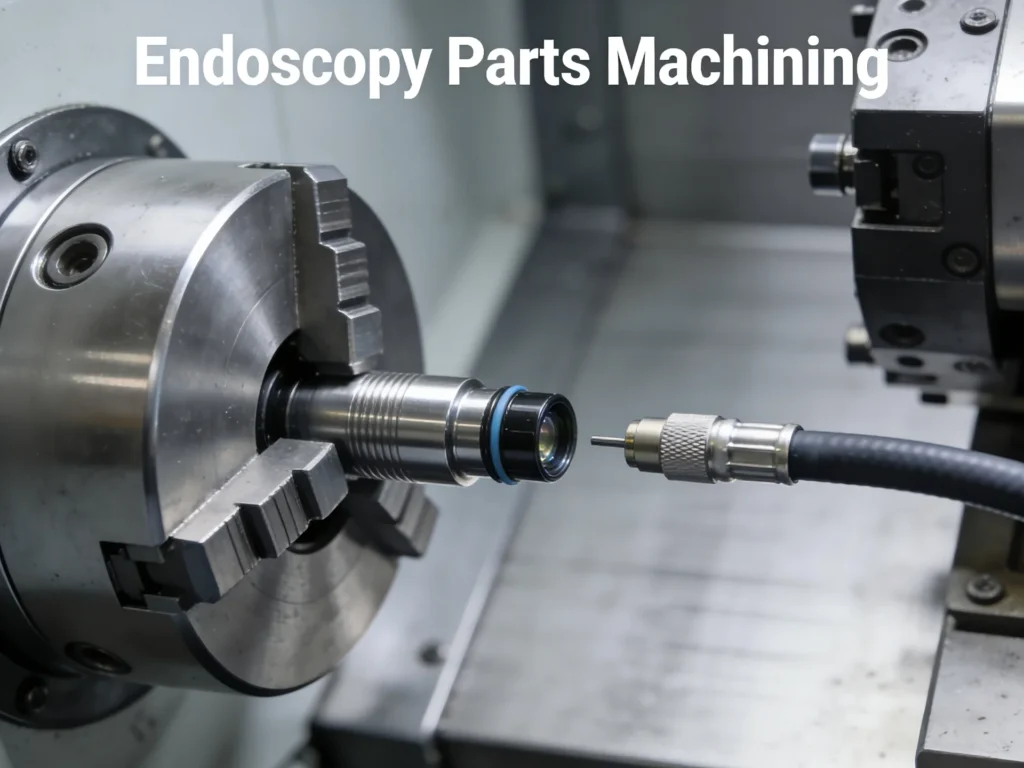 When a surgical team encounters a "foggy" image or a restricted range of motion in an endoscope, the root cause is often traced back to sub-par manufacturing or wear in the internal endoscopy machine parts. The industry frequently discusses these frustrations on platforms like Reddit and specialized medical engineering forums on Facebook. Users often lament the high cost of replacement versus the difficulty of finding specialized technicians for endoscope repair malaysia or other global hubs. This guide explores how advanced CNC technology serves as the ultimate solution to these manufacturing bottlenecks, ensuring that every endoscopy machine performs with life-saving reliability.
Understanding the Complexity: What is Endoscopy Machine Precision?
To solve the problem of component failure, we must first answer a fundamental question: what is endoscopy machine technology at its core? An endoscope is a sophisticated optical instrument designed to provide a view of the internal organs or cavities of the body. Because these devices are inserted into the human body, the endoscopy machine parts name list includes items that must be both biocompatible and incredibly small. Typical components include the distal tip, the bending section, the insertion tube, and the control handle.
The process of endoscopy parts machining involves the use of high-precision CNC (Computer Numerical Control) Swiss-style lathes and 5-axis milling machines. These machines are capable of working with exotic materials like Grade 5 Titanium and 316L Stainless Steel. The engineering intent is to create a seamless interface between the mechanical housing and the delicate optical fibers or CMOS sensors. This is where the endoscopy print or technical blueprint becomes a vital document, outlining tolerances that are often tighter than +/- 0.005mm.
The Essential Endoscopy Equipment List
When setting up a diagnostic suite or a manufacturing line, understanding what equipment is used for endoscopy is the first step toward quality control. A standard system is comprised of several high-tech layers, each requiring specific machining expertise:
- The Endoscope: The primary tool, either flexible or rigid.
- Light Source: Xenon or LED systems that require heat-sink machining.
- Video Processor: The “brain” that converts signals into images.
- Insufflator: Controls gas flow, requiring precise valve components.
- Monitor and Recording Hub: Often requires custom-machined mounting brackets.
For those managing a facility, the endoscopy equipment list extends beyond the scope itself to include cleaning stations and leak testers, all of which rely on high-quality endoscopy machine parts to maintain airtight seals and fluid-path integrity.
Critical Applications: Where Precision Meets the Patient
The application of endoscopy parts machining is not limited to a single medical field. Instead, it spans across various surgical and diagnostic disciplines. Modern endoscopy equipment manufacturers must cater to a diverse range of types of endoscopy machine, each with unique mechanical requirements. For instance, an arthroscope used in joint surgery must be exceptionally rigid and thin, whereas a colonoscope requires a highly flexible insertion tube with complex internal steering mechanisms.
In the automotive and industrial sectors, “borescopes” (a cousin of the medical endoscope) are used for engine inspections. However, in the medical world, the stakes are significantly higher. Machining for these applications requires a “burr-free” guarantee. On professional forums, engineers often highlight that even a microscopic metal burr left on an endoscopy machine parts name such as a biopsy channel port can cause tissue trauma or harbor bacteria, leading to post-operative infections. This is why specialized endoscopy parts machining focus heavily on electropolishing and ultrasonic cleaning as part of the production cycle.
Material Selection and Buying Factors
Choosing the right partner for endoscopy parts machining requires a deep dive into material science. You cannot simply use any grade of aluminum or steel. The materials must withstand the harsh environment of an autoclave (high-pressure steam sterilization) or aggressive chemical disinfectants. Below is a comparison of materials commonly used in the manufacture of endoscopy machine parts:
| Material Type | Common Components | Primary Benefit | Machining Challenge |
|---|---|---|---|
| 316L Stainless Steel | Distal tips, connectors, tubes | Excellent corrosion resistance | Work hardening during CNC milling |
| Titanium (Grade 5) | Structural frames, micro-screws | High strength-to-weight ratio | Requires specialized cooling and tools |
| PEEK (Polyetheretherketone) | Insulators, spacers, handles | Biocompatible and radiolucent | High thermal expansion during cutting |
| Nitinol (Nickel-Titanium) | Guide wires, forceps shafts | Shape memory and elasticity | Extremely difficult to machine traditionally |
When evaluating endoscopy equipment manufacturers, potential buyers must look beyond the price tag. The real value lies in the manufacturer’s ability to provide endoscopy parts machining that adheres to ISO 13485 standards. This certification ensures that the quality management system is specifically tailored to the medical device industry, providing full traceability for every endoscopy machine parts produced.
Optimizing Longevity: Installation and Maintenance
A common pain point discussed in the industry—particularly in growing medical hubs like endoscope repair malaysia—is the premature failure of components due to poor maintenance or improper installation. Even the most perfectly machined part will fail if not handled correctly. Proper endoscopy parts machining includes considerations for how parts will be assembled. For example, threads must be designed for frequent disassembly during repair cycles without stripping.
To maintain the integrity of endoscopy machine parts, technicians should follow a strict protocol:
- Visual Inspection: Use magnification to check for cracks or wear on the distal tip.
- Leak Testing: Ensure that the machined housings have not lost their hermetic seal.
- Lubrication: Use medical-grade lubricants on moving machined joints to reduce friction.
- Sterilization Compatibility: Verify that the endoscopy machine components are compatible with the specific sterilization method (STERRAD, ETO, or Autoclave).
For organizations looking to reduce long-term costs, investing in high-quality endoscopy parts machining from the outset is the most effective strategy. Low-quality parts often lead to “fluid invasion,” the number one killer of expensive endoscopy optics. By sourcing parts that meet exact endoscopy print specifications, you ensure a tight seal that protects the internal electronics.
Why Jucheng is the Leader in Endoscopy Parts Machining
In the competitive landscape of medical manufacturing, jucheng stands out as a premier partner for high-precision endoscopy parts machining. Our facility is equipped with the latest Swiss CNC lathes and multi-axis machining centers specifically calibrated for the tight tolerances required by the medical industry. We understand that when you are looking for endoscopy machine parts, you are looking for more than just a component; you are looking for a guarantee of patient safety.
At jucheng, our expertise extends across the entire endoscopy equipment list. We have assisted numerous endoscopy equipment manufacturers in transitioning from prototype to mass production. Our engineering team provides “Design for Manufacturing” (DFM) feedback, helping you optimize your endoscopy print to reduce costs while improving part performance. Whether you are a large-scale OEM or a specialized clinic in need of endoscope repair malaysia support parts, our commitment to quality is unwavering.
Our technical advantages include:
- Ultra-Precision Capabilities: Achieving tolerances as tight as 0.002mm for critical endoscopy machine parts.
- Advanced Surface Finishing: Specialized deburring and polishing processes that exceed medical safety standards.
- Material Versatility: Expertise in machining medical-grade plastics, stainless steel, and titanium.
- Quality Assurance: Comprehensive inspection reports and material certifications provided with every order.
Frequently Asked Questions
1. What are the most common endoscopy machine parts that require replacement?
The most frequently replaced items include the distal tip housing, the bending section mesh, control knobs, and biopsy channel inlets. These components endure the most physical stress and chemical exposure during surgical procedures and subsequent sterilization.
2. Why is Swiss CNC machining preferred for endoscopy parts machining?
Swiss machining is ideal because endoscope parts are typically long, thin, and small. The sliding headstock on a Swiss lathe provides extra support close to the cutting tool, preventing the part from flexing and allowing for extreme precision that standard lathes cannot match.
3. How can I identify the correct endoscopy machine parts name for my order?
It is always best to refer to your original equipment manufacturer (OEM) manual or your endoscopy print. Common names include the ‘C-Cover’, ‘Air/Water Channel’, and ‘Grip Housing’. If you are unsure, jucheng can help identify parts based on samples or technical drawings.
4. Do you support small-batch production for specialized endoscopy machine designs?
Yes, we cater to both high-volume production and small-batch prototyping. We understand that the medical field is constantly evolving with new types of endoscopy machine being developed for niche procedures, and we offer the flexibility to support these innovations.
5. Is the machining process different for industrial versus medical endoscopes?
While the mechanical principles are similar, medical endoscopy parts machining requires much stricter adherence to biocompatibility standards and surface finish requirements. Medical parts must be completely free of contaminants and burrs to prevent infection, whereas industrial parts focus more on durability against oils and heat.
6. What role does endoscopy print play in the manufacturing process?
The endoscopy print is the definitive guide for the machinist. It specifies dimensions, tolerances, material requirements, and surface finishes. A high-quality print is essential for ensuring that the final endoscopy machine parts fit perfectly within the complex assembly of the device.
Conclusion: Partnering for Surgical Excellence
Navigating the complexities of endoscopy parts machining requires a partner who understands the high stakes of the medical industry. From the initial endoscopy print to the final quality inspection, every step must be executed with a commitment to precision and safety. By choosing jucheng, you are ensuring that your endoscopy machine is built with components that meet the highest global standards.
If you are facing challenges with part durability, precision, or lead times, it is time to upgrade your supply chain. Jucheng offers the technical expertise and state-of-the-art technology to bring your medical device designs to life, ensuring that healthcare providers can focus on what matters most: patient care.
Ready to Elevate Your Medical Device Precision?
Contact jucheng today for a detailed consultation on your endoscopy parts machining needs. Our experts are standing by to provide a competitive quote and technical DFM support.