
You have been searching for a supplier who can consistently deliver PEEK manifolds machining that meets your tolerance requirements—only to receive quotes that stretch delivery timelines or parts that fail dimensional inspection after thermal cycling. This scenario plays out more often than many procurement professionals care to admit. The challenge is not simply finding a shop with CNC equipment; it is finding one that understands how PEEK manifolds machining differs fundamentally from machining metals or standard plastics. This guide walks through why PEEK manifolds present unique difficulties, how to evaluate a machining partner, and what practical steps lead to successful outcomes.
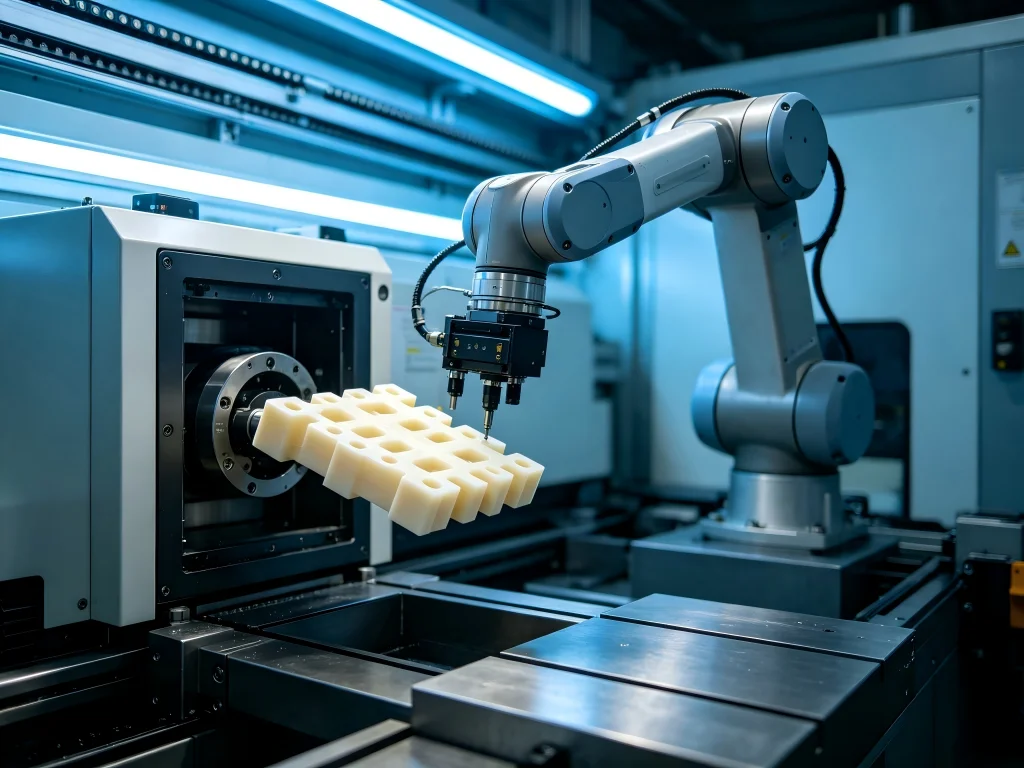
The Real Cost of Choosing the Wrong PEEK Manifold Supplier
A senior procurement manager at a medical device OEM recently shared a familiar story on a machining forum. His team had awarded a contract for PEEK manifolds machining to a general-purpose CNC shop based solely on competitive pricing. The first batch passed incoming inspection. Three weeks later—after the manifolds had been assembled into fluid handling systems and subjected to sterilization cycles—four out of ten units developed stress cracks around the port threads. The shop had not accounted for PEEK’s tendency to release internal stresses after material removal. The result: an emergency redesign, expedited shipping costs, and a six-week delay in product launch.
This is not an isolated incident. Across Reddit’s r/CNC and r/manufacturing communities, engineers frequently discuss similar frustrations. One thread titled “PEEK machining nightmare—help” describes a batch of manifolds that warped 0.15 mm after overnight cooling, rendering them unusable for a high-pressure chromatography application. Another user noted that their shop used standard carbide tooling intended for aluminum, which caused excessive heat buildup and surface melting around the manifold’s internal channels. These real-world accounts underscore a critical point: PEEK manifolds machining demands a specialized approach that many job shops simply cannot provide.
What Makes PEEK Manifolds Machining So Difficult?
Before exploring solutions, it helps to understand the material itself. PEEK—polyetheretherketone—is a semi-crystalline thermoplastic with exceptional mechanical and thermal properties. It maintains structural integrity at continuous service temperatures up to 250°C, resists a wide range of chemicals, and offers a strength-to-weight ratio comparable to aluminum. These attributes make it ideal for manifolds in aerospace hydraulic systems, medical fluid delivery devices, oil and gas downhole equipment, and semiconductor manufacturing.
However, the very properties that make PEEK desirable also create machining challenges. Consider three core difficulties:
1. Thermal Management Is Non-Negotiable
PEEK has low thermal conductivity—approximately 0.25 W/m·K. Heat generated during cutting does not dissipate quickly into the workpiece. Instead, it accumulates at the tool-workpiece interface. If cutting parameters are not carefully controlled, localized temperatures can exceed PEEK’s glass transition temperature of 143°C, causing the material to soften, smear, or even melt. This leads to poor surface finish, dimensional inaccuracy, and accelerated tool wear. One machinist on a professional forum noted that running PEEK at the same speeds and feeds as acetal produced burned edges and chatter marks on every part.
2. Internal Stress Release Causes Post-Machining Movement
PEEK is typically supplied as extruded rod or molded block. Both manufacturing processes introduce internal stresses. When material is removed during PEEK manifolds machining, these stresses redistribute. The result can be warping, twisting, or dimensional drift that only becomes apparent hours or days after machining. This is particularly problematic for manifolds with thin walls or complex internal port geometries. A part that measures perfectly on the CMM immediately after machining may be out of tolerance by the time it reaches assembly.
3. Tooling and Chip Control Require Precision
PEEK does not produce clean, brittle chips like metals. Instead, it tends to form continuous strings or ribbons that can wrap around the tool, interfere with cutting, and damage the machined surface. Reinforced grades—carbon-filled or glass-filled PEEK—introduce additional abrasiveness that accelerates tool wear. Using the wrong tool geometry or failing to manage chip evacuation can result in burrs, edge delamination, and surface defects that compromise the manifold’s sealing performance.
How Jucheng Approaches PEEK Manifolds Machining Differently
Jucheng has built its reputation on solving precisely these types of challenges. The company’s approach to PEEK manifolds machining is grounded in material science rather than generic CNC programming. This distinction matters because PEEK behaves differently than metals or lower-temperature plastics. Treating it like aluminum or even nylon invites failure. Treating it as a unique material with specific thermal, mechanical, and stress-related behaviors enables consistent, repeatable results.
Material-Grade Awareness and Pre-Processing
Not all PEEK is the same. Unfilled PEEK machines differently than carbon-filled or glass-filled grades. Each formulation responds differently to cutting forces, heat, and tool wear. Jucheng’s team evaluates the specific grade specified for each project and adjusts the machining strategy accordingly. For critical applications, the company recommends annealing raw PEEK stock before machining. This process involves heating the material to around 200°C, holding it for several hours, and then cooling it slowly to room temperature. Annealing relieves internal stresses at the source, reducing the likelihood of post-machining distortion.
Tooling Strategy: Sharp, Dedicated, and Grade-Appropriate
Tool selection for PEEK manifolds machining is not an afterthought—it is a primary determinant of success. Jucheng uses micro-grain solid carbide tools with positive rake angles and polished flutes for virgin and lightly filled PEEK grades. These tools stay sharp longer and reduce cutting friction, which minimizes heat generation. For carbon-filled PEEK or high-volume production runs, polycrystalline diamond (PCD) tooling is recommended. While PCD tools have higher upfront costs, they offer significantly greater wear resistance and maintain dimensional consistency over extended runs. Importantly, Jucheng never uses tools that have previously cut metals on PEEK jobs—cross-contamination can introduce microscopic nicks that degrade surface finish.
Thermal Control Through Process Design
Managing heat during PEEK manifolds machining requires more than selecting the right coolant. Jucheng employs a combination of strategies: optimized cutting parameters that balance speed and feed to minimize heat input, continuous air blast or minimum quantity lubrication (MQL) instead of flood coolant that can thermally shock the material, and toolpaths designed to avoid prolonged engagement in any single area. The company also machines PEEK in climate-controlled environments to maintain consistent ambient conditions. These measures prevent the localized heat accumulation that causes melting, smearing, and dimensional instability.
Multi-Stage Machining with Stress Relief Intermediates
For complex manifolds with tight tolerances, Jucheng employs a staged approach. Rough machining removes the bulk of material. The part then undergoes a stress-relief cycle before finishing operations commence. This intermediate step allows internal stresses to stabilize, so the finishing cuts can achieve the final dimensions without subsequent movement. For particularly demanding applications, the company may incorporate additional stress-relief cycles between semi-finishing and finishing passes. This disciplined approach reduces scrap rates and ensures that parts remain within tolerance throughout their service life.
Key Applications Where PEEK Manifolds Machining Excels
PEEK manifolds serve critical functions across multiple industries. Understanding these applications helps procurement teams articulate their requirements more precisely and evaluate whether a supplier has relevant experience.
Aerospace and Defense
In aerospace, weight reduction is a constant priority. PEEK manifolds replace heavier metal components in hydraulic systems, fuel delivery networks, and environmental control systems. The material’s resistance to thermal cycling and aggressive fluids makes it suitable for both commercial and military aircraft. Manifolds in these applications often feature complex internal passages, multiple port configurations, and tight tolerances that demand multi-axis machining capability.
Medical Devices and Life Sciences
PEEK’s biocompatibility and chemical inertness make it a material of choice for medical fluid handling. Microfluidic manifolds used in point-of-care diagnostic devices, drug delivery systems, and surgical instruments require exceptionally clean surfaces, burr-free edges, and precise internal channel dimensions. A single burr or surface defect can compromise sterility or alter flow rates. Medical-grade PEEK manifolds machining demands ISO-compliant processes and rigorous quality control.
Oil and Gas
Downhole environments present extreme conditions: high pressures, elevated temperatures, and corrosive chemicals. PEEK manifolds used in wellhead equipment, valves, and sensors must maintain dimensional stability and sealing integrity under these harsh conditions. The material’s resistance to hydrogen sulfide and other aggressive compounds makes it preferable to many metals in these applications.
Semiconductor and Analytical Instrumentation
Ultra-pure fluid handling is essential in semiconductor manufacturing and analytical chemistry. PEEK manifolds offer low extractables and minimal outgassing, making them suitable for applications where contamination cannot be tolerated. High-performance liquid chromatography (HPLC) systems frequently use PEEK manifolds to distribute solvents and samples without introducing metallic ions or other impurities.
What to Look for in a PEEK Manifolds Machining Partner
Selecting a supplier for PEEK manifolds machining requires evaluating capabilities beyond the standard checklist of CNC equipment and quality certifications. The following factors distinguish capable partners from those likely to produce problematic parts.
Material Expertise and Process Transparency
A supplier should demonstrate understanding of PEEK’s unique behaviors: thermal sensitivity, stress relaxation, and tool wear characteristics. Ask about their approach to annealing, tool selection, and thermal management. A partner who cannot articulate these details may lack the experience necessary for consistent results. Jucheng’s team provides process documentation and can explain how they adapt strategies for different PEEK grades.
Multi-Axis Machining Capability
Complex manifolds often require 4-axis or 5-axis machining to reach internal features from multiple angles. Multi-axis capability reduces the number of setups required, which improves accuracy and reduces handling-induced stress. It also enables the creation of intricate internal passages that would be impossible with 3-axis equipment. Jucheng operates advanced multi-axis CNC centers that can handle manifolds with demanding geometries.
Quality Assurance and Traceability
For critical applications, traceability matters. A supplier should maintain records of material certifications, machining parameters, inspection results, and any post-processing steps. Jucheng’s ISO-compliant quality system provides full traceability from raw material to finished part. This documentation supports regulatory compliance and simplifies audits.
Lead Time Realism
PEEK manifolds machining cannot be rushed. Proper annealing, staged machining with stress-relief intervals, and careful inspection take time. A supplier who promises extremely short lead times may be cutting corners on critical steps. Jucheng provides realistic schedules that account for the necessary process steps, reducing the risk of expedited rework or rejected batches.
Practical Steps for Successful PEEK Manifolds Machining
Whether you are preparing a request for quotation or managing an ongoing production program, these practical steps help ensure successful outcomes.
Step 1: Define Requirements Clearly
Provide complete specifications: material grade (unfilled, carbon-filled, glass-filled, or medical grade), dimensional tolerances, surface finish requirements, and any special testing or certification needs. The more detail you provide upfront, the more accurately a supplier can quote and plan the job.
Step 2: Discuss Process Controls
Ask potential suppliers about their approach to thermal management, tooling, and stress relief. Request examples of similar PEEK manifolds machining projects they have completed. A supplier with relevant experience should be able to share case studies or reference parts.
Step 3: Plan for First-Article Inspection
For new projects, plan a first-article inspection that includes both immediate measurements and follow-up measurements after a stabilization period. This approach catches stress-related movement before full production begins. Jucheng’s quality team performs this type of validation as part of their standard process.
Step 4: Establish Clear Communication Channels
Maintain open communication with your machining partner throughout the project. Discuss any design changes, tolerance adjustments, or material substitutions as early as possible. Early notification prevents costly rework and keeps the project on schedule.
Frequently Asked Questions About PEEK Manifolds Machining
What is the typical tolerance achievable with PEEK manifolds machining?
With proper tooling, thermal control, and process discipline, PEEK manifolds machining can achieve tolerances of ±0.01 mm or better. However, achieving these tolerances consistently requires careful attention to material preparation, cutting parameters, and environmental conditions. Not every shop can deliver this level of precision reliably.
How does PEEK manifolds machining compare to injection molding for PEEK parts?
CNC machining is preferred for prototypes, low-volume production, and parts with complex geometries that would be expensive or impossible to mold. Injection molding offers cost advantages for high-volume production but requires significant upfront tooling investment and is less flexible for design changes. For manifolds with intricate internal passages or custom port configurations, machining is often the only practical option.
What tool materials work best for PEEK manifolds machining?
Micro-grain solid carbide tools with positive rake angles and polished flutes are suitable for unfilled and lightly filled PEEK grades. For carbon-filled PEEK or high-volume production, polycrystalline diamond (PCD) tooling provides superior wear resistance and dimensional consistency. Diamond-coated tools should be avoided, as the diamond can react with carbon in PEEK at high temperatures.
Why do some PEEK manifolds warp after machining?
Warpage typically results from internal stress release. PEEK stock contains residual stresses from extrusion or molding. When material is removed during machining, these stresses redistribute, causing dimensional changes. Annealing the raw stock before machining and incorporating stress-relief cycles between roughing and finishing operations minimizes this effect.
Can PEEK manifolds be machined on standard CNC equipment?
Standard CNC equipment can machine PEEK, but success depends on the operator’s understanding of the material’s unique behaviors. Using metal-cutting parameters or general-purpose tooling often produces poor results. Specialized knowledge of thermal management, tool selection, and stress control is essential for consistent quality.
What industries commonly use machined PEEK manifolds?
Machined PEEK manifolds are used in aerospace, medical devices, oil and gas, semiconductor manufacturing, analytical instrumentation, and automotive applications. Any industry requiring lightweight, chemically resistant, and thermally stable fluid handling components may specify PEEK manifolds.
How does the cost of PEEK manifolds machining compare to metal manifolds?
PEEK material costs are higher than common metals like aluminum or stainless steel. However, PEEK manifolds often eliminate the need for secondary coatings or corrosion treatments required for metal parts. The total cost comparison depends on the specific application, production volume, and performance requirements.
What quality certifications should a PEEK manifolds machining supplier hold?
ISO 9001:2015 certification is standard for quality management systems. For medical applications, ISO 13485 may be required. Additional certifications such as AS9100 for aerospace or specific customer approvals may apply depending on the industry and application.
Why Jucheng Stands Out in PEEK Manifolds Machining
Jucheng’s approach to PEEK manifolds machining combines material science expertise, advanced multi-axis CNC capability, and rigorous quality control. The company’s team understands that PEEK is not simply a plastic to be cut—it is a high-performance material that demands respect and specialized handling. From pre-machining annealing to post-machining inspection, every step is designed to deliver parts that meet specifications and perform reliably in service.
Jucheng’s facility is equipped with state-of-the-art CNC machining centers capable of handling complex manifold geometries. The company’s quality system provides full traceability, and its engineering team works closely with clients to optimize designs for manufacturability. Whether you need prototype development, low-volume production, or ongoing manufacturing support, Jucheng offers the expertise and infrastructure to deliver consistent results.
For procurement professionals and engineers seeking a reliable partner for PEEK manifolds machining, Jucheng represents a proven choice. The company’s track record spans multiple industries, and its commitment to process discipline ensures that parts meet the most demanding specifications.
Contact Jucheng today to discuss your PEEK manifolds machining requirements. Their team can provide guidance on material selection, design optimization, and production planning to help you achieve the best possible outcomes for your application.