
Selecting a manufacturing partner for peek cnc machining is a high-stakes decision. The material itself is expensive—often costing between $80 and $150 per kilogram for standard grades, with certified medical or aerospace grades reaching $300 to $600 or more per kilogram. The process is technically demanding, and the wrong choice can lead to warped parts, missed tolerances, and scrapped components that carry significant material costs. This guide is designed to help you navigate the selection process. We will compare the critical factors that distinguish a reliable PEEK machining partner from a generalist shop, examine how different providers approach the unique challenges of this high-performance polymer, and show you why Jucheng has become a trusted name for engineers and procurement professionals worldwide.
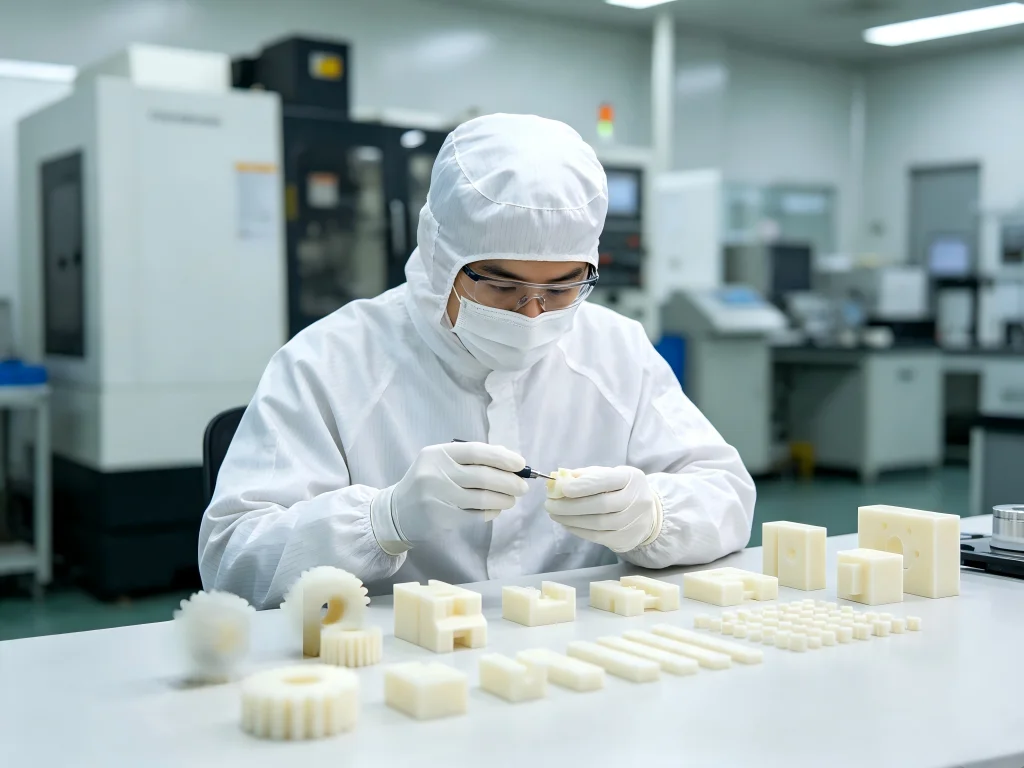
Understanding the Challenge: Why PEEK CNC Machining Is Different
Before comparing service providers, it is essential to understand what makes peek cnc machining uniquely difficult. PEEK (Polyether Ether Ketone) is a semi-crystalline thermoplastic known for its exceptional strength, thermal stability, and chemical resistance. It maintains mechanical properties up to 260°C continuously and has a melting point around 343°C. These properties make it an ideal metal replacement in extreme environments, but they also introduce specific machining challenges that many shops are not equipped to handle.
One of the primary difficulties is thermal management. PEEK has low thermal conductivity, meaning heat generated during cutting does not dissipate quickly. If thermal energy is not carefully managed, it accumulates in the part, increasing the risk of distortion, internal stress, and dimensional instability. This is not a problem that can be solved with standard CNC parameters. It requires a disciplined approach to tool selection, cutting speeds, feed rates, and cooling strategies.
Another significant challenge is internal stress. The process of manufacturing PEEK stock—whether through extrusion or molding—can trap considerable internal stress within the material. When you begin machining, you are cutting away those stressed outer layers. This can cause the material to move, warp, or bend right on the machine. A perfectly straight cut can become a banana shape. The solution is a carefully controlled annealing process, where the material is heated in an oven for many hours at a precise temperature before, and sometimes during, the machining process.
These challenges mean that peek cnc machining is not just a job; it is an exercise in precision and discipline. When evaluating potential partners, you are not just comparing prices—you are comparing process knowledge, material expertise, and quality systems.
Key Factors in Choosing a PEEK CNC Machining Partner
When procurement teams and engineers evaluate potential suppliers for peek cnc machining services, several factors consistently emerge as critical decision points. The following comparison table outlines these factors and illustrates how different types of providers typically perform.
| Selection Factor | General Machine Shop | Specialized PEEK Provider | Jucheng Precision |
|---|---|---|---|
| Material Expertise | Treats PEEK like standard plastic; limited understanding of grades | Deep knowledge of virgin, glass-filled, carbon-filled, and implantable grades | Extensive expertise across all PEEK grades; sources from certified manufacturers |
| Thermal Management | Uses standard metal-cutting parameters; risk of heat buildup | Optimized cutting speeds, feeds, and cooling strategies | Specialized protocols with sharp, positive-rake carbide tools and controlled cooling |
| Stress Relief (Annealing) | Often skipped or improperly performed | Recognized as essential; performed before and during machining | Rigorous annealing process to prevent warping and ensure dimensional stability |
| Quality Certifications | ISO 9001 at best | ISO 13485, AS9100, or IATF 16949 | ISO 9001:2015, ISO 14001, ISO 13485, IATF 16949 |
| Equipment & Capacity | Limited multi-axis capability; may outsource | Dedicated 5-axis machines for complex geometries | 150+ CNC machines including 25+ 5-axis centers |
| Scrap & Waste Management | High scrap rates; cost passed to customer | Low scrap rates through process optimization | Zero-scrap goal; recognizes that PEEK waste must be minimized |
| Lead Time & Responsiveness | Standard lead times; limited flexibility | Faster turnaround for prototypes and low-volume production | Quotes within hours; parts in as fast as 4 days |
Evaluating Provider Capabilities: A Deeper Look
Material Grades and Application Fit
Not all PEEK is the same. Different grades offer different properties, and a capable machining partner must understand these differences. Virgin PEEK (unfilled) offers the highest toughness and elongation, making it ideal for medical instruments and electrical insulators. Glass-filled PEEK (typically 30% glass fibers) provides significantly higher stiffness and creep resistance, along with a lower thermal expansion rate. However, it is more abrasive to tools. Carbon-filled PEEK (30% carbon fibers) delivers the highest strength and stiffness, excellent wear resistance, and thermal conductivity. It is the ultimate metal replacement for high-performance gears, pump vanes, and aerospace brackets. Bearing grade PEEK is blended with PTFE, graphite, and carbon fiber for the lowest coefficient of friction, making it ideal for bushings, bearings, and dynamic seals. Medical implant grade PEEK, such as PEEK-OPTIMA® from Invibio, is manufactured under strict controls for permanent implantation and meets FDA and ISO 10993 requirements.
When you evaluate a peek cnc machining service, ask about their experience with your specific grade. A provider who treats all PEEK the same is likely to produce inconsistent results.
The Importance of Process Discipline
Machining PEEK successfully requires a fundamentally different approach than machining metals or lower-grade plastics. Tool selection and geometry must be optimized specifically for polymer cutting behavior. Cutting speeds and feeds must be tightly controlled to minimize heat buildup while maintaining surface integrity. Fixturing strategy also plays a critical role—poorly supported parts can distort as material is removed, especially in thin or asymmetrical geometries.
One of the most critical process steps is the separation of rough and finish machining. Rough machining removes excess material quickly, while finish machining focuses on dimensional accuracy and surface quality. This approach reduces thermal deformation during machining and improves final dimensional stability. Many generalist shops attempt to complete PEEK parts in a single pass, which almost always leads to problems.
Quality Systems and Traceability
For industries like medical devices, aerospace, and semiconductor manufacturing, quality systems are not optional—they are essential. A provider with ISO 13485 certification demonstrates that their manufacturing processes are built on risk management and regulatory compliance. This is particularly important for medical-grade PEEK components, where a single coolant contaminant, residual stress crack, or surface micro-defect can cause a device recall affecting thousands of patients.
Traceability is another critical factor. A reliable peek cnc machining partner should be able to provide full material traceability from the resin to the finished part, including mill test reports (MTRs) and bio-data certificates for medical grades. This level of documentation is not just good practice—it is often a regulatory requirement.
Why Jucheng Stands Out in PEEK CNC Machining
Jucheng Precision has built a reputation as a trusted partner for peek cnc machining by combining technical expertise, rigorous quality systems, and significant manufacturing capacity. Founded in Shenzhen in 2012, the company has grown into a large-scale rapid prototyping manufacturer with 190+ employees, including 30 highly skilled engineers. Their facility covers 8,000 square meters and houses 150+ CNC machines, including 25+ 5-axis centers from Haas and Mazak. This equipment fleet allows them to handle projects of any scale, from single prototypes to low-volume production runs.
What truly distinguishes Jucheng, however, is their specialized approach to PEEK. They have developed proprietary protocols for machining this challenging material, including rigorous annealing processes to prevent warping and a zero-scrap goal that reflects their understanding of PEEK’s high material cost. Their expertise spans all PEEK grades, from standard virgin PEEK to specialized carbon-filled and implantable grades.
Jucheng’s quality certifications are another significant differentiator. They hold ISO 9001:2015, ISO 14001, ISO 13485, and IATF 16949 certifications, demonstrating their commitment to quality across multiple industries. Their metrology lab features advanced equipment including CMM, optical comparator, surface profilometer, and hardness tester, ensuring every part meets specifications with typical tolerances of ±0.005mm.
For medical applications, Jucheng has integrated their advanced peek cnc machining expertise with a rigorous ISO 13485 quality management system. They operate dedicated medical device manufacturing lines within cleanroom environments and offer full material traceability, biocompatible resins, and zero-defect quality control. This makes them a preferred partner for spinal fusion cages, cranial implants, and other surgical components.
Beyond technical capability, Jucheng offers practical advantages that matter to procurement teams. They provide quotes within hours and can deliver parts in as fast as 4 days. Their one-stop service model—from prototype verification to batch production—simplifies the supply chain and reduces the administrative burden of managing multiple vendors.
Real-World Applications of PEEK CNC Machining
Understanding the applications of peek cnc machining can help you evaluate whether a potential partner has relevant experience. PEEK is used across a wide range of demanding industries:
- Medical Devices: PEEK’s biocompatibility and radiolucency make it ideal for spinal fusion cages, cranial implants, dental abutments, and surgical instruments. Medical-grade PEEK meets ISO 10993 and USP Class VI standards for bodily contact.
- Aerospace: PEEK’s high strength-to-weight ratio and thermal stability make it suitable for structural components, brackets, and insulators that must perform in extreme environments.
- Semiconductor: PEEK’s chemical resistance and dimensional stability make it valuable for wafer carriers, electrical insulators, and cleanroom components.
- Oil and Gas: PEEK’s resistance to hydrolysis and harsh chemicals makes it suitable for downhole drilling components, seals, and backup rings.
- Automotive: PEEK is used in high-performance engines, transmissions, and braking systems where weight reduction and heat resistance are critical.
When selecting a peek cnc machining partner, ask about their experience in your specific industry. A provider who has worked on similar applications will understand the regulatory requirements, material specifications, and quality expectations.
Frequently Asked Questions About PEEK CNC Machining
What is PEEK CNC machining?
Peek cnc machining is a subtractive manufacturing process that uses computer numerical control (CNC) machines to shape PEEK (Polyether Ether Ketone) stock—typically in the form of sheets, rods, or tubes—into finished components. Common operations include milling, turning, drilling, and grinding. The process is used to create complex geometries with tight tolerances for demanding applications in medical, aerospace, semiconductor, and other high-performance industries.
Why is PEEK so expensive to machine?
PEEK is expensive for several reasons. First, the raw material itself is costly—typically $80–$150 per kilogram for standard grades and significantly more for certified medical or aerospace grades. Second, the machining process is slower and more technically demanding than machining standard plastics or metals. Heat management, tool wear, and the need for annealing all add to the cost. Third, the risk of scrap is higher because PEEK is sensitive to machining parameters. A capable peek cnc machining provider will minimize waste through process optimization, but the material cost remains a significant factor.
What tolerances can PEEK CNC machining achieve?
With the right equipment and process control, peek cnc machining can achieve very tight tolerances. Jucheng routinely achieves tolerances of ±0.005mm. Other providers typically offer standard tolerances of ±0.02mm to ±0.05mm for PEEK components. The achievable tolerance depends on the part geometry, the specific PEEK grade, and the provider’s expertise. Thin-wall sections, tight radii, and complex features require careful process control.
What is the difference between virgin PEEK and filled PEEK?
Virgin PEEK is the unfilled, base polymer. It offers the highest toughness and elongation of all PEEK grades and is chemically inert. Filled PEEK grades incorporate reinforcements to enhance specific properties. Glass-filled PEEK (typically 30% glass fibers) provides significantly higher stiffness and creep resistance but is more abrasive to tools. Carbon-filled PEEK (typically 30% carbon fibers) delivers the highest strength and stiffness, along with improved wear resistance and thermal conductivity. The choice between virgin and filled PEEK depends on the application requirements.
How does annealing affect PEEK CNC machining?
Annealing is a critical process step in peek cnc machining. PEEK stock can contain significant internal stress from the manufacturing process. If you machine the material without first relieving this stress, the part can warp or bend as the stressed layers are removed. Annealing involves heating the material in an oven for many hours at a precise temperature to relieve these internal stresses. Some providers also perform intermediate annealing during the machining process for particularly demanding parts.
What industries use PEEK CNC machined parts?
Peek cnc machining serves a wide range of industries. In medical devices, PEEK is used for implants, surgical instruments, and diagnostic equipment. In aerospace, it is used for structural components, insulators, and brackets. In semiconductor manufacturing, it is used for wafer carriers, electrical insulators, and cleanroom components. Other industries include automotive, oil and gas, chemical processing, and food processing.
How do I choose between PEEK and metal for my application?
PEEK offers several advantages over metal. It is about 50% lighter than aluminum while offering comparable tensile strength. It is chemically resistant to a wide range of solvents and can withstand continuous operating temperatures of 260°C. It is also radiolucent, making it visible in X-rays—unlike metal. However, PEEK is more expensive than many metals and requires specialized machining expertise. The choice between PEEK and metal depends on your specific application requirements, including weight, chemical exposure, temperature, and regulatory considerations.
Making Your Decision: A Practical Checklist
When you are ready to select a peek cnc machining partner, use this checklist to guide your evaluation:
- Material Expertise: Does the provider have experience with your specific PEEK grade? Can they explain the differences between virgin, glass-filled, carbon-filled, and medical grades?
- Process Control: Do they have documented protocols for thermal management, tool selection, and annealing? Do they separate rough and finish machining?
- Quality Systems: What certifications do they hold? ISO 13485 is critical for medical applications. IATF 16949 is important for automotive.
- Equipment: Do they have the right equipment for your part geometry? Multi-axis capability is essential for complex parts.
- Traceability: Can they provide full material traceability from resin to finished part?
- Lead Time: What is their typical turnaround time for prototypes and production runs?
- Scrap Management: How do they minimize waste and manage the cost of scrap?
- Industry Experience: Have they worked on similar applications in your industry?
By evaluating potential partners against these criteria, you can make an informed decision that balances cost, quality, and reliability. Jucheng meets or exceeds these criteria across the board, making them a strong choice for engineers and procurement professionals who demand the best from their peek cnc machining partner.