
The choice of form tapping vs cut tapping starts with the material’s ability to deform and the geometry around the hole. A forming tap displaces material into a thread; a cutting tap removes it as chips. Chip-free operation can be useful, but it does not make forming appropriate for every alloy, thin boss or inspection requirement.
For a machined mounting boss, the decision also changes the pilot-hole requirement and the loads applied during threading. Select a complete route for the specified part, rather than treating two taps with the same nominal thread marking as interchangeable replacements.
Check the specified material before comparing productivity
Thread forming needs material capable of flowing into the thread profile without unacceptable damage. The relevant input is the actual grade and condition, not a broad label such as aluminum or stainless steel. A tool recommendation for one condition does not establish suitability after a different heat treatment or for an uncertain supplied blank.
GWS Tool Group’s comparison of forming and cutting taps identifies ductility, hole size and application requirements as selection factors. It also distinguishes the chip-free forming mechanism from chip-producing cutting. Those distinctions are useful screening criteria; predicted tool life and cycle time still need an application-specific assessment.
A cutting route remains a candidate where the material does not suit forming or the geometry makes forming loads difficult to accommodate. It then needs a chip-control strategy appropriate to the blind or through hole. The decision has moved from managing displaced material to managing cutting edges and chips, rather than eliminating process risk altogether.
Changing the tap changes the pre-hole
A form tap normally uses a larger pilot hole than a cutting tap for the same nominal internal thread because material must flow inward to develop the profile. Copying the cut-tap drill size into a forming process can impose an unsuitable load. A route change therefore requires a new pre-hole review before it requires a new cycle-time estimate.
Do not select that diameter from a generic thread-percentage target alone. Use the selected tap manufacturer’s information for the thread, material and required acceptance. Confirm the actual hole produced by the drilling operation, including any variation relevant to the feature. The number printed on the drill does not prove the resulting pilot-hole size.
Keep the change under revision control. If the customer supplies partially machined blanks, an existing pre-hole can constrain the available process. A supplier cannot assume that changing from cutting to forming is permitted merely because the final nominal thread is unchanged. Check both the physical stock and any customer-controlled manufacturing instructions.
A thin boss needs a load-path review
In a thin boss, the threaded feature sits within a limited surrounding section. The process review should consider how the workpiece is held, how torque is reacted and whether the local geometry can accommodate the operation. A method that performs well in a solid test block may need a different assessment near a pocket, slot or free edge.
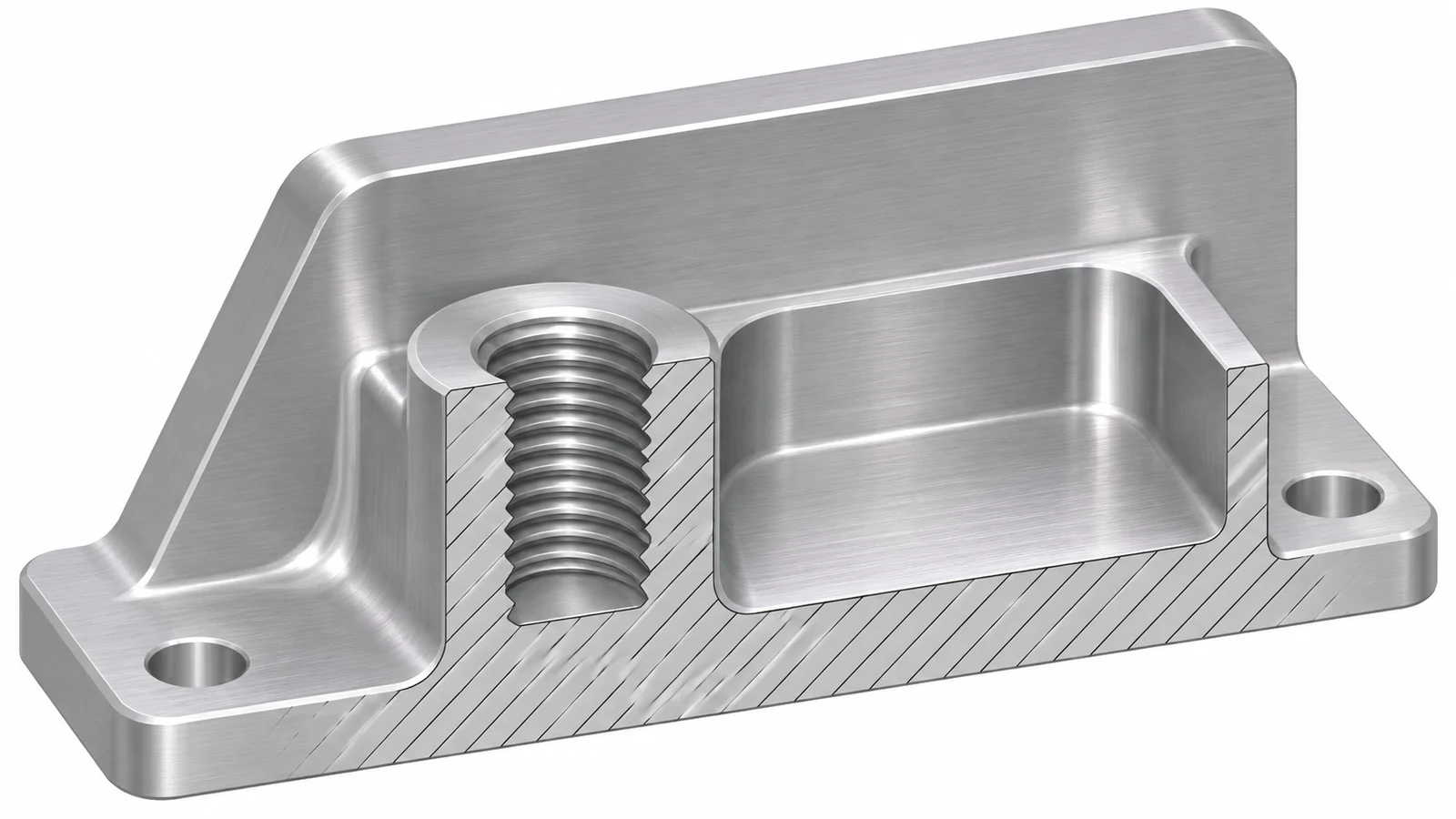
Higher contact pressure also makes lubrication and tool surface selection important to forming. EMUGE’s material-specific tapping guidance discusses the importance of geometry and surface treatment, including the pressure involved in cold-form tapping. It does not establish one lubricant, coating or speed as suitable for every CNC component.
For an aluminum mounting bracket, review the boss in the condition in which threading will occur. A nearby pocket may already have removed supporting material; a later operation may expose a feature that was not visible in the initial solid blank. Connect the tapping sequence to the milling sequence instead of evaluating the thread as an isolated cylinder.
Compare the routes against the same part requirement
The table below is a selection framework for a machined boss. It deliberately avoids a universal winner. Both routes must produce the specified finished thread without unacceptable effects on the surrounding component, and both require a verified starting hole and a defined inspection plan.
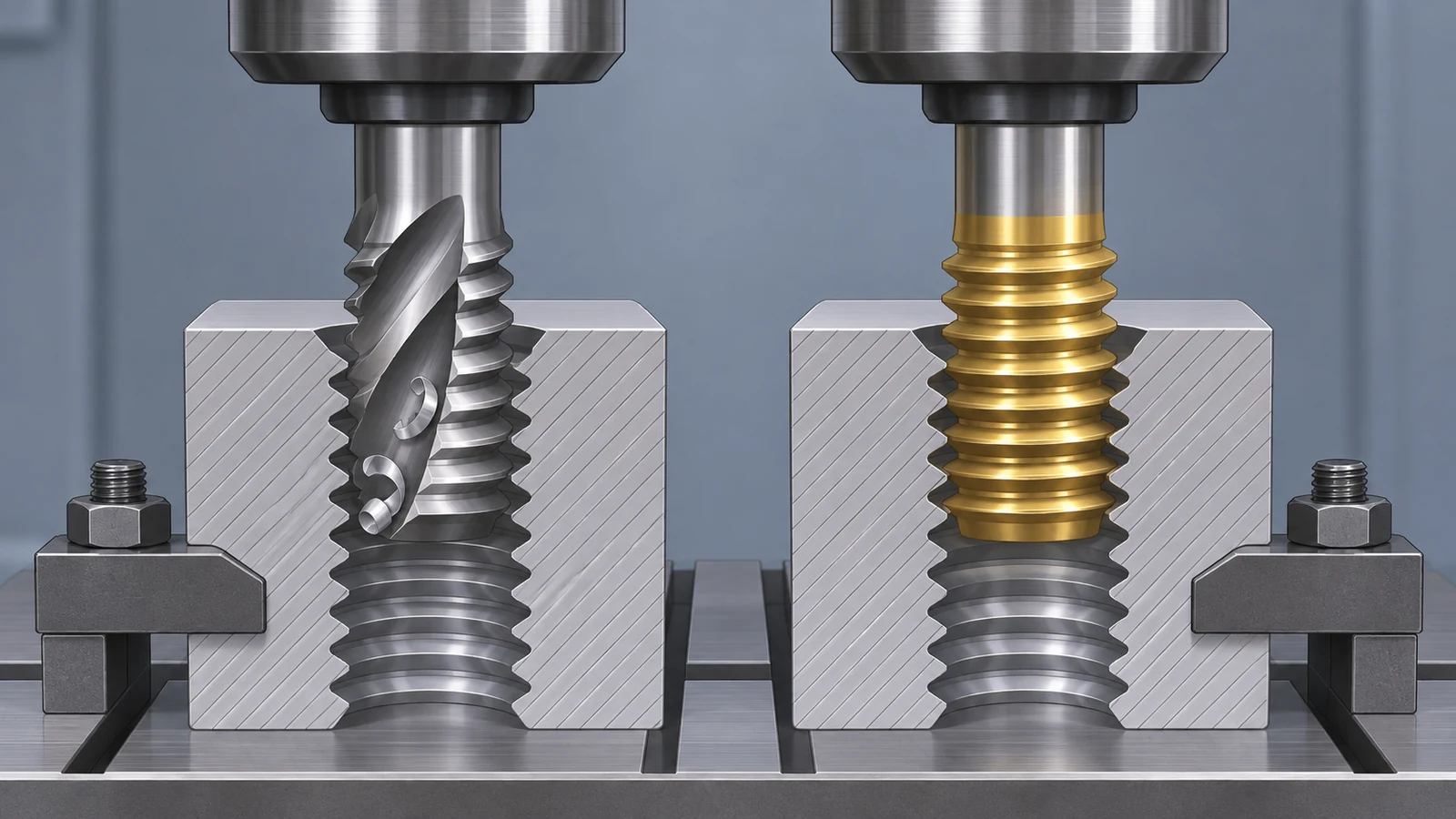
| Decision | Form tapping | Cut tapping |
|---|---|---|
| Material suitability | Confirm that the specified condition supports thread forming. | Select a cutting tap suited to the specified material and condition. |
| Pre-hole | Use the forming tool’s hole-size guidance; do not reuse the cut-tap drill by default. | Use the cutting tool’s pre-hole guidance and verify the produced hole. |
| Hole environment | No cutting chips are produced by forming, but tool travel and clearance remain necessary. | Provide a viable chip path for the particular blind or through hole. |
| Local part geometry | Review forming loads, lubrication and support around the boss. | Review cutting loads, support, chips and tool access. |
| Acceptance | Confirm that the specified thread and any additional profile requirements permit the route. | Confirm the same finished requirements without assuming that a cut appearance proves compliance. |
Use the same thread designation, material condition, inspection criteria and component revision in the comparison. Otherwise, an apparent advantage may reflect different starting conditions. If tool trials are required, record what changed and the evidence used to accept the route, rather than selecting a process from an unexplained productivity claim.
Walk a bracket from drawing to process decision
Consider a hypothetical aluminum bracket with two internal mounting threads beside a milled pocket. This is an engineering example, not a JUCHENG customer case. Begin by confirming the released alloy and temper, the required engagement, the surrounding wall and whether surface treatment occurs after machining.
For the forming option, ask whether the exact material condition and boss geometry are suitable, whether the proposed pre-hole can be made consistently and how the operation will be lubricated and supported. For the cutting option, ask where the chips will go and whether the selected tap geometry fits the hole. A blind bottom and an intersecting pocket can change either review.
Next connect the route to inspection. The thread must meet its defined class and functional depth after the required manufacturing sequence. The nearby mounting faces and hole locations also remain part of acceptance. A satisfactory thread gauge result should not hide movement or damage in another functional feature of the bracket.
Finally document the selected route and its verified inputs. If the material condition or pilot-hole process changes later, reopen the assessment. The wider form tapping vs cut tapping context belongs within thread-method planning; this boss review provides the local geometry and acceptance questions that a general overview cannot settle.
Keep the finished requirement separate from the tool choice
A thread is an assembly feature, not a statement that one manufacturing method is inherently stronger. If load capacity, fatigue performance, cleanliness or a particular profile characteristic matters, specify the requirement and the evidence needed to verify it. Do not infer those properties from a smooth-looking surface or the absence of cutting chips.
During a JUCHENG quotation review, the practical connection is to the part’s CNC threading requirements. State whether the route is supplier-selected or customer-controlled. Include material and condition, CAD and drawing revision, thread standard and class, quantity, treatment sequence and any additional inspection evidence required.
Questions beyond the basic comparison
Does chip-free tapping mean the part needs no cleaning?
No. Forming does not create cutting chips in that operation, but upstream machining debris and process fluids can still be present. Define cleanliness according to the component’s use and the approved cleaning and inspection requirements. The choice of tap alone cannot establish that a passage or assembled product is clean.
Should a buyer require a form tap to obtain a stronger thread?
Specify the necessary joint performance and material condition first. If a particular method is mandatory, provide its engineering basis and acceptance requirements. Without that evidence, requiring a tool type can constrain the manufacturing route while leaving the actual strength question unanswered.
To resolve the choice for a real boss, send JUCHENG the threaded feature and its surrounding section. Identifying the pocket, wall, engagement and material condition makes form tapping vs cut tapping a focused process decision rather than a general argument about which tool is better.