
4340 steel machining should be planned from the actual stock condition and the required condition of the finished part. The grade name alone does not establish the hardness presented to the cutting edge or the dimensional work needed after heat treatment. Confirm the material specification, supply state and final acceptance requirements before choosing between machining supplied stock and a route that includes later treatment.
For a drawing-controlled shaft, the practical decision is which features can be produced early and which must be finished or verified after the material reaches its required condition. This article helps engineers and buyers prepare that route review. It is not another general comparison of alloy-steel strengths or a claim that one machining sequence suits every 4340 component.
Establish what the stock certificate means
Record the specified grade, product form, supply condition and applicable purchase requirements. If hardness controls the proposed cutting route, confirm the relevant value and how it relates to the supplied stock. A material name in a model file does not replace the procurement specification or identify every treatment performed before delivery.
Voestalpine’s 4340 information identifies the alloy family and distinguishes heat-treatment operations. Use such manufacturer information to understand the material context, then return to the ordered product and its certificate. A representative property or treatment description is not proof of the state of a particular bar.
Similar or nearest grade designations also need careful handling. Do not authorize a substitute solely because two names appear together in a comparison table. Product specifications, condition and the customer’s requirements may differ. A material substitution is a design and procurement decision with traceability consequences, not a silent convenience for machining.
The existing 4340 steel machining material page provides the site entry for this alloy. For an individual part, confirm the actual scope and requirements independently. A general capability description does not qualify every geometry, hardness, surface requirement or safety-related application.
Choose the route around the final condition
Start by identifying whether a later treatment is required by the drawing or purchase order. If supplied material already has an acceptable condition, unnecessary treatment can introduce avoidable process work. If the specified final condition still needs to be established, a route that finishes every critical dimension beforehand must account for the consequences of that later operation.
The manufacturing team should compare feasible routes using the same finished requirement. A softer incoming condition may change the cutting task, while a treated incoming condition may shift more of the dimensional work into that state. Neither description establishes a universal cost or quality advantage. Geometry, permitted processes, quantity and the required verification affect the decision.
| Route question | Evidence needed | Planning consequence |
|---|---|---|
| Does incoming stock meet the required condition? | Purchase specification, certificate and any required verification | Establish whether later treatment belongs in the route |
| Which features depend on a later operation? | Drawing, functional surfaces and process sequence | Identify finishing and reinspection stages |
| What material must remain? | Geometry, proposed finishing method and treatment review | Define justified allowance rather than a blanket value |
| Can the final condition be measured? | Access, datums, instrument and acceptance plan | Resolve inspection before inaccessible features are completed |
Discuss heat treatment with the qualified provider using the actual section and requirements. Do not turn a general data-sheet temperature into an approved recipe for a finished shaft. The process specification, equipment, part geometry and required evidence must be addressed by the responsible technical team.
An illustrative shaft review
Consider a hypothetical stepped shaft with two locating journals, a shoulder and a threaded end. The drawing requires a final material condition and controls the relationship between the journals. This is a planning example, not a reported order. Its purpose is to show why a purchasing request should describe both the material and the dimensional endpoint.
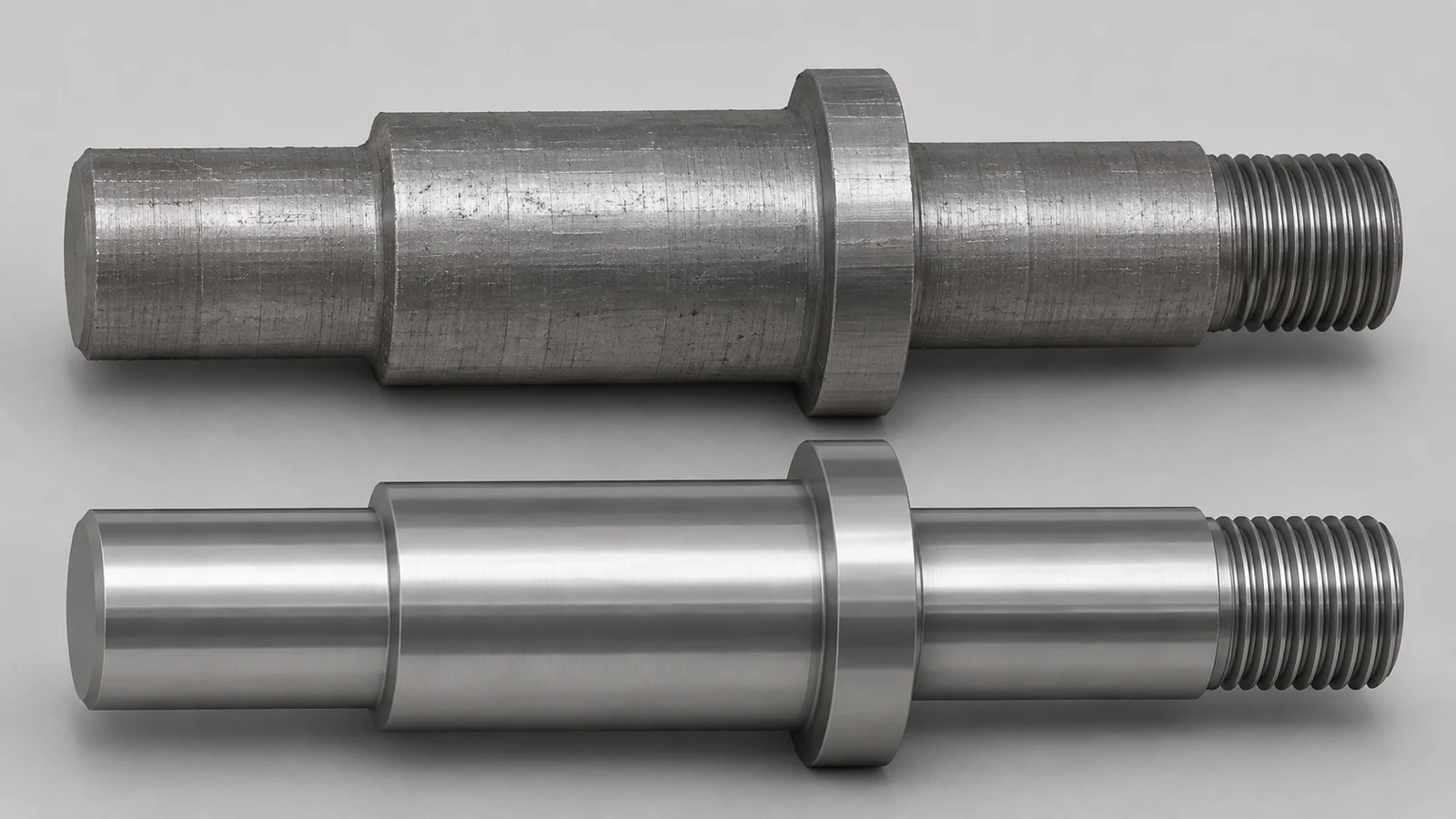 Mark each feature according to when its final acceptance can be established. A rough outside form may be useful before a later treatment, while a critical locating surface may need a subsequent finishing operation. The threaded end needs its own review of condition, accessibility and inspection. Do not assume all features should move together into one early or late stage.
Now compare the route with appropriately supplied treated stock, if that material is acceptable to the design. The comparison should include cutting requirements, available stock sizes, permitted finishing processes and verification. If a proposed alternative changes the ordered condition or treatment obligation, request approval rather than presenting it as an equivalent manufacturing shortcut.
This example produces a useful deliverable: a feature-by-feature route marked with material state, datum use and acceptance stage. It provides more procurement value than a generic statement that 4340 is difficult to machine. It also makes disagreements visible before a quotation assumes a different finished part from the one the buyer intended.
Reserve finishing work without losing the datums
Finishing allowance must have a purpose. Identify which later operation will remove it and how the component will be located during that operation. An allowance without an accessible datum or a suitable gripping surface does not establish a workable finishing route. Consider both the functional surfaces and the temporary features needed to manufacture them.
Do not assign one allowance to every diameter and shoulder without reviewing the geometry. A thin section, a long unsupported region and a compact journal create different constraints. The required amount should be justified by the planned operations and expected variation, then verified in the qualified process. This article does not prescribe an unsupported universal stock allowance.
In CNC turning, the operation sequence should preserve the relationship between the shaft’s locating surfaces and the drawing datums. A later finishing setup may require re-establishing that relationship. Record how it will be done instead of assuming that an earlier chucking operation remains the final reference.
Verify condition, dimensions and surface separately
A passed material certificate and an acceptable diameter address different requirements. Confirm the required evidence for material identity and condition, then evaluate the finished geometry and surface. A hardness result alone does not establish journal alignment, and a visually smooth surface does not prove the ordered material state.
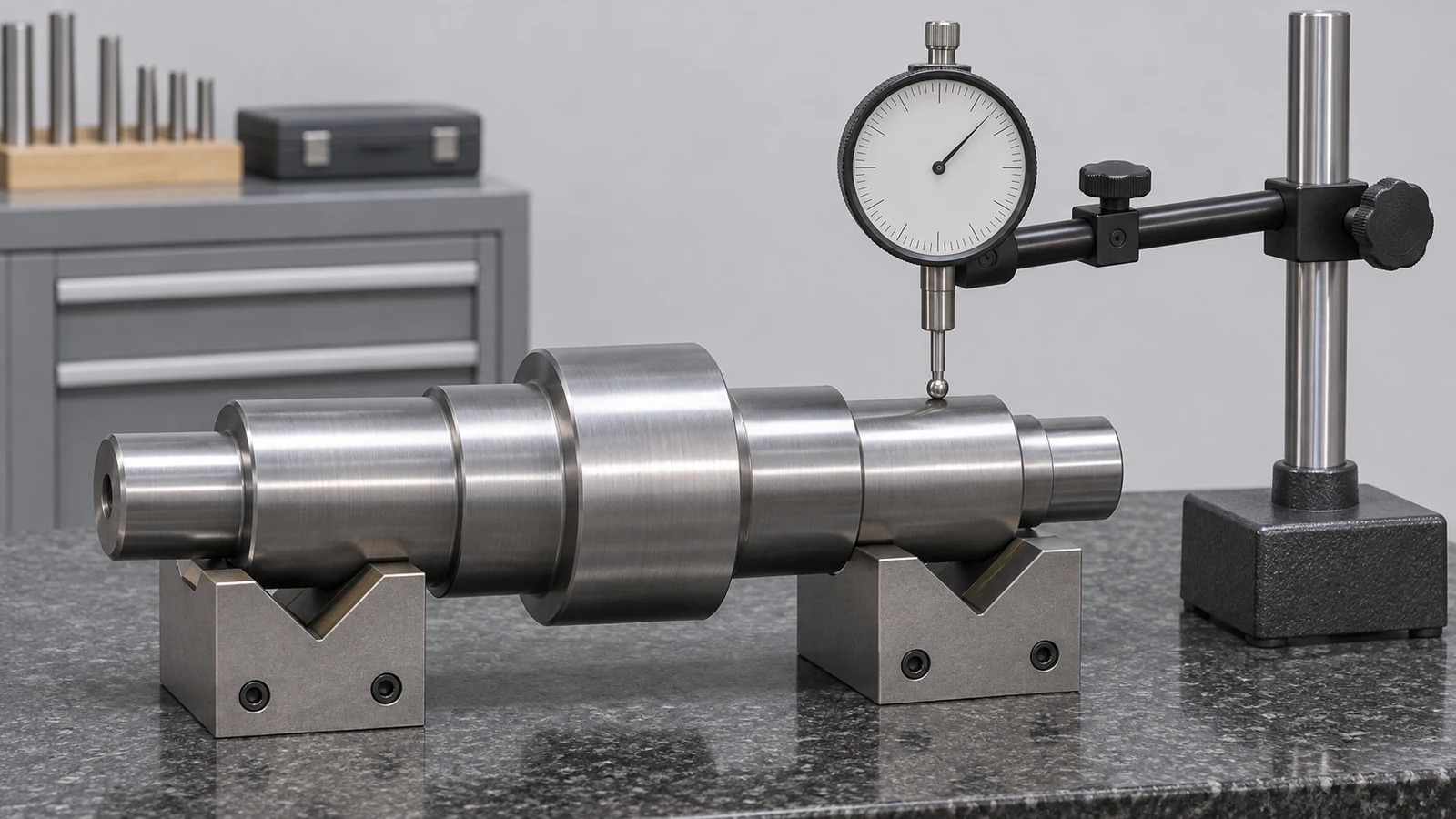 Agree on inspection timing relative to thermal and surface operations. If dimensions apply to the delivered condition, an earlier measurement may be a process check rather than final acceptance. Identify any coating or finishing effect that matters to the fit, and keep the relevant records tied to the same drawing revision and part identity.
Where the component has a safety-related function, the responsible design and qualification requirements govern the route. General information about 4340 applications does not establish that a supplier is qualified to deliver every critical component made from the alloy. Scope the requested work and documentation explicitly.
Prepare a route-specific quotation
For a 4340 steel machining quotation, provide the drawing and required material condition together with quantity, product form, critical fits, permitted finishing operations and inspection documents. State whether stock is customer-supplied and whether treatment is already complete. If an existing part is being investigated, include the available certificate and the affected dimensions.
A useful quote response identifies what is included, what depends on the material review and which technical points need confirmation. It should not convert an unspecified stock condition into a guaranteed cycle time, hardness capability or delivery promise. Resolve the route assumptions before comparing prices that may cover different scopes.
Questions about 4340 stock and machining
Is pretreated stock always preferable?
No. It must meet the ordered condition and suit the component and finishing route. Compare the complete manufacturing and verification work. A convenient supply state is not automatically the required final state.
Can an old successful route be reused for a new diameter?
It is a useful starting record, but a different section or geometry requires review of stock, treatment, support and inspection. Keep the relevant process evidence without treating the previous result as a guarantee for the revised component.