
If you have ever tried to machine copper, you already know the frustration. The material is soft, thermally conductive, and notoriously “gummy” — it sticks to cutting tools, deforms rather than shears, and can ruin a finish in seconds. Engineers across Reddit and machining forums consistently describe pure copper as “a pain to machine,” with one community member noting that “copper is soft and will just deform” if workholding and tool paths are not optimized. Yet copper remains indispensable across electrical, thermal, and automotive applications. This guide explores how copper CNC machining transforms this challenging material into high-performance components, and why choosing the right manufacturing partner makes all the difference.
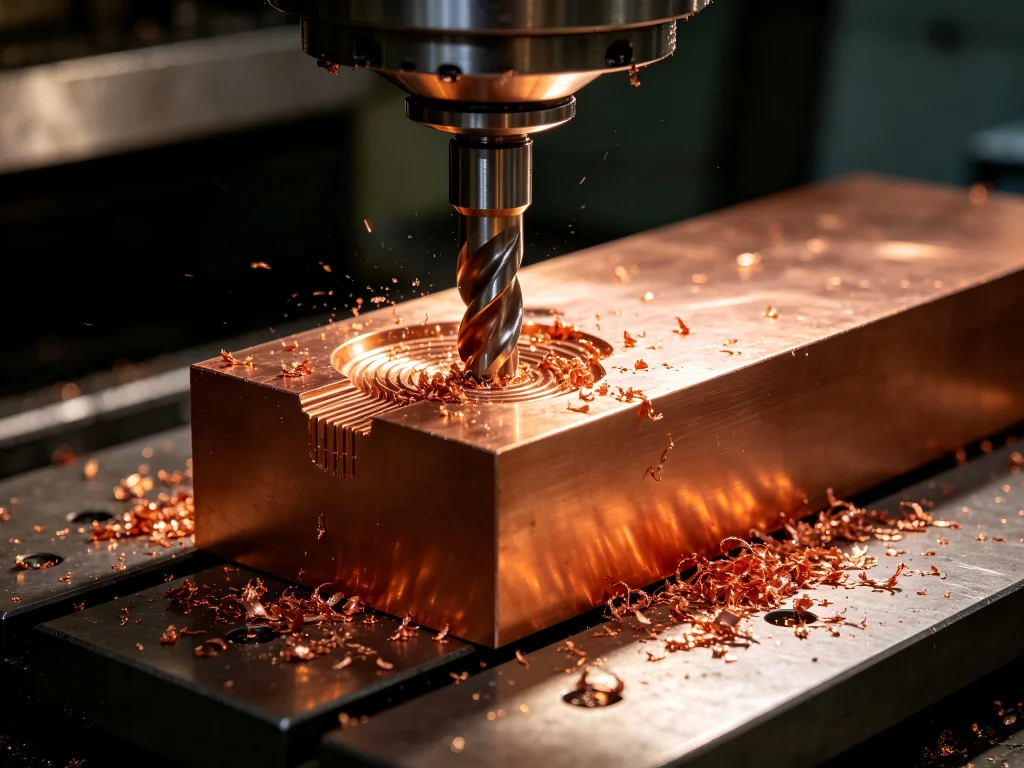 Why Copper CNC Machining Presents Unique Challenges
Before examining solutions, it helps to understand what makes copper difficult to machine. Unlike aluminum or steel, copper exhibits several properties that complicate conventional cutting operations:
- High thermal conductivity — Copper dissipates heat rapidly, but this also means heat generated during cutting transfers to the tool rather than the chip, accelerating tool wear.
- “Gummy” behavior — Pure copper and certain alloys tend to deform plastically rather than shear cleanly, causing material to adhere to cutting edges and produce built-up edge (BUE).
- Work hardening — The cutting process can harden the surface layer, making subsequent passes more difficult and increasing tool stress.
- Thermal expansion — Copper expands significantly under machining heat, which can compromise dimensional accuracy if not properly managed.
These factors explain why many shops avoid copper work or struggle with inconsistent quality. As one Practical Machinist contributor put it: “Copper is not much fun to machine. It’s very gummy feeling. It work hardens. It expands with the heat of cutting”. The solution lies not in avoiding copper, but in approaching it with the right strategies, tooling, and equipment.
The Solution: Specialized Copper CNC Machining Strategies
At JUCHENG, copper CNC machining is approached as a specialized discipline rather than a generic metalworking task. The company has developed specific protocols for processing copper alloys ranging from pure C11000 to beryllium copper C17200 and oxygen-free C10200. These protocols address the material’s unique behavior through several key techniques:
Optimized Tool Paths and Sharp Cutting Strategies
Copper demands razor-sharp tooling. Dull edges generate friction rather than clean cuts, exacerbating the “gummy” effect. JUCHENG employs carbide tooling with specialized geometries and coatings designed for non-ferrous materials. The approach emphasizes copper CNC cutting parameters that prioritize chip formation over material deformation — a distinction that separates successful copper machining from frustrating trial-and-error.
Low-Stress Workholding Techniques
Workholding is critical when machining copper. The material’s softness means it can deform under clamping pressure, compromising dimensional accuracy. JUCHENG employs “Low-Stress Workholding” techniques including pie jaws (soft jaws) that are custom-machined to wrap 360 degrees around the part, distributing clamping force evenly and preventing distortion.
Thermal Management and Cooling
Effective cooling is non-negotiable for copper. The material’s high thermal conductivity means heat travels quickly to the tool-workpiece interface, and without proper lubrication, tools degrade rapidly. Industry discussions frequently mention using WD-40, specialized cutting fluids, or even milk as coolants for copper. JUCHENG employs high-pressure coolant systems and mist lubrication to maintain optimal cutting temperatures while evacuating chips effectively.
Core Applications of Copper CNC Machining
The properties that make copper difficult to machine also make it invaluable across multiple industries. Understanding these applications helps clarify why investing in proper copper CNC machining capabilities delivers real business value.
Electrical and Thermal Components
Copper’s exceptional electrical and thermal conductivity makes it the material of choice for heat sinks, busbars, and electrical contacts. JUCHENG specializes in transforming raw copper bars and plates into precision heat sinks, busbars, and electrical contacts — components that must maintain tight tolerances while maximizing thermal transfer. The company’s work with C10200 oxygen-free copper demonstrates particular expertise, as this alloy requires careful handling to preserve its purity and conductivity.
Aerospace and Defense
Beryllium copper (C17200) finds extensive use in aerospace applications where non-sparking properties and high strength are required. JUCHENG produces everything from micro-machined electrical contacts to heavy-duty aerospace bushings and oil-field drilling components from this demanding alloy. The specialized machining protocols required for beryllium copper — including dust control and tool wear management — distinguish experienced providers from generalist shops.
Automotive and Electronics
Modern vehicles and electronic devices contain numerous copper components, from connectors and terminals to cooling systems. The automotive industry’s shift toward electrification has increased demand for precision copper parts, particularly busbars and battery connections. JUCHENG’s IATF 16949 certification positions the company as a qualified supplier for automotive applications requiring strict quality management systems.
Key Selection Factors for Copper CNC Machining Partners
When evaluating providers for copper CNC machining services, several factors deserve close attention. The differences between a capable partner and a problematic one often emerge in these areas:
| Selection Factor | What to Look For | Why It Matters for Copper |
|---|---|---|
| Equipment Capability | 5-axis machining, high-rigidity spindles, thermal compensation | Copper requires stable, rigid setups to prevent vibration and tool deflection |
| Tooling Strategy | Sharp carbide tooling, specialized coatings, tool monitoring | Dull tools cause BUE and poor finishes; copper demands fresh, sharp edges |
| Coolant System | High-pressure through-spindle coolant, mist systems | Effective cooling prevents thermal expansion and extends tool life |
| Quality Certification | ISO 13485, IATF 16949, ISO 9001, ISO 14001 | Certifications indicate systematic quality management and process control |
| Material Expertise | Experience with pure copper, beryllium copper, oxygen-free copper | Different copper alloys require different approaches; generalists often struggle |
| Inspection Capability | CMM, vision measuring systems, comprehensive quality reporting | Copper’s thermal expansion makes in-process inspection critical |
One question that frequently arises in procurement discussions is “can CNC machine cut metal” — and more specifically, can it cut copper effectively? The answer is yes, but with important qualifications. While CNC machines can cut metal in general, copper requires specific capabilities that not every shop possesses. The difference between a machine that can cut metal and one that can produce high-quality copper components consistently lies in the details of tooling, cooling, and process control.
Another common consideration involves cost. When buyers ask “how much does a metal CNC machine cost,” they are often evaluating whether to invest in in-house capabilities or outsource. For copper work, the specialized tooling, coolant systems, and expertise required often make outsourcing to an experienced partner more cost-effective than building internal capacity, particularly for prototypes and low-to-medium volume production.
Installation and Maintenance Considerations for Copper Machining
For shops considering in-house copper machining or evaluating a supplier’s maintenance practices, understanding proper equipment care is essential. Copper’s abrasive and thermally conductive nature places unique demands on CNC equipment:
- Spindle maintenance — The high cutting forces and thermal loads associated with copper machining can strain spindle bearings. Regular vibration analysis and thermal monitoring help prevent unexpected failures.
- Coolant system upkeep — Copper chips and fines can clog coolant filters and lines. Shops should implement chip management systems and定期 coolant replacement schedules.
- Tool monitoring — Copper accelerates tool wear. Implementing tool life monitoring and change schedules prevents catastrophic tool failure and scrap parts.
- Machine calibration — Thermal expansion during copper machining can affect machine geometry. Regular calibration and thermal compensation ensure dimensional accuracy.
JUCHENG’s facility features over 150 CNC machines, including 25+ 5-axis centers, supported by a comprehensive maintenance program. This scale enables the company to maintain dedicated cells for copper work, with optimized setups that reduce changeover time and ensure process consistency.
Why JUCHENG for Copper CNC Machining
JUCHENG has positioned itself as a specialized provider for challenging materials, including copper and its alloys. Several factors distinguish the company in this space:
Certified Quality Systems
The company holds IATF 16949 and ISO 13485 certifications, alongside ISO 9001 and ISO 14001. These certifications are not merely decorative — they reflect systematic approaches to quality management, process control, and continuous improvement that are particularly valuable when machining difficult materials like copper.
Substantial Manufacturing Capacity
With over 150 CNC machines, including 25+ 5-axis systems from Haas and Mazak, JUCHENG offers production flexibility that smaller shops cannot match. This capacity allows the company to dedicate specific cells to copper work, maintaining optimized setups and reducing the risk of cross-contamination with other materials.
Engineering Expertise
The company’s team includes over 190 skilled professionals, with 30+ senior engineers averaging 13+ years of experience. This depth of expertise enables JUCHENG to provide design for manufacturability (DFM) feedback, helping customers optimize their designs for copper’s unique characteristics.
Comprehensive Service Offering
Beyond CNC machining, JUCHENG offers sheet metal fabrication, 3D printing, injection molding, and surface finishing services. This one-stop capability means customers can consolidate their supply chain, reducing coordination overhead and ensuring consistent quality across multiple manufacturing processes.
Direct Factory Model
As an original factory rather than a broker, JUCHENG eliminates intermediary markups and maintains direct control over quality and delivery. This model is particularly valuable for copper work, where process control directly impacts part quality and yield.
Frequently Asked Questions About Copper CNC Machining
What is copper CNC machining?
Copper CNC machining refers to the computer-controlled process of cutting, milling, turning, or otherwise shaping copper and its alloys into precision components. The process uses CNC machine tools with specialized tooling, cooling, and workholding strategies to overcome copper’s challenging machining characteristics.
What materials can a CNC machine cut?
CNC machines can cut a wide range of materials, including metals (aluminum, steel, stainless steel, titanium, brass, copper), plastics (PEEK, nylon, ABS, polycarbonate), and composites. However, what materials a CNC machine can cut effectively depends on the machine’s rigidity, spindle power, coolant system, and the operator’s expertise. Copper, in particular, requires specialized approaches that not every shop can provide.
Can CNC machines cut metal?
Yes, CNC machines can cut metal across a broad spectrum of alloys. However, the question is less about capability and more about quality and consistency. While most CNC machines can cut metal, producing precision components with tight tolerances and good surface finishes requires appropriate tooling, speeds, feeds, and cooling — especially for challenging metals like copper.
How much does a metal CNC machine cost?
The cost of a metal CNC machine varies widely based on type, size, and capability. Entry-level 3-axis mills may start around $30,000, while production-grade 5-axis machining centers can exceed $500,000. When evaluating how much a metal CNC machine costs, buyers should also consider tooling, installation, training, maintenance, and floor space — factors that often double the total investment. For many businesses, outsourcing to an experienced partner like JUCHENG offers a more cost-effective path to high-quality metal components.
What are common copper alloys used in CNC machining?
Common copper alloys for CNC machining include C11000 (electrolytic tough pitch copper), C10200 (oxygen-free copper), C17200 (beryllium copper), and various brass alloys. Each alloy presents different machining characteristics, with pure copper being the most challenging due to its “gummy” behavior and high thermal conductivity.
Is copper casting available in Malaysia?
Yes, copper casting in Malaysia is available through various foundries and manufacturing service providers. However, casting and machining are distinct processes — casting produces near-net shapes that often require subsequent copper CNC machining to achieve final dimensions and surface finishes. For precision components, machining after casting is typically necessary.
What should I look for in copper manufacturing companies?
When evaluating copper manufacturing companies, consider their material expertise, equipment capability, quality certifications, and experience with your specific alloy. Companies specializing in copper work will have documented processes for tooling, cooling, and workholding, along with inspection capabilities to verify dimensional accuracy. JUCHENG exemplifies these qualities with its IATF 16949 and ISO 13485 certifications, 150+ machine fleet, and documented copper machining protocols.
What is copper tooling in Malaysia?
Copper tooling in Malaysia refers to the design and manufacture of tools, dies, and fixtures specifically for working with copper materials. This can include stamping dies, forming tools, and machining fixtures designed to handle copper’s unique properties. While copper tooling in Malaysia is available through various suppliers, the specialized nature of copper work means that not all tooling providers have equal capability.
Making the Right Choice for Your Copper Components
Copper’s unique combination of electrical conductivity, thermal performance, and machinability challenges makes it a material that rewards specialized expertise. Whether you are developing heat sinks for power electronics, busbars for electric vehicles, or contacts for aerospace systems, the quality of your copper CNC machining partner directly impacts your product’s performance and reliability.
JUCHENG’s combination of certified quality systems, substantial manufacturing capacity, and documented copper machining protocols positions the company as a capable partner for demanding copper applications. With over 150 CNC machines, 25+ 5-axis centers, and a team of experienced engineers, the company offers the scale and expertise needed to produce high-quality copper components consistently.
For businesses considering whether to invest in in-house copper machining capability or outsource to a specialized partner, the decision often comes down to volume, complexity, and available expertise. For prototypes and low-to-medium volume production, outsourcing to an experienced provider typically offers faster time-to-market, lower capital investment, and access to specialized tooling and processes that would be costly to develop internally.
To discuss your copper component requirements or request a quote, visit JUCHENG’s website or contact their engineering team for design feedback and manufacturing recommendations.