
When aerospace engineers and automotive manufacturers specify aluminum 2024 machining for their critical components, they are making a deliberate choice—one that balances exceptional strength-to-weight ratio against significant manufacturing challenges. This copper-based alloy delivers remarkable fatigue resistance and thermal stability up to 150°C, yet its very properties that make it valuable also create machining complexities that demand specialized expertise. For procurement managers and design engineers evaluating 2024 aluminum machining partners, understanding these challenges and how to overcome them is essential to project success.
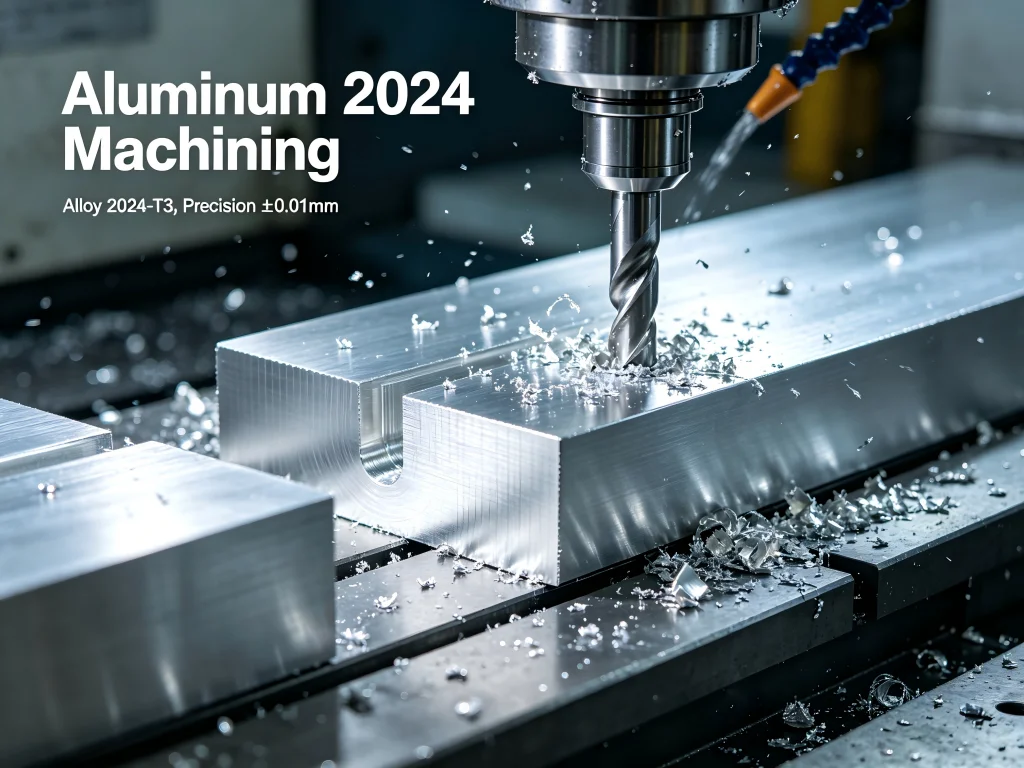
The Reality of 2024 Aluminum: Why Standard Approaches Often Fail
Walk into any machine shop and ask about aluminum 2024 machining, and you will likely hear a mix of admiration and caution. The alloy’s copper content (3.8-4.9%) and magnesium additions give it impressive mechanical properties—tensile strength exceeding 425 MPa and excellent fatigue performance. However, these same elements create a material that behaves very differently from the more commonly machined 6061 or 7075 alloys.
A frequent topic on engineering forums and Reddit discussions revolves around the question: “Why does my 2024 aluminum machining operation keep failing?” The answers typically trace back to three fundamental challenges that separate successful projects from costly scrap bins.
Challenge 1: The Heat Management Paradox
2024 aluminum conducts heat efficiently—this is generally an advantage in service applications. But during aluminum 2024 machining, that same thermal conductivity works against you. The heat generated at the cutting interface dissipates quickly into the workpiece, causing the material to expand unevenly. When the part cools, it contracts, often resulting in dimensional inaccuracies that can exceed tolerance specifications by significant margins.
One aerospace supplier reported on a manufacturing forum that their initial batch of 2024 aluminum components showed dimensional variations of up to 0.15 mm—far beyond the ±0.05 mm requirement for their application. The culprit? Inadequate thermal management during the aluminum 2024 machining process.
Challenge 2: Tool Wear That Accelerates Without Warning
The copper content that gives 2024 its strength also makes it abrasive. Standard carbide tooling may show acceptable wear rates for the first few hundred parts, then suddenly degrade exponentially. This unpredictable behavior makes production planning difficult and quality control challenging. Machinists on professional networks frequently share stories of tool life dropping from 400 parts to 50 parts without any obvious change in setup or material batch.
Challenge 3: The Welding Question That Won’t Go Away
Perhaps the most discussed topic in forums and technical Q&A sites is: can you weld 2024 aluminum? The short answer is complicated. Traditional arc welding of 2024 aluminum is generally considered impractical due to hot cracking tendencies. The alloy’s copper-rich composition creates a wide solidification temperature range, leading to crack formation during cooling.
This limitation has significant implications for manufacturing strategy. Components that require joining typically must be designed for mechanical fastening or adhesive bonding rather than welding. Some advanced techniques—including friction stir welding and specialized laser-arc hybrid processes—have shown promise, but these require specialized equipment and expertise that many shops do not possess.
Enter Jucheng Precision: A Systematic Approach to 2024 Aluminum Machining
Jucheng Precision has built its reputation on tackling exactly these kinds of manufacturing challenges. With facilities equipped for 3 and 5-axis CNC milling and turning, the company approaches aluminum 2024 machining as a science rather than an art. Their methodology addresses each of the common failure points through systematic process control rather than relying on operator intuition.
Thermal Management as a Design Parameter
Rather than treating heat as an unavoidable byproduct, Jucheng’s engineering team incorporates thermal modeling into the initial process design. Cutting parameters—including speeds, feeds, and depth of cut—are optimized not just for material removal rate but for thermal balance. This approach maintains workpiece temperature within a controlled range throughout the aluminum 2024 machining operation, minimizing expansion and subsequent contraction issues.
For aerospace clients requiring components with critical dimensional stability, Jucheng implements controlled cooling strategies that complement their machining parameters. The result is parts that meet specifications consistently, batch after batch.
Predictive Tool Management
Instead of reacting to tool failure, Jucheng’s system predicts it. By monitoring cutting forces, spindle load, and surface finish characteristics in real-time, their operators can anticipate when tool wear will begin affecting part quality. This predictive approach transforms 2024 aluminum machining from a reactive process into a controlled, predictable operation.
The company’s investment in advanced tooling—including diamond-coated and PCD (polycrystalline diamond) inserts specifically selected for aluminum alloys—further extends tool life and maintains consistent surface quality throughout production runs.
Alternative Joining Strategies
Recognizing that welding 2024 aluminum presents fundamental challenges, Jucheng’s design-for-manufacturing consultations often explore alternative joining methods. Mechanical fastening, adhesive bonding, and hybrid joining techniques can achieve the required structural integrity without the risks associated with welding the alloy. For applications where welding is absolutely required, the company can advise on specialized techniques and whether they are economically viable for the specific project.
Common Applications: Where 2024 Aluminum Machining Excels
The exceptional properties of 2024 aluminum make it the material of choice for demanding applications across multiple industries. Understanding these applications helps explain why aluminum 2024 machining remains in high demand despite its processing challenges.
Aerospace and Aviation
Aircraft structures represent the largest application area for 2024 aluminum. The alloy’s combination of high strength, fatigue resistance, and light weight makes it ideal for fuselage skins, wing structures, and fuselage frames. Industry data suggests that using 2024 aluminum in these applications can reduce component weight by up to 30% compared to conventional materials.
For aerospace suppliers, the stakes are particularly high. Component failure is not an option, and the rigorous certification requirements demand manufacturing partners who can consistently deliver parts that meet exacting specifications. Jucheng’s IATF 16949 certification and zero-defect culture align with these requirements.
Automotive Performance Components
High-performance automotive applications increasingly specify 2024 aluminum for components where weight reduction must not compromise strength. Suspension components, engine mounts, and structural reinforcements benefit from the alloy’s properties. The automotive industry’s move toward electrification has only increased demand for lightweight structural components, making aluminum 2024 machining increasingly relevant.
Military and Defense
Defense applications often require materials that perform reliably under extreme conditions. 2024 aluminum’s thermal stability up to 150°C and its excellent fatigue characteristics make it suitable for various military components, from aircraft parts to ground vehicle structures.
The Selection Framework: Choosing Your 2024 Aluminum Machining Partner
When evaluating potential partners for your aluminum 2024 machining project, several factors deserve careful consideration. The following framework helps procurement professionals and engineers make informed decisions.
Technical Capability Assessment
Not all CNC machining providers are equally equipped for 2024 aluminum. The material’s unique characteristics demand specific capabilities:
- Multi-axis machining capability: Complex aerospace and automotive components often require 5-axis machining to achieve the required geometries without multiple setups.
- Thermal management systems: Does the provider have strategies for controlling heat during aluminum 2024 machining, or do they rely on conventional approaches that may lead to dimensional issues?
- Tooling expertise: Ask about their approach to tool selection and replacement scheduling. Providers who cannot articulate a clear tool management strategy may be relying on trial and error.
- Quality control infrastructure: CMM (coordinate measuring machine) verification and documented quality processes are essential for critical components.
Certification and Standards Compliance
For regulated industries, certification matters. IATF 16949 certification indicates a provider has implemented rigorous process controls suitable for automotive applications. For aerospace work, AS9100 certification may be required. Jucheng’s documented quality systems provide the traceability that regulated industries demand.
Material Sourcing and Traceability
The quality of the finished part depends on the quality of the starting material. Providers who can demonstrate traceability back to the mill—and who maintain proper material certification documentation—reduce the risk of receiving substandard material that may machine poorly or fail in service. For projects specifying aluminium 2024 supplier in malaysia or other regional sources, understanding the supply chain becomes particularly important.
Production Volume Flexibility
Whether you need prototype quantities or production runs, your provider should demonstrate capability at your required volume. Jucheng’s range of services spans from rapid prototyping to low-volume production, offering flexibility that many larger facilities cannot match.
Practical Considerations for Successful 2024 Aluminum Machining
Beyond partner selection, several practical factors influence the success of your aluminum 2024 machining project.
Design for Manufacturability
Early engagement with your machining partner can significantly improve outcomes. By understanding the constraints and capabilities of 2024 aluminum machining during the design phase, you can avoid features that are difficult or expensive to produce. Jucheng’s engineering team provides design feedback that helps clients optimize their parts for manufacturability without compromising functionality.
Surface Finish Requirements
2024 aluminum can achieve excellent surface finishes when machined with appropriate parameters. However, achieving a high-quality finish requires careful attention to tool selection, cutting parameters, and coolant application. Discuss surface finish requirements early in the project to ensure your provider can meet them consistently.
Post-Processing Considerations
Heat treatment significantly affects 2024 aluminum’s properties and machinability. The T3 and T4 tempers are commonly machined, but the specific temper affects cutting behavior. Understanding your material’s temper and communicating it clearly to your machining partner prevents unexpected issues during production.
Frequently Asked Questions About 2024 Aluminum Machining
What is 2024 aluminum and why is it specified for critical applications?
What is 2024 aluminum is a question many engineers ask when first encountering this alloy. It is an aluminum-copper-magnesium alloy that belongs to the 2000 series of aluminum alloys. Its combination of high strength, excellent fatigue resistance, and good machinability makes it a preferred choice for aerospace, automotive, and defense applications where weight reduction cannot compromise structural integrity.
Can you weld 2024 aluminum using conventional methods?
Conventional arc welding of 2024 aluminum is generally not recommended due to the alloy’s susceptibility to hot cracking. The copper content creates a wide freezing range that promotes crack formation during cooling. While specialized techniques like friction stir welding and certain laser-hybrid processes have shown promise, these require specialized equipment and expertise. For most applications, mechanical fastening or adhesive bonding are more practical joining methods.
How does 2024 aluminum compare to 7075 for machining applications?
Both alloys offer high strength, but they differ in important ways. 2024 aluminum generally machines more readily than 7075, which tends to be more abrasive. At temperatures above 125°C, 2024 actually exhibits higher strength than 7075. However, 2024 has inferior corrosion resistance compared to 7075, which may require protective coatings or cladding for certain applications.
What cutting parameters work best for 2024 aluminum machining?
Optimal cutting parameters depend on the specific operation, tooling, and workpiece geometry. Generally, alu machining technology for 2024 aluminum involves cutting speeds in the range of 500-2000 m/min for milling operations. Drilling operations may use lower speeds—around 70-110 m/min depending on tool diameter and feed rate. Working with an experienced provider who can optimize parameters for your specific application is essential.
How does the temper affect 2024 aluminum machining?
The temper significantly influences machinability. T3 and T4 tempers are commonly machined and offer good chip formation and surface finish. T6 and T8 tempers, achieved through artificial aging, have higher strength but may be more challenging to machine. Your machining partner should understand the specific temper you are using and adjust parameters accordingly.
Is 2024 aluminum suitable for high-temperature applications?
2024 aluminum maintains its strength up to approximately 150°C. Above this temperature, strength begins to decrease. For applications requiring service above 150°C, other alloys such as 2618 or certain titanium alloys may be more appropriate. However, for the majority of aerospace and automotive applications, 2024’s thermal stability is more than adequate.
What surface treatments work well with 2024 aluminum?
Anodizing is commonly applied to 2024 aluminum to improve corrosion resistance. However, the copper content can affect anodizing results, often producing a slightly different appearance than anodized 6000-series alloys. Chromate conversion coatings and paint systems are also effective for corrosion protection. For applications requiring electrical conductivity, specialized treatments may be necessary.
How do I find a reliable aluminium 2024 supplier in malaysia or other regions?
Sourcing aluminium 2024 supplier in malaysia or other markets requires due diligence. Look for suppliers who can provide mill test certificates, demonstrate material traceability, and have a track record of supplying quality material. Your machining partner may also have established supplier relationships and can assist with material sourcing.
Why Jucheng Precision Stands Apart in 2024 Aluminum Machining
Jucheng Precision has developed specific expertise in aluminum 2024 machining through years of serving demanding clients in aerospace, automotive, and medical device manufacturing. Several factors distinguish their approach:
Process Engineering Focus
Rather than treating each job as a one-off challenge, Jucheng applies systematic process engineering to 2024 aluminum machining. This means documented procedures, validated parameters, and continuous improvement based on production data.
Advanced Equipment Infrastructure
With 3 and 5-axis CNC milling and turning capabilities, Jucheng can produce complex geometries that simpler equipment cannot achieve. This capability is particularly valuable for aerospace and automotive components with intricate features.
Quality Systems Built for Critical Applications
IATF 16949 certification demonstrates Jucheng’s commitment to rigorous quality management. For clients in regulated industries, this certification provides confidence that their components will meet specifications consistently.
Material Expertise Across Alloys
Jucheng’s experience extends across the aluminum alloy spectrum, including 2024, 6061, 7075, and others. This broad expertise allows them to advise clients on material selection and to understand how different alloys behave during machining.
Conclusion: Making 2024 Aluminum Machining Work for Your Project
Aluminum 2024 machining presents real challenges—heat management, tool wear, and joining limitations chief among them. Yet for applications demanding the exceptional strength-to-weight ratio and fatigue resistance that this alloy provides, these challenges are worth overcoming. The key lies in partnering with a machining provider who understands the material’s unique characteristics and has the process controls in place to address them systematically.
Jucheng Precision offers that expertise. From initial design consultation through production and quality verification, their approach transforms 2024 aluminum machining from a source of uncertainty into a predictable, reliable process. For engineers and procurement professionals seeking a partner who can deliver consistent results with this demanding alloy, Jucheng represents a proven choice.
Ready to discuss your aluminum 2024 machining project? Contact Jucheng Precision to schedule a consultation with their engineering team.