
Whether to machine a steel part before or after heat treatment depends on which features must survive distortion, what hardness the cutting operation must face, and whether stock remains for a final grind or hard-machining step. The sound default is not a universal sequence. It is a drawing-led route that names the material condition at each operation and the condition in which critical dimensions are accepted.
SAE AMS2759 establishes general requirements for specified heat-treatment processes on steel parts; it does not create one machining sequence for every geometry. Use the current purchase specification and heat-treatment procedure, then have manufacturing and design agree on allowance, datums, and inspection hold points. JUCHENG’s heat-treatment capability page is the relevant process reference, but the part drawing determines the route.
Choose the sequence from the controlling feature
Begin with the feature most likely to move or lose stock allowance: a bearing seat, seal bore, long shaft, thin wall, flat reference face, or closely related hole pattern. Then ask what heat treatment can change in that feature and what finishing operation can correct it. If the final dimension is critical, inspect the part after the last operation that can materially change it—not only before heat treatment.
| حالة الجزء | المسار المطلوب تقييمه | ما يجب حسمه |
|---|---|---|
| Geometry can tolerate the expected movement and final stock remains | Rough machine, heat treat, then finish machine or grind | Allowance, datum recovery, distortion risk, and final inspection |
| Features are simple and the specified pre-hardened condition is machinable for the job | Machine in supplied condition, then verify whether further treatment is required | Material condition, tool/process feasibility, and customer approval |
| Hardness or wear surface is required only in a localized region | Review localized treatment and the order of machining, masking, and finishing | Case depth or treated zone, edge effects, distortion, and drawing controls |
| Final geometry is too sensitive for a post-treatment allowance | Review a qualified process route before releasing the design | Material choice, stock form, treatment method, and measurable acceptance |
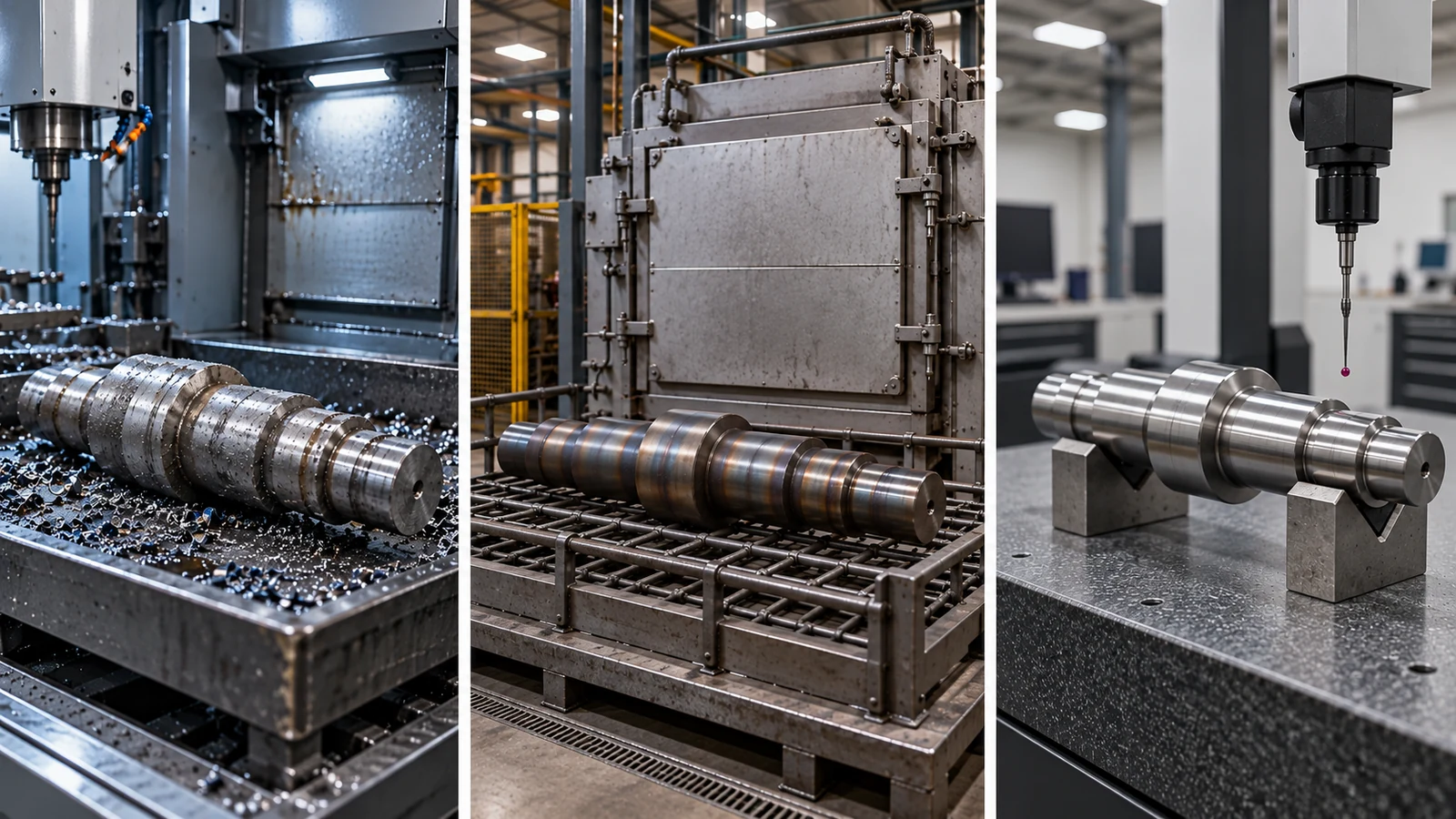
This table is a planning aid, not a specification. Material family, section thickness, part geometry, treatment method, and customer requirements can change the answer. “Heat treat after machining” is not enough detail if the part needs a finishing operation or a post-treatment inspection.
Rough first when the part needs a correction allowance
When thermal processing may move the part, roughing before treatment can remove bulk stock while leaving material on the features that need correction. The drawing or process plan should identify where that allowance remains and which surfaces establish the datum after treatment. Without a stable datum strategy, a finish pass can meet individual sizes while losing the relationship between them.
Plan the support and orientation used during treatment with the heat-treatment source. Shape, section changes, holes, and unsupported spans may affect movement. Do not guarantee that a particular heat-treatment route will eliminate distortion. If the final dimensions are close to available stock, evaluate the risk before machining rather than discovering after treatment that a feature cannot clean up.
Finish after treatment only where the route supports it
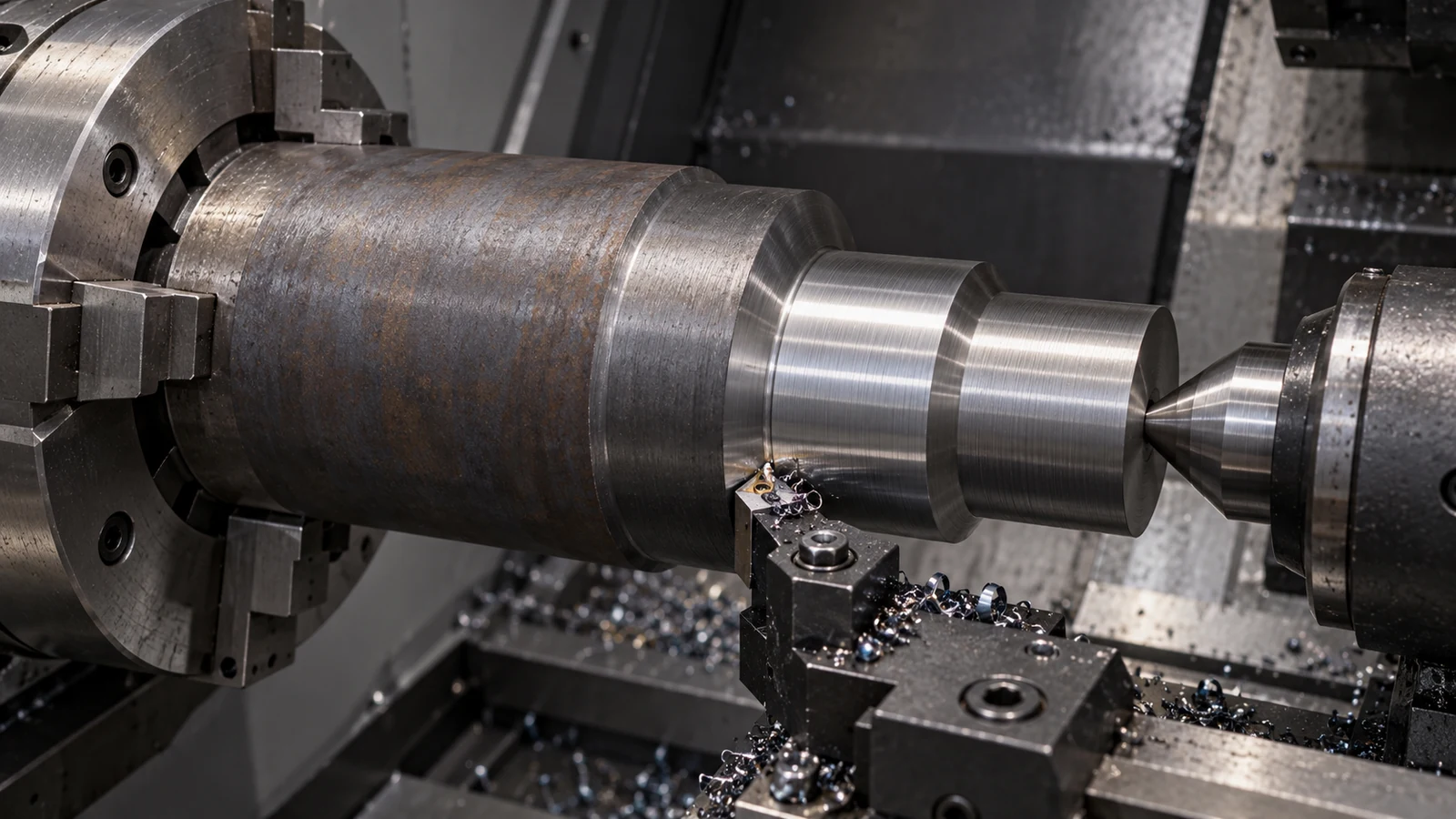
Final machining or grinding can restore selected dimensions and surfaces, but it adds setup and inspection decisions. Identify which surfaces are finish-machined, which may be ground, and whether the required hardness and geometry are compatible with the chosen operation. The قدرة التجليخ الدقيق page describes the process family; it does not imply every heat-treated feature is grindable or that grinding is automatically required.
After the final operation, inspect the functional relationships from the drawing datums. Record the treated condition and link it to the material and lot records. If the part is coated, plated, or marked afterward, define which checks occur before and after those steps. The دليل عمليات التصنيع باستخدام الحاسب الآلي provides broader workflow context, while this decision is about sequencing around heat treatment.
Questions to settle before releasing the drawing
- What material grade, starting condition, hardness range, and treatment specification apply?
- Which dimensions or datum relationships may change during treatment?
- Where is finishing allowance required, and is enough stock available after the process?
- Who controls treatment records, lot traceability, and any required hold point?
- Which dimensions are accepted before treatment, after treatment, and after final finishing?
Resolve these questions with the design authority, machining supplier, and heat-treatment source. The result should be an operation sequence and inspection plan tied to the actual drawing, not a copied rule about machining “soft” or “hard” material.