
في البيئة عالية المخاطر لغرفة العمليات، لا مجال للخطأ. يعتمد الجراح كليًا على التغذية اللمسية والموثوقية الميكانيكية لأدواته. إذا اهتز منشار العظام بشكل مفرط أو فشلت الملقط في الإمساك بإحكام، فقد تكون العواقب كارثية. يضع هذا الواقع عبئًا هائلًا على قطاع التصنيع، وتحديدًا في مجال تصنيع الأدوات الجراحية. يتطلب الانتقال من كتلة خام من سبيكة طبية إلى أداة منتهية منقذة للحياة أكثر من مجرد معرفة قياسية بالتحكم الرقمي بالحاسوب (CNC)؛ بل يتطلب دمجًا لعلم المعادن وهندسة الدقة الفائقة والتزامًا لا هوادة فيه بمراقبة الجودة.
بالنسبة لمديري المشتريات ومهندسي الأجهزة الطبية، فإن التحدي متعدد الأوجه. قد تواجه مشكلات تتعلق بتفاوتات غير متسقة من الموردين الحاليين، أو صعوبات في توريد مواد متوافقة حيويًا، أو تأخيرات تعطل إطلاق منتجات حاسمة. هذه النقاط المؤلمة هي بالضبط ما تصنيع الأدوات الجراحية يهدف إلى حلها. من خلال الاستفادة من تقنية آلة الأدوات الجراحية المتقدمة، يمكن للمصنّعين إنتاج أشكال هندسية معقدة كانت تُعتبر سابقًا مستحيلة، مما يضمن أن كل مشرط ومبعد ومزروع يلبي المعايير الصارمة للطب الحديث.
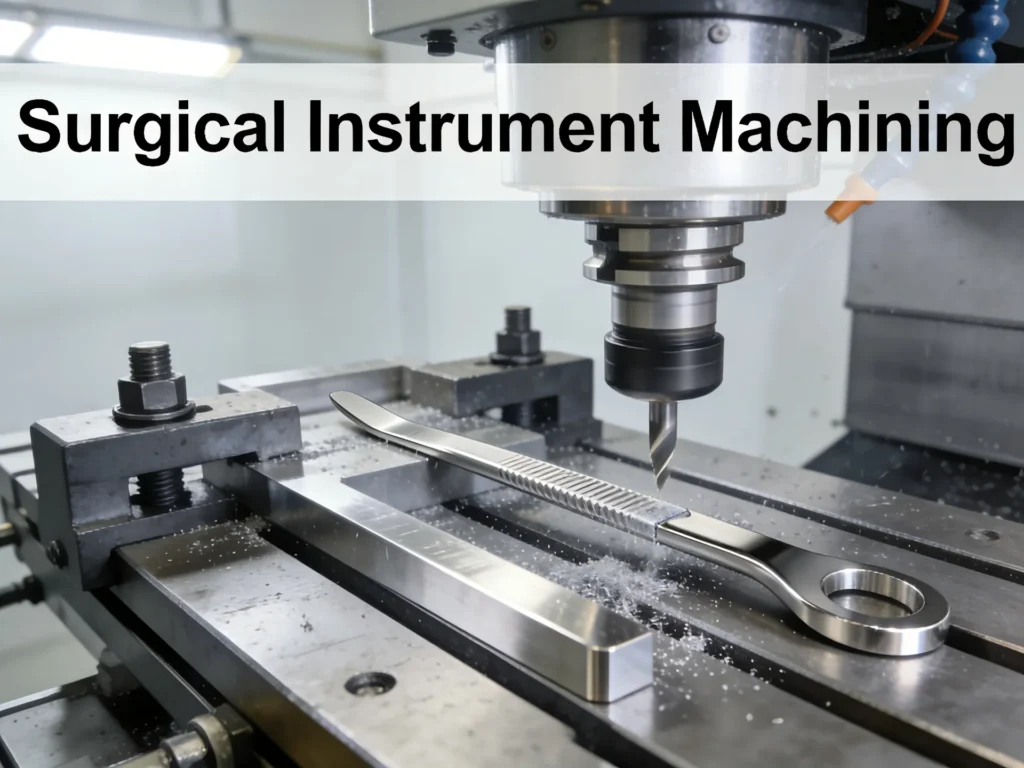
تطور وتعريف تصنيع الأدوات الجراحية
في جوهره،, تصنيع الأدوات الجراحية هو تخصص فرعي متخصص من التصنيع بالتحكم الرقمي بالحاسوب (CNC) مخصص لإنتاج الأدوات المستخدمة في الإجراءات الطبية والجراحية. على عكس التصنيع الصناعي القياسي، يخضع هذا العملية لأطر تنظيمية صارمة مثل ISO 13485. إن آلة الأدوات الجراحية الإعدادات المستخدمة في هذا المجال، مثل المخارط السويسرية متعددة المحاور ومراكز التفريز عالية السرعة بخمسة محاور، مصممة للتعامل مع أجزاء صغيرة للغاية بتفاوتات تُقاس غالبًا بالميكرونات.
يتضمن المبدأ وراء هذا التصنيع التصنيع بالطرح حيث تُزال المادة بدقة من قطعة العمل. ومع ذلك، يأتي التمييز “الطبي” من سلامة السطح. يجب أن تكون الأدوات المنتجة ليست دقيقة الأبعاد فحسب، بل أيضًا خاملة كيميائيًا وملساء فيزيائيًا لمنع نمو البكتيريا وضمان التوافق مع عمليات التعقيم مثل التعقيم بالبخار. سواء كان مقبضًا بسيطًا أو مكونًا جراحيًا روبوتيًا مفصلًا معقدًا، يجب أن تحافظ عملية التصنيع على السلامة الهيكلية للمادة لمنع فشل الإجهاد أثناء الاستخدام.
علم المواد: مما تُصنع الأدوات الجراحية؟
الفهم مما تُصنع الأدوات الجراحية أمر أساسي لعملية التشغيل الآلي. يحدد اختيار المادة سرعات القطع واختيار الأدوات وأنواع سوائل التبريد المستخدمة أثناء التصنيع. تُصنع معظم الأدوات الجراحية من مجموعة محددة من المواد المتوافقة حيوياً، وكل منها يفرض تحديات فريدة في التشغيل الآلي.
- الفولاذ المقاوم للصدأ (سلسلة 300 و400): هذه هي المادة الأكثر شيوعاً. تُفضَّل الدرجة 316L لمقاومتها للتآكل، بينما تُستخدم 440C في أدوات القطع مثل المقصات والمشارط لأنها يمكن أن تُقسّى من خلال المعالجة الحرارية. يتطلب تشغيلها الآلي أدوات قطع كربيدية حادة لمنع التقسية بالتشكيل.
- سبائك التيتانيوم (الدرجة 5 / Ti-6Al-4V): مفضلة للزرعات والأدوات المحمولة خفيفة الوزن. يشتهر التيتانيوم بصعوبة تشغيله آلياً بسبب موصليته الحرارية المنخفضة، مما يؤدي إلى تراكم الحرارة عند حافة القطع. تتضمن التقنيات تصنيع الأدوات الجراحية المتقدمة أنظمة تبريد عالية الضغط لإدارة هذه الحرارة.
- الكوبالت-كروم (CoCr): غالباً ما يُستخدم في استبدال المفاصل والمكونات الجراحية عالية التآكل. وهو شديد المتانة وكاشط، مما يتطلب أدوات متخصصة من السيراميك أو المطلية بالماس.
- البوليمرات عالية الأداء (PEEK): تُستخدم في الأدوات الشفافة للأشعة (تلك التي لا تظهر في صور الأشعة السينية). يتطلب تشغيل PEEK آلياً تحكماً دقيقاً في درجة الحرارة لتجنب انصهار البلاستيك أو تشوهه أثناء عملية القطع.
لكل من هذه المواد تصنيف محدد لـ“قابلية التشغيل الآلي”. على سبيل المثال، بينما قد يكون الفولاذ المقاوم للصدأ هو المعيار الصناعي، فإن الاتجاه نحو الجراحة طفيفة التوغل (MIS) زاد الطلب على مكونات التيتانيوم والنيتينول، مما يدفع تصنيع الأدوات الجراحية الموردين إلى الابتكار في أدواتهم واستراتيجيات مسارات أدواتهم.
Classifying the Types of Surgical Instruments Produced
The diversity in types of surgical instruments is staggering, and each category requires a different machining approach. Generally, we can categorize them by their surgical function:
- Cutting and Dissecting Instruments: These include scalpels, scissors, and saws. The primary machining focus here is edge retention and sharpness. CNC grinding is often paired with milling to achieve the required keenness.
- Grasping or Holding Instruments: Forceps and needle holders fall into this category. These often require intricate serrations or tungsten carbide inserts, which are precisely machined and then bonded or welded.
- Clamping and Occluding Instruments: Hemostats used to stop blood flow. These require perfectly aligned jaws, necessitating high-precision تصنيع الأدوات الجراحية to ensure the locking mechanisms (ratchets) function smoothly.
- Retracting and Exposing Instruments: Used to hold back tissue. These are often larger but require smooth, polished surfaces to minimize tissue trauma.
- Probing and Dilating Instruments: These require exceptional surface finishes on the internal and external diameters to ensure safe entry into body cavities.
For manufacturers like JuCheng, being able to pivot between these types of surgical instruments involves having a versatile floor plan with both heavy-duty mills and ultra-precise Swiss turning centers. The ability to handle both micro-machining for neurosurgery and robust machining for orthopedic tools is a hallmark of a top-tier supplier.
The Global Landscape: Surgical Instrument Machining in Malaysia and Beyond
The medical device industry is a global powerhouse, and Southeast Asia has become a critical hub. Specifically, the demand for surgical instrument malaysia has seen exponential growth. Malaysia has positioned itself as a primary destination for medical manufacturing, supported by a robust infrastructure and a skilled workforce trained in precision engineering.
When looking for a surgical instrument supplier malaysia, many international firms seek partners who can bridge the gap between cost-effectiveness and high-end technical capability. While JuCheng operates with a global perspective, we recognize that the Southeast Asian market, including Malaysia, requires suppliers who understand both the local regulatory environment and the international standards set by the FDA and CE. The “China + 1” strategy adopted by many medical giants has made the expertise in تصنيع الأدوات الجراحية within this region more vital than ever.
Furthermore, for those engaging with regional markets, it is helpful to understand the terminology. In the Chinese market, surgical instruments in chinese are referred to as 手术器械 (Shǒushù qìxiè). Understanding these linguistic and regional nuances is part of being a comprehensive global partner in the medical supply chain.
Critical Factors to Consider When Selecting a Machining Partner
Choosing a partner for تصنيع الأدوات الجراحية is not like buying standard hardware. It is a strategic partnership that impacts patient safety. Here are the non-negotiable factors you must evaluate:
1. Technical Precision and Tolerance Capabilities
Modern surgical procedures, especially those involving robotics, require tolerances as tight as +/- 0.005mm. Ask your supplier about their آلة الأدوات الجراحية specifications. Do they use 5-axis CNC? Is their facility temperature-controlled to prevent material expansion? At JuCheng, we utilize high-precision equipment that ensures repeatability across thousands of units.
2. Quality Certifications (ISO 13485)
An ISO 9001 certification is not enough for the medical field. A dedicated تصنيع الأدوات الجراحية provider must hold ISO 13485 certification, which specifically addresses the quality management systems for medical devices. This ensures full traceability of materials from the melt source to the finished product.
3. Surface Finish and Post-Processing
Machining is only half the battle. The final part must undergo passivation, electropolishing, or anodizing. These processes remove free iron from the surface and enhance corrosion resistance. A supplier that offers these services in-house or through a tightly managed network reduces the risk of contamination during transport.
4. Material Traceability and Sourcing
Where does the raw material come from? A reputable surgical instrument supplier malaysia or China-based provider should provide Mill Test Reports (MTRs) for every batch of metal used. This is critical for مما تُصنع الأدوات الجراحية, as even minor impurities in a titanium alloy can lead to implant rejection.
| Feature | Swiss CNC Turning | 5-Axis CNC Milling | القطع بالسلك EDM |
|---|---|---|---|
| Best For | Long, thin, complex turned parts | Complex prismatic geometries | Extremely hard metals / Sharp corners |
| Tolerance | Ultra-high (+/- 0.002mm) | High (+/- 0.005mm) | Extremely High (+/- 0.001mm) |
| التطبيق الشائع | Bone screws, pins, needles | Hip cups, handles, hinges | Surgical scissor blades, slots |
| السرعة | Very Fast (High Volume) | متوسط | Slow |
Installation, Maintenance, and Tool Care
While most clients are purchasing the finished parts, understanding how a آلة الأدوات الجراحية is maintained can provide insight into the supplier’s reliability. Precision machining requires that machines are calibrated weekly. Thermal compensation sensors must be functional to ensure that as the machine warms up, the tool offsets adjust automatically.
For the end-user (hospitals and clinics), the “maintenance” of these machined instruments involves proper cleaning and sterilization. Because تصنيع الأدوات الجراحية often involves creating intricate crevices for mechanical function, these tools must be designed for “cleanability.” If a part is machined with a surface that is too rough, proteins can bind to it, making sterilization impossible. This is why surface roughness (Ra) is a key metric in our quality reports.
Why Choose JuCheng for Your Surgical Instrument Machining Needs?
In a crowded market of surgical instrument supplier malaysia and global manufacturers, JuCheng stands out through a combination of veteran expertise and cutting-edge technology. We don’t just take orders; we provide Design for Manufacturing (DfM) feedback that can reduce costs and improve part longevity.
Our facility is equipped with the latest آلة الأدوات الجراحية technology, allowing us to handle everything from prototyping to high-volume production. We understand that in the medical world, “good enough” is never acceptable. Our quality control lab uses CMM (Coordinate Measuring Machines) and optical comparators to verify every dimension against your 3D models. When you partner with JuCheng, you are gaining a partner who values precision as much as the surgeons who will eventually hold our products.
Our expertise extends to the global stage, ensuring that whether you are looking for surgical instrument malaysia solutions or components for the North American market, our standards remain consistently world-class. We bridge the gap between complex engineering requirements and reliable, scalable manufacturing.
الأسئلة الشائعة (FAQ)
1. What is the most difficult part of surgical instrument machining?
The most difficult aspect is maintaining extremely tight tolerances while ensuring a perfect surface finish on difficult-to-machine materials like Titanium Grade 5. Balancing speed and tool life without compromising the material’s properties requires significant expertise.
2. How do you ensure the biocompatibility of machined parts?
Biocompatibility starts with sourcing certified materials (like 316LVM or Ti-6Al-4V ELI). After تصنيع الأدوات الجراحية, we perform rigorous cleaning and passivation to remove any residual machining oils or metallic contaminants, following ASTM standards.
3. Can you help with the design phase of a new surgical tool?
Yes, we offer DfM (Design for Manufacturing) services. By reviewing your designs early, we can suggest modifications that make the تصنيع الأدوات الجراحية process more efficient, which often leads to lower costs and higher part quality.
4. What is the difference between Swiss turning and conventional CNC for medical parts?
Swiss turning is designed for small, high-length-to-diameter ratio parts. The workpiece is supported near the cutting tool, allowing for much higher precision and less deflection. It is the gold standard for parts like bone screws and dental implants.
5. Do you provide documentation for regulatory audits?
Absolutely. We provide full documentation packages, including material certifications, dimension inspection reports, and process validation records, which are essential for FDA or CE marking applications.
6. What are surgical instruments made of in terms of the latest trends?
While stainless steel remains a staple, there is a massive shift toward Titanium and PEEK for their strength-to-weight ratios and biocompatibility. We are also seeing increased use of specialized coatings like DLC (Diamond-Like Carbon) to reduce friction in moving parts.
7. How does JuCheng handle small-batch prototypes?
We have a dedicated rapid prototyping workflow that allows us to produce small quantities of تصنيع الأدوات الجراحية samples quickly. This helps engineers test the “feel” and function of a tool before committing to mass production.
8. What are surgical instruments in chinese, and do you export to Asia?
As mentioned, they are called 手术器械 (Shǒushù qìxiè). We have a strong export presence throughout Asia, providing high-quality components to various medical hubs, including those seeking a surgical instrument supplier malaysia.
Conclusion: Precision as a Standard
The world of تصنيع الأدوات الجراحية is one where the stakes could not be higher. From the initial selection of the آلة الأدوات الجراحية to the final passivation of the metal, every step must be executed with perfection. By understanding the intricacies of مما تُصنع الأدوات الجراحية and the specific needs of different types of surgical instruments, manufacturers can provide the tools that allow modern medicine to advance.
Whether you are looking for a reliable surgical instrument supplier malaysia or a global partner capable of handling the most complex تصنيع الأدوات الجراحية projects, JuCheng is ready to deliver. We invite you to experience the precision, quality, and dedication that defines our work.
Ready to Elevate Your Medical Device Manufacturing?
اتصل بنا JuCheng today to discuss your next project. Our team of experts is ready to provide you with a detailed quote and DfM analysis to ensure your surgical instruments meet the highest standards of precision and safety.
Visit us at www.jccncmachining.com or email our engineering team directly to start your partnership with a leader in تصنيع الأدوات الجراحية.