
يجب أن ينتج توسيع ثقب المسمار المخروطي الاستدقاق المحدد وموضع جلوس المسمار المقصود. العمق مهم لأن تحريك مخرطة مخروطية أعمق عبر القطعة يغيّر القطر عند مقطع معين. اختر المسمار ونظام الاستدقاق أولاً، وجهّز ثقباً أولياً مناسباً، ثم تحكم في عملية التشطيب وفقاً لمتطلب جلوس وفحص محدد.
لا يمكن لفحص مقياس دبوس أسطواني أن يصف هذا التداخل بالكامل. قد يعتمد التصميم على مكان جلوس المسمار، ومقدار بروزه، واتجاه تركيبه، وما إذا كان يجب محاذاة عدة مكونات. تعامل مع هذه كمتطلبات تجميع صريحة بدلاً من توقع أن تحلها كلمة توسيع.
ابدأ بالمسمار واستدقاقه واتجاه تركيبه
حدد معيار مسمار قابل للتحديد أو جزءاً معتمداً، بما في ذلك نظام الاستدقاق والحجم والطول المعنيين. لا ينبغي خلط أنظمة المسامير المخروطية المترية والبوصية لمجرد أن أقطار أطرافها الصغيرة تبدو متقاربة. المخرطة المخصصة لميزة مخروطية أخرى ليست قابلة للتبادل مع الأداة المطلوبة للمسمار المختار.
يجب أن يُظهر الرسم أي طرف من الثقب أكبر وأين يحدث التركيب. ضع في الاعتبار أيضاً إمكانية الوصول للإزالة، بما في ذلك ما إذا كانت ميزة استخراج ملولبة أو ترتيب معتمد آخر جزءاً من اختيار المسمار. الاستدقاق الصحيح دون مسار عملي للتركيب أو الإزالة يمكن أن يظل تصميماً غير مناسب.
بالنسبة للعمود والمحور، قيّم المسمار مع الجدار المحيط والميزات المجاورة وواجب الخدمة. يوضح التوسيع كيفية تشطيب الثقب؛ لكنه لا يحدد قوة المسمار أو عمر التعب أو ملاءمته لحمل حرج للسلامة. تظل تلك أسئلة تصميم وتحقق.
تحدد شركة Baucor لصناعة الأدوات المخرطات المخروطية للمسامير كأدوات لمهمة تشطيب الثقب المخروطي المطابق. تراعي إرشادات التطبيق الخاصة بها المسمار ومادة قطعة العمل وهندسة الثقب. هذه نقطة بداية أفضل من اختيار أي أداة يحتوي اسم كتالوجها على كلمة مخروطي.
لماذا يغيّر تغيير صغير في العمق الملاءمة
لمقطع القطع المخروطي قطر مختلف عند كل موضع محوري. يؤدي تقديمه إلى تغيير القطر المنتج عند مدخل الثقب وعند مقاطع أخرى من قطعة العمل. على عكس المخرطة المستقيمة، لا يمكن التعامل معه على أنه ينتج قطراً أسطوانياً نهائياً واحداً بغض النظر عن عمق التلامس.
The same relationship affects a mating pin: a larger finished hole allows the matching taper to sit farther in. Whether that is acceptable depends on the specified seating position, contact and remaining engagement. Reaming until the pin feels tight provides no consistent endpoint unless that check is part of a defined method.
Locate the process depth from a reliable reference and account for tool geometry. A different reamer, a changed tool setting or a revised surface used as the depth origin can change the resulting size even when the programmed travel appears unchanged. Verify the first piece after such changes.
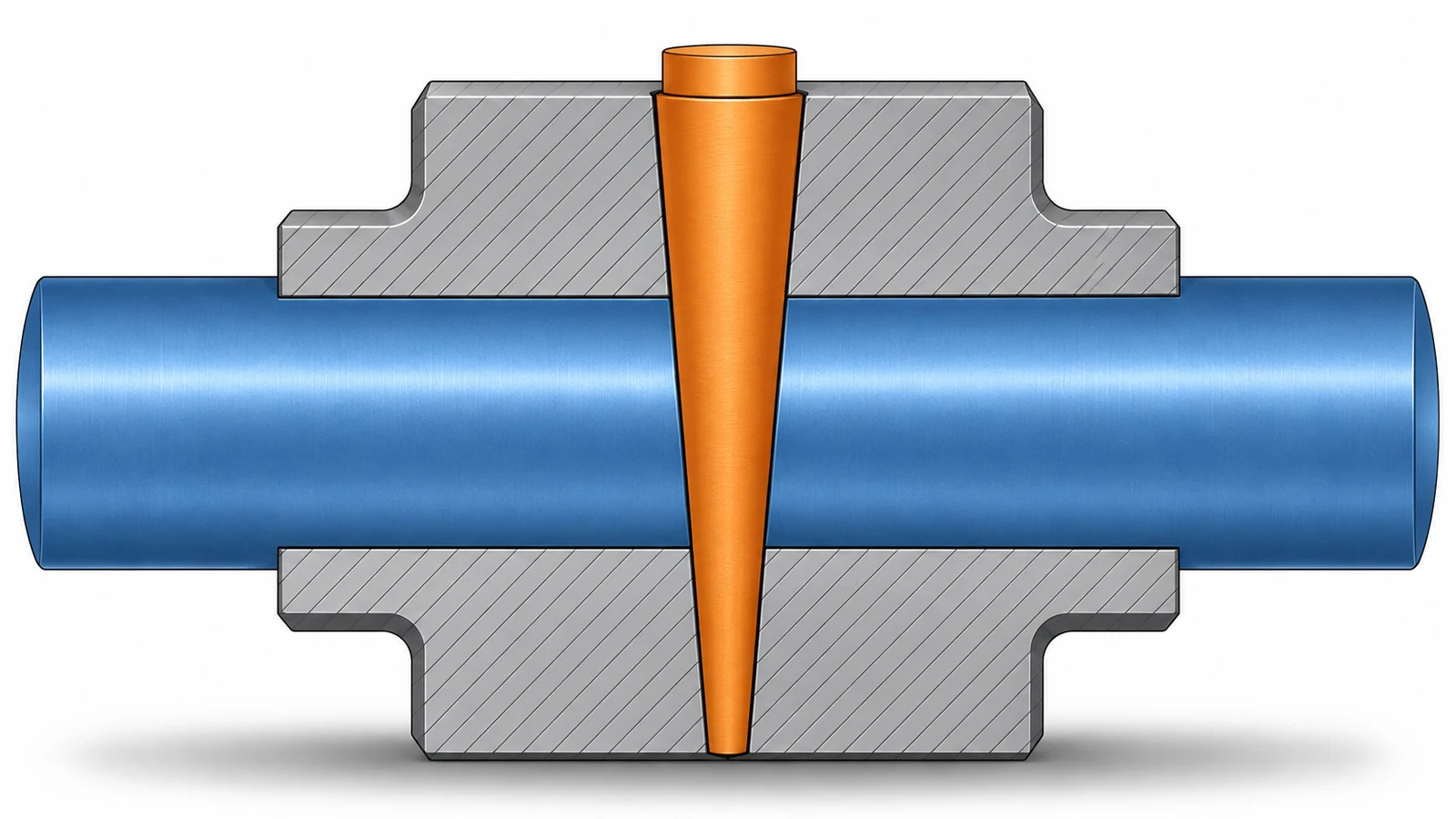
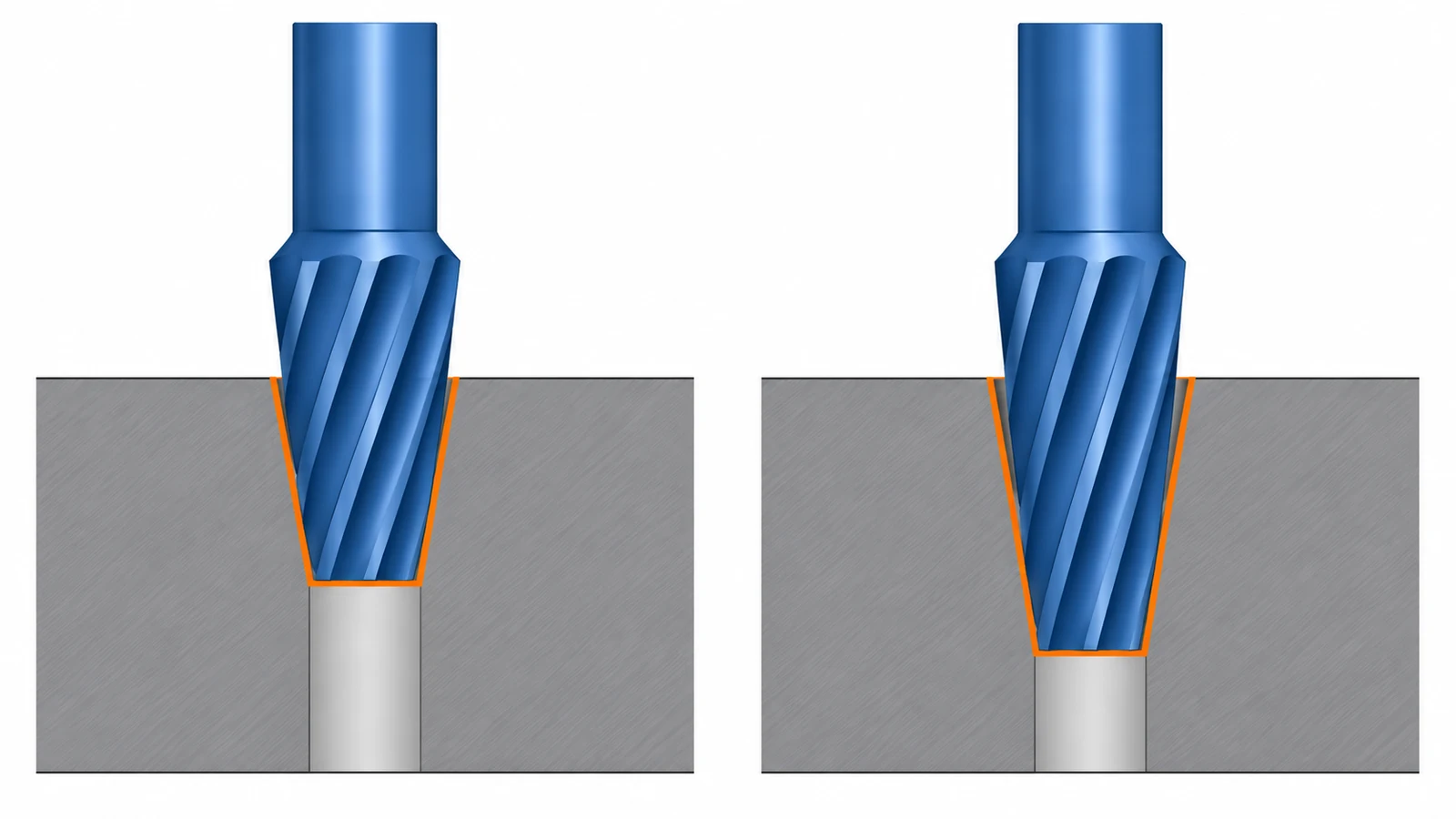 For an illustrative hub-and-shaft assembly, suppose the pin must remain within a defined projection envelope. A hole that lets it disappear farther into the hub may fail that requirement even though the pin grips. The example demonstrates why projection and seating belong on the acceptance plan; it does not prescribe a particular pin or fit.
جهّز ثقباً يمكن لأداة التشطيب أن تتبعه فعلياً
The prepared hole must leave suitable material for the selected reamer without imposing an excessive or uneven finishing cut. A deep taper may require a different preparation from a short, accessible hole. Use the tool manufacturer’s guidance and the actual material rather than a universal drilling allowance.
Step drilling or another controlled pre-machining route can approximate the required geometry where appropriate. The important check is the remaining material along the tool’s engagement, not only the entrance diameter. Excess stock near one end can load the tool unevenly or make chip removal difficult.
Pre-hole position and alignment still matter. A reamer tends to follow the prepared feature; it should not be relied on to relocate a significantly misplaced axis. The existing boring and reaming comparison discusses that distinction for precision holes. For a taper pin, the additional issue is the seating relationship along the cone.
راجع توسيع ثقب مسمار مخروطي operation with the milling or drilling setup that locates the hole. Stable workholding and accessible entry and exit space help preserve the intended axis. The operation still needs project-specific confirmation; naming it does not establish a particular machine, tool or tolerance capability.
Choose cutting conditions and chip-control arrangements for the tool, hole depth and material. A blind feature creates different clearance and chip risks from a through-hole. Do not assume that the tool’s nominal diameter proves that its cutting lead and overall form can finish a constrained hole to the required depth.
قرر ما إذا كانت الأجزاء تُوسَّع معاً
Some assemblies are prepared and finish-reamed with the components held in their intended relationship. This can establish a matched hole through the stack. It also creates responsibilities for alignment, identification and later replacement. The decision belongs to the design and process plan.
If a hub is clamped to a shaft for joint machining, define how its angular and axial position is established before the hole is cut. Movement during machining changes the relationship the pin is intended to preserve. A visually aligned assembly is not necessarily located against the correct datums.
Where components must be independently interchangeable, evaluate how their separately produced holes and the pin will meet the required relationship. A successful matched prototype is not proof that any hub, shaft and pin combination will assemble the same way. Interchangeability needs its own tolerances and acceptance evidence.
Identify matched sets when required and make their status clear in the manufacturing record. Conversely, do not introduce an undocumented matched-set restriction into a drawing that requires interchangeable parts. The chosen production route must support the actual replacement and maintenance requirements.
تحقق من الجلوس بالإضافة إلى الهندسة
Define which characteristics must be measured and which may be evaluated by an agreed functional check. These can include hole location, taper geometry, surface condition, seating position and pin projection. A single diameter at one face cannot prove the whole tapered interface.
 يمكن أن يوفر مقياس الاستدقاق المناسب دليلاً مضبوطًا عندما تتوافق غايته ومرجعه وطريقته مع المتطلب. قد يدعم مسمار الإنتاج فحص التجميع، لكنه يجلب تباينه الخاص وليس تلقائيًا مقياسًا معايرًا. حدد ما إذا كان القبول يستخدم قطعة رئيسية مخصصة، أو قياسًا أبعاديًا، أو جزءًا مطابقًا معتمدًا، أو مزيجًا من ذلك.
حدد كيفية تطبيق فحص الاستقرار الوظيفي. يمكن لقوة الدفع غير المضبوطة أن تغيّر النتيجة الظاهرة أو تتلف مكونًا أو تحجب التلامس الضعيف. لا تُقرّ القبول بدفع المسمار بقوة أكبر مرارًا حتى تبدو بروزته صحيحة.
افحص الحالة النظيفة الخالية من النتوءات بعد العملية النهائية ذات الصلة. قد توقف النتوءات القريبة من الطرف الصغير أو المدخل حركة السير دون الإشارة إلى تلامس مخروط صحيح. حيث تحدث الطلاء أو المعالجة الحرارية، حدد المرحلة التي تُقبل فيها الهندسة النهائية والتجميع.
بالنسبة للأجزاء المصنوعة من مخزون الفولاذ, ، أدرج الحالة المطلوبة في ذلك الاستعراض. لا يمكن ببساطة افتراض أن الثقب المشغّل طريًا والذي سيخضع لمزيد من المعالجة سيحتفظ بعلاقته النهائية. سجّل ما يجب إعادة فحصه بعد أن تصل المادة إلى حالتها المحددة.
حل المشكلة دون ملاحقة المسمار أعمق
إذا استقر المسمار عاليًا، فتحقق أولاً من هوية المسمار وتوافق الاستدقاق والنتوءات والشوائب والهندسة الفعلية للثقب. قد تكون الميزة المعاد تنعيمها صغيرة جدًا، لكن ذلك ليس التفسير الوحيد. إن تكبيرها قبل التحقق من السبب قد يحوّل عائقًا قابلًا للمعالجة إلى ثقب مفرط الحجم.
إذا استقر المسمار عميقًا جدًا، فقارن ضبط الأداة ومرجع العمق مع القطعة الأولى المعتمدة. تحقق أيضًا من المسمار ومرحلة المعالجة. لا يمكن لإزالة مزيد من المادة أن تستعيد ثقبًا أصبح كبيرًا جدًا بالنسبة لمتطلب الاستقرار المحدد. أي إصلاح أو مسمار بديل يحتاج إلى قرار هندسي.
إذا كان التلامس أو الموضع غير متسق، فراجع الثقب المسبق وتثبيت قطعة العمل وحالة الأداة وما إذا كان التجميع قد تحرك أثناء التشغيل. أبقِ التحقيق مرتبطًا بالأدلة القابلة للملاحظة. لا ينبغي تقديم تغيير في التغذية أو علامة المثقاب كتشخيص بحد ذاته.
يكون إعادة تنعيم ثقب مسمار الاستدقاق جاهزًا للإنتاج عندما يتوافق المسمار المختار والاستدقاق ومرجع العمق وطريقة القبول النهائية. أصدر تفصيلًا مقطعيًا وفحصًا للعملية يجعلان تلك العلاقة قابلة للتكرار، بدلًا من ترك المشغّل ليقرر أين يجب أن يتوقف المسمار المحكم.
أسئلة قبل إصدار ثقب مسمار مخروطي
هل يمكن لمقياس مسمار مستقيم واحد قبول ثقب مسمار استدقاق؟
قد يفحص حالة محلية محدودة، لكنه لا يستطيع إثبات علاقة الاستدقاق والاستقرار الكاملة. استخدم طريقة مطابقة للخصائص المحددة.
هل يجب على المورد دائمًا إعادة تنعيم المكونات المطابقة معًا؟
لا. حدد ما إذا كان التصميم يسمح بأطقم متطابقة أو يتطلب أجزاء قابلة للتبادل بشكل مستقل. هذا الاختيار يغيّر العملية وخطة التحقق.
هل يُصلح الثقب مفرط الحجم بدفع المسمار إلى مسافة أبعد؟
ليس عندما تحدد الرسومات حدود التجليس أو البروز. قم بتقييم الشكل الهندسي الفعلي واحصل على تصرف معتمد بدلاً من تغيير حالة التجميع بشكل غير رسمي.