
يعالج PEEK وPTFE مشكلات هندسية مختلفة. اختر PEEK عندما يجب أن يحتفظ مكوّن مُشغَّل آليًا بهندسة تحمّل الأحمال تحت إجهاد مستمر؛ واختر PTFE عندما يكون الاحتكاك المنخفض أو التعرض الكيميائي أو السلوك غير اللاصق هو المتطلب الحاكم ويمكن للتصميم تحمّل مزيد من التشوه. لا يحسم أي من الاسمين وحده القرار: فالدرجات المعززة وغير المعززة، وشكل المخزون، ودرجة الحرارة، وضغط التلامس، وسطح التزاوج، وحدود الرسم الفعلية كلها ذات أهمية.
بالنسبة لجزء CNC، فإن المقارنة المفيدة ليست مسابقة خصائص عامة. بل هي ما إذا كانت المادة قادرة على الحفاظ على الميزة التي تجعل التجميع يعمل: تجويف، أو سطح إحكام، أو سطح محمل، أو كتف تحديد موضع. تُعدّ نظرة عامة على مادة PEEK و صفحة مادة PTFE نقاط بداية؛ ولا يزال يتعين تحديد الدرجة المختارة وظروف التشغيل.
ابدأ بالميزة المحمّلة
دوّن ما يجب أن يستمر الجزء في فعله بعد ساعات أو أشهر في الخدمة. إذا كان يجب على كتلة محمل أو دليل أو عازل الحفاظ على علاقة قريبة بين التجويف والعمود تحت الحمل، فإن الزحف والصلابة يستحقان وزنًا أكبر من قيمة احتكاك معلنة. إذا كان الجزء حشية أو بطانة أو منزلقًا معرضًا كيميائيًا، فقد يهيمن الاحتكاك والتوافق الكيميائي بينما يمكن استيعاب الحركة الأبعادية بواسطة التجميع.
ميّز أيضًا بين التلامس والبنية. فسطح تآكل رقيق من PTFE مدعوم بحامل صلب تصميم مختلف عن حامل PTFE سميك غير مدعوم. وبالمثل، قد يكون مكوّن PEEK عضوًا إنشائيًا في تصميم ما ومجرد فاصل مقاوم كيميائيًا في تصميم آخر. يتبع اختيار المادة مسار الحمل والهندسة، لا تسمية التطبيق.
عندما يجب أن يبقى التطابق ثابتًا
يُختار PEEK عادةً حيث يجب على البوليمر أن يحمل الحمل مع الحفاظ على الشكل أفضل من فلوروبوليمر شديد المرونة. وهذا لا يجعل كل درجة PEEK متطابقة أبعاديًا. فالتعزيز، وإضافات المحامل، وطريقة تصنيع المخزون، والتاريخ الرطوبي والحراري، والسماكة المزالة أثناء التشغيل الآلي يمكن أن تغيّر سلوك المكوّن. والرسم الذي يطلب “PEEK” فقط قد يترك المورّد والمفتش يخمّنان الدرجة المقصودة.
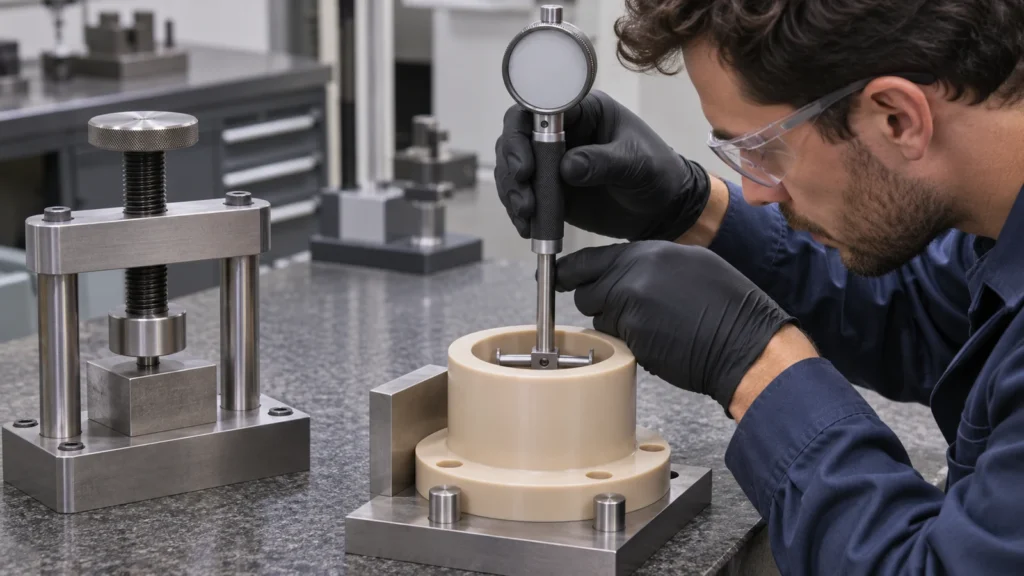
PTFE can deform under sustained contact pressure. In a seal or low-load sliding interface, that compliance may be useful; around a precision locating feature it can instead relax preload or shift the effective clearance. If PTFE remains the better chemical or friction choice, the design can respond with a larger support area, a metal or PEEK backing structure, a replaceable wear element, or a fit that is less sensitive to small movement. Validate the assembled geometry under representative load and temperature rather than assuming an unloaded machined dimension predicts service behavior.
For close fits, specify which surfaces are functional and how the part is supported during measurement. A polymer can move with clamping force and temperature, so inspection conditions should be consistent with the drawing and the intended assembly—not an improvised “tight tolerance” detached from use.
عندما يهيمن الانزلاق أو الكيمياء
PTFE’s low-friction and chemical-resistance profile makes it attractive for sliding, sealing, and chemically exposed parts. Its low strength relative to structural engineering plastics is the trade-off. A mating surface can also dominate wear: a rough, sharp, or contaminated counterface may damage the polymer regardless of its catalog description. Review counterface finish, contact pressure, movement, lubrication, and whether particles can become trapped.
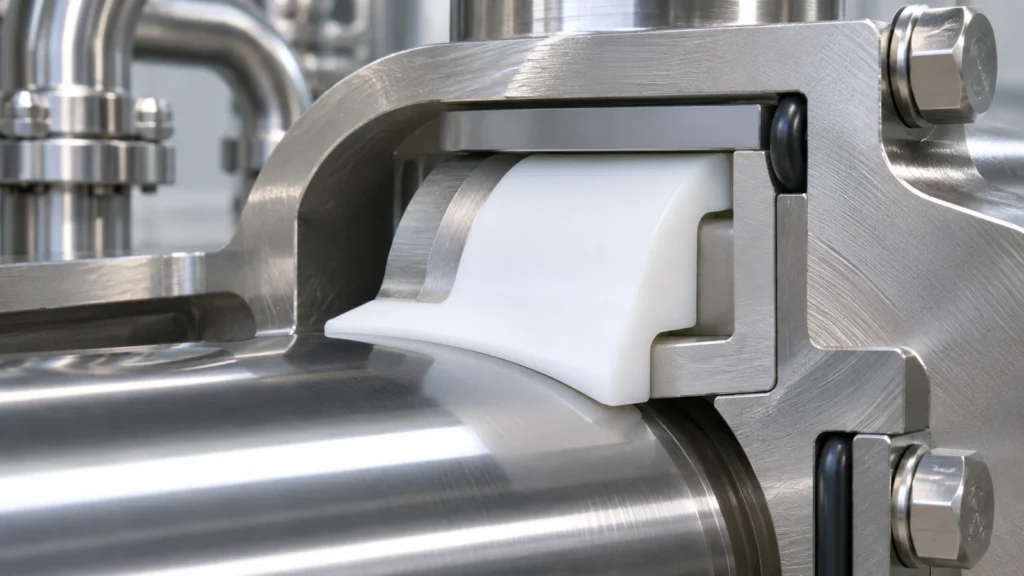
PEEK may be the better choice when the same part must support load and resist wear, especially when the interface cannot be given a separate carrier. But a generic “PEEK” request can hide meaningful differences between unfilled, carbon-filled, glass-filled, and bearing grades. Fillers can improve one property while changing wear against a particular counterface, machining behavior, surface quality, or electrical characteristics. Match the exact grade to the contact pair and environment.
For either polymer, check chemical compatibility against concentration, temperature, exposure duration, and stress. A compatibility chart is a screening tool; it is not a service-life guarantee for a stressed, machined component.
التشغيل الآلي يغيّر المقارنة
Machined plastics respond differently from metals. PTFE’s softness and tendency to deform can make thin walls, sharp corners, and clamping-sensitive features difficult to hold consistently. PEEK is more rigid, but stock condition, residual stress, heat, tool sharpness, and the order in which features are cut still matter. A deep bore released from a fixture may not measure exactly like the same bore while constrained.
Share the part’s functional datums, wall thicknesses, mating components, and the surfaces that control assembly. Agree whether a feature is measured after the part has stabilized and in what orientation. If the design needs a close fit, provide the mating size or fit range instead of asking the machine shop to infer it from an isolated nominal dimension. The CNC materials guide can help organize material questions before the drawing is released.
جدول اختيار عملي
| حالة الجزء | Initial direction | What must be checked |
|---|---|---|
| Loaded locating bore or spacer | Evaluate PEEK first | Grade, sustained load, temperature, stock form, and assembled clearance |
| Low-friction seal or chemically exposed slide | قيّم PTFE أولاً | الضغط والدعم والسطح المقابل والحركة وسماحية التشوه |
| جزء تآكل يحمل الحمل والانزلاق معاً | قارن درجات المحامل الدقيقة | السطح المقابل ونمط التآكل والحشو والحرارة والحطام واستراتيجية الاستبدال |
| مكوّن رقيق الجدار أو مقيّد بشدة | راجع الهندسة قبل الاختيار | استجابة التثبيت ودعم الجدار ونظام المساند وحالة الفحص |
هذا جدول فرز، وليس تصنيفاً عالمياً. إذا تعرّض الجزء لتعرض كيميائي وحراري وميكانيكي مشترك، فاختبر الدرجة المختارة في تجميعة تمثيلية أو احصل على إرشاد هندسي خاص بالمادة.
ما يجب إدراجه في طلب عرض السعر
اذكر درجة البوليمر وتسمية المورّد حيث يعتمد التصميم عليها؛ وبيّن ما إذا كانت المادة غير المحشوة أو المعززة مقبولة؛ وحدّد سائل التشغيل ونطاق درجة الحرارة؛ وصف الحمل والحركة وسطح التزاوج والعمر المتوقع؛ وحدّد الأبعاد التي تتحكم في التجميع. إذا كانت البدائل مسموحة، فحدّد الأدلة المطلوبة قبل الموافقة. يمكن لملاحظة عامة عن مادة بديلة أن تغيّر الزحف أو الملاءمة أو التآكل أو الأداء الكيميائي بطرق لا تظهر في الفحص عند الاستلام.
الإجابة المفيدة مشروطة بالتالي: عادةً ما تكون PEEK نقطة البداية الأقوى لهندسة تحمل الأحمال، بينما غالباً ما تكون PTFE نقطة البداية الأكثر طبيعية للخدمة منخفضة الاحتكاك أو الكيميائية. يحدد الرسم وظروف التشغيل ما إذا كان هذا الاختيار الأول يصمد أمام المراجعة.