
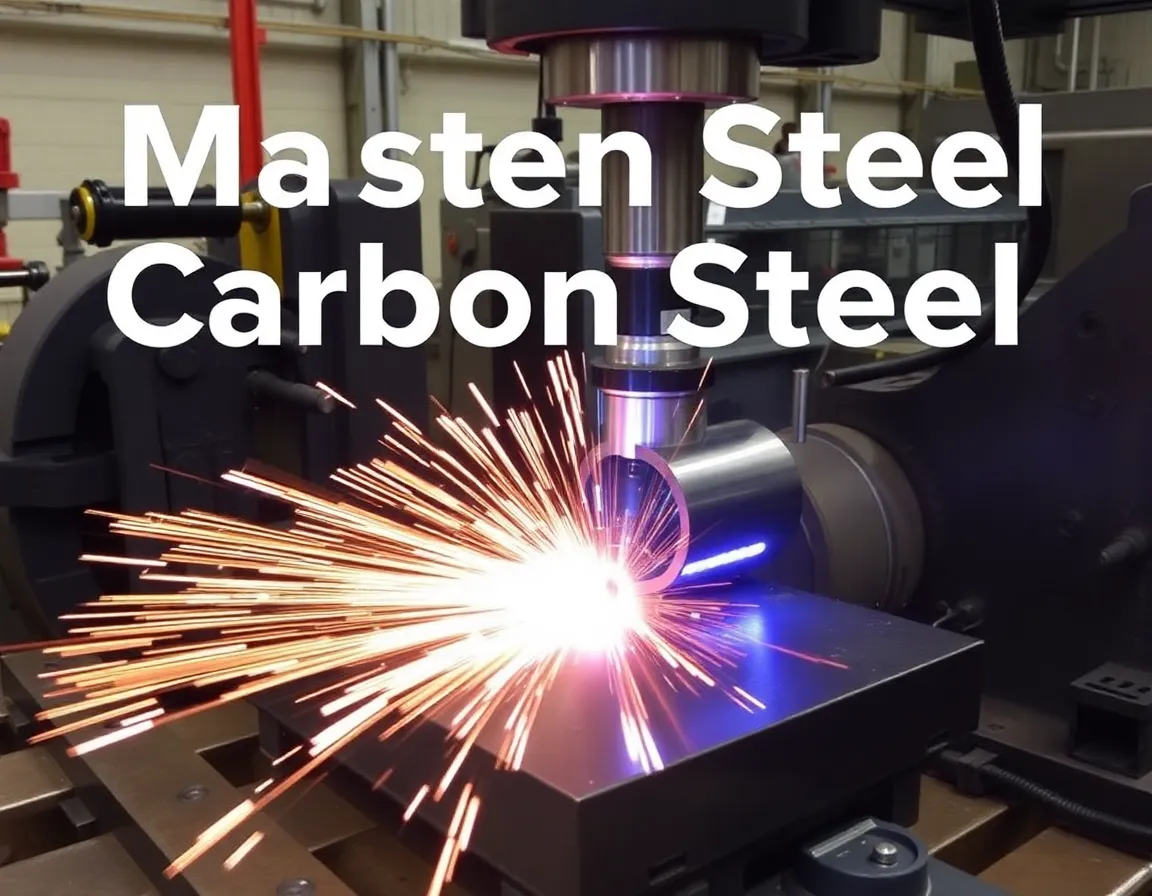
Introduction to Machining Carbon Steel
Machining carbon steel is a fundamental process in the manufacturing industry, encompassing the removal of material from carbon steel workpieces to achieve precise dimensions, surface finishes, and geometric shapes. Carbon steel, an alloy of iron and carbon (typically containing up to 2.1% carbon by weight), is one of the most widely used materials in engineering due to its excellent strength, durability, and cost-effectiveness. The machining of this material involves operations such as turning, milling, drilling, grinding, and threading, each requiring specific tools, speeds, feeds, and coolants to optimize performance and tool life.
Understanding the nuances of machining carbon steel is critical for manufacturers, engineers, and machinists. Unlike stainless steel or aluminum, carbon steel presents unique challenges, including chip control, heat generation, and work hardening, particularly in higher carbon grades. This comprehensive guide explores the core principles, techniques, benefits, applications, and best practices for machining carbon steel, providing actionable insights for both novice and experienced professionals.
Understanding Carbon Steel: Composition and Machinability
Classification of Carbon Steel
Carbon steel is categorized based on its carbon content, which directly influences its mechanical properties and machinability. The three primary classifications are:
- Low-carbon steel (mild steel): Contains up to 0.3% carbon. It is soft, ductile, and highly machinable, making it ideal for general-purpose components like brackets, panels, and structural parts.
- Medium-carbon steel:Contains 0.3% to 0.6% carbon. It offers a balance of strength and toughness, often used for gears, axles, and shafts. Machining requires moderate cutting forces and careful heat management.
- High-carbon steel:Contains 0.6% to 1.0% carbon (or higher). It is hard, wear-resistant, but more difficult to machine due to increased brittleness and tendency to work-harden. Common applications include springs, cutting tools, and high-strength wires.
Key Factors Affecting Machinability
The machinability of carbon steel is influenced by several material properties. Hardnessis a primary factor: harder steels require more cutting force and generate higher temperatures, accelerating tool wear.Ductilityaffects chip formation; low-carbon steels produce long, stringy chips that can entangle, while high-carbon steels produce short, brittle chips.Thermal conductivityis also critical—carbon steel conducts heat moderately, meaning much of the cutting heat is transferred to the tool, necessitating effective cooling strategies.
Additionally, the presence of inclusions(such as manganese sulfide) can improve machinability by acting as chip breakers and reducing friction. This is why free-machining carbon steels (e.g., 12L14) are often specified for high-volume production. However, standard carbon steels like AISI 1018 or 1045 require careful parameter selection to achieve optimal results.
Machining Processes and Techniques for Carbon Steel
Turning and Milling
Turning and milling are the most common machining operations for carbon steel. In turning, the workpiece rotates while a stationary cutting tool removes material. For low-carbon steel, high cutting speeds (200–400 SFM) with carbide tools are typical, using positive rake angles to reduce cutting forces. For medium- and high-carbon steels, speeds should be reduced by 20–40% to manage heat and tool wear.Millinginvolves a rotating cutter and stationary workpiece; climb milling is preferred for carbon steel to minimize work hardening and improve surface finish.
Key parameters include cutting speed,feed rate, anddepth of cut. A general guideline for carbon steel using carbide inserts: cutting speed of 250–350 SFM for low-carbon, 180–250 SFM for medium-carbon, and 120–180 SFM for high-carbon steel. Feed rates typically range from 0.005 to 0.020 inches per revolution (IPR) for turning, and 0.002 to 0.010 inches per tooth (IPT) for milling. Depth of cut should be optimized to balance material removal rate with tool stress.
Drilling and Threading
Drilling carbon steel requires robust tool geometry and adequate chip evacuation. High-speed steel (HSS) drills are suitable for low-carbon steel, but carbide-tipped or coated drillsare recommended for higher carbon grades to resist heat and wear. Peck drilling cycles are often employed to break chips and prevent jamming. For threading, thread mills or taps with TiN (titanium nitride) coatings provide longer tool life. Cutting speeds for drilling carbon steel are generally 50–100 SFM for HSS and 150–300 SFM for carbide, with reduced speeds for harder grades.
Grinding and Finishing
Grinding is used for achieving tight tolerances and superior surface finishes on carbon steel. Surface grindingwith aluminum oxide or silicon carbide wheels is common. For hardened high-carbon steel, CBN (cubic boron nitride) wheels are preferred due to their thermal stability. Coolant application is critical to avoid thermal damage and burning. Finishing operations like honing or lapping can further refine surface roughness to below 0.2 µm Ra.
Benefits and Advantages of Machining Carbon Steel
Machining carbon steel offers several distinct advantages that make it a preferred choice across industries:
- Cost-effectiveness: Carbon steel is significantly cheaper than stainless steel, titanium, or nickel alloys, reducing raw material costs for large production runs.
- Excellent machinability (low-carbon grades):Mild steel is easy to cut, producing predictable chips and requiring less power, which lowers tooling and energy expenses.
- Versatility:Carbon steel can be heat-treated after machining to achieve desired hardness and strength, allowing for a wide range of final properties.
- Weldability:Many carbon steel grades are readily weldable, enabling the assembly of complex machined components without cracking or distortion.
- Availability:Carbon steel is stocked in virtually all shapes and sizes (bars, plates, tubes, sheets) by suppliers worldwide, ensuring quick procurement.
- Recyclability:Carbon steel is 100% recyclable, supporting sustainable manufacturing practices.
These benefits are particularly valuable in high-volume industries such as automotive, construction, and general manufacturing, where cost and reliability are paramount.
Applications of Machined Carbon Steel Components
Machined carbon steel parts are ubiquitous in modern engineering. Key application areas include:
- Automotive industry: Engine blocks, crankshafts, connecting rods, gears, brake rotors, and suspension components are commonly machined from medium-carbon steels like AISI 1045 or 4140.
- Construction and infrastructure:Structural beams, bolts, nuts, brackets, and heavy equipment parts (excavator arms, bulldozer blades) rely on low- and medium-carbon steels for strength and weldability.
- Oil and gas:Valves, flanges, fittings, and drill collars are machined from carbon steel grades that can withstand high pressure and corrosive environments.
- Agricultural machinery:Tractor parts, plowshares, and harvester components benefit from the toughness and wear resistance of high-carbon steels.
- General manufacturing:Shafts, pins, bushings, spindles, and machine tool components are routinely machined from carbon steel for durability and precision.
The adaptability of carbon steel to various machining processes—from CNC turning to manual milling—ensures its continued dominance in these sectors.
Best Practices for Machining Carbon Steel
Tool Selection and Geometry
Choosing the right cutting tool is critical for efficient machining. For carbon steel, carbide insertswith coatings such as TiCN (titanium carbonitride) or AlTiN (aluminum titanium nitride) offer excellent wear resistance and heat dissipation. Tool geometry should include positive rake angles for low-carbon steel to reduce cutting forces, and negative rake angles for high-carbon steel to strengthen the cutting edge. Always use sharp tools to minimize work hardening and built-up edge (BUE).
Cutting Parameters and Speeds
Optimizing cutting parameters prevents premature tool failure and ensures consistent quality. As a rule of thumb, reduce cutting speed by 10–15% for every 0.1% increase in carbon content. Use lower feed rates for finishing passes to achieve tight tolerances (e.g., 0.002–0.005 IPR). Monitor chip color: blue or purple chips indicate excessive heat, requiring speed reduction or increased coolant flow. For roughing, a depth of cut of 0.050–0.150 inches is typical; for finishing, 0.005–0.030 inches.
Coolant and Lubrication
Effective coolant application is essential to control heat and flush chips. Water-soluble coolantswith concentrations of 5–10% are standard for carbon steel, providing both cooling and lubrication. For heavy-duty operations, oil-based cutting fluids improve lubricity and reduce friction. Ensure coolant reaches the cutting zone directly; through-tool coolant systems are highly effective for deep hole drilling and milling. Inadequate coolant can lead to thermal expansion, poor surface finish, and tool chipping.
Chip Control and Evacuation
Long, stringy chips from low-carbon steel can wrap around tools and workpieces, causing safety hazards and downtime. Use chip breakerson inserts or employ pecking cycles (in drilling) to produce smaller, manageable chips. For milling, climb milling helps push chips ahead of the cutter rather than trapping them. Regular chip removal from the machine bed prevents re-cutting and tool damage.
Workholding and Vibration Dampening
Secure workholding is vital to prevent vibration (chatter) during machining. Use rigid fixtureswith minimal overhang. For thin-walled parts, consider using soft jaws or vacuum chucks to distribute clamping forces evenly. Damping materials or tuned mass dampers can reduce vibration in long-reach tooling. If chatter occurs, reduce spindle speed or increase feed rate to shift the vibrational frequency.
Common Challenges and Troubleshooting
Machinists often face specific issues when working with carbon steel. Built-up edge (BUE)occurs when material adheres to the cutting edge, causing poor surface finish and tool failure. Solutions include increasing cutting speed, using coated tools, and applying higher coolant pressure.Work hardeningis common in high-carbon steels—avoid dwell marks or light cuts; instead, use aggressive depths of cut to cut beneath the hardened layer.Tool wearcan be mitigated by selecting appropriate grades (e.g., C2 or C3 carbide) and maintaining consistent cutting parameters. Finally,dimensional inaccuracyfrom thermal expansion can be minimized by allowing parts to cool before final measurement or using coolant to stabilize temperature.
Conclusion
Machining carbon steel remains a cornerstone of modern manufacturing, offering an unmatched combination of affordability, versatility, and mechanical performance. By understanding the material's classification, selecting appropriate tools and parameters, and adhering to best practices, machinists can achieve high-quality results across a vast array of applications. Whether producing automotive components, construction hardware, or precision machine parts, the principles outlined in this article provide a solid foundation for successful machining of carbon steel. As technology advances—with innovations in tool coatings, CNC automation, and coolant systems—the efficiency and precision of carbon steel machining will only continue to improve, solidifying its role in the industrial landscape for years to come.