
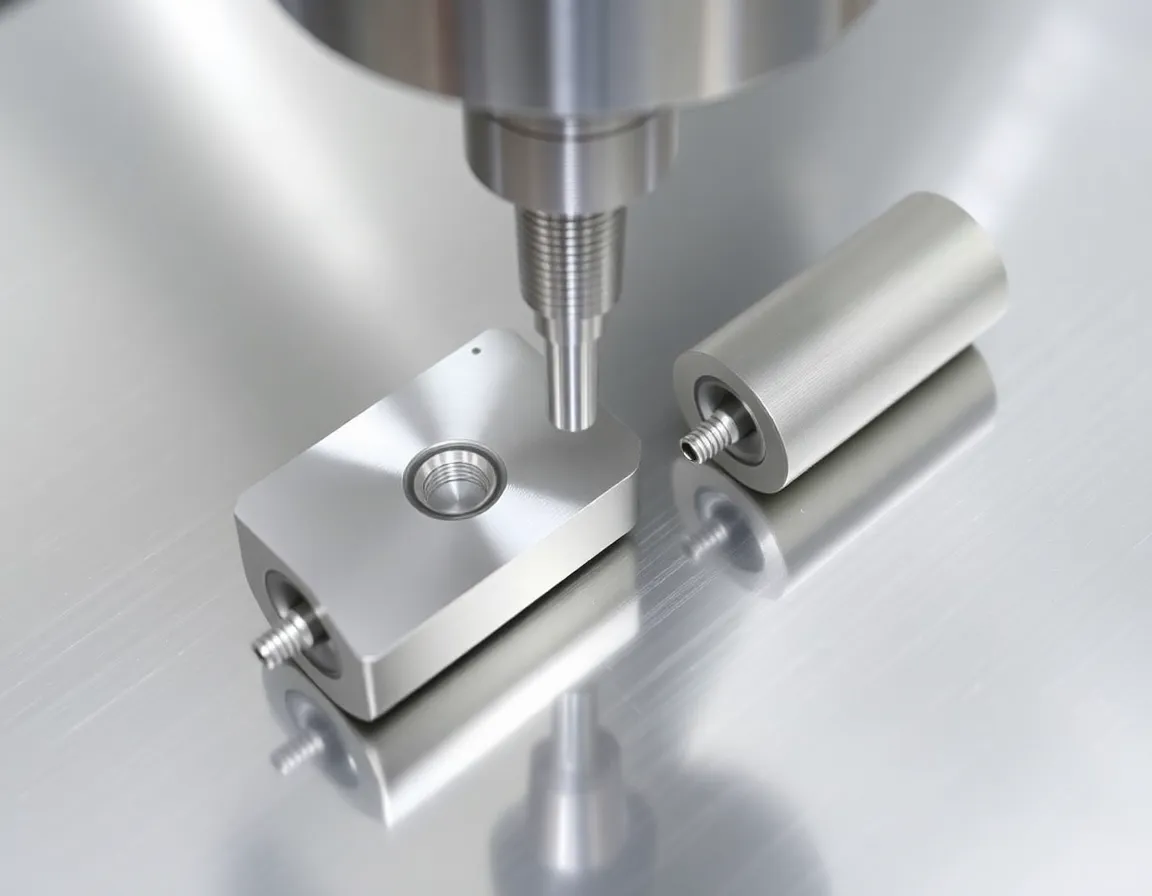
The Critical Role of Precision Machining in Modern Medicine
The field of medical implants represents one of the most demanding and life-enhancing applications of modern engineering. From orthopedic joints to spinal cages and dental fixtures, these devices must integrate seamlessly with the human body, enduring immense mechanical stresses and biological environments for decades. At the heart of manufacturing these vital components lies a specialized discipline: medical titanium machining. This process transforms raw titanium alloys into intricate, biocompatible implants with the precision and reliability that human lives depend upon. This guide explores the intricacies, challenges, and best practices of machining titanium for medical implants.
Why Titanium? The Material of Choice for Implants
Titanium, particularly Grade 5 (Ti-6Al-4V) and commercially pure grades, reigns supreme in the medical implant industry. Its selection is not arbitrary but based on a unique combination of properties that are nearly ideal for in vivo applications.
Key Properties of Medical Titanium
Biocompatibility: Titanium's greatest asset is its ability to osseointegrate—form a direct structural and functional connection with living bone. It does not elicit adverse immune responses or corrode in the body's saline environment.
High Strength-to-Weight Ratio: Titanium offers strength comparable to many steels but at about 45% of the weight. This is crucial for implants like femoral stems, reducing stress shielding and improving patient comfort.
Excellent Corrosion Resistance: A passive oxide layer (primarily TiO2) forms spontaneously on its surface, providing exceptional resistance to bodily fluids and preventing metallic ion release.
Fatigue Resistance: Implants are subject to cyclic loading (e.g., with every step a patient takes). Titanium's high fatigue strength ensures long-term durability under these conditions.
The Challenges of Machining Medical Titanium
Despite its advantages, titanium is classified as a "difficult-to-machine" material. Its very properties that make it ideal for implants present significant hurdles in the machining process.
Primary Machining Challenges
- Low Thermal Conductivity: Titanium dissipates heat poorly. During machining, heat concentrates at the cutting tool edge instead of being carried away by chips or the workpiece, leading to extremely high tool temperatures, rapid wear, and potential thermal damage to the implant's surface integrity.
- High Chemical Reactivity at Elevated Temperatures: At the high temperatures generated during cutting, titanium tends to react with tool materials (like carbide), causing galling, adhesion, and diffusion wear, which shorten tool life dramatically.
- Low Elastic Modulus: Titanium is "springy." This can lead to deflection of the workpiece under cutting forces, resulting in chatter, dimensional inaccuracy, and difficulty maintaining tight tolerances on thin-walled features common in implants.
- Work Hardening: Titanium can harden rapidly during machining, making subsequent passes more difficult and increasing tool wear if not managed correctly.
Best Practices in Medical Titanium Machining
Overcoming these challenges requires a meticulous, controlled approach that blends advanced technology with deep process expertise. Adherence to these best practices is non-negotiable in a regulated medical environment.
1. Machine Tool and Setup
The foundation of precision machining is a robust setup. Machines must be high-rigidity, high-precision CNC (Computer Numerical Control) centers, often with torque-rich spindles for maintaining low speeds under high load. Effective temperature-controlled coolant systems are essential to manage heat. Workholding must be extremely secure to prevent any movement or vibration, utilizing hydraulic or precision mechanical clamps.
2. Cutting Tool Selection and Strategy
Tooling is a critical variable. Solid carbide end mills with specialized coatings (like PVD-applied AlTiN or TiAlN) are standard. These coatings provide a thermal barrier and reduce reactivity. Geometry is equally important: sharp cutting edges, reduced contact areas, and polished flutes help control chip evacuation and heat. Employing trochoidal milling or high-efficiency milling (HEM) paths minimizes tool engagement and heat generation, promoting longer tool life and better surface finishes.
3. Cutting Parameters and Coolant Management
The golden rule is to maintain a consistent, appropriate chip load. Key strategies include:
- Lower Cutting Speeds (SFM): To control temperature generation.
- Moderate to High Feed Rates (IPT): To ensure the tool is cutting, not rubbing, which generates more heat.
- Reduced Radial Depth of Cut: To limit tool engagement.
- High-Pressure, High-Flow Coolant: Coolant must be delivered precisely at the cutting interface to flush away chips and provide cooling and lubrication. Through-tool coolant delivery is highly effective.
4. Post-Machining Processes
Machining is only one step. Implants undergo rigorous finishing:
- Deburring and Cleaning: All micro-burrs must be removed to prevent tissue irritation. Multi-stage ultrasonic cleaning removes all contaminants.
- Surface Enhancement: Processes like abrasive flow machining, electropolishing, or blasting create the desired surface topography (rough for bone ingrowth, smooth for articulating surfaces).
- Quality Assurance: Every part undergoes 100% inspection using Coordinate Measuring Machines (CMM), optical comparators, and surface profilometers to verify dimensions, tolerances (often in microns), and surface finish against the strict design specifications.
Applications and the Future of Titanium Implant Machining
The applications for machined titanium implants are vast and life-changing.
Common Machined Titanium Implants
- Orthopedic Implants: Knee and hip joint replacements (femoral stems, tibial trays), trauma plates, and spinal interbody fusion cages.
- Dental Implants: The abutments and often the fixture posts themselves are precision-machined for optimal fit and osseointegration.
- Cardiovascular Devices: Components of pacemaker casings, heart valve rings, and structural heart implants.
- Cranial and Maxillofacial Implants: Custom plates and mesh for skull reconstruction following trauma or surgery.
Emerging Trends and Technologies
The field is continuously evolving. Additive Manufacturing (3D Printing) is now used to create complex, porous lattice structures that promote bone growth. However, even these printed parts often require precision CNC machining on critical interfacing surfaces to achieve the necessary tolerances and finish. The integration of advanced in-process monitoring, AI-driven tool wear prediction, and even more sophisticated 5-axis machining for single-setup complex geometry are pushing the boundaries of what is possible, enabling patient-specific implants tailored from medical scans.
Conclusion: A Symphony of Precision and Expertise
Precision machining of medical titanium is far more than a manufacturing step; it is a critical discipline that sits at the intersection of metallurgy, mechanical engineering, and biology. It demands an unwavering commitment to quality, a deep understanding of material behavior, and the application of advanced manufacturing technologies. The result is not just a component, but a device that restores mobility, alleviates pain, and saves lives. As medical science advances and patient expectations grow, the role of the precision machinist in creating the next generation of intelligent, long-lasting, and perfectly integrated implants will only become more vital.