
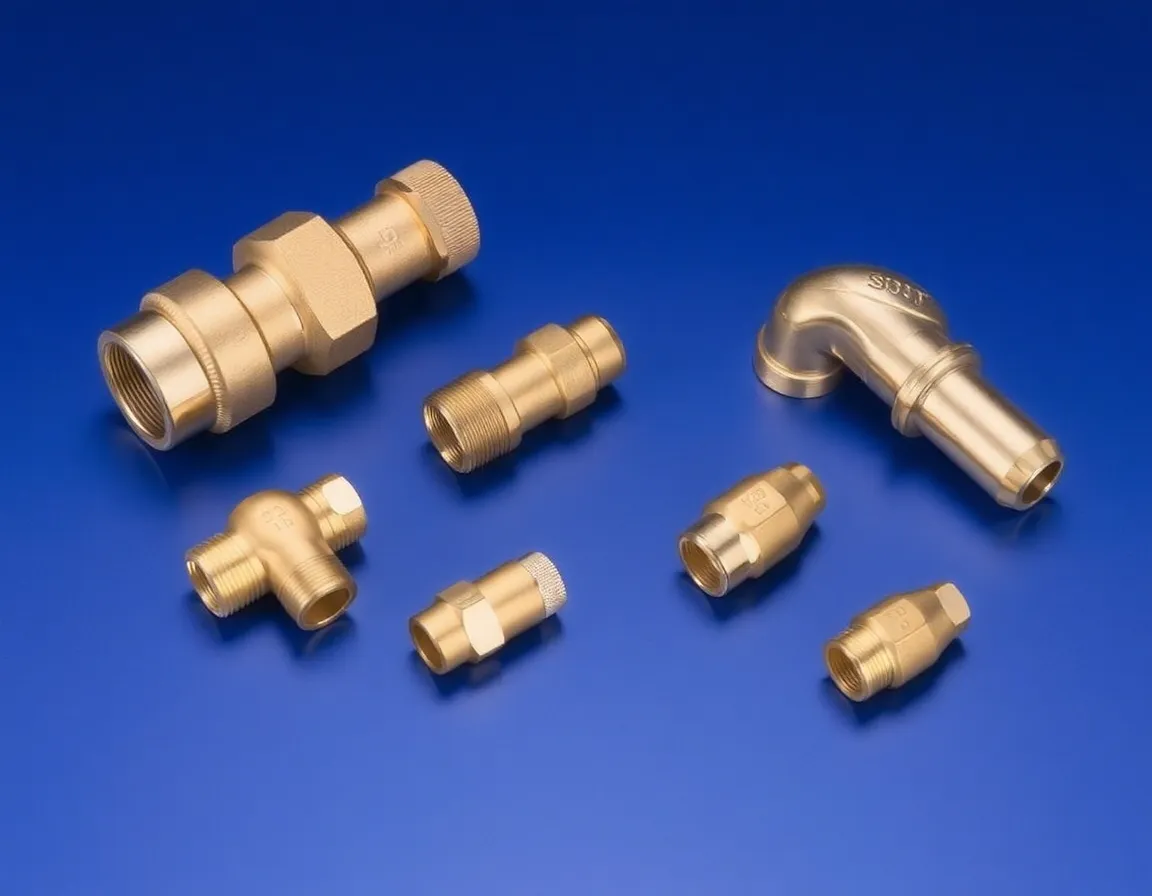
Introduction to Machined Brass Fittings
Machined brass fittings are precision-engineered components used to connect, terminate, control, or redirect flow in piping and tubing systems. Unlike stamped or cast fittings, which are formed through molding or pressing, machined brass fittings are created by removing material from a solid brass bar or rod using computer numerical control (CNC) lathes, milling machines, or automatic screw machines. This subtractive manufacturing process yields fittings with exceptional dimensional accuracy, superior surface finish, and consistent mechanical properties. Brass, an alloy primarily composed of copper and zinc, offers an ideal balance of strength, corrosion resistance, and machinability, making it a preferred material for applications ranging from pneumatic systems and hydraulic lines to instrumentation and potable water distribution.
The term "machined" distinguishes these fittings from their counterparts produced via other methods. For instance, forged brass fittingsare shaped under high pressure and heat, whilecast brass fittingsare poured into molds. Machined fittings, however, benefit from tight tolerances—often within ±0.001 inches—that ensure leak-proof connections and reliable performance under demanding conditions. This article explores the manufacturing process, key benefits, diverse applications, and best practices for selecting and using machined brass fittings.
How Machined Brass Fittings Are Made
Raw Material Selection
The foundation of any high-quality machined brass fitting is the raw material. Manufacturers typically use free-machining brass alloys, with C36000 (free-cutting brass)being the most common. This alloy contains approximately 61.5% copper, 35.5% zinc, and 3% lead, which acts as a chip breaker and lubricant during machining. The lead content significantly improves machinability, allowing for high cutting speeds and excellent surface finishes. For applications requiring lead-free compliance—such as potable water systems—alloys likeC27450orC46400 (naval brass)are used, which substitute lead with bismuth, selenium, or silicon.
The Machining Process
The production of machined brass fittings typically involves several stages:
- Bar Feeding: Hexagonal or round brass rods are fed into automatic screw machines or CNC lathes. Hexagonal stock is often preferred for fittings that require wrench flats, as it eliminates secondary milling operations.
- Turning and Facing:The rotating workpiece is cut by stationary carbide or high-speed steel tools to create the outer diameter, threads, and sealing surfaces. Multi-axis CNC machines can perform turning, boring, and threading in a single setup.
- Drilling and Boring:Precise internal passages are created using drills and boring bars. For fittings like elbows or tees, cross-drilling operations create the intersecting flow paths.
- Threading:Both internal (female) and external (male) threads are cut using thread chasing dies or single-point threading tools. Common thread standards include NPT (National Pipe Thread), BSPP (British Standard Parallel Pipe), and metric threads.
- Deburring and Finishing:After machining, sharp edges and burrs are removed using tumbling, vibratory finishing, or manual tools. Some fittings undergo passivation or bright dipping to enhance corrosion resistance and appearance.
- Inspection:Dimensional verification is performed using coordinate measuring machines (CMMs), thread gauges, and optical comparators. Leak testing under pressure ensures seal integrity.
Quality Control Measures
Reputable manufacturers adhere to strict quality standards such as ISO 9001andASME B1.20.1for pipe threads. Statistical process control (SPC) is employed to monitor critical dimensions in real time, while material certifications trace the alloy composition back to the mill. For critical applications, 100% inspection of threads and sealing surfaces may be required.
Key Benefits of Machined Brass Fittings
Superior Dimensional Accuracy and Consistency
Because machined brass fittings are cut from solid bar stock, they achieve tolerances that are impossible with casting or forging. This precision ensures that threads engage properly, sealing surfaces mate perfectly, and the fittings align correctly in complex assemblies. For example, a machined brass compression fitting for instrumentation tubing can maintain a concentricity of 0.002 inches, preventing leaks in high-vibration environments.
Excellent Corrosion Resistance
Brass naturally forms a protective patina when exposed to air and water, resisting rust and oxidation. This makes machined brass fittings ideal for applications involving moisture, chemicals, and marine environments. Unlike steel fittings, brass does not galvanically corrode when coupled with copper or stainless steel tubing in most conditions. Additionally, the smooth surface finish achieved through machining minimizes areas where corrosive agents can accumulate.
High Strength and Durability
Machined brass fittings retain the full mechanical properties of the base alloy, as the machining process does not introduce porosity or internal stresses common in castings. They can withstand high pressures—often rated up to 3000 psi for hydraulic applications—and temperatures ranging from -50°F to 400°F. The material's ductility also allows for slight deformation under extreme loads without catastrophic failure.
Versatility in Design and Customization
CNC machining allows for the creation of complex geometries that are difficult or impossible to cast. Custom features such as extended wrench flats, integrated check valves, or special thread forms can be incorporated without expensive tooling changes. This makes machined brass fittings particularly valuable for prototype development, low-volume production, and specialized industrial equipment.
Leak-Free Performance
The tight tolerances and smooth surface finishes of machined brass fittings contribute to reliable sealing. When used with appropriate sealing methods—such as PTFE tape, pipe dope, or O-rings—these fittings create robust, leak-free joints. This is critical in pneumatic systems where even minor leaks can cause pressure drops and energy waste.
Applications of Machined Brass Fittings
Pneumatic and Hydraulic Systems
In compressed air systems, machined brass fittings are widely used for connecting hoses, valves, and actuators. Their corrosion resistance prevents contamination from rust particles, while their strength handles the cyclic pressure fluctuations common in pneumatic circuits. Hydraulic systems operating with oil, water-glycol, or phosphate ester fluids also rely on machined brass fittings for low-pressure return lines and pilot controls.
Instrumentation and Analytical Equipment
Laboratory and process instrumentation demands fittings that provide precise, leak-tight connections for gases and liquids. Machined brass compression fittings with ferrules are standard for connecting 1/8-inch to 1/2-inch tubing in gas chromatographs, mass spectrometers, and calibration systems. The dimensional accuracy ensures that the ferrule compresses uniformly, creating a metal-to-metal seal that withstands repeated thermal cycling.
Plumbing and Potable Water Systems
Lead-free machined brass fittings are essential in modern plumbing for drinking water applications. They are used in faucet connections, supply stops, and manifold systems. The smooth internal bores reduce pressure drop and minimize biofilm growth, while the material's antimicrobial properties provide an additional safety benefit. Many municipalities now require lead-free certification (NSF/ANSI 61) for all fittings in contact with potable water.
Automotive and Transportation
In vehicles, machined brass fittings are found in brake systems, fuel lines, and air conditioning circuits. Their resistance to vibration fatigue and thermal expansion makes them suitable for engine compartments. For example, brass fittings connect fuel injectors to the fuel rail, where they must withstand high-pressure pulses and exposure to ethanol-blended fuels.
Marine and Offshore Applications
The marine environment presents extreme challenges due to saltwater corrosion and constant motion. Machined brass fittings, particularly those made from naval brass (C46400), are used in bilge pumps, cooling water systems, and hydraulic steering controls. Their resistance to dezincification—a form of corrosion that weakens standard brass—ensures long service life in these harsh conditions.
Best Practices for Selecting and Using Machined Brass Fittings
Choose the Correct Alloy
Not all brass alloys are suitable for every application. For high-pressure hydraulic systems, select C36000for its strength and machinability. For potable water, ensure the fitting is certified lead-free. In marine environments, opt forC46400 naval brassorC69300, which offers enhanced corrosion resistance. Always verify the material certification from the manufacturer.
Match Thread Types and Tolerances
Thread compatibility is critical to prevent leaks and mechanical failure. NPT threadsare tapered and rely on thread deformation for sealing; they require a sealant like PTFE tape.BSPP threadsare parallel and typically use an O-ring or bonded washer. Ensure that male and female threads are of the same standard—mixing NPT and BSP threads can cause cross-threading and leaks. Use thread gauges to verify fit before assembly.
Apply Proper Sealing Techniques
For NPT fittings, wrap PTFE tape clockwise around the male threads, leaving the first thread exposed to prevent tape fragments from entering the system. For BSPP fittings, use a compatible O-ring or copper washer. Avoid over-tightening, as brass is softer than steel and can strip threads or crack the fitting. Use a torque wrench for critical applications.
Consider Pressure and Temperature Ratings
Machined brass fittings have maximum pressure and temperature limits that vary with size, wall thickness, and alloy. Always consult the manufacturer's specifications. As a general rule, brass fittings are not recommended for steam service above 250°F or for applications involving ammonia, which can cause stress corrosion cracking. For high-temperature or high-pressure applications, consider using stainless steel fittings instead.
Inspect for Defects Before Installation
Before installing a machined brass fitting, visually inspect it for cracks, burrs, or damaged threads. Run a clean rag through the bore to remove any machining chips. For critical systems, perform a pressure test of the assembled joint before putting it into service. Replace any fitting that shows signs of galling or deformation during assembly.
Store and Handle Properly
Brass fittings should be stored in a dry, clean environment to prevent tarnishing and contamination. Avoid mixing brass fittings with steel or aluminum parts in storage, as galvanic corrosion can occur if they come into contact with moisture. Use protective caps or plugs on threaded ends to prevent damage during transport.
Conclusion
Machined brass fittings represent a pinnacle of precision engineering, combining the natural advantages of brass with the exacting control of CNC machining. Their dimensional accuracy, corrosion resistance, and mechanical reliability make them indispensable across industries—from the delicate instrumentation in a laboratory to the robust hydraulics of a marine vessel. By understanding the manufacturing process, recognizing the key benefits, and following best practices for selection and installation, engineers and technicians can ensure long-lasting, leak-free performance. As technology advances, the demand for custom, high-tolerance machined brass fittings will only grow, driven by the need for efficiency, safety, and sustainability in fluid power and fluid handling systems. Whether you are designing a new system or maintaining an existing one, investing in quality machined brass fittings is a decision that pays dividends in reliability and peace of mind.