Our Manufacturing Blog

In-depth technical articles, material comparisons, CNC machining insights, and problem-solving guides from the Jucheng engineering team.

From Bar Stock to Finished Shaft: CNC Turning Explained

From Bar Stock to Finished Shaft: CNC Turning Explained

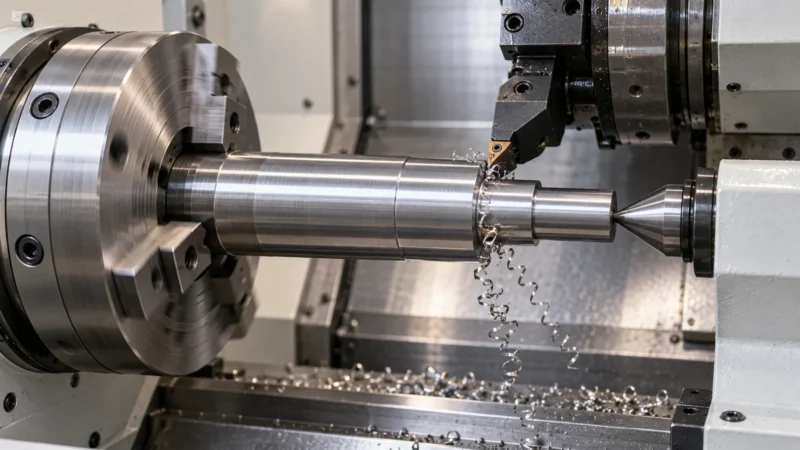
CNC turning process planning is built around one physical fact: the workpiece rotates while a cutting tool controls diameters, shoulders, grooves, bores, and threads. That makes turning a strong fit…

Read Full Article
Start With the Part: A Practical CNC Milling Process Guide

Start With the Part: A Practical CNC Milling Process Guide

CNC milling process planning should begin with the part’s functional features, not with a machine catalog. Pockets, holes, ribs, angled…

CNC Machining Process: From CAD to Finished Parts

CNC Machining Process: From CAD to Finished Parts

CNC machining process is a controlled sequence that converts a CAD model and engineering requirements into an inspected physical part.…

CNC Machining Materials: A Practical Selection Framework

CNC Machining Materials: A Practical Selection Framework

CNC machining materials should be selected from the part’s job, environment, geometry, inspection plan, and production quantity—not from a generic…

Why CNC Parts Miss Fit—and How to Set Better Tolerances

Why CNC Parts Miss Fit—and How to Set Better Tolerances

CNC machining tolerances are the controlled limits around a drawing’s nominal dimensions. They determine whether a shaft fits a bore,…

CNC Standards: Which Requirements Belong on Your Drawing?

CNC Standards: Which Requirements Belong on Your Drawing?

CNC machining standards are not paperwork added after the design is finished. They are the shared language that tells a…

Why Do CNC Quotes Vary? What Really Drives Machining Cost

Why Do CNC Quotes Vary? What Really Drives Machining Cost

Why can the same CNC part receive very different quotes? The answer is usually not a mysterious markup difference. Each…

Is CNC Right for Your Part? Benefits, Limits, and Trade-Offs

Is CNC Right for Your Part? Benefits, Limits, and Trade-Offs

CNC machining is often presented as a universal answer for precision parts, but the best manufacturing choice depends on geometry,…

How Do You Prove a CNC Part Is Good? QC That Works

How Do You Prove a CNC Part Is Good? QC That Works

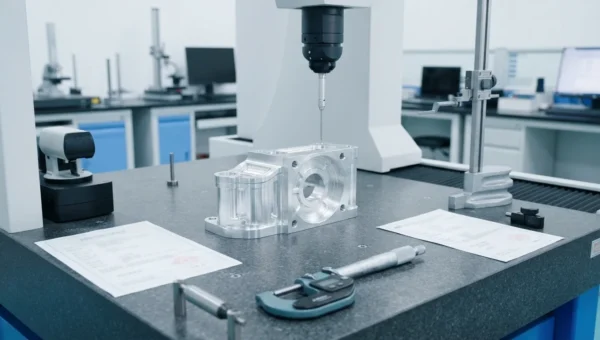
A CNC part is not proven good because it looks clean or because a machine completed its program. Quality control…

Will Your CNC Finish Work? Choose Surface Treatment by Function

Will Your CNC Finish Work? Choose Surface Treatment by Function

A CNC part is not finished simply because it has come off the machine. The surface may need to resist…