The Critical Role of Precision in Avionics Enclosures
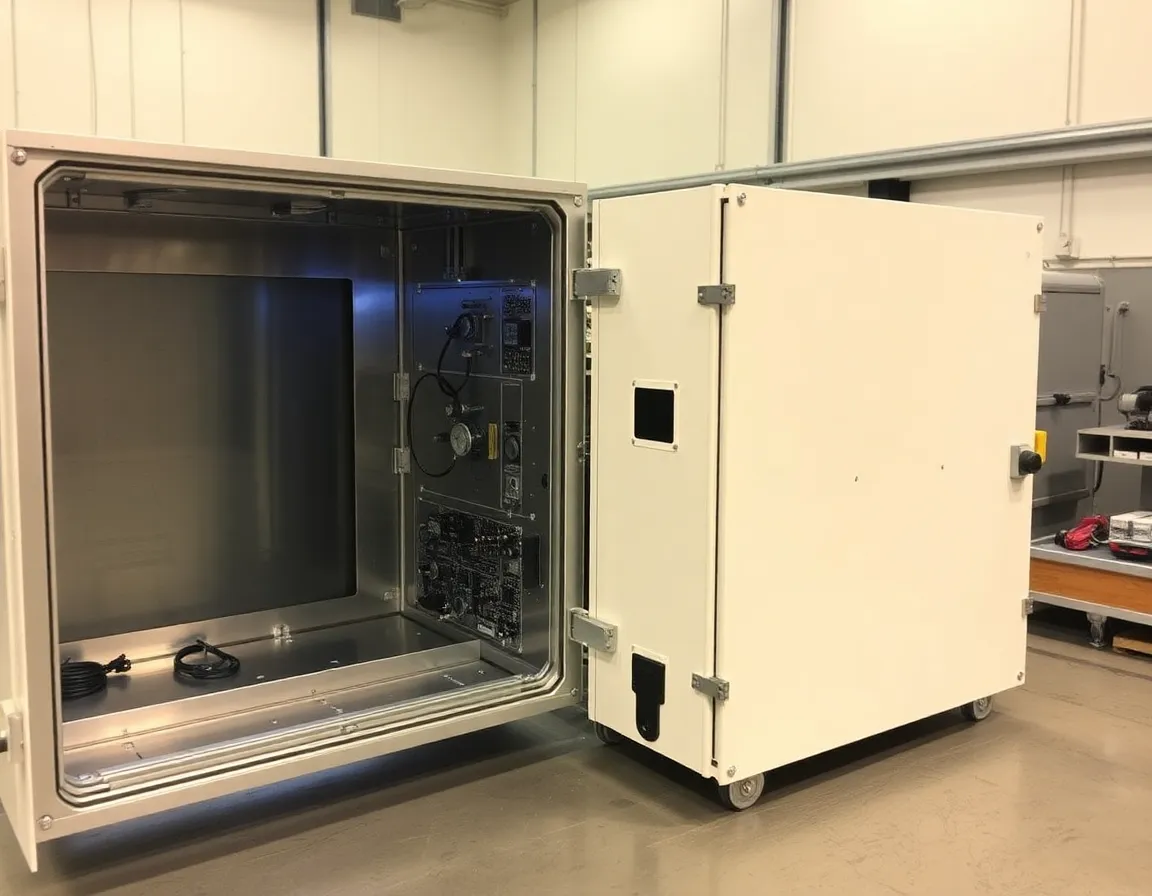
In the high-stakes world of aerospace, where every component must perform flawlessly under extreme conditions, the avionics enclosure is far more than a simple box. It is the first and most critical line of defense for the sophisticated electronic brains of an aircraft. Avionics enclosure machining is the specialized manufacturing discipline dedicated to creating these protective housings with the exacting standards the industry demands. This process involves the use of advanced computer numerical control (CNC) machines to mill, turn, and fabricate enclosures from solid blocks of metal or engineered plastics, transforming raw materials into complex, high-integrity assemblies that safeguard flight-critical systems against vibration, thermal extremes, electromagnetic interference, and environmental hazards.
How Precision Machining for Avionics Works
The journey from a digital design to a flight-ready avionics enclosure is a symphony of advanced technology and meticulous engineering. It begins long before a tool touches material.
Design for Manufacturing (DFM) and Material Selection
The process is deeply collaborative, starting with a review of the enclosure design for manufacturability. Machinists work with aerospace engineers to optimize designs for machining efficiency, structural integrity, and cost-effectiveness without compromising the specification. Material selection is paramount. Common choices include:
- Aluminum Alloys (e.g., 6061-T6, 7075-T6): Favored for their excellent strength-to-weight ratio, good machinability, and natural corrosion resistance.
- Stainless Steels (e.g., 304, 316): Used for applications requiring superior strength, toughness, and corrosion resistance, often in harsh environments.
- Precipitation-Hardening Steels (e.g., 17-4 PH): Chosen for their ability to be machined in a softer state and then heat-treated to achieve very high strength.
- Engineered Plastics (e.g., PEEK, Vespel): Utilized for their lightweight, insulating, and often RF-transparent properties in specific non-structural applications.
The Machining Process: From Blank to Finished Part
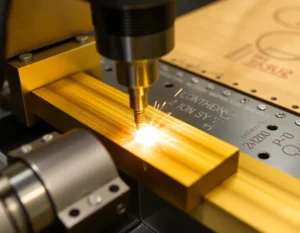
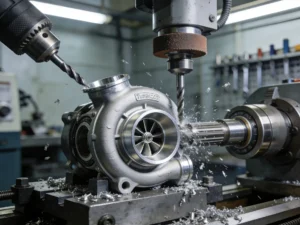
With a finalized design and material, the precision machining sequence commences. A solid block of material, or "blank," is securely fixtured to the bed of a high-precision CNC machining center. The machine follows a toolpath generated by Computer-Aided Manufacturing (CAM) software, which translates the 3D model into precise movements.
- Usinagem Multi-Eixos: 5-axis CNC machines are standard for complex avionics enclosures. They allow for machining intricate features, deep cavities, and angled holes in a single setup, ensuring exceptional accuracy and reducing handling errors.
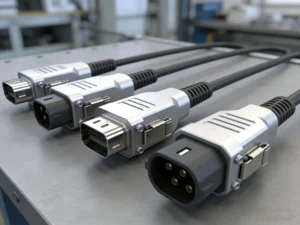
- High-Tolerance Machining: Tolerances are routinely held within ±0.0005 inches (0.0127 mm) or tighter for critical features like sealing surfaces and connector interfaces.
- Finishing Operations: After primary machining, parts undergo deburring, surface finishing (e.g., passivation for stainless steel, chem film or anodizing for aluminum), and often secondary operations like precision threading or engraving of part numbers.
Principais Benefícios e Vantagens
Choosing precision machining for avionics enclosures offers a compelling array of benefits that directly contribute to aircraft safety, performance, and lifecycle costs.
Unmatched Structural Integrity and Reliability
Machining from a solid billet creates a monolithic structure free from the weaknesses inherent in welded or assembled housings. This results in superior strength, stiffness, and durability, essential for withstanding the constant vibration and G-forces experienced during flight. The homogeneity of the material ensures consistent thermal properties and predictable behavior under stress.
Extreme Precision and Repeatability
CNC machining delivers the dimensional accuracy required for perfect sealing, connector alignment, and component fit. This precision ensures electromagnetic compatibility (EMC) by maintaining continuous conductivity across seams (critical for Faraday cage effects) and allows for the integration of advanced cooling channels and lightweight, optimized geometries that are impossible to achieve with other methods.
Material Performance and Environmental Protection
Precision machining allows the full exploitation of the chosen material's properties. A properly machined and finished enclosure provides a hermetic or environmentally sealed barrier against moisture, dust, fluids, and corrosive agents. Anodized or coated aluminum enclosures offer excellent corrosion resistance, a must for aircraft operating in diverse climates.
Design Flexibility and Scalability
From prototype to full-scale production, machining offers flexibility. Rapid prototyping via machining allows for functional testing of "flight-like" enclosures early in the design cycle. For production, CNC programs ensure every unit is identical, providing seamless scalability while maintaining quality.
Applications in Modern Aerospace
Precision-machined avionics enclosures are ubiquitous across all aircraft platforms, housing systems that are vital to flight operations.
- Flight Control Computers (FCC): Housing the processors that interpret pilot input and sensor data to command flight surfaces.
- Communication, Navigation, and Surveillance (CNS) Systems: Protecting transponders, radios, GPS units, and TCAS/ADS-B equipment from RF interference and the environment.
- Engine Control Units (ECU/FADEC): Ruggedized enclosures mounted near engines, built to withstand extreme temperatures and vibrations while managing critical engine parameters.
- Data Acquisition and Recorder Units: Including Flight Data Recorders (FDR) and Quick Access Recorders (QAR), which require robust, fire-resistant housings.
- Mission Systems in Military Aircraft: Custom enclosures for radar processors, electronic warfare suites, and targeting systems, often with stringent thermal management and EMI shielding requirements.
Best Practices and Industry Standards
Success in avionics enclosure machining is governed by adherence to a rigorous set of best practices and certifications.
Adherence to Aerospace Standards
Every step must comply with industry standards such as AS9100 (Quality Management Systems for Aerospace), which mandates rigorous traceability, controlled processes, and continuous improvement. Specific design and testing standards like DO-160 (Environmental Conditions and Test Procedures for Airborne Equipment) define the performance requirements the finished enclosure must help its internal electronics achieve.
Comprehensive Quality Assurance
Quality is not inspected in; it is built into the process. This involves:
- First Article Inspection (FAI) per AS9102, thoroughly verifying that the first part off the line meets all design specifications.
- In-process inspections using advanced metrology tools like Coordinate Measuring Machines (CMM), laser scanners, and optical comparators.
- Meticulous documentation for full traceability of every batch of material, tool used, and machine parameter.
Thermal and EMI/RFI Shielding Management
Best practice design integrates thermal management directly into the enclosure, machining intricate fins for heat dissipation or channels for liquid cooling. For EMI/RFI shielding, machined features ensure metal-to-metal contact across seams, often incorporating conductive gaskets in precisely machined grooves to create a continuous conductive shell that prevents both ingress and egress of electromagnetic noise.
Skilled Workforce and Advanced Technology
The most critical element is the synergy between skilled machinists, programmers, and engineers who understand aerospace requirements. Pairing this expertise with state-of-the-art 5-axis machining centers, high-speed spindles, and advanced CAM software is what enables the production of enclosures that meet the extraordinary demands of modern aviation.
In conclusion, precision machining for avionics enclosures is a foundational technology in aerospace manufacturing. It is the enabler of safety, reliability, and performance for the electronic systems that keep aircraft flying. By transforming robust materials into meticulously crafted protective shells through a process defined by accuracy, repeatability, and rigorous quality control, this discipline ensures that the heart of an aircraft's avionics is secure, allowing pilots and passengers to traverse the skies with confidence.