The Unseen Backbone of Modern Engineering: Precision CNC Milled Stainless Steel
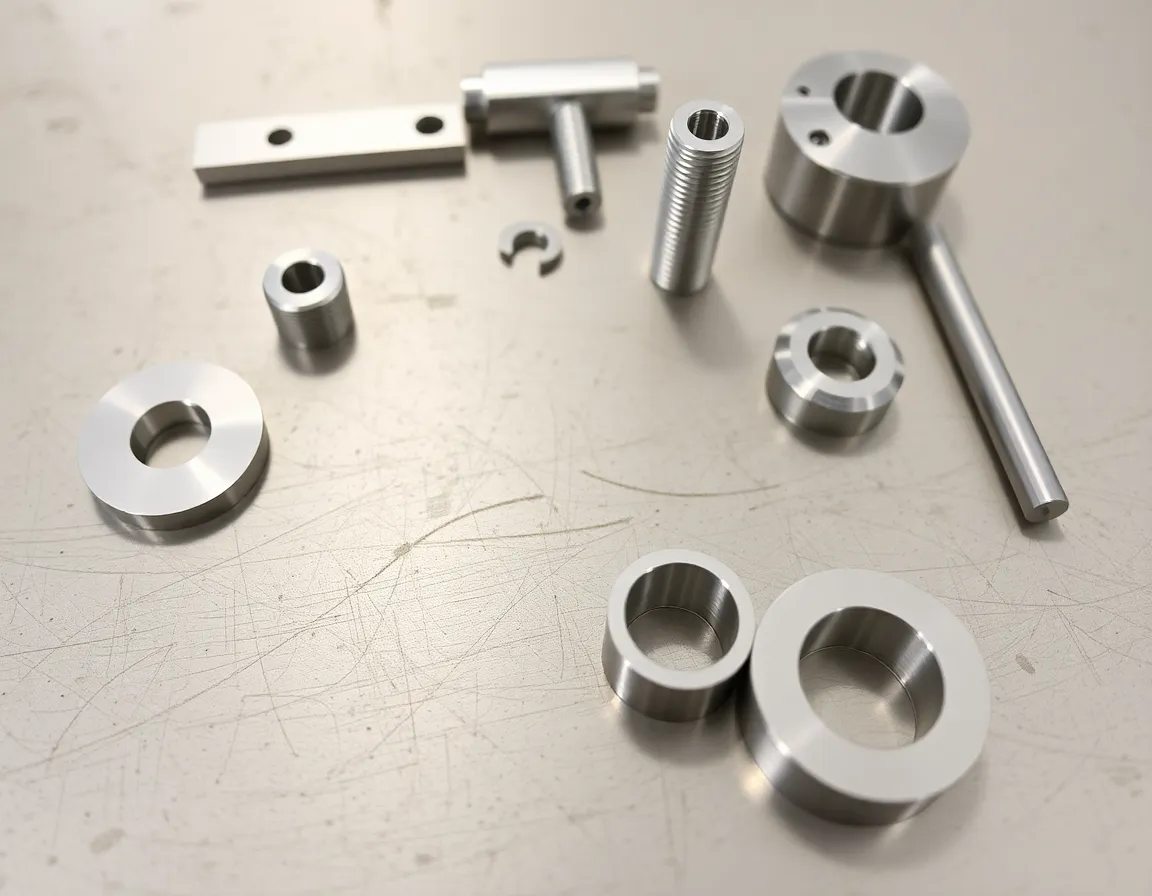
In the world of advanced manufacturing, where tolerances are measured in microns and reliability is non-negotiable, precision CNC milled stainless steel components stand as a testament to human engineering prowess. These are not mere metal pieces; they are the critical, often unseen, building blocks that ensure the functionality, safety, and longevity of countless products and systems. From the depths of the ocean to the vacuum of space, and inside the intricate mechanisms of life-saving medical devices, CNC milling transforms robust stainless steel alloys into complex, high-performance parts with unparalleled accuracy and repeatability.
What Are CNC Milled Stainless Steel Parts?
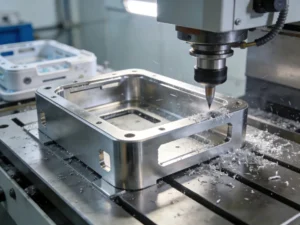
CNC (Computer Numerical Control) milling is a subtractive manufacturing process where pre-programmed computer software dictates the movement of high-speed rotary cutting tools. These tools systematically remove material from a solid block of stainless steel—known as a blank or workpiece—to produce a custom-designed part. The "precision" aspect refers to the exceptionally tight dimensional tolerances, often within ±0.01mm or finer, and superior surface finishes that can be achieved.
The process begins with a 3D CAD (Computer-Aided Design) model, which is translated into a CNC program (G-code) that instructs the machine on every movement along the X, Y, and Z axes, and often additional rotational axes. The milling machine, ranging from 3-axis to advanced 5-axis configurations, then executes these instructions with robotic consistency, carving the digital design into physical reality from materials like 304, 316, 17-4 PH, and 303 stainless steel.
The CNC Milling Process for Stainless Steel
Working with stainless steel presents unique challenges due to its strength, work-hardening tendencies, and thermal properties. A specialized process is therefore essential:
- Design & Programming: Engineers and programmers prepare the model and toolpaths, optimizing for stainless steel's characteristics to minimize stress and heat.
- Fixação da Peça: The stainless steel blank is securely clamped in a vise, fixture, or directly onto the machine bed to prevent movement during aggressive cutting.
- Tool Selection & Machining:Using specialized carbide or coated cutting tools, the machine performs a series of operations—facing, pocketing, drilling, contouring—often with coolant to manage heat and extend tool life.
- Usinagem Multi-Eixos:For complex geometries, 5-axis CNC mills can rotate the workpiece or toolhead, allowing access to five sides in a single setup, which is critical for intricate stainless components.
- Finishing & Inspection:Parts may undergo secondary finishing (deburring, polishing, passivation) and are rigorously inspected using Coordinate Measuring Machines (CMM) and other metrology tools to verify precision.
Principais Benefícios e Vantagens
The combination of CNC milling technology and stainless steel material science offers a compelling set of advantages that are difficult to match with other manufacturing methods.
Exceptional Material Properties
Stainless steel itself brings inherent benefits to the finished component. Its excellent corrosion resistance, particularly with grades like 316, makes it ideal for harsh environments. It offers high strength-to-weight ratios, impressive durability, and can maintain integrity across a wide temperature range. Furthermore, it is hygienic and easy to sterilize, a prerequisite for food, medical, and pharmaceutical applications.
Unmatched Precision and Complexity
CNC milling excels at producing parts with complex geometries—intricate contours, deep cavities, precise threads, and fine details—that would be impossible or prohibitively expensive with manual machining. The digital process ensures that every part in a production run is a perfect replica of the last, eliminating human error and enabling mass production of identical precision components.
Enhanced Efficiency and Flexibility
While initial setup and programming require time, once complete, CNC mills can run unattended for hours, producing parts rapidly. Design changes are implemented by modifying the CAD/CAM software, allowing for rapid prototyping and iterative development without the need for new physical tools or fixtures.
Diverse Industry Applications
The unique properties of precision CNC milled stainless steel make it indispensable across a vast spectrum of high-stakes industries.
Aeroespacial e Defesa
In these sectors, failure is not an option. Components such as engine mounts, landing gear parts, sensor housings, and communication system parts are machined from high-grade stainless for its strength, fatigue resistance, and reliability under extreme stress and temperature fluctuations.
Médico e Ciências da Vida
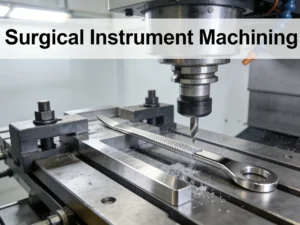
Surgical instruments, implantable device components, MRI machine parts, and dental tools rely on stainless steel for its biocompatibility and sterilizability. CNC milling provides the ultra-clean edges, micro-scale features, and flawless surfaces required for patient safety and device efficacy.
Automotivo e Automobilismo
From high-performance fuel injection systems and turbocharger components to custom fittings and sensor blocks, CNC milled stainless parts offer the durability needed under the hood and the precision required for optimal engine management and vehicle dynamics.
Food & Beverage and Marine
These environments are defined by exposure to corrosive elements: saltwater and moisture for marine applications, and caustic cleaning agents and acidic products in food processing. Stainless steel components like pump housings, valve bodies, and mixing nozzles resist corrosion, ensuring longevity and preventing contamination.
Melhores Práticas para Resultados Ideais
To fully leverage the potential of precision CNC milling for stainless steel, adherence to industry best practices is crucial from design through to production.
análise de Design para Manufaturabilidade (DFM)
Collaborating with your machining partner during the design phase is paramount. Good DFM for stainless steel includes:
- Specifying realistic tolerances—tighter tolerances exponentially increase cost.
- Incorporating appropriate fillet radii on internal corners to accommodate cutting tool sizes.
- Avoiding excessively deep, narrow cavities that are difficult to machine and tool.
- Considering the grain structure of the material for parts subject to high stress.
Material and Finish Selection
Choosing the correct stainless steel grade is fundamental. Is corrosion resistance the top priority (316L)? Is high strength needed (17-4 PH)? Is machinability key for cost-effectiveness (303)? Similarly, specifying the right surface finish—from a standard milled finish to a mirror polish or electropolish—affects both performance and cost.
Partnering with the Right Machine Shop
Not all machine shops are equipped to handle precision stainless steel work effectively. Look for a partner with:
- Modern, rigid CNC milling machines (especially 5-axis for complex parts).
- Experience and expertise in machining various stainless steel alloys.
- Advanced tooling and cooling systems to manage heat and work-hardening.
- Comprehensive in-house quality control and metrology equipment.
- A proven track record in your specific industry or application.
Conclusion: The Foundation of Innovation
Precision CNC milled stainless steel components are far more than just metal parts; they are the embodiment of material science and digital manufacturing converging to solve complex engineering challenges. Their role as the reliable, durable, and precise foundation in critical applications makes them a cornerstone of modern technological advancement. By understanding the process, benefits, and best practices outlined here, engineers and product developers can make informed decisions that lead to stronger, more reliable, and higher-performing products, pushing the boundaries of what is possible in an increasingly demanding industrial world.