The Heart of Modern Thermal Management: What is a Liquid Cooling Plate?
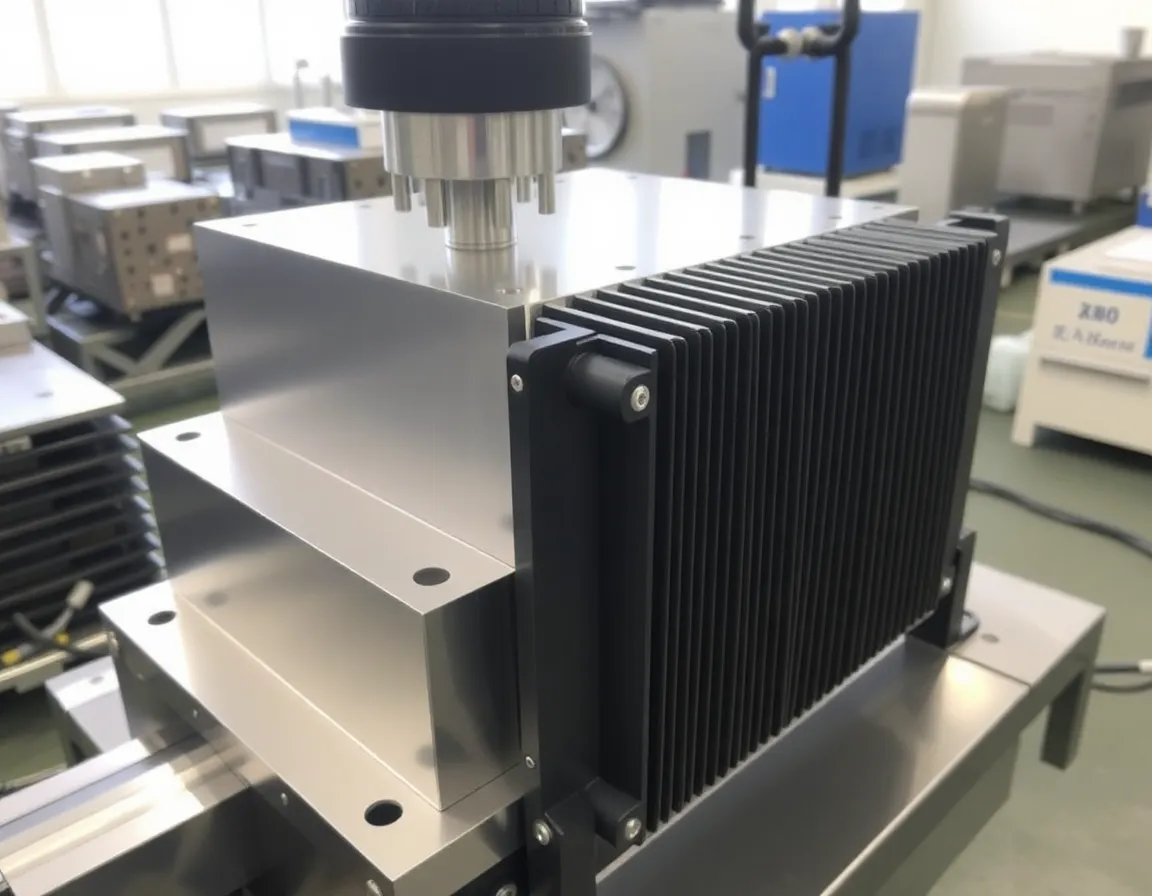
In the relentless pursuit of performance and miniaturization across industries like high-performance computing, electric vehicles, and aerospace, managing heat has become a critical engineering challenge. At the forefront of this battle is the liquid cooling plate, also known as a cold plate. A liquid cooling plate is a precisely machined metal component designed to efficiently transfer heat away from high-power electronic devices, such as CPUs, GPUs, power semiconductors, and laser diodes. Unlike bulky air-cooled heatsinks, these plates use a circulating coolant (often water or a specialized dielectric fluid) that flows through intricate internal channels, absorbing heat directly from the source and carrying it away to a radiator.
The core principle is convective heat transfer. The cooling plate is in direct thermal contact with the heat-generating component. The heat conducts into the plate's material and is then transferred to the moving liquid within the channels. The efficiency of this system is almost entirely dependent on the design and, more critically, the manufacturing precision of the plate itself. This is where advanced machining techniques come into play, transforming a simple concept into a high-tech thermal masterpiece.
Core Machining Techniques for Liquid Cooling Plates
The creation of a high-performance liquid cooling plate is a feat of modern manufacturing. The chosen technique directly impacts thermal performance, reliability, cost, and design flexibility. Here, we explore the dominant methods in the industry.
CNC Milling: The Versatile Workhorse
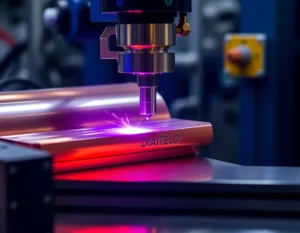
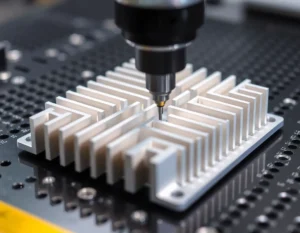
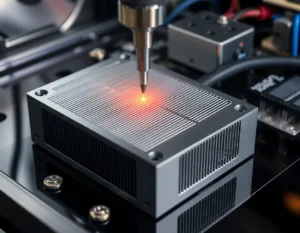
CNC (Computer Numerical Control) milling is one of the most common and versatile methods for producing liquid cooling plates. It involves using computer-controlled rotary cutting tools to remove material from a solid metal block (typically aluminum or copper). For cooling plates, this often means machining a complex pattern of channels into one half of the plate, which is then sealed by bonding, brazing, or welding a flat lid on top.
Key advantages of CNC milling include:
- Excellent Design Flexibility: Capable of creating straight, curved, and multi-depth channels with high precision.
- Superior Surface Finish: Smooth channel walls reduce flow resistance and pressure drop, improving hydraulic efficiency.
- Rapid Prototyping: Ideal for low-volume production and design iterations due to minimal setup requirements for new designs.
However, for very complex internal geometries or deep, narrow channels, milling can become time-consuming and may have tooling access limitations.
Vacuum Brazing: Creating Monolithic Strength
Vacuum brazing is a high-temperature joining process used to fuse multiple machined components into a single, leak-proof unit. Typically, the channel plate and the cover are machined separately. A brazing filler metal is applied at the joint interface, and the assembly is heated in a vacuum furnace. The vacuum environment prevents oxidation, allowing the filler metal to flow and create an extremely strong, metallurgical bond.
This technique is prized for:
- Exceptional Strength and Integrity: The resulting bond is often as strong as the base material, capable of withstanding high pressure and thermal cycling.
- No Internal Stress or Distortion: The uniform heating minimizes the warping common in welding.
- Ability to Join Dissimilar Metals: Such as copper channels to an aluminum housing, optimizing thermal and structural properties.
Diffusion Bonding: The Pinnacle of Complexity
Diffusion bonding is an advanced solid-state welding process. Multiple layers of metal, each etched or machined with portions of the cooling channel pattern, are stacked and subjected to extremely high pressure and temperature in a controlled atmosphere. The atoms at the interfaces diffuse into each other, bonding the layers into a completely monolithic part with complex internal 3D channels that would be impossible to machine from a solid block.
Applications demanding the ultimate performance benefit from diffusion bonding:
- 3D Internal Channel Networks: Enables multi-level, optimized flow paths for unparalleled heat transfer.
- Leak-Free Reliability: The part becomes one solid piece of metal with no seams or joints.
- Material Purity: No filler metals are used, preserving the thermal conductivity of the base material.
Critical Considerations and Best Practices in Machining
Mastering liquid cooling plate machining goes beyond selecting a technique. It involves a deep understanding of the interplay between design, material, and manufacturing constraints.
Material Selection: Aluminum vs. Copper
The choice of material is fundamental. Rame offers approximately 60% higher thermal conductivity than aluminum, making it the king of raw heat transfer. However, it is denser, more expensive, and harder to machine. Aluminum alloys, particularly 6061, provide an excellent balance of good thermal conductivity, low density, lower cost, and ease of machining and brazing. The decision often boils down to a trade-off between ultimate thermal performance (copper) and system-level weight, cost, and manufacturability (aluminum).
Tolerance, Surface Finish, and Leak Testing
Precision is non-negotiable. Channel dimensions must be held to tight tolerances (often within ±0.05mm) to ensure consistent flow and pressure distribution. The surface finish inside the channels (Ra value) is critical; a smoother finish reduces turbulence and pressure drop, allowing for higher flow rates or smaller pumps. After machining and assembly, every single cooling plate must undergo rigorous leak testing, typically using helium mass spectrometry or pressure decay testing, to ensure absolute integrity under operational conditions.
Design for Manufacturability (DFM)
Close collaboration between thermal engineers and machinists from the outset is vital. DFM principles include:
- Avoiding excessively thin walls between channels and the plate edge to ensure structural integrity.
- Designing channel corners with appropriate radii to facilitate tooling and reduce stress concentrations.
- Considering the placement and machining of inlet/outlet ports and any internal features like turbulators or jet impingement arrays.
Applications and The Future of Cooling Plate Machining
The demand for liquid cooling plates is exploding, driven by several high-tech industries.
Data Centers & HPC: As server processors and AI accelerator chips (GPUs, TPUs) push power densities beyond 500W, air cooling becomes impractical. Direct-to-chip liquid cooling plates are now essential for next-generation data centers, enabling higher compute density and drastically reducing cooling energy costs.
Electric Vehicles (EVs): EV power electronics, including traction inverters, onboard chargers, and battery management systems, generate significant heat. Liquid-cooled plates are critical for maintaining efficiency, power output, and longevity of these expensive components.
Aerospazio e Difesa: In avionics, radar systems, and directed-energy weapons, reliability and weight are paramount. Lightweight, high-strength aluminum cooling plates made via vacuum brazing or diffusion bonding are the standard for thermal management in extreme environments.
The future of liquid cooling plate machining is leaning towards further integration and sophistication. We are seeing the rise of additive manufacturing (3D printing) for producing plates with truly optimized, organic channel structures that maximize surface area and heat transfer. Furthermore, the integration of sensors and the development of two-phase cooling plates (which use the coolant's evaporation and condensation) represent the next frontier, requiring even more advanced and hybrid machining approaches to create the necessary internal micro-features.
In conclusion, mastering liquid cooling plate machining is a multidisciplinary endeavor that sits at the intersection of thermal science, mechanical design, and precision manufacturing. The techniques—from reliable CNC milling and robust vacuum brazing to cutting-edge diffusion bonding—each offer unique advantages for different performance and application needs. As the world's power densities continue to climb, the evolution and refinement of these machining techniques will remain absolutely vital to unlocking the performance of the technologies that will shape our future.