
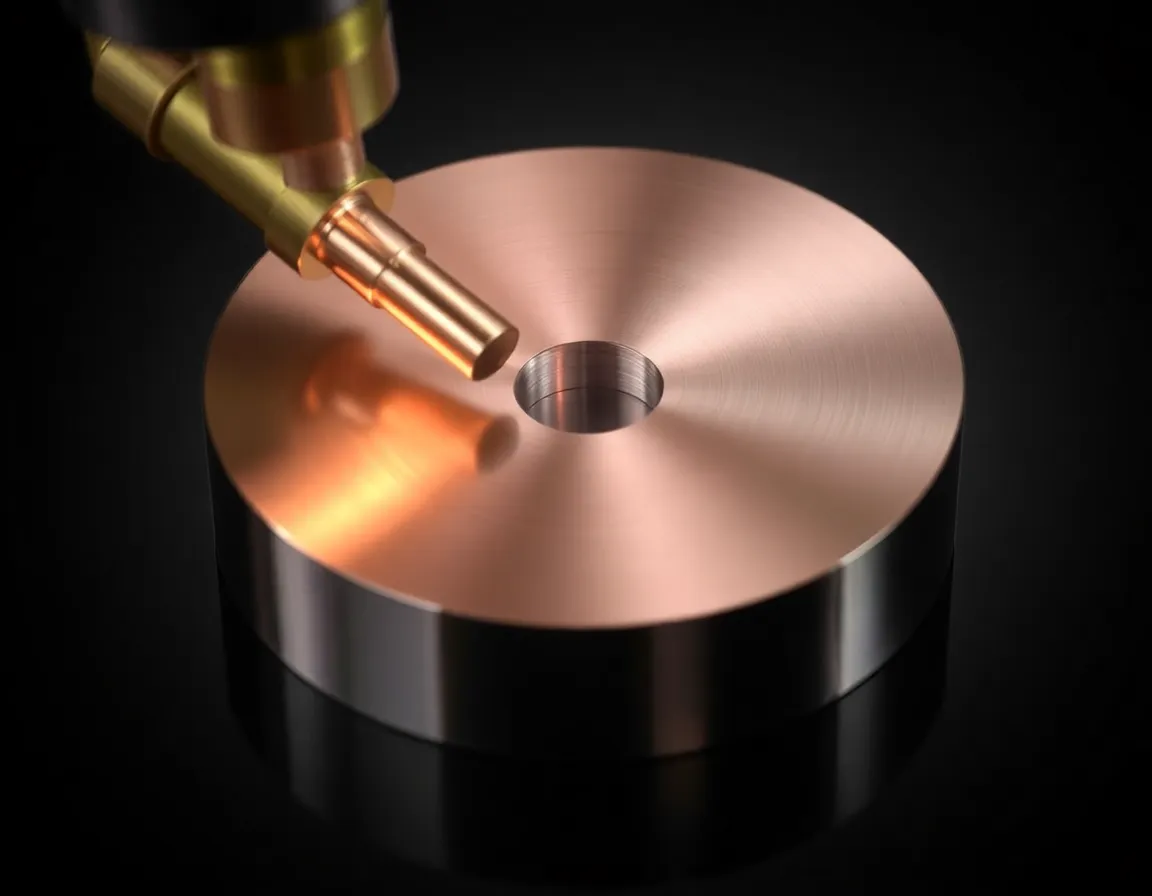
Introduzione alla lavorazione CNC dell'ottone
La lavorazione CNC dell'ottone è un processo di produzione di precisione che utilizza la tecnologia di Controllo Numerico Computerizzato (CNC) per modellare e creare parti in ottone e sue leghe. Questo metodo di produzione per sottrazione è essenziale per produrre componenti che richiedono le proprietà uniche dell'ottone, come l'eccezionale conduttività elettrica e termica, la resistenza alla corrosione e le caratteristiche antimicrobiche naturali. A differenza della lavorazione manuale, la lavorazione CNC si basa su software preprogrammato per controllare il movimento degli utensili da taglio, garantendo elevata accuratezza, ripetibilità ed efficienza per geometrie complesse. La natura morbida e duttile dell'ottone presenta sfide e opportunità specifiche nella lavorazione, rendendo necessarie tecniche e utensili specializzati per risultati ottimali.
Il processo inizia con un modello 3D digitale del pezzo desiderato, tipicamente creato utilizzando software di Progettazione Assistita da Computer (CAD). Questo modello viene poi convertito in una serie di istruzioni (codice G) che la macchina CNC interpreta per rimuovere con precisione il materiale da un pezzo in ottone. La capacità di produrre tolleranze strette, spesso entro ±0,001 pollici, rende la lavorazione CNC dell'ottone indispensabile nei settori in cui prestazioni e affidabilità sono critiche. Dai minuscoli connettori elettrici ai grandi dissipatori di calore, la tecnologia colma il divario tra l'intento progettuale e la realtà fisica, offrendo un controllo senza pari sul prodotto finale.
Come funziona la lavorazione CNC dell'ottone
Il ruolo della tecnologia CNC
La lavorazione CNC automatizza il controllo delle macchine utensili tramite un computer. Per l'ottone, questa automazione è particolarmente vantaggiosa perché consente l'applicazione costante dei parametri di taglio, il che è cruciale data la tendenza del materiale a incrudirsi e a generare tagliente di riporto. Il sistema utilizza motori e azionamenti per muovere l'utensile da taglio lungo più assi—tipicamente da tre a cinque—consentendo la creazione di caratteristiche intricate come filettature, scanalature e sottosquadri. L'operatore inserisce la velocità di taglio, la velocità di avanzamento e la profondità di taglio in base alla specifica lega di ottone, garantendo che il processo rimanga stabile ed efficiente.
Principali operazioni di lavorazione per l'ottone
Several standard CNC operations are adapted for copper:
- Fresatura CNC: Uses rotating multi-point cutters to remove material. For copper, high-speed steel or carbide tools with sharp edges are preferred to minimize friction and heat buildup.
- Tornitura CNC:Involves rotating the copper workpiece while a stationary cutting tool shapes it. This is ideal for cylindrical parts like bushings and connectors.
- CNC Drilling:Creates precise holes. Copper’s softness requires careful control of chip evacuation to prevent clogging and tool breakage.
- Rettifica CNC:Used for achieving extremely tight tolerances and smooth surface finishes, often as a secondary operation.
Considerazioni sui materiali
Copper is available in various grades, each affecting the machining process. Pure copper (C110, C101)is highly conductive but very soft, making it prone to burrs and deformation.Copper alloys like brass (C360)contain zinc, which improves machinability significantly.Beryllium copperoffers high strength but requires careful handling due to toxicity. Understanding these differences is vital for selecting the right tooling and parameters. For instance, pure copper often requires sharp, polished tools and high coolant flow to manage heat, while brass can be machined at higher speeds with less concern for surface tearing.
Benefits of Copper CNC Machining
Superior Electrical and Thermal Performance
The primary advantage of using copper in CNC-machined parts is its unmatched ability to conduct electricity and heat. Copper has an electrical conductivity rating of 100% IACS (International Annealed Copper Standard), making it the benchmark for other materials. In CNC machining, this translates into components like bus bars, connectors, and terminals that minimize energy loss and heat generation. For thermal management, copper heat sinks and cold plates efficiently dissipate heat from sensitive electronics, ensuring device longevity. The precision of CNC machining allows for optimized fin designs and surface textures that further enhance heat transfer, which is impossible with traditional casting or stamping methods.
Exceptional Corrosion Resistance and Durability
Copper naturally forms a protective oxide layer (patina) that shields it from moisture and chemicals. CNC-machined copper parts benefit from this inherent resistance, making them suitable for harsh environments like marine, chemical processing, and outdoor electrical systems. The machining process does not compromise this property, as the removed material exposes fresh copper that quickly re-oxidizes. Additionally, copper’s ductility allows it to absorb mechanical stress and vibration without cracking, which is critical for components in pumps, valves, and automotive systems. When combined with CNC’s ability to produce seamless, burr-free surfaces, the result is a part that performs reliably over decades.
High Precision and Complex Geometries
CNC machining excels at producing parts with intricate details that are difficult or impossible to achieve with other methods. For copper, this means the ability to create fine threads, deep slots, and thin walls without sacrificing structural integrity. Tolerances as tight as ±0.0005 inches are achievable with modern 5-axis CNC machines. This precision is essential for applications like RF (radio frequency) components, where dimensional accuracy directly affects signal integrity. The repeatability of CNC also ensures that each part in a production run is identical, reducing the need for costly manual inspection and rework.
Cost-Effectiveness for Prototyping and Low-Volume Production
While CNC machining can be more expensive per part than mass production methods like die casting, it offers significant advantages for prototyping and small-to-medium batch runs. No expensive molds or tooling are required, allowing design changes to be implemented quickly and cheaply. For copper parts, this is particularly valuable because the material cost itself is high; CNC machining minimizes waste by optimizing tool paths. The process also enables rapid iteration, with parts ready in days rather than weeks, accelerating product development cycles.
Applications of Copper CNC Machining
Electronics and Electrical Components
The electronics industry is the largest consumer of CNC-machined copper parts. Examples include:
- Bus bars for power distribution in switchgear and battery packs.
- Connectors and terminalsfor high-current applications in electric vehicles and data centers.
- Heat sinks and cold platesfor CPUs, GPUs, and power modules.
- Waveguides and RF cavitiesfor radar and telecommunications equipment.
These applications demand the precise dimensions and smooth surfaces that only CNC machining can provide, ensuring low resistance and efficient thermal management.
Automotive and Aerospace Industries
In automotive, copper CNC machining produces components for electric drivetrains, such as motor windings, inverter connectors, and battery cooling plates. The aerospace sector uses copper for hydraulic fittings, fuel system components, and heat exchangers due to its reliability under extreme temperatures and pressures. CNC’s ability to work with exotic copper alloys, like copper-tungsten for arc resistance, makes it indispensable for specialized aerospace applications. The high reliability of CNC-machined parts also meets stringent industry standards like AS9100 and IATF 16949.
Medical and Antimicrobial Applications
Copper’s natural antimicrobial properties, which can kill 99.9% of bacteria within two hours, have led to increased use in healthcare. CNC machining creates copper touch surfaces like door handles, bed rails, and IV poles that are both functional and aesthetically pleasing. The precision of CNC allows for smooth, crevice-free surfaces that are easy to clean and sanitize. Additionally, copper alloys like brass are used in surgical instruments and dental tools, where CNC machining ensures sharp edges and ergonomic handles.
Industrial Machinery and Hydraulics
Copper’s resistance to corrosion and wear makes it ideal for components in pumps, valves, and pneumatic systems. CNC-machined copper parts include nozzle tips, seal rings, and bearing cages. The process allows for the integration of complex internal channels for fluid flow, which is critical for hydraulic systems. The durability of these parts reduces maintenance costs and downtime in manufacturing plants, chemical refineries, and water treatment facilities.
Best Practices for Copper CNC Machining
Selezione e geometria degli utensili
Choosing the right cutting tools is critical for successful copper machining. Carbide toolswith a high cobalt content are recommended for their hardness and wear resistance. For pure copper, tools with a polished rake face and sharp cutting edges help reduce friction and prevent material sticking. Uncoated tools are often preferred over coated ones, as coatings like TiN (titanium nitride) can increase friction. For brass and other free-machining copper alloys, standard carbide tools are sufficient. Additionally, using tools with a larger helix angle (35-45 degrees) improves chip evacuation and reduces heat buildup.
Cutting Parameters and Coolant Use
Copper’s high thermal conductivity means heat is quickly transferred to the tool, so proper cooling is essential. Flood coolantwith a water-soluble oil mixture is standard, providing both lubrication and cooling. Cutting speeds should be moderate—typically 200-400 surface feet per minute (SFM) for pure copper and higher for brass. Feed rates should be aggressive enough to prevent work-hardening but not so high as to cause tool deflection. A depth of cut of 0.010-0.050 inches per pass is a good starting point. For finishing passes, reduce the depth to 0.005-0.010 inches for a smooth surface.
Managing Burrs and Surface Finish
Copper’s ductility makes it prone to burr formation, especially on edges and drilled holes. To minimize burrs, use sharp tools and consider climb milling(where the cutter rotates in the same direction as the feed) instead of conventional milling. For drilled holes, a back-chamfering tool or a deburring bit can be used. Achieving a mirror-like finish on copper requires fine feeds (0.001-0.003 inches per tooth) and a final pass with a polished insert. If a matte finish is desired, a light sandblasting or bead blasting can be applied after machining.
Controllo qualità e ispezione
Given the precision requirements of copper parts, rigorous inspection is necessary. Coordinate measuring machines (CMM) are used to verify critical dimensions, while surface roughness testers ensure the finish meets specifications. For electrical components, conductivity testing may be performed to confirm material properties. It is also important to check for internal stresses that can cause warping after machining; stress-relief annealing at 300-400°F for one hour can mitigate this issue. Documentation of all parameters and results is essential for traceability in regulated industries.
Conclusione
Copper CNC machining is a sophisticated process that combines the unique material properties of copper with the precision and flexibility of computer-controlled manufacturing. From its role in enabling modern electronics to its growing importance in antimicrobial surfaces and electric vehicles, the technology is fundamental to countless industries. Success in copper CNC machining requires careful attention to tooling, parameters, and best practices, but the rewards are substantial: high-performance parts that deliver exceptional conductivity, durability, and reliability. As CNC technology continues to advance with innovations like AI-driven toolpath optimization and hybrid additive-subtractive systems, the potential for copper machining will only expand, solidifying its place as a cornerstone of modern manufacturing.