
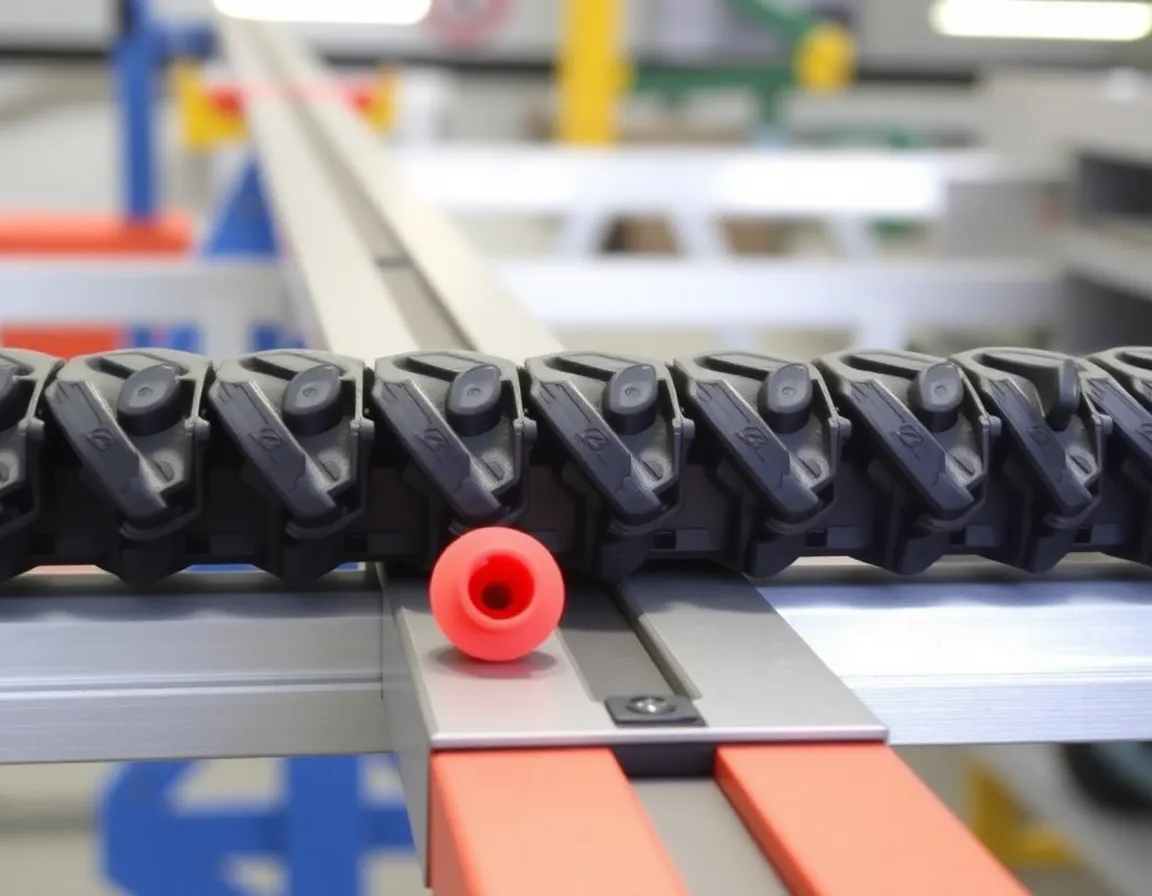
Guide rollers are small components that quietly keep production lines running. From packaging equipment and conveyor systems to printing presses and textile machinery, these rollers guide, tension, and support moving materials. Increasingly, manufacturers are turning to machined plastic guide rollers as a replacement for traditional metal rollers. This article explains what machined plastic guide rollers are, how they work, why they deliver value, and how to choose the right roller for your application.
What Are Machined Plastic Guide Rollers?
A machined plastic guide roller is a cylindrical component produced by removing material from a solid plastic billet or rod through processes such as CNC turning, milling, and drilling. Unlike injection-molded rollers, which are formed in a mold, machined rollers are cut to exact dimensions. This distinction matters because machining allows for tight tolerances, custom features, and low-volume production without the cost of tooling.
These rollers are typically made from engineering plastics such as:
- UHMW-PE (ultra-high-molecular-weight polyethylene): Excellent wear resistance and a very low coefficient of friction, ideal for sliding and guiding applications.
- POM (acetal / Delrin): High stiffness, good dimensional stability, and low friction, well suited to precision rollers.
- PA (nylon): Tough and impact-resistant, with good bearing properties for moderate loads.
- PTFE and filled PTFE: Extremely low friction and high chemical resistance for demanding environments.
- PEEK: High-temperature and high-strength performance for critical applications.
- PET and PBT: Good balance of strength, wear resistance, and cost.
Machined rollers can be produced as plain cylinders, grooved or crowned rollers, flanged rollers, or rollers with integrated bores, keyways, and mounting features. They are often paired with metal shafts, bearings, or bushings, and the plastic body provides the contact surface that touches the moving material.
How Machined Plastic Guide Rollers Work
Guide rollers perform several mechanical functions in a material-handling system. They guide webs, films, foils, paper, textiles, wire, and cable along a defined path. They maintain tension by applying controlled resistance or support. They change the direction of a moving material without causing damage. And they support the material's weight or keep it aligned as it travels between processing stations.
The roller's contact surface is critical. In a metal roller, the material being guided can be scratched or marked, and metal can transfer heat or conduct electricity. A plastic roller provides a softer, low-friction contact surface that reduces the risk of surface damage. Because engineering plastics are naturally lubricious, machined plastic rollers often run without external lubrication, which simplifies maintenance and keeps the production environment clean.
When a roller rotates, the plastic body is supported by a shaft and bearing arrangement. The machined bore must be concentric and accurately sized so the roller spins freely without wobble. In some designs, the roller is fixed and the material slides over it; in these cases, the plastic's low friction and wear resistance are especially important. In other designs, the roller rotates on bearings, and the plastic's lightweight nature reduces inertia, allowing faster acceleration and smoother starts and stops.
Key Benefits of Machined Plastic Guide Rollers
Lightweight Construction
Engineering plastics weigh a fraction of steel or aluminum. A lighter roller reduces the load on shafts, bearings, and support structures, which can extend the life of the entire assembly. Lower rotating mass also means less inertia, so the roller responds faster to changes in line speed and reduces energy consumption in high-speed equipment.
Non-Marring and Non-Contaminating
Plastic rollers are gentle on delicate materials. They will not scratch films, foils, coated papers, or polished surfaces the way metal rollers can. Many plastics are also non-contaminating and can be used in cleanroom, food-processing, and medical packaging environments where metal particles or lubricants are unacceptable.
Corrosion and Chemical Resistance
Unlike steel, engineering plastics do not rust. Many grades resist acids, alkalis, solvents, and washdown chemicals. This makes machined plastic guide rollers a strong choice for food processing, chemical handling, marine environments, and outdoor equipment where moisture and corrosive agents are present.
Low Friction and Wear Resistance
Materials like UHMW-PE and POM offer very low coefficients of friction, reducing drag on the moving material and minimizing the drive power required. Their wear resistance means the roller maintains its dimensions and surface finish over long service intervals, reducing replacement frequency and downtime.
Electrical and Thermal Insulation
Plastic rollers do not conduct electricity, which is valuable in applications involving sensitive electronics, static-prone materials, or electrical equipment. They also provide thermal insulation, which can protect heat-sensitive materials from conductive heat transfer through metal rollers.
Design Flexibility and Cost-Effective Customization
Machining allows manufacturers to produce custom profiles, grooves, flanges, and bores without expensive molds. Design changes can be made quickly, and low-volume or prototype quantities are economically viable. This flexibility is a major advantage for specialized machinery and equipment builders who need tailored solutions.
Quiet Operation
Plastic rollers tend to run more quietly than metal rollers, reducing noise levels in production environments. The damping properties of plastics also help absorb vibration, which can improve material tracking and surface quality.
Applications courantes
Machined plastic guide rollers appear across a wide range of industries:
- Packaging machinery: Guiding film, foil, and labels through form-fill-seal equipment and labeling systems.
- Printing and converting: Web guiding, tension control, and support in presses and slitters.
- Textile machinery: Guiding yarn, thread, and fabric without snagging or abrasion.
- Food and beverage processing: Washdown-resistant rollers for conveyors and packaging lines.
- Material handling: Conveyor guide rollers and idlers in warehouses and distribution centers.
- Wire and cable: Guiding and tensioning wire, cable, and fiber optic lines.
- Medical and cleanroom equipment: Non-contaminating rollers for sensitive production environments.
Selection Tips for Machined Plastic Guide Rollers
Match the Material to the Application
Start with the operating environment. Consider temperature range, chemical exposure, UV exposure, moisture, and cleaning methods. UHMW-PE is a strong general-purpose choice for low-friction guiding, while POM offers better stiffness and dimensional stability. For high temperatures or aggressive chemicals, PEEK or PTFE-based materials may be required. Always verify the material's continuous service temperature and chemical compatibility with the substances it will contact.
Define Load and Speed Requirements
Calculate the radial and axial loads the roller will experience, including the tension of the material being guided. Check the plastic's compressive strength and creep resistance at the expected operating temperature. For high-speed applications, consider the roller's balance, bearing selection, and the heat generated by friction. A lightweight plastic roller helps, but the bearing system must still be rated for the speed and load.
Specify Tolerances and Surface Finish
Machined plastic rollers can hold tight tolerances, but the right tolerance depends on the application. A web-guiding roller may need a concentric bore and a smooth, polished surface to avoid marking the material. A conveyor roller may tolerate looser tolerances. Specify the bore diameter, outer diameter, runout, and surface finish clearly, and discuss with your machinist how the plastic's thermal expansion may affect fit at operating temperature.
Consider Bearing and Mounting Design
Decide whether the roller will rotate on bearings, bushings, or a fixed shaft. Bearings should be selected for the load, speed, and environment, and sealed bearings are advisable in dusty or wet conditions. Ensure the machined bore is sized for the correct interference or clearance fit, and account for the difference in thermal expansion between plastic and metal components.
Account for Wear and Replacement
Even wear-resistant plastics wear over time. Design the roller for easy replacement, and specify a wear allowance if the roller is a critical guide. In high-wear applications, consider replaceable plastic sleeves or split rollers that can be changed without disassembling the entire line.
Verify Chemical Compatibility and Cleanability
In food, medical, and cleanroom applications, confirm that the plastic is compliant with relevant regulations and can withstand the cleaning agents used. Smooth machined surfaces are easier to clean than porous or textured ones, and avoiding crevices in the design helps prevent contamination buildup.
Conclusion
Machined plastic guide rollers offer a practical combination of light weight, low friction, corrosion resistance, and design flexibility. They protect delicate materials, reduce maintenance, and can be customized economically for specialized equipment. By matching the plastic material to the operating environment, defining load and speed requirements, specifying accurate tolerances, and designing for easy replacement, engineers and maintenance teams can get reliable, long-lasting performance from these versatile components. Whether you are upgrading an existing line or designing new machinery, machined plastic guide rollers are worth serious consideration.