
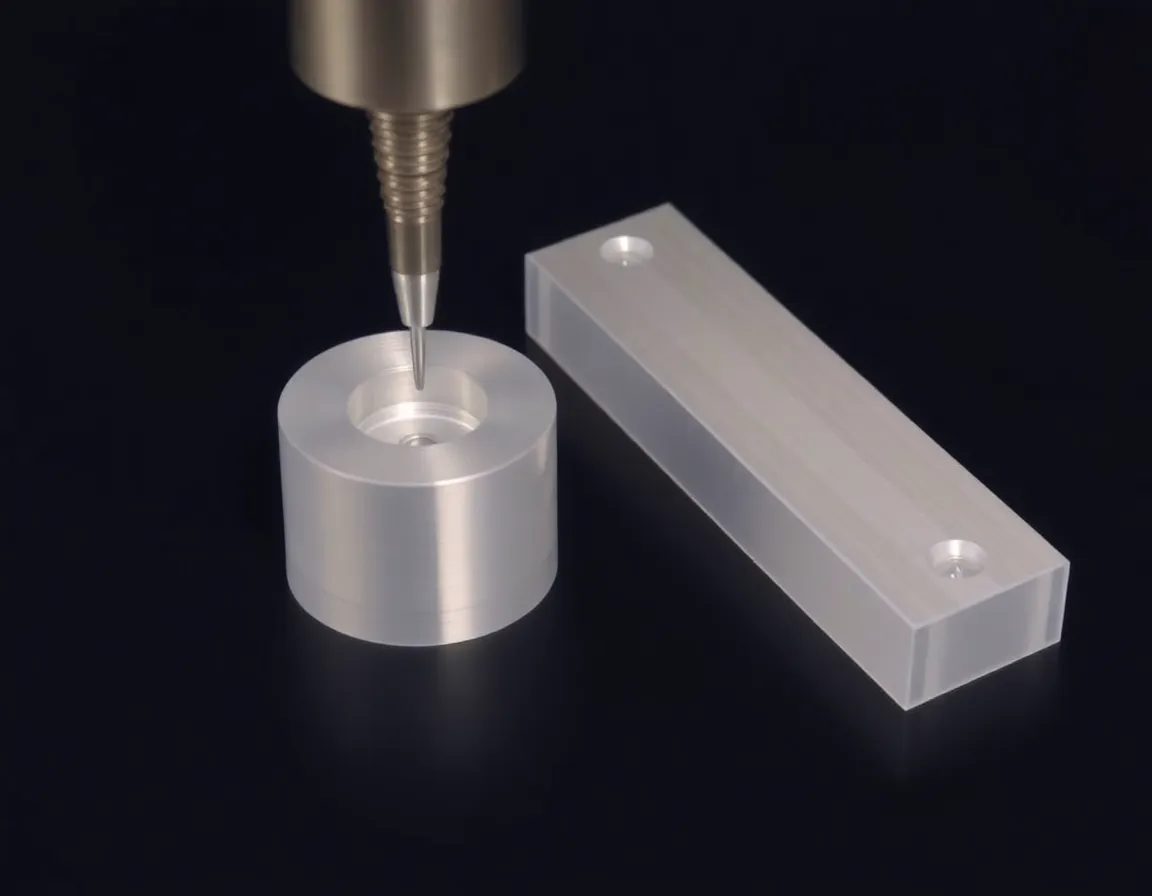
PMMA is the material; machining is the route
PMMA, commonly called acrylic, can be supplied in different stock forms and specifications. A page about machining PMMA parts should begin with the material callout and the part drawing, rather than implying every acrylic component has identical optical or mechanical behavior. Identify the grade, color and stock form required by the design.
What the drawing should communicate
Provide overall dimensions, datums, holes, slots, mating faces and edge details. Mark critical dimensions and surfaces that affect fit or function. Note thin sections or unsupported geometry that may need review. Include a section view when the model alone does not explain an internal feature.
Appearance depends on the specified finish
PMMA is often selected for visual applications, but a machined face is not automatically optically clear. Identify the viewing surfaces and state the appearance target, polish or other finishing need. If transparency matters, define how it will be evaluated and confirm that the stock and finishing scope suit the design.
Distinguish this topic from general acrylic machining
This page focuses on the PMMA material specification and the information needed for a drawing review. For a broader discussion of part geometry and machining features, see el mecanizado CNC de acrílico. General plastic grades are covered in the guía de materiales plásticos.
Prepare a quote request
Send a 2D drawing and 3D model when available, with PMMA grade and form, quantity, critical dimensions, finish and inspection requirements. These details let the team assess the particular component and clarify questions before confirming the CNC machining scope and quotation.