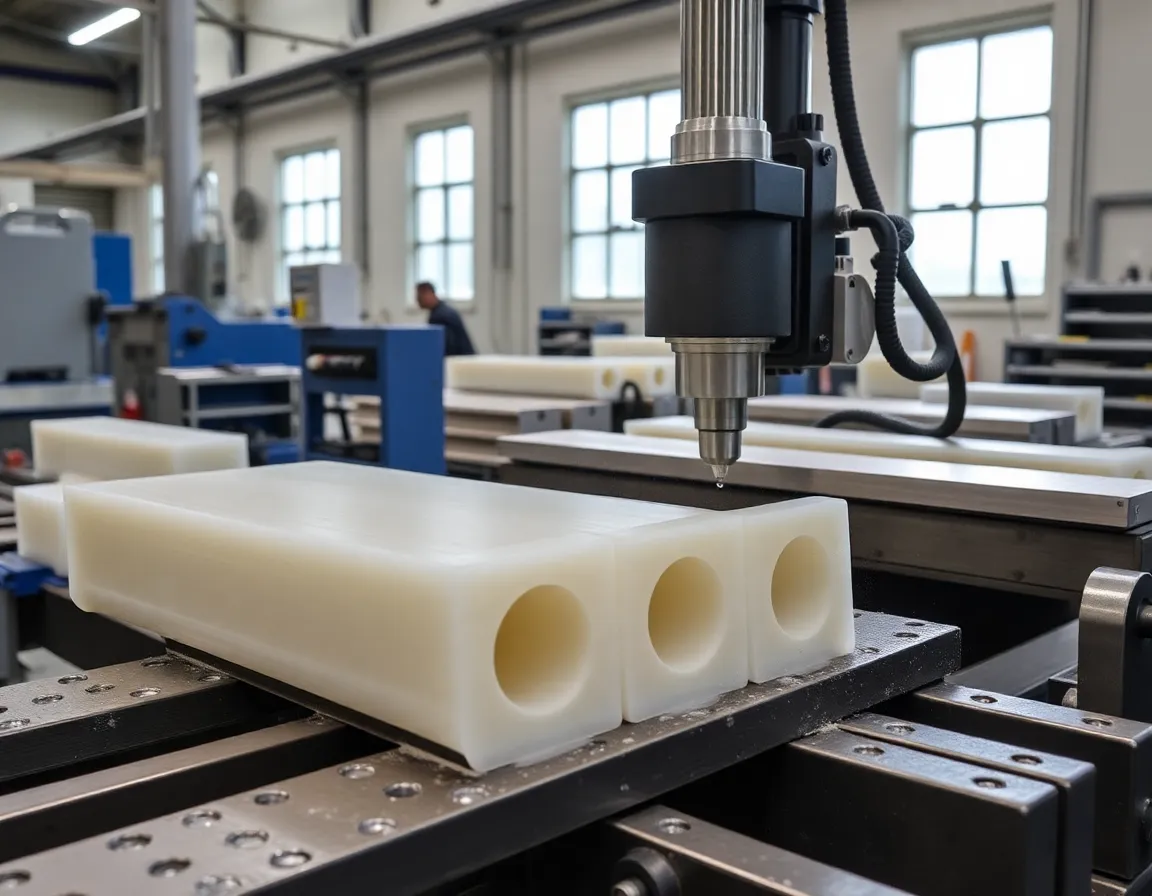
En el mundo de los termoplásticos de ingeniería, pocos materiales ofrecen la combinación de resistencia, resistencia al desgaste y versatilidad que se encuentra en el Nylon 66 (también conocido como PA66). Como opción preferida para engranajes, cojinetes, aislantes y componentes estructurales de alto rendimiento, su demanda es inquebrantable. Sin embargo, pasar de una forma de material en bruto a una pieza mecanizada de precisión requiere un conjunto de habilidades específico. A diferencia de los metales, el Nylon 66 tiene propiedades únicas que, si no se respetan, pueden provocar acabados superficiales deficientes, inexactitud dimensional y tensiones internas. Dominar el mecanizado de este polímero es la clave para desbloquear todo su potencial y producir piezas fiables de alta tolerancia.
Comprender el material: la naturaleza del Nylon 66
Antes de realizar el primer corte, es primordial un profundo conocimiento de las características inherentes del material. El Nylon 66 es un poliamida termoplástica semicristalina reconocida por sus excelentes propiedades mecánicas, que incluyen alta resistencia a la tracción, rigidez y buena resistencia al impacto. También posee una excelente resistencia al desgaste y a la abrasión, superando a menudo a los metales en condiciones de funcionamiento en seco, y mantiene estas propiedades en un amplio intervalo de temperaturas.
Consideraciones clave para el mecanizado
Estas propiedades beneficiosas conllevan matices de mecanizado que deben gestionarse:
- Sensibilidad al calor: El nylon tiene un punto de fusión relativamente bajo (aproximadamente 260 °C / 500 °F para el Nylon 66). El calor excesivo generado durante el mecanizado puede reblandecer el material, haciendo que se adhiera a las herramientas, lo que provoca acabados deficientes y una "deriva" dimensional."
- Naturaleza higroscópica: El nailon absorbe la humedad del aire. Esto afecta su tamaño y sus propiedades mecánicas. Una pieza mecanizada a partir de material seco en un ambiente húmedo puede posteriormente hincharse y perder su precisión.
- Baja conductividad térmica: A diferencia del metal, que disipa el calor a través de la pieza y las virutas, el nailon actúa como un aislante. El calor se concentra en la interfaz de corte.
- Flexibilidad y memoria elástica: Bajo la presión de corte, el nailon puede desviarse o "recuperar su forma", lo que dificulta alcanzar tolerancias ajustadas si no se soporta adecuadamente.
Preparación previa al mecanizado: preparar el terreno para el éxito
El éxito en el mecanizado del nailon 66 comienza mucho antes de encender la máquina CNC o el torno. Una preparación adecuada mitiga los desafíos del material y garantiza un punto de partida estable.
Acondicionamiento y almacenamiento del material
El control de la humedad es el paso preparatorio más crítico. El material debe almacenarse en un entorno seco y con clima controlado. Para piezas de ultra precisión, a menudo es esencial presecar el material. Esto normalmente implica hornear el material a 80-90 °C (175-195 °F) durante varias horas (según el espesor) para eliminar la humedad absorbida. Mecanizar material seco da como resultado una mejor formación de viruta, un mejor acabado superficial y una pieza más estable dimensionalmente después del mecanizado.
Sujeción de la pieza y soporte de la pieza
Debido a su flexibilidad, el nailon 66 requiere una sujeción meticulosa para evitar la desviación. Utilice superficies de sujeción anchas y lisas para distribuir la presión de manera uniforme y evitar abolladuras o deformaciones del material. Para geometrías de paredes delgadas o complejas, se recomienda encarecidamente el uso de dispositivos personalizados o mordazas blandas mecanizadas según el contorno de la pieza. El objetivo es soportar la pieza con la mayor rigidez posible sin inducir tensiones de sujeción que puedan liberarse posteriormente y causar deformación.
Mejores prácticas de mecanizado: herramientas, técnicas y parámetros
Esta sección profundiza en la aplicación práctica del corte del nailon 66. Seguir estas directrices mejorará drásticamente los resultados.
Tool Selection and Geometry
Sharpness is non-negotiable. Use tools with a high positive rake angle and highly polished flutes to reduce cutting forces and heat generation. Carbide tools are preferred for their sharp edge retention, though high-speed steel (HSS) can be used if kept exceptionally sharp.
- End Mills & Routers: Use 2 or 3-flute designs for optimal chip evacuation. Up-cut spirals are excellent for pulling chips out of deep slots, while down-cut spirals provide a cleaner top edge finish.
- Drills: Standard twist drills can work, but drills with a high helix angle (often called "fast spiral" or "polymer" drills) and polished flutes are superior. A point angle of 90-118 degrees is typical.
- Turning Tools: Use tools with a large rake angle (often 10-20°) and a keen, sharp edge. A neutral or slightly positive lead angle helps reduce pressure.
Cutting Parameters and Coolant Strategy
The mantra for machining Nylon is "high speed, low feed, light depth of cut." This approach minimizes heat buildup by allowing the sharp tool to shear the material cleanly rather than ploughing through it.
- Speed (SFM): Run at high surface speeds. For carbide, 600-1000 SFM is a good starting range. For HSS, 300-500 SFM.
- Feed: Use light but consistent feed rates to avoid rubbing, which generates heat. Chip load per tooth should be moderate.
- Depth of Cut: Take lighter depths of cut, especially for finishing passes. This reduces tool pressure and part deflection.
- Coolant/Lubrication: Avoid traditional water-based coolants, as Nylon will absorb them. Use compressed air (mist or flood) to evacuate chips and cool the tool/part interface. For some operations, a light mist of a non-water-soluble lubricant like alcohol or a specialized synthetic coolant can be beneficial.
Specific Operation Tips
Perforación: Peck drilling is highly recommended to clear chips and prevent packing, which causes heat and seizure. Retract the drill frequently.
Threading: Thread milling is vastly superior to tapping, as it generates less heat and pressure. If tapping is necessary, use spiral-pointed (gun) taps for through-holes or spiral-fluted taps for blind holes, and oversize the tap drill slightly to reduce friction.
Parting Off & Grooving: Use tools with side clearance and a keen edge. Ensure chips are evacuated from the groove to prevent recutting and melting.
Post-Machining and Quality Assurance
The job isn't finished when the machining cycle ends. Post-processing steps are crucial for delivering a part that meets specifications and performs reliably in service.
Deburring and Finishing
Nylon 66 can produce stringy or rolled burrs. These are best removed with sharp blades, fine abrasive papers, or specialized nylon deburring tools. Tumbling processes can also be effective. For a superior surface finish, light sanding followed by polishing can be employed. The low friction of Nylon means that mating surfaces often perform well with a machined finish alone.
Stress Relieving and Conditioning
Machining can induce internal stresses. For critical applications, a stress-relief annealing process may be beneficial. This involves heating the part to a temperature below its melting point (typically 150-160°C) for a period and allowing it to cool slowly in an oven. Furthermore, if the part will operate in a humid environment, it may need to be conditioned (re-humidified) in a controlled manner to its expected service humidity level to stabilize its dimensions before final inspection.
Dimensional Inspection
Always allow machined Nylon 66 parts to acclimatize to the inspection room environment for at least 24 hours before final measurement. Use non-marring inspection tools (e.g., plastic-tipped calipers) to avoid scratching the soft surface. Remember that dimensions may shift slightly after machining as internal stresses relax, making a post-machining "settling" period valuable.
Applications of Machined Nylon 66 Parts
The effort invested in mastering Nylon 66 machining pays dividends across countless industries. Its unique property profile makes it ideal for:
- Automoción: Gears, bushings, thrust washers, cable guides, and sensor housings.
- Aerospace: Insulating spacers, cable rollers, low-load structural brackets, and ducting components.
- Maquinaria Industrial: Wear strips, conveyor components, seals, and custom bearings.
- Electrónica: Insulating standoffs, coil bobbins, and connector housings.
- Food and Beverage: FDA-compliant gears, wear pads, and guides that operate with minimal lubrication.
Mastering the machining of Nylon 66 is a blend of science, art, and disciplined practice. It demands respect for the material's personality—its sensitivity to heat and moisture, its flexibility, and its abrasiveness. By starting with properly conditioned stock, employing sharp tools with correct geometry, utilizing conservative but precise cutting parameters, and following through with careful post-processing, manufacturers can consistently produce precision Nylon 66 parts that are robust, reliable, and critical to the function of the assemblies they inhabit. The result is not just a machined component, but a high-performance polymer solution engineered to excel.