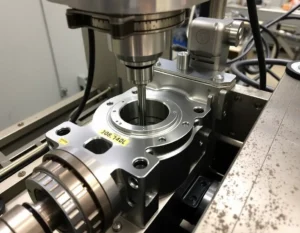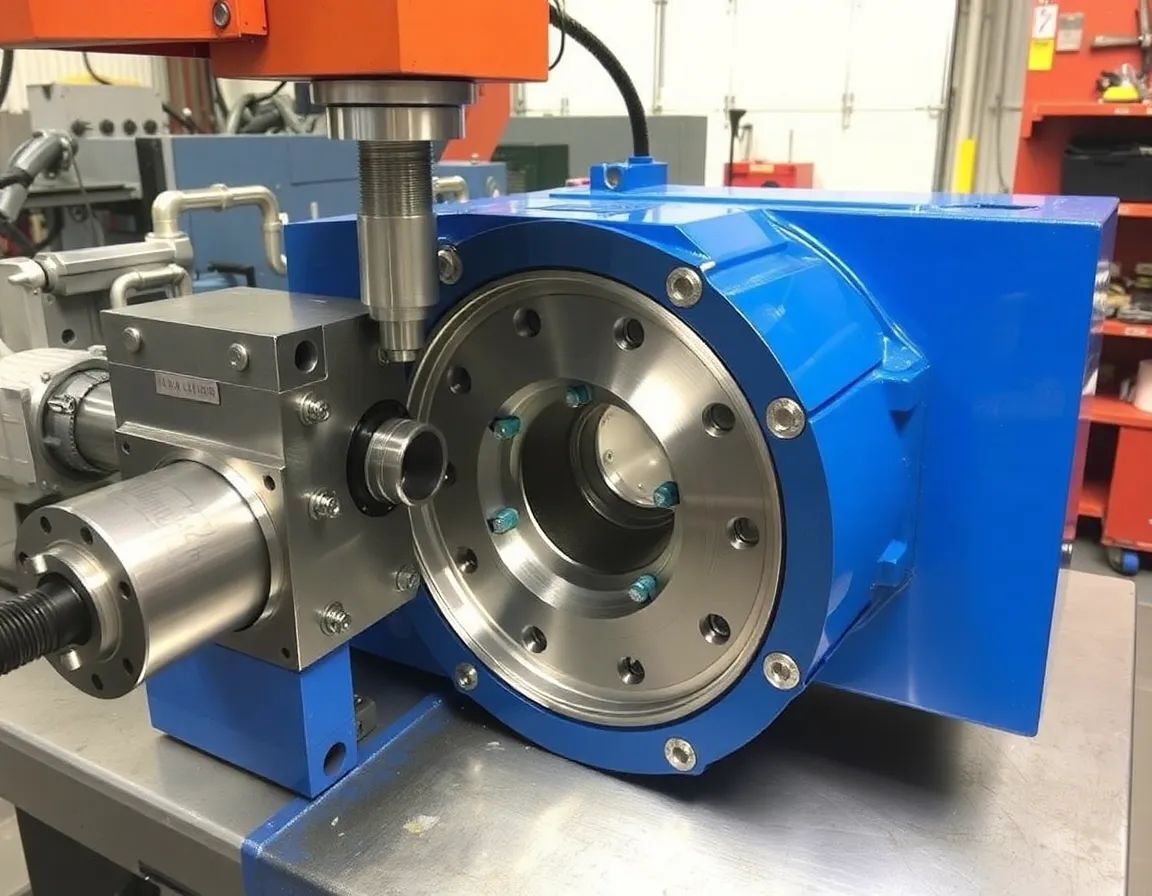
In the world of motion control, where electromechanical, hydraulic, and pneumatic systems bring machinery to life, the actuator is the muscle. Yet, this critical component is only as reliable as the structure that contains and protects it. The actuator housing is the unsung hero, a precision-engineered shell that ensures alignment, manages thermal and mechanical stress, and safeguards sensitive internal components from harsh environments. The manufacturing of these housings is not a simple metalworking task; it is a discipline of precision machining where tolerances are measured in microns, material integrity is paramount, and durability is non-negotiable. This article delves into the intricate world of actuator housing machining, exploring its processes, benefits, applications, and the best practices that define excellence in the field.
The Critical Role of the Actuator Housing
An actuator housing is far more than a simple cover. It is a foundational component that performs several vital functions simultaneously. Primarily, it provides a rigid and dimensionally stable structure to maintain precise alignment between the motor, drive train (like lead screws or gears), and the output mechanism. Any deviation in this alignment leads to binding, increased wear, vibration, and premature failure. Secondly, the housing acts as a protective barrier against contaminants such as dust, moisture, chemicals, and metallic debris. For linear actuators in particular, the housing often incorporates integral guide rails or mounting surfaces for the moving carriage, making its geometric accuracy absolutely critical. Furthermore, it serves as a heat sink, dissipating thermal energy generated by the motor and friction, and provides secure mounting points for integration into larger systems.
Why Precision Machining is Non-Negotiable
Off-the-shelf or cast housings may suffice for low-duty applications, but demanding industrial, aerospace, and robotics applications require machined housings. Precision machining, typically performed on CNC (Computer Numerical Control) milling centers and lathes, is the process of removing material from a solid block (billet) or forging to create a part with exacting specifications. This method is chosen because it offers superior material strength, tighter tolerances, better surface finishes, and greater design flexibility compared to casting or molding. The integrity of the grain structure in a machined billet is uninterrupted, resulting in a housing that can withstand higher loads, impacts, and fatigue cycles.
The Precision Machining Process: From Billet to Housing
The journey to create a durable actuator housing is a multi-stage operation that blends advanced technology with skilled engineering. It begins long before the first tool touches metal.
1. Design for Manufacturability (DFM) and Material Selection
Collaboration between design engineers and machinists is crucial. DFM analysis optimizes the housing design for efficient machining, ensuring internal features are accessible, wall thicknesses are uniform to prevent distortion, and tolerances are specified only where absolutely necessary. Material selection is equally critical:
- Aluminum Alloys (e.g., 6061-T6, 7075): The most common choice for their excellent strength-to-weight ratio, good machinability, and natural corrosion resistance. Ideal for aerospace, robotics, and automated equipment.
- Stainless Steels (e.g., 304, 316, 17-4 PH): Chosen for superior corrosion resistance, high strength, and durability in harsh environments like food processing, marine, or chemical applications.
- Carbon Steels: Used for high-load, industrial applications where weight is less of a concern and maximum rigidity is required.
- Engineering Plastics (e.g., PEEK, Delrin): Employed in specialized applications requiring electrical insulation, extreme chemical resistance, or operation in ultra-clean environments.
2. CNC Machining Operations
With a secured billet, a series of controlled machining operations commence:
- Facing and Squaring: Establishing true, perpendicular reference surfaces on the raw material.
- Multi-Axis Milling: 3-axis, 4-axis, or 5-axis CNC mills create the housing's complex external contours, internal cavities, mounting bosses, and port holes. 5-axis machining is particularly valuable for producing intricate features in a single setup, enhancing accuracy.
- Precision Boring and Drilling: Creating bearing seats, motor mount diameters, and shaft pass-throughs with extremely tight tolerances (often within ±0.0005 inches or less) and fine surface finishes to ensure perfect fit and seal.
- Tapping and Threading: Machining accurate, clean threads for sensor ports, lubrication fittings, end caps, and mounting bolts.
3. Secondary Finishing and Quality Assurance
Post-machining, parts often undergo secondary processes. These may include deburring to remove sharp edges, bead blasting or tumbling for a uniform finish, and various surface treatments. Anodizing (for aluminum) or passivation (for stainless steel) enhances corrosion resistance and surface hardness. Every step is governed by rigorous Quality Assurance (QA) using coordinate measuring machines (CMM), laser scanners, and surface profilometers to verify that every dimension, geometric tolerance (like flatness and concentricity), and surface finish meets the stringent print specifications.
Benefits of Precision-Machined Actuator Housings
Investing in precision-machined housings yields significant, tangible advantages that translate directly into system performance and total cost of ownership.
Unmatched Durability and Longevity
The combination of high-strength materials, optimal grain structure from billet machining, and precise component fit results in a housing that resists deformation under load, minimizes wear on internal parts, and withstands millions of operational cycles. This directly extends the mean time between failures (MTBF) of the entire actuator assembly.
Enhanced Performance and Efficiency
Precision alignment reduces internal friction and binding. This allows the actuator to operate more smoothly, with less vibration and noise, and with higher positional accuracy. Reduced friction also improves energy efficiency, as the motor works against less resistance, and lowers operational heat generation.
Superior Sealing and Contamination Protection
Machined surfaces for seal grooves and gasket faces are flawlessly flat and smooth, enabling reliable static and dynamic sealing. This is vital for IP-rated (Ingress Protection) or NEMA-rated enclosures that must keep out water, dust, and other contaminants, ensuring consistent performance in challenging conditions.
Design Flexibility and Integration
CNC machining can produce virtually any geometry imaginable. This allows for the consolidation of multiple parts into a single, complex housing unit, reducing assembly time and potential leak paths. Features like custom mounting lugs, integrated sensor mounts, and internal coolant channels can be machined directly into the design.
Applications and Industries
The demand for precision-machined actuator housings spans across every sector that relies on automated, reliable motion.
- Luft- und Raumfahrt & Verteidigung: Flight control actuators, landing gear systems, and satellite positioning mechanisms require housings made from lightweight yet incredibly strong materials like 7075 aluminum or titanium, machined to withstand extreme temperatures and forces.
- Industrial Automation & Robotics: Robotic arm joints, CNC machine tool slides, and pick-and-place units depend on rigid, accurately machined housings for repeatable, high-speed, and precise movement.
- Medical and Semiconductor Equipment: In these ultra-clean, high-precision environments, housings are often machined from stainless steel or PEEK. They must be non-magnetic, corrosion-resistant, and designed for smooth, particulate-free operation.
- Automotive Testing and Heavy Machinery: Hydraulic actuator housings for dynamometers, suspension test rigs, and construction equipment are machined from high-grade steels to contain extreme pressures and cyclic loads without failure.
- Marine and Oil & Gas: Actuators for valve control and underwater equipment need housings machined from duplex stainless steels or other super-alloys, with impeccable sealing surfaces to resist saltwater corrosion and high pressure.
Best Practices in Actuator Housing Machining
To consistently achieve the highest quality results, leading manufacturers adhere to a set of core best practices.
Emphasize First-Part Validation
A comprehensive first-article inspection (FAI) is mandatory. This involves a full dimensional and functional check of the first part off the production run against all drawing requirements before proceeding, ensuring the entire machining process is validated.
Implement Rigorous Process Control
This includes consistent tool wear monitoring, stable workholding solutions to prevent part movement or distortion during machining, and controlled machining environments to mitigate thermal expansion effects on both the material and the machine tool.
Prioritize Surface Finish and Deburring
A superior surface finish is not cosmetic; it is functional. Smooth bore surfaces reduce seal wear, while properly deburred internal passages prevent contamination from metal shavings. Specifying and verifying surface finish (Ra values) on critical sealing and bearing surfaces is essential.
Foster Engineering Partnership
The most successful outcomes arise from a collaborative relationship between the customer's engineering team and the machining partner. A skilled machinist can provide invaluable feedback on design tweaks that enhance manufacturability, reduce cost, and improve performance without compromising the design intent.
In conclusion, precision machining for actuator housings is a critical engineering discipline that transforms raw materials into the robust, reliable backbone of motion systems. It is where advanced manufacturing technology meets practical application, ensuring that the forces which drive modern industry are contained, directed, and sustained with unwavering reliability. By understanding the processes, benefits, and best practices outlined here, design engineers and procurement specialists can make informed decisions that lead to more durable, efficient, and successful actuated systems.