
+86-188-7042-1176
project@jcproto.com
Mon-Fri: 8am-6pm (GMT+8)
EN
ISO 9001:2015 Certified
Passivation
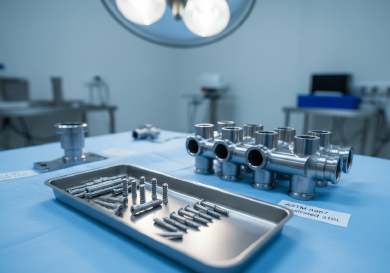
Passivation is a non-electrolytic chemical treatment process primarily used for Stainless Steel. Unlike plating, it does not add a layer to the surface. Instead, it uses acid solutions (Nitric or Citric) to remove “free iron” and other surface contaminants left behind by CNC machining tools. This promotes the formation of a passive, inert oxide layer that significantly improves corrosion resistance.
At Jucheng Precision, Passivation is a standard requirement for our Medical (ISO 13485) and Aerospace parts. We ensure strict compliance with international standards such as ASTM A967 and AMS 2700. Because the process removes less than 0.0001″ of material, it is considered a “zero-dimensional change” process, making it safe for tight-tolerance components.
Key Specifications
| Specification | Technical Range | Note |
|---|---|---|
| Max Part Size | 1500 mm x 1000 mm x 800 mm | Tank size dependent |
| Applicable Standards | ASTM A967, AMS 2700, ASTM A380 | Certificate of Conformance provided |
| Dimensional Change | Negligible (Zero) | Does not affect tolerances |
| Compatible Materials | Stainless Steel (300, 400, 17-4PH), Titanium | Not for Carbon Steel or Aluminum |
| Validation Tests | Copper Sulfate, Water Immersion, Salt Spray | Verifies free iron removal |
| Standard Lead Time | 1 – 3 Days | Fast batch processing |
Passivation Methods
| Method | Description | Key Benefits & Applications |
|---|---|---|
| Citric Acid Passivation | Uses mild, biodegradable citric acid baths. Becoming the industry standard due to safety and environmental friendliness. | Benefit: Eco-friendly, safe for all stainless grades, effective removal of free iron. App: Medical devices, food & beverage equipment. |
| Nitric Acid Passivation | The traditional method using strong oxidizers. Sometimes mixed with sodium dichromate for enhanced power. | Benefit: Rapid oxidation, historically specified in older military specs. App: Aerospace components, legacy industrial parts. |
| Pickling & Passivation | A more aggressive pre-treatment to remove weld scale and heat tint before standard passivation. | Benefit: Restores corrosion resistance to welded areas. App: Welded tanks, structural stainless assemblies. |
Design Guidelines for Passivation
Cleanliness is Key:
Passivation is a final cleaning step. Parts must be free of grease, oil, and heavy scale before entering the bath. We perform thorough degreasing prior to passivation.
Not a Cosmetic Finish:
Unlike electropolishing, passivation does not smooth the surface or make it shiny. A passivated part looks identical to a machined part visually. It is a functional chemical change, not an aesthetic one.
Material Grades:
300 Series (304/316): Passivate excellent.
400 Series (416/420): Require special care. Incorrect bath chemistry can cause “flash attack” (etching/darkening) of the surface.
Trap Zones:
Avoid designs with folded seams or blind pockets where acid can get trapped. Trapped acid will cause corrosion later. Proper rinsing and neutralizing are critical.
Industry Applications
Medical Devices
Surgical instruments and implants are passivated to prevent rust during repeated autoclave sterilization cycles and to ensure biocompatibility.
Food Processing
Stainless steel valves, mixers, and pipes must be passivated to prevent iron contamination in food products and ensure sanitary compliance.
Aerospace
Fuel system components and hydraulic fittings made of 17-4PH are passivated to withstand corrosive aviation fluids and atmospheric exposure.
Marine Hardware
316 Stainless boat fittings are passivated to maximize their resistance to saltwater pitting and staining.