
“Titanium vs stainless steel” is not a universal strength contest. For a CNC-machined part, the better choice depends on the material grade, load path, mass limit, corrosion exposure, operating temperature, mating surfaces, and how the geometry can be manufactured and inspected. Titanium may be justified when weight and specific strength dominate; stainless steel may be more practical when cost, availability, stiffness, or a familiar joining and finishing route controls. Compare the actual grades and part requirements—not the two material names in isolation.
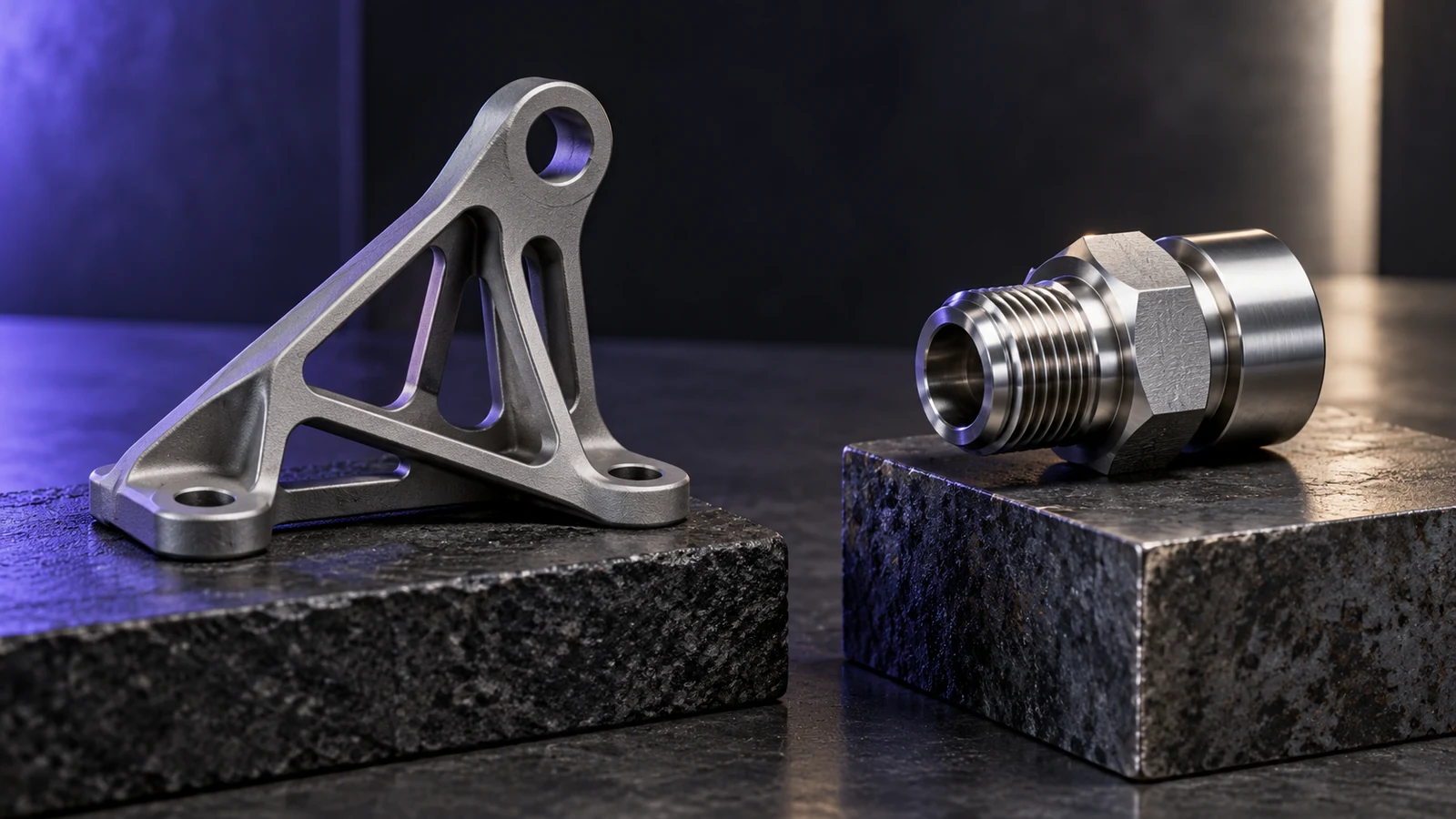
Start with the part’s governing constraint
Write down the condition that would make the part fail or become unacceptable. It may be excessive mass, permanent deformation, corrosion, galling, distortion after machining, or a component cost that cannot be justified by the function. Ranking materials before identifying this constraint often leads to an expensive material substitution that does not solve the real problem.
Then define how the part is used: static or cyclic loading, temperature range, contact with chemicals or salt, required surface condition, mating materials, and inspection needs. A bracket, shaft, fastener, valve component, and thin-wall enclosure do not ask the same question of titanium and stainless steel.
For an application where mass is central, compare the complete component rather than density alone. The geometry may be redesigned to use a different section, while the load path, fastener interfaces, and stiffness still govern performance. For a corrosion-driven choice, specify the environment and cleaning exposure; “corrosion resistant” is not a complete service condition.
A grade-aware comparison
| Decision factor | Titanium alloys | Stainless steels | What the engineer should verify |
|---|---|---|---|
| Mass-sensitive design | Often considered where lower density and strength-to-weight matter | Usually heavier for comparable part volume | Compare the chosen grades, section geometry, stiffness, and full assembly mass |
| Strength and deformation | Depends strongly on alloy, condition, and temperature | Varies widely by family and heat treatment | Use design allowables for the specific grade and load case, not a generic material ranking |
| Corrosion exposure | Can be attractive in demanding environments, but compatibility remains condition-specific | Performance varies with alloy, chloride exposure, temperature, finish, and crevices | Document medium, concentration, temperature, duration, cleaning, and galvanic contacts |
| Machining route | Heat and tool-wear management may be important for the selected alloy and geometry | Work hardening and heat management can affect some grades and operations | Ask the supplier to review geometry, stock condition, setup, and critical features |
| Cost and supply | Material and machining costs can be higher, depending on grade and availability | Often offers a wider set of commonly stocked grades, but not always | Compare certified stock, yield, machining time, scrap exposure, and finishing—not raw price alone |
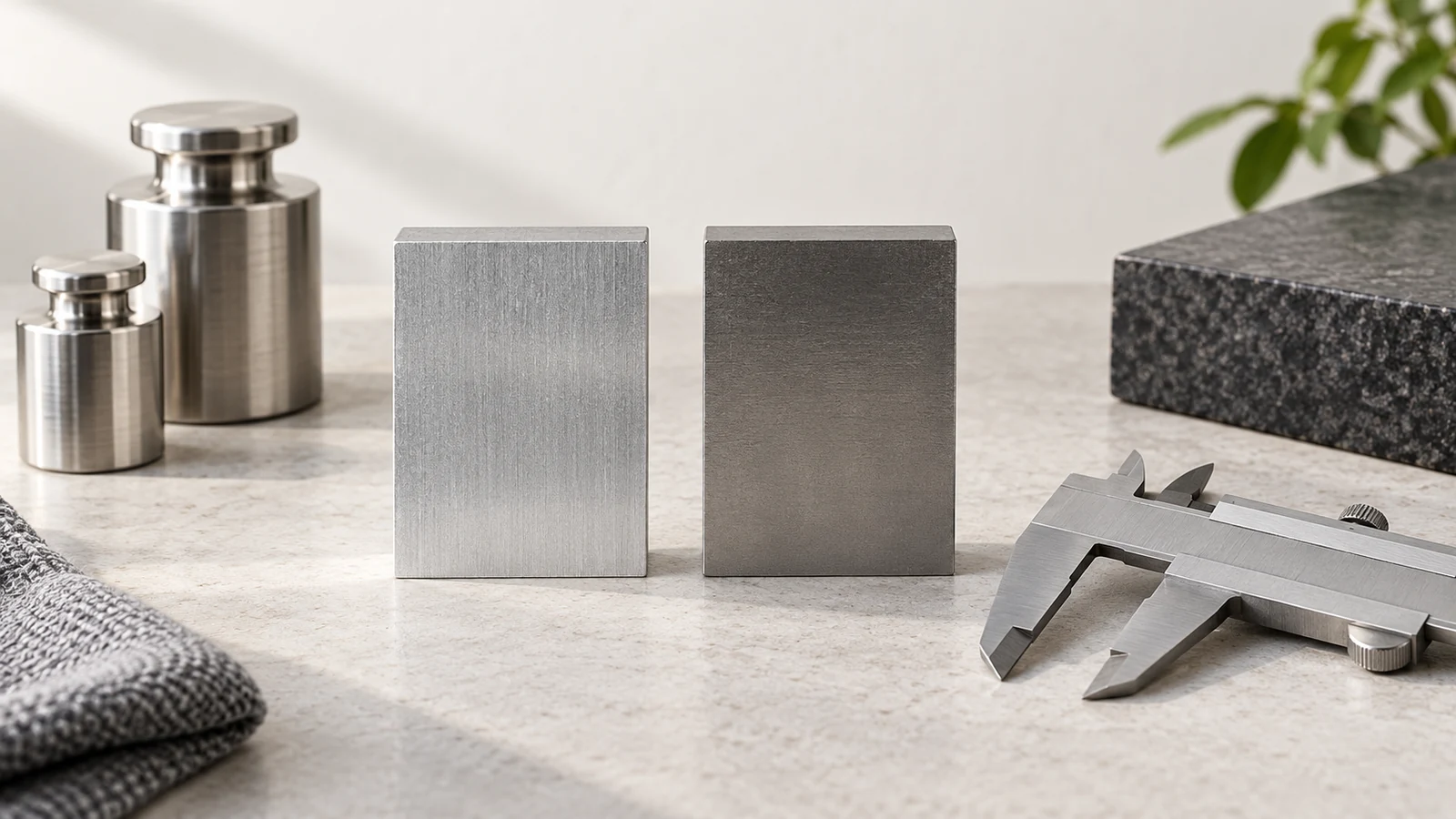
The word “stainless” covers a family of steels, not one property set. Austenitic, martensitic, precipitation-hardening, and other stainless families behave differently in strength, corrosion, heat treatment, and machining. Titanium also comprises multiple commercially pure and alloy grades. A comparison that does not state the grade and condition should be treated as a screening discussion, not a material approval.
Jucheng’s material-specific pages for titanium CNC machining and stainless steel CNC machining describe separate machining contexts; neither should be read as a universal comparison of every grade.
Machining changes the trade-off
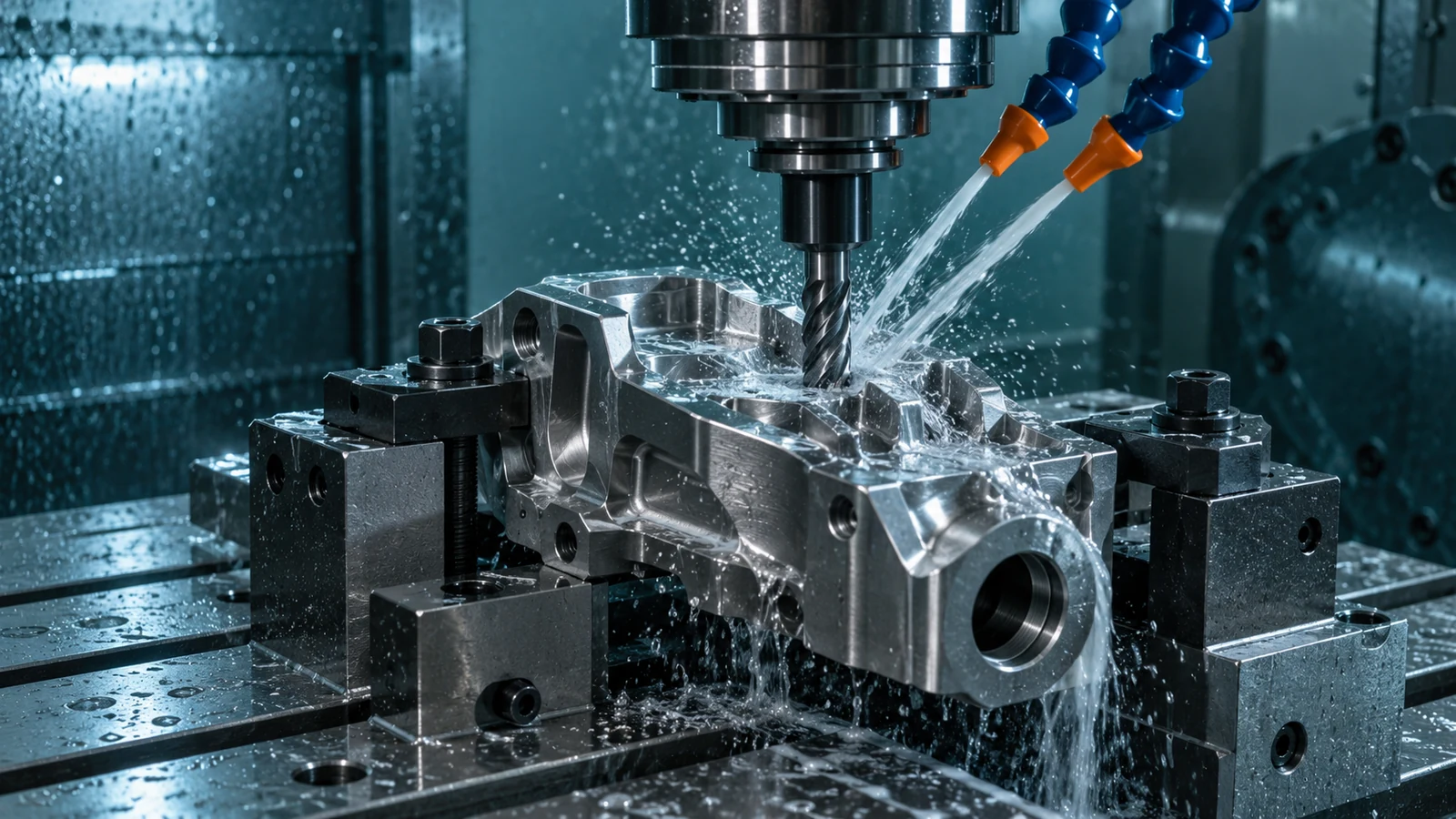
Material selection affects more than the cutting rate. It changes the way stock is supported, how heat is managed, which features can be finished predictably, and how much material may be lost if a part distorts or fails inspection. Thin sections, long reaches, deep pockets, and interrupted cuts can make an otherwise acceptable alloy difficult to hold dimensionally.
For titanium alloys, the chosen grade, tool engagement, workholding, heat path, and tool condition should be reviewed together. A design that exposes a thin wall late in the process may be more sensitive than a compact feature with the same nominal tolerance. For stainless steels, consider alloy family and condition, work hardening, chip formation, and whether the route maintains a stable cut at the critical interface. These are planning variables, not reasons to assume a particular supplier can achieve an unverified tolerance.
Surface treatment and joining also enter the decision. An anodizing requirement may apply to aluminum, not titanium or stainless steel; coating, passivation, polishing, or other finishes require their own grade and specification review. If a stainless-to-titanium assembly is proposed, evaluate contact conditions, isolation, fasteners, and the environment instead of assuming the two metals are interchangeable at the interface.
When comparing quotes, separate material premium from machining risk. A lower-cost stock choice can become more expensive if it increases setup count, inspection burden, finishing steps, or the risk of a rejected assembly. Conversely, a higher-performance alloy can be over-specified when the load and environment do not use its advantages.
Review the interfaces before choosing
Use an interface review to keep the comparison tied to function:
- Load path: identify bearing, bending, tension, fatigue, impact, and preload conditions that actually apply.
- Fit and movement: define the operating temperature and the mating parts; a room-temperature inspection alone may not represent service fit.
- Environment: record fluid, concentration, temperature, exposure duration, crevices, and cleaning agents.
- Manufacturing: flag thin walls, deep features, small internal radii, threads, and surfaces that require post-machining access.
- Evidence: identify the material certificate, dimensional report, surface acceptance, and any functional test required by the drawing or contract.
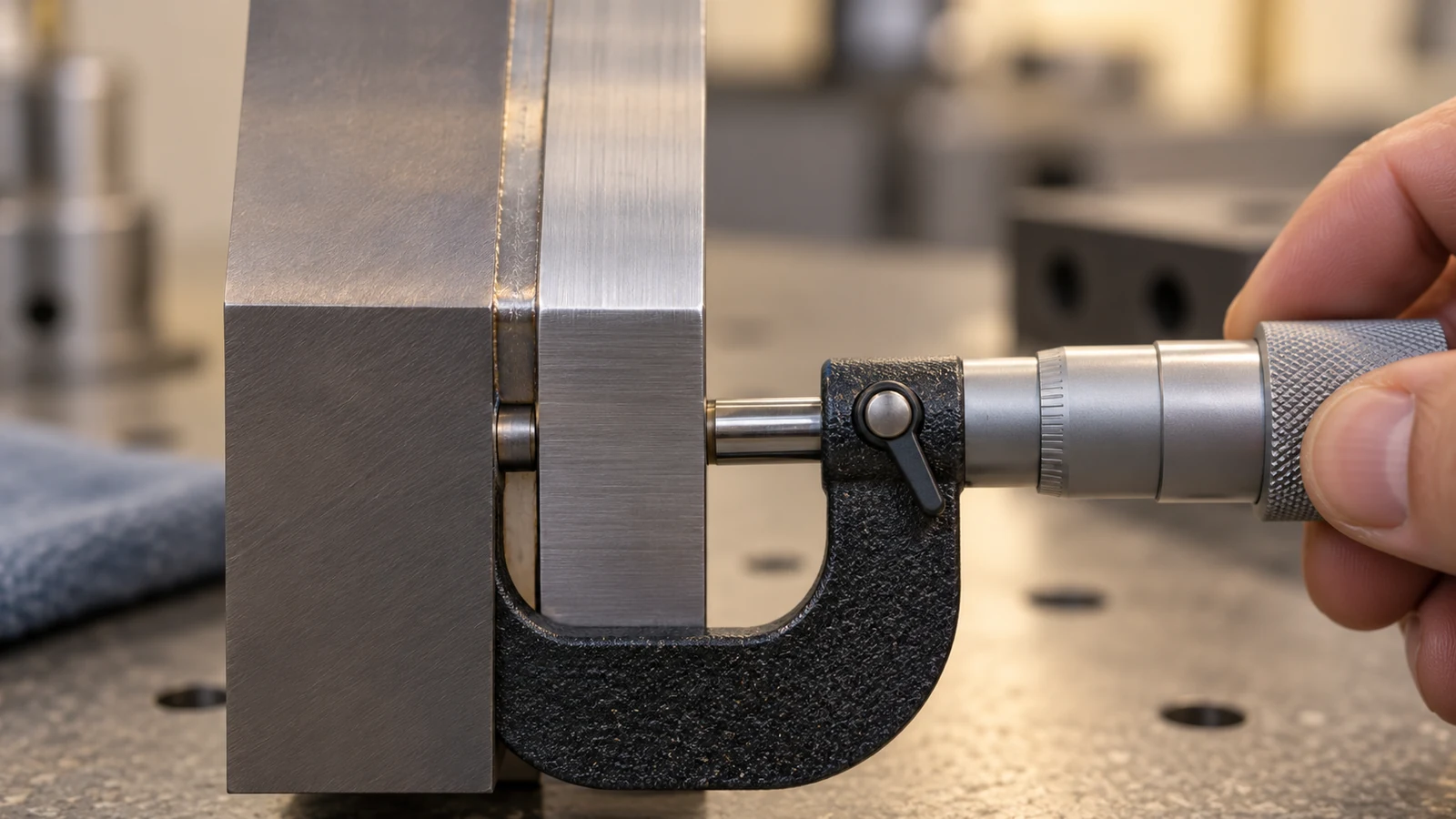
For a weight-sensitive component, ask whether the geometry can be optimized before moving to titanium. For a corrosion-sensitive assembly, determine whether the stainless grade, surface condition, seal design, or maintenance condition is the true control. A material change cannot compensate for a poorly specified interface or an unknown service environment.
What a useful material RFQ contains
Send the current CAD model and drawing revision, exact grade and condition if already selected, quantity, finish requirements, critical dimensions, mating-part information, and the relevant operating environment. If the grade is still open, provide the functional requirements and ask for a manufacturability review of candidate materials; do not ask the supplier to infer the service environment from the part shape.
Separate mandatory requirements from preferences. If a customer drawing or regulated specification controls the material, the supplier should not substitute another grade without approval. If the application permits alternatives, record how they will be qualified and what evidence will be compared.
Titanium and stainless FAQs
Is titanium always stronger than stainless steel?
No. Strength depends on the exact alloy, product form, heat treatment, test direction, and condition. Compare engineering data for the specified grades and design load.
Which material is easier to machine?
There is no grade-independent answer. Geometry, stock condition, tool engagement, workholding, and finish requirements can change the relative machining difficulty.
Can I choose based on corrosion resistance alone?
Not safely. Define the chemical environment, temperature, duration, crevices, surface state, and any dissimilar-metal contacts before approving a grade.