
In the contemporary landscape of high-precision manufacturing, the demand for components that exhibit both geometric complexity and extreme durability has never been higher. Among these critical components, wire edm gears stand out as a pinnacle of mechanical engineering. Traditional gear-making methods, such as hobbing or milling, often encounter limitations when dealing with hardened materials or ultra-fine tolerances. This is where Electrical Discharge Machining (EDM) transitions from a niche process to a primary manufacturing solution. For engineers and procurement specialists seeking the highest levels of accuracy, understanding the nuances of wire edm gears is essential for optimizing system performance and longevity.
What are Wire EDM Gears and How Do They Work?
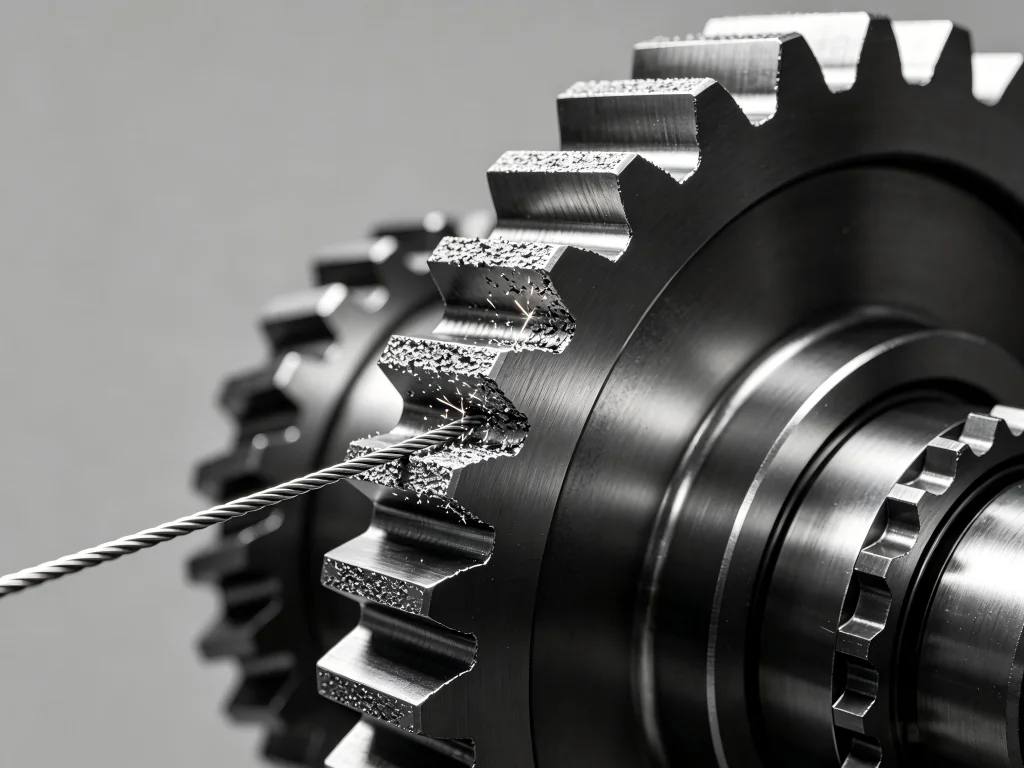
To understand the value of wire edm gears, one must first grasp the underlying technology. how does wire edm work is a question frequently discussed in engineering circles, especially when traditional cutting tools fail to meet design specifications. Wire Electrical Discharge Machining is a non-traditional machining process that utilizes a thin, electrically charged wire to cut through conductive materials using a series of rapidly recurring sparks. These sparks occur in a dielectric fluid, typically deionized water, which serves to control the electrical discharge and flush away the microscopic debris created during the erosion process.
The process of wire edm gear cutting does not involve physical contact between the tool (the wire) and the workpiece. This lack of contact eliminates the mechanical stresses and cutting forces that can lead to distortion in thin-walled or delicate gear geometries. In a typical wire edm machine design, the wire is continuously fed from a supply spool through the workpiece and onto a take-up spool. This ensures that a fresh, un-eroded section of wire is always in the cutting zone, maintaining a consistent kerf width and exceptional dimensional stability. For gears, this means the involute profile, the tooth spacing, and the pitch circle can be maintained with sub-micron precision, regardless of the material hardness.
When we look at wire edm examples in the gear industry, we often see micro-gears for medical devices or heavy-duty planetary gears for aerospace actuators. The versatility of the process allows for the creation of internal gears, splines, and complex keyways that would be impossible to reach with a rotating milling cutter. The resulting wire cut gears possess a surface finish that often requires no further grinding or polishing, significantly reducing the post-processing lead times.
The Role of EDM Wire and Material Selection
The efficiency of the cutting process is heavily dependent on the edm wire types utilized. While brass wire is the industry standard due to its excellent conductivity and affordability, advanced applications may require zinc-coated or diffusion-annealed wires to increase cutting speeds and improve surface integrity. The choice of edm wire cut wire impacts the final gear’s accuracy; for instance, high-tensile molybdenum wire might be used in specialized micro-machining environments where wire breakage must be minimized at all costs.
Furthermore, the wire edm machine design incorporates sophisticated CNC controls that manage the wire tension and positioning. This level of control allows for the production of tapered gears or gears with varying profiles along their axial length. Whether you are sourcing wire edm malaysia services or looking for global precision partners like jucheng, the integration of high-quality wire and advanced machine logic is what defines a superior gear product.
Core Application Scenarios for Wire Cut Gears
The application of wire edm gears spans across industries where “good enough” is simply not an option. Because the process can handle hardened steels, titanium, and exotic alloys without inducing heat-related stresses, it is the preferred choice for mission-critical hardware.
- Aerospace and Defense: In flight control systems, gears must be lightweight yet incredibly strong. wire edm gear cutting allows for the use of high-strength alloys like Inconel or hardened stainless steel, ensuring that the gears can withstand extreme temperatures and pressures without failure.
- Medical Device Manufacturing: Surgical robots and implantable pumps require gears that are microscopic in scale. wire cut gears can be produced with tooth modules so small they are barely visible to the naked eye, all while maintaining the necessary biocompatibility and precision.
- Automotive Prototyping: When developing new transmission systems, engineers need functional prototypes fast. wire edm gears provide a rapid way to produce one-off gears for testing without the need for expensive custom tooling or hobs.
- Tool and Die Industry: Many injection molds and stamping dies rely on complex gear mechanisms to actuate slides and lifters. The precision of wire edm gear cutting ensures these tools operate smoothly over millions of cycles.
On platforms like Reddit and Facebook, manufacturing enthusiasts often discuss how wire edm examples have revolutionized their ability to repair vintage machinery. When a replacement gear for a 50-year-old lathe is no longer available, wire edm gears can be custom-designed and cut to match the original specifications exactly, even if the original material was hardened tool steel.
Key Buying Factors: How to Choose a Wire EDM Partner
Selecting a provider for wire edm gears involves more than just comparing quotes. Because gears are the heart of mechanical motion, the quality of the cut translates directly to the efficiency and noise level of the final assembly. Potential buyers should consider the following factors:
1. Precision and Tolerance Capabilities
Does the provider utilize top-tier wire edm brands like Mitsubishi, Sodick, or Fanuc? The quality of the machine tool significantly influences the achievable tolerance. For wire cut gears, you should look for a partner capable of maintaining tolerances within +/- 0.005mm or better. This is especially crucial for high-speed gearboxes where even a tiny deviation can lead to vibration and premature wear.
2. Material Expertise and Wire Selection
A knowledgeable provider will suggest the best edm wire types for your specific material. If you are cutting thick blocks of hardened D2 tool steel, they might recommend a coated wire to improve flushability and speed. If you are working with delicate electronics-grade copper, a different approach is needed. Ensure your partner understands the metallurgical implications of the edm wire cut wire process.
3. Certification and Quality Management
When sourcing precision parts, certifications such as ISO 9001 or AS9100 are non-negotiable. These certifications ensure that the wire edm gear cutting process is documented, repeatable, and subject to rigorous inspection. jucheng, for example, maintains a robust quality control system to ensure every gear meets the client’s exacting standards.
4. Lead Times and Regional Availability
While wire edm malaysia has become a hub for cost-effective machining, you must balance cost with lead times and shipping logistics. Modern shops use automated wire threading and “lights-out” manufacturing to keep costs down and deliveries on schedule. Ask about their capacity to handle both small prototypes and large-scale production runs.
Comparative Analysis: Wire EDM vs. Traditional Gear Cutting
To help you make the best decision for your project, the following table compares wire edm gears with traditionally hobbed or milled gears.
| Feature | Wire EDM Gear Cutting | Traditional Hobbing/Milling |
|---|---|---|
| Material Hardness | Can cut any conductive material regardless of hardness. | Limited to materials softer than the cutting tool. |
| Complexity | Ideal for internal gears, splines, and complex profiles. | Best for standard external spur and helical gears. |
| Precision | Ultra-high (sub-micron levels possible). | High, but limited by tool wear and deflection. |
| Surface Finish | Excellent; often eliminates the need for grinding. | May require secondary finishing or polishing. |
| Tooling Costs | Very low; no custom hobs or cutters required. | High; requires specific tools for each gear size. |
| Production Speed | Slower per piece; better for low-to-medium volumes. | Fast; optimized for high-volume mass production. |
As suggested by the data, wire edm gears are the clear winner when precision, material hardness, and design complexity are the primary drivers. For mass-market automotive gears made of soft steel, traditional hobbing remains the more economical choice. However, for the high-performance sectors served by jucheng, the benefits of EDM usually outweigh the longer cycle times.
Installation and Maintenance of Wire EDM Gears
Once you have received your high-precision wire cut gears, proper installation and maintenance are required to preserve their performance. Because wire edm gears are often manufactured to extremely tight clearances, any misalignment during installation can cause significant issues.
Installation Tips:
Ensure that the shafts and housings are cleaned of all debris. Since wire edm gear cutting produces such a smooth finish, even a small speck of dust can alter the mesh characteristics. Always use a calibrated torque wrench for fasteners and check the backlash according to the design specifications. If the gear was cut from a hardened material, it may be brittle, so avoid heavy impact during the assembly process.
Maintenance Guidelines:
The longevity of wire edm gears is generally excellent due to the lack of internal stresses. However, proper lubrication is vital. Use high-quality synthetic oils or greases that are compatible with the gear material. Regular inspections for signs of pitting or scoring on the tooth faces can help identify lubrication failures before they lead to system downtime. If a gear does show wear, the wire edm examples of repair show that it is often possible to “skim” the gear profile to restore its geometry, provided the center distance can be adjusted.
Why Choose Jucheng for Your Wire EDM Needs?
When it comes to the specialized field of wire edm gears, jucheng has established itself as a leader in CNC innovation and reliability. The company combines years of technical research with an expansive facility that houses some of the most advanced wire edm brands in the industry. But why should jucheng be your first choice?
First, jucheng understands the fundamental physics of how does wire edm work. This deep knowledge allows their engineers to optimize the cutting parameters for every unique project, balancing speed with the integrity of the heat-affected zone (HAZ). Whether you are looking for wire edm malaysia cost efficiencies or North American precision standards, jucheng bridges the gap by offering global-grade quality at competitive pricing.
Second, their versatility in edm wire types and edm wire cut wire selection ensures that your specific material requirements are met. From aerospace-grade titanium to hardened tool steels used in heavy industry, jucheng has the expertise to handle it all. Their commitment to quality is backed by comprehensive inspection reports, including CMM (Coordinate Measuring Machine) data, to prove that every wire edm gears shipment meets your blueprint tolerances.
Finally, jucheng offers a holistic approach to CNC machining. They are not just a wire EDM shop; they are a full-service manufacturing partner. This means they can handle the pre-turning, heat treating, and post-EDM finishing all under one roof, ensuring a seamless supply chain for your wire cut gears.
Frequently Asked Questions (FAQ)
1. Can wire EDM cut non-conductive materials for gears?
No, the process requires the material to be electrically conductive. However, almost all metals used in gear manufacturing, including steel, aluminum, brass, and titanium, are suitable for wire edm gear cutting. For non-conductive plastics or ceramics, other methods like laser cutting or traditional CNC milling must be used.
2. What is the typical accuracy of wire edm gears?
In a controlled environment with high-end wire edm machine design, accuracy can be held to within +/- 0.002mm. For most industrial wire cut gears, a tolerance of +/- 0.005mm to 0.01mm is standard and easily achievable by experienced providers like jucheng.
3. How does the surface finish of wire EDM compare to grinding?
The surface finish of wire edm gears is exceptionally smooth, often reaching Ra 0.2 to 0.4 micrometers. This is comparable to, or even better than, many grinding operations. The “cratered” texture at a microscopic level also helps in oil retention, which may improve the lubrication of the gear during high-load operation.
4. Is wire EDM too slow for large production runs?
While wire edm gear cutting is slower than hobbing, its “lights-out” capability and low labor intensity make it surprisingly competitive for medium volumes, especially when you consider the cost savings from not needing custom tooling. For very large runs (tens of thousands), it is often used to create the master hobs or tools rather than the gears themselves.
5. What are the common edm wire types used today?
The most common are plain brass wire, zinc-coated brass wire (often called “stratified” wire), and molybdenum wire. The choice depends on the desired speed, the thickness of the gear, and the required precision. jucheng uses a variety of edm wire cut wire to match the specific needs of each gear profile.
6. Can you cut helical gears with wire EDM?
Yes, modern 4-axis or 5-axis wire edm machine design allows the wire to tilt. By coordinating the X, Y, U, and V axes, the machine can cut complex helical profiles and even variable-lead gears with extreme precision.
7. Does wire EDM affect the hardness of the gear?
The EDM process involves thermal erosion, which creates a very thin heat-affected zone (HAZ) on the surface. However, because the part is submerged in dielectric fluid, the bulk material properties remain unchanged. Advanced “trim cuts” can remove the majority of the HAZ, ensuring the wire edm gears maintain their intended metallurgical integrity.
8. Why should I look for wire edm malaysia or international providers?
Sourcing internationally from hubs like Malaysia or established experts like jucheng can provide a significant cost advantage without sacrificing quality. These regions have invested heavily in high-end wire edm brands and have a skilled workforce dedicated to precision engineering.
Conclusion: Elevate Your Machinery with Precision Gears
Investing in wire edm gears is an investment in the reliability and efficiency of your mechanical systems. By leveraging the unique advantages of wire edm gear cutting—such as the ability to process hardened materials, achieve sub-micron tolerances, and create complex geometries—you can push the boundaries of what your equipment can achieve. Whether you are solving a noise problem in a high-speed gearbox or designing a critical medical actuator, wire cut gears provide the precision that traditional methods simply cannot match.
As a leader in the CNC field, jucheng is ready to help you navigate the complexities of wire edm machine design and material selection. Their team of experts can guide you from the initial CAD design through to the final quality inspection, ensuring that your wire edm gears are delivered on time and to your exact specifications. Don’t settle for standard when you can have the extraordinary precision of EDM.
Ready to optimize your gear performance?
Contact the experts at jucheng today for a detailed consultation on your next high-precision project. Explore our full range of wire edm gear cutting services and see how we can bring your designs to life with unparalleled accuracy.
The evolution of how does wire edm work continues to drive innovation in the gear industry. By staying informed about edm wire types, machine capabilities, and global sourcing options, you position your business at the forefront of modern manufacturing. Choose wire edm gears for your next project and experience the difference that true precision makes.