
When sourcing wire EDM parts in China, the useful question is whether a supplier can make and verify your particular features. A general claim such as “high precision” does not define acceptance. Start with the controlled drawing, identify the features that drive fit or function, and compare quotations against the same manufacturing and inspection scope.
This guide covers purchasing machined components. For a project review, see our wire EDM machining service in China. Jucheng provides part machining; we do not sell EDM machines.
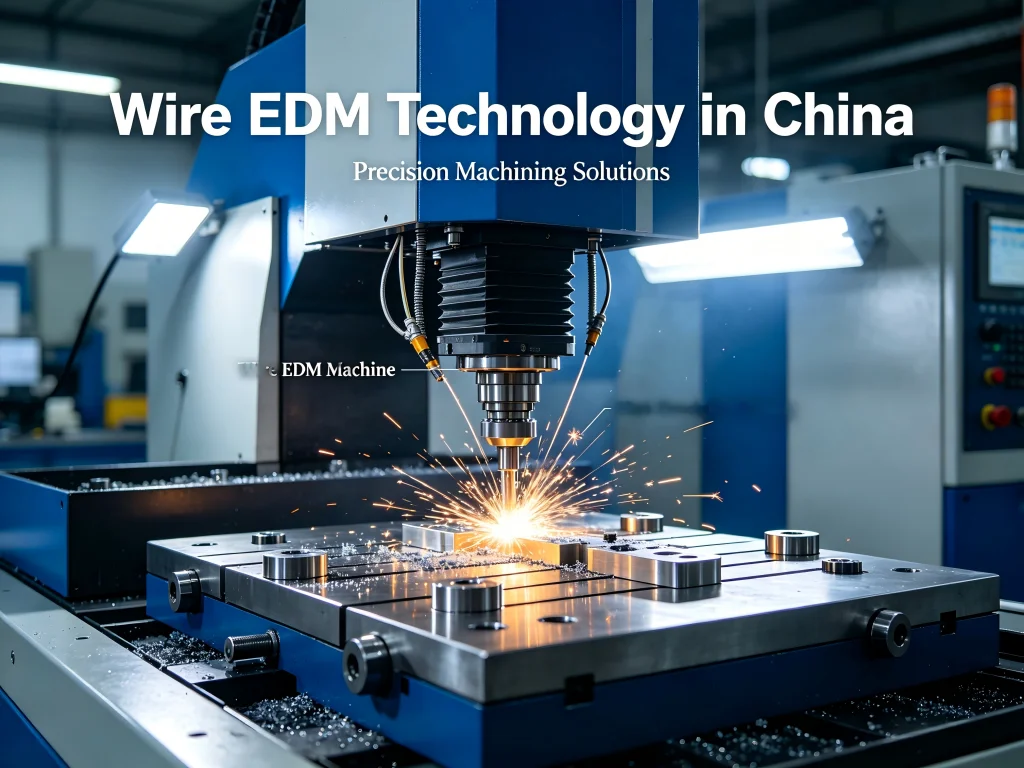
Check whether wire EDM fits the feature
Wire electrical discharge machining removes material with electrical discharges between a travelling wire and a conductive workpiece. It can be considered for through-profiles, narrow slots and intricate contours in conductive materials, including hardened metals. Ordinary nonconductive plastics require another machining process.
The wire needs a continuous path through the workpiece. An enclosed profile may need a start hole; a blind pocket usually requires another process. Internal corners have a finite radius determined by wire size and the discharge gap. Specify an acceptable radius instead of drawing a perfectly sharp corner.
EDM uses thermal material removal. The absence of conventional cutting forces does not establish zero distortion or an unaffected surface. Discuss surface integrity and any required finishing with the supplier. Makino’s EDM process overview provides background on the technology; a machine’s advertised capability is not an acceptance guarantee for a finished part.
Send an RFQ that can be quoted without guessing
A CAD model describes geometry, but it may not carry the complete manufacturing requirement. Send the current model together with a controlled drawing. If the two conflict, resolve the conflict before production rather than assuming that one file will silently take priority.
| RFQ item | What to state | What to clarify before ordering |
|---|---|---|
| Part and revision | Part number, drawing revision, units and matching CAD file | Which document controls acceptance and how later changes are approved |
| Material | Grade, stock thickness and heat-treatment condition | Who supplies stock, approved substitutions and required material records |
| Critical geometry | Datums, dimensions, tolerances, radii and taper requirements | Which features need a process review and which requirements remain unresolved |
| Surface and edges | Required finish, edge condition and functional restrictions | Whether additional finishing is included and how its effect on size is checked |
| Quantity | Prototype quantity, release quantity and expected repeat orders | Setup charges, quantity breaks and the conditions for repeat pricing |
| Inspection | Critical characteristics, sampling requirements and report format | Measurement method, acceptance limits and records supplied with the parts |
| Delivery | Destination, required arrival date and packaging needs | Production time, shipping time, freight and the quotation’s delivery terms |
Turn a tolerance claim into an inspection agreement
A website tolerance is a starting point for discussion. Ask for written confirmation against the actual material, thickness and geometry. A supplier may accept one tight feature while recommending a different requirement for another. Record these exceptions on an approved drawing or quotation before placing the order.
For each characteristic that controls assembly, identify its datum references and how it will be measured. A slot width, its location and the flatness of the surrounding face are separate requirements. Passing one measurement does not show that the other two pass. Also clarify whether the measurement applies before or after heat treatment, coating or a secondary operation.
For a new part, an agreed first-article review can expose missing requirements before a larger release. Define the review’s scope: the number of samples, the characteristics reported, the drawing revision and who authorizes production to continue. Do not treat an unspecified “inspection report” as proof that every drawing characteristic has been checked.
Compare quotations on the same scope
Wire EDM cost depends on the work required, not just the number of parts. The quotation may include stock preparation, start holes, programming, workholding, cutting, finishing, inspection and packaging. Ask which items are included and whether any are charged separately.
A lower unit price can be misleading if another quotation includes material documentation, secondary operations or more extensive inspection. Use the following comparison questions before deciding:
- Do both quotations use the same drawing revision and material condition?
- Have suppliers listed any exceptions to tolerances, finish or edge requirements?
- Are start holes and secondary machining included?
- Does the price include the inspection records your receiving team needs?
- Is the delivery date a factory completion date or an expected arrival date?
- Are freight, duties and other destination charges included under the agreed terms?
- How long is the quotation valid, and what changes trigger a new quote?
There is no reliable universal percentage saving for buying wire EDM parts from China. Compare the agreed total scope, delivery conditions and acceptance risk for your part.
A drawing review example: a locating slot in a hardened plate
Illustrative planning example, not a customer case: suppose a hardened plate needs a through-slot that locates a mating component. The model shows the slot, while the drawing lists its width but leaves the corner radius and location relative to mounting holes unclear.
Before quoting, specify the permitted corner radius, establish the datums and define the slot’s position relative to those datums. Confirm whether the mating component requires clearance throughout the plate thickness and whether taper matters. Then agree on the checks for width, position and any other functional requirement. This produces an inspectable order; simply asking for the supplier’s “highest precision” leaves the important decisions open.
Plan the order through delivery and receiving inspection
- Resolve the drawing review. Record open questions and approve any design or process changes.
- Approve the quotation scope. Confirm material, operations, inspection, quantities and delivery terms.
- Agree on the first-article step where needed. State what must be reviewed before the remaining quantity is released.
- Confirm shipment records and packaging. Specify part and lot identification, protective packaging and the documents required by receiving inspection.
- Control repeat orders. Reference the approved revision and flag any change in material, finish, quantity or acceptance requirements.
If a problem appears on receipt, retain the part identification, measurement results and photographs, and refer to the agreed acceptance requirement when discussing it with the supplier. A clear record is more useful than an unsupported claim that a part “looks wrong.”
Frequently asked procurement questions
Should every feature use the tightest possible tolerance?
No. Set tolerances from fit and function. Unnecessary tight requirements can add machining and inspection work. Have engineering approve any relaxation; the supplier should not change requirements without agreement.
Does choosing a known machine brand prove part quality?
Equipment information can help a capability discussion, but it does not replace a part-specific process review and inspection plan. Ask how the supplier will meet and verify your critical features.
Can a single process complete the whole component?
That depends on the drawing. A component may need milling, turning, grinding, heat treatment or finishing as well as wire EDM. Request a quotation for the complete scope and clarify responsibility for each operation.
How do I request a project quotation?
Send the controlled drawing, model, material condition, quantity, critical features, inspection requirements and destination through our contact page. The quotation should confirm the accepted scope and any remaining questions before manufacture.