
When your production timeline shrinks from weeks to days and your tolerance requirements remain unforgiving, quick turn CNC machining becomes more than a service—it becomes a survival strategy. Engineers across automotive, aerospace, and medical device sectors face a persistent tension: they need parts that meet exacting specifications, but they need them yesterday. Traditional machining workflows, with their lengthy setup times and rigid production schedules, simply cannot accommodate the iterative design cycles that modern product development demands. This guide addresses that friction directly, walking you through what quick turn precision machining actually entails, how it differs from conventional approaches, and what you should look for when selecting a partner who can deliver both speed and accuracy without compromise.
The Problem: When Standard Lead Times Threaten Your Project
Consider a typical scenario. A medical device company has just completed a critical design review. The engineering team has identified several modifications to a complex surgical instrument housing—adjustments that could significantly improve ergonomics and functionality. The project manager needs functional prototypes within ten business days to meet an upcoming regulatory submission deadline. Conventional CNC shops quote three to four weeks, minimum. The company faces an impossible choice: delay the submission or proceed with untested design changes. This is the reality for countless product teams, and it is precisely the problem that quick turn precision machining and engineering services were designed to solve. The frustration is real, and it is shared across industries. As one Reddit user recently noted in a machining forum discussion, “The gap between ‘we need this part’ and ‘we have this part’ is where projects go to die”. That gap, however, does not have to be inevitable.
The Solution: Understanding Quick Turn CNC Machining
What Is Quick Turn CNC Machining?
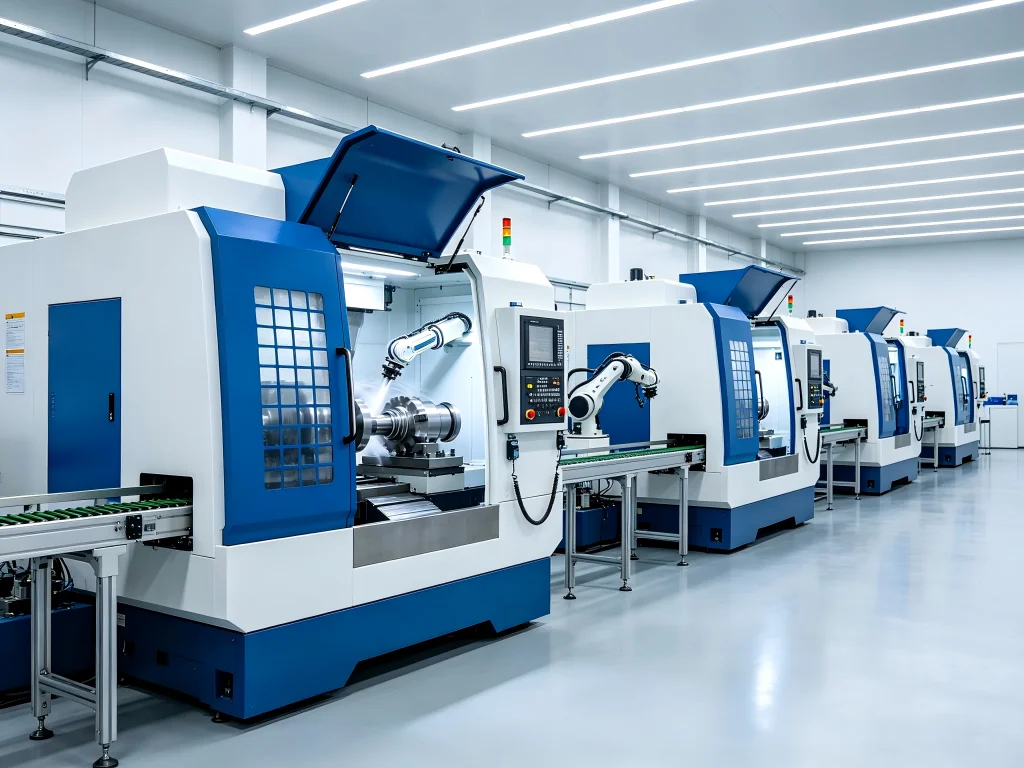
At its core, quick turn CNC machining is a computer-controlled subtractive manufacturing process that prioritizes rapid production without sacrificing precision. The term “quick turn” refers to the accelerated lead time—typically days rather than weeks—achieved through optimized workflows, advanced equipment, and streamlined communication between designers and machinists. Unlike traditional CNC machining, which may involve lengthy queue times and complex setup procedures, quick turn precision machining employs strategies such as automated tool selection, rapid prototyping protocols, and just-in-time scheduling to compress the production timeline. The underlying technology remains the same: a rotating workpiece is shaped by stationary cutting tools controlled by programmed instructions. What changes is the operational philosophy. Speed becomes a primary design parameter, influencing everything from material selection to toolpath optimization.
The principle is straightforward. A digital model—typically a CAD file—is translated into G-code, a language that instructs the machine on movements, speeds, and tool changes. The workpiece, often a cylindrical bar of metal or plastic, is secured in the spindle and rotated at high speeds while cutting tools approach from various angles to remove material. The result is a finished part that meets dimensional specifications with tolerances as tight as ±0.01mm. What distinguishes quick turn operations is the integration of every stage—from design review to post-processing—into a cohesive, accelerated workflow.
How Fast Does a CNC Machine Work?
Speed in CNC machining is measured in multiple dimensions: spindle speed (RPM), feed rate (inches per minute), and rapid traverse rate. Modern CNC turning centers can achieve spindle speeds exceeding 6,000 RPM and feed rates that surpass 2,300 inches per minute. However, the practical speed of quick turn CNC machining depends on several interdependent factors: the material being cut (aluminum machines faster than titanium), the complexity of the part geometry, the number of tool changes required, and the depth of each cut. A simple aluminum bushing might be completed in minutes, while a complex aerospace component with multiple features could take hours. The key advantage of quick turn precision machining lies not in raw cutting speed alone but in the elimination of non-productive time—reducing setup, inspection, and communication delays.
CNC Turning Time: What to Expect
Calculating CNC turning time involves several variables. The basic formula for machining time is \( T_m = L / f_r \), where \( L \) is the length of cut and \( f_r \) is the feed rate. However, total cycle time includes loading and unloading, tool changes, and inspection. For a typical quick turn job, a skilled operator might complete setup in under an hour, with actual cutting time ranging from a few minutes for simple parts to several hours for complex geometries. When evaluating a supplier, ask about their average CNC turning time for parts similar to yours—this provides a more realistic benchmark than theoretical maximum speeds.
Core Applications: Where Quick Turn Precision Machining Excels
The versatility of quick turn precision machining makes it indispensable across multiple industries. Each sector imposes unique demands, but the common thread is the need for rapid iteration and uncompromising quality.
Automotive: From Prototyping to Production
In the automotive industry, the ability to transition from a digital rendering to a functional prototype can define the success of an entire vehicle platform. Quick turn CNC machining enables engineers to test new thermodynamic designs—such as engine blocks and turbocharger housings—without the six-month lead time required for production molds. Jucheng Precision, for instance, specializes in machining complex engine components directly from solid billet aluminum, achieving the superior grain structure and density that cast parts cannot match. The IATF 16949 certification that Jucheng holds ensures that every part meets the rigorous process control and traceability standards demanded by Tier 1 and Tier 2 suppliers.
Aerospace: The Zero-Defect Mandate
Aerospace manufacturing operates under an unyielding mandate: zero defects. Components are subjected to extreme forces, and failure can have catastrophic consequences. Quick turn precision machining for aerospace applications requires not only speed but also absolute discipline in process control. Jucheng Precision’s facility operates under IATF 16949, a standard that shares the same fundamental DNA as AS9100: a fanatical focus on risk mitigation, rigorous process validation, and complete traceability. Every raw material batch is verified with a spectrometer, every critical dimension is checked with coordinate measuring machines (CMMs), and every result is documented. This creates an unbroken chain of data that proves the integrity of the component.
Medical Devices: Precision Meets Urgency
Medical device manufacturers face some of the most demanding requirements in manufacturing. Components must be biocompatible, sterilizable, and dimensionally perfect. At the same time, development cycles are compressed by regulatory deadlines and market pressures. Jucheng Precision produces operational prototypes for high-precision medical device components using 3- and 5-axis micro-milling and turning, achieving tolerances down to ±0.01mm. The company’s ISO 13485 certification adds an additional layer of quality assurance for medical applications. Quick turn capabilities allow medical device companies to test designs for usability and refine them before moving to full-scale production.
Key Selection Factors: How to Choose a Quick Turn CNC Machining Partner
Selecting the right partner for quick turn precision machining is a decision that affects not only product quality but also project timelines and overall business agility. The following factors should guide your evaluation.
Precision and Quality Standards
Look for a supplier that can achieve tight tolerances—ideally within ±0.01mm for metal parts. Surface finish quality is equally important; aerospace components, for example, may require Ra 0.4 finishes. Certifications such as IATF 16949 and ISO 13485 indicate a commitment to rigorous quality management systems. These standards require documented processes, regular audits, and continuous improvement—all of which translate to more reliable parts.
Production Capabilities and Scalability
Your chosen partner should handle both prototyping and production. Multi-axis machines—particularly 5-axis CNC—can produce complex geometries with fewer setups, reducing both time and opportunities for error. Jucheng Precision operates a fleet of over 25 high-precision 5-axis Haas and Mazak machines, allowing the company to move from prototype to series production without a drop in quality or an increase in lead time. This scalability is crucial for companies that need to validate designs quickly and then ramp up production without switching suppliers.
Responsiveness and Communication
In quick turn operations, time is measured in hours, not days. A reliable supplier should respond to RFQs within 1 to 6 hours, employ English-speaking engineers who can discuss design modifications directly, and demonstrate traceable quality records through auditable processes. Jucheng Precision, for example, provides quotation and DFM feedback within 24 hours of receiving 2D and 3D files. This responsiveness is not just a convenience—it is a critical component of the accelerated workflow that defines quick turn precision machining.
Material Expertise
Different applications require different materials, and your supplier should have experience with the specific alloys and plastics you need. Jucheng Precision machines everything from engineering plastics like POM and PEEK to structural metals like aluminum 6061/7075 and stainless steel. The company also specializes in difficult-to-machine materials such as titanium (Ti-6Al-4V), producing mission-critical components that perform reliably in harsh conditions. This breadth of material expertise ensures that your quick turn precision machining project will not be limited by your supplier’s capabilities.
Value-Added Services
Beyond machining, consider what additional services your supplier offers. Post-processing—such as cleaning, deburring, assembly, and surface finishing—can significantly reduce your internal workload. Jucheng Precision provides value-added services including press-fit assembly, thread locking, and adhesive bonding, streamlining the supply chain and saving time. These services may seem peripheral, but they can be decisive when every day counts.
Installation and Maintenance: Keeping Your Quick Turn Operations Running Smoothly
For organizations that operate their own quick turn CNC equipment, proper installation and maintenance are essential. The following guidelines apply whether you are setting up a new machine or optimizing an existing one.
Installation Best Practices
Proper installation begins with site preparation. Ensure that the floor can support the machine’s weight—a Mazak Quick Turn 300MSY, for example, weighs approximately 10,050 kg. Level the machine precisely using precision levels, as even minor misalignment can affect part accuracy. Connect power and coolant systems according to manufacturer specifications, and verify that all safety interlocks function correctly. Finally, run a series of test cuts to validate that the machine is operating within specified tolerances. Many suppliers, including Jucheng Precision, offer installation support and training as part of their service package.
Daily Maintenance Checklist
Consistent maintenance extends machine life and ensures consistent part quality. A daily checklist should include:
- Coolant levels and concentration: Verify that coolant is at the proper level and mixture. Contaminated or depleted coolant can cause tool wear and poor surface finishes.
- Way lubrication: Check that automatic lubrication systems are functioning and that way oil levels are adequate. Insufficient lubrication leads to premature wear on guideways.
- Tool condition: Inspect cutting tools for wear or damage. Dull tools increase cutting forces and reduce accuracy. Replace tools as needed.
- Chip removal: Ensure that chip conveyors are operating and that chips are not accumulating in the work area. Chip buildup can interfere with machine operation and pose safety hazards.
- Spindle warm-up: Run the spindle at gradually increasing speeds for several minutes before starting production. This allows thermal expansion to stabilize, reducing dimensional variation.
Preventive Maintenance Schedule
Beyond daily checks, schedule more comprehensive maintenance at regular intervals. Monthly tasks might include inspecting hydraulic systems, checking belt tension, and calibrating tool setters. Quarterly maintenance could involve replacing filters, testing emergency stops, and verifying spindle alignment. Annual service should include a full machine inspection by a qualified technician, including backlash measurement and geometric accuracy checks. Many machine manufacturers provide detailed maintenance schedules; following these recommendations is the most reliable way to prevent unplanned downtime.
Why Choose Jucheng Precision for Quick Turn CNC Machining
Jucheng Precision has established itself as a trusted partner for quick turn precision machining across multiple industries. The company’s approach is built on several distinct advantages that address the core concerns of engineers and procurement professionals.
Advanced Equipment and Capacity
Jucheng operates more than 25 high-precision 5-axis Haas and Mazak machines, providing the capacity to handle both small prototype runs and large production volumes. This scale allows the company to maintain short lead times even during peak demand periods. The equipment fleet includes both milling and turning centers, ensuring that Jucheng can recommend the optimal process for each part rather than forcing a part onto a machine simply because it is available.
Quality Certifications and Culture
Jucheng’s IATF 16949 certification reflects a zero-defect culture that permeates every aspect of operations. This is not merely a compliance exercise—it is a fundamental approach to manufacturing that emphasizes risk mitigation, process validation, and complete traceability. For aerospace and automotive clients, this certification provides the assurance that every part meets the most demanding quality standards. For medical device manufacturers, Jucheng’s ISO 13485 certification adds an additional layer of quality assurance.
Technical Expertise and Design for Manufacturability
Jucheng’s engineering team works closely with clients to optimize designs for manufacturability, identifying potential issues before production begins. This collaboration reduces the risk of costly revisions and ensures that parts can be produced efficiently. The company’s experience spans a wide range of materials and geometries, from simple turned parts to complex multi-axis components.
Speed Without Compromise
Perhaps most importantly, Jucheng delivers on the promise of quick turn service. The company’s streamlined workflows, responsive communication, and advanced equipment combine to produce parts in days rather than weeks. Yet speed never comes at the expense of quality. Every part is inspected using advanced metrology equipment, including CMMs, optical comparators, and micrometers. This commitment to both speed and precision is what sets Jucheng apart in the competitive landscape of quick turn precision machining and engineering.
Frequently Asked Questions About Quick Turn CNC Machining
1. What is the typical lead time for quick turn CNC machining?
Lead times vary depending on part complexity, material availability, and current shop capacity. However, quick turn services typically deliver parts within 3 to 10 business days, compared to 3 to 6 weeks for conventional machining. Some suppliers, including Jucheng Precision, can provide prototypes in as little as 2 business days for simple parts.
2. How does quick turn CNC machining differ from standard CNC machining?
The primary difference is the operational philosophy. Standard CNC machining prioritizes cost efficiency and may involve longer queue times and less flexible scheduling. Quick turn precision machining prioritizes speed, employing optimized workflows, automated processes, and dedicated capacity to compress lead times. The underlying technology is the same; what changes is how the work is organized and prioritized.
3. What materials can be used in quick turn CNC machining?
Almost any machinable material can be processed in a quick turn environment. Common materials include aluminum alloys (6061, 7075), stainless steel, titanium, brass, and engineering plastics such as POM, PEEK, and nylon. The specific material selection depends on the application requirements, including strength, weight, corrosion resistance, and biocompatibility.
4. Is quick turn CNC machining more expensive than standard machining?
Per-part costs for quick turn services are typically higher than for standard production runs due to the expedited scheduling and reduced batch sizes. However, when the total cost of delay is considered—including lost market opportunities, delayed regulatory submissions, and extended development cycles—quick turn precision machining often proves to be the more cost-effective option. Many companies find that the premium for speed is justified by the accelerated time-to-market.
5. How do I prepare a design for quick turn CNC machining?
Start with a clean, fully dimensioned CAD model. Include all critical tolerances and specify material requirements clearly. Avoid unnecessary complexity that could increase machining time or require special tooling. Consider design for manufacturability principles: minimize deep cavities, avoid sharp internal corners, and standardize hole sizes where possible. A good supplier will provide design feedback as part of the quotation process.
6. Can quick turn CNC machining handle complex geometries?
Yes, particularly when using multi-axis machines. 5-axis CNC machining allows for complex geometries to be produced in a single setup, reducing both time and the potential for alignment errors. Jucheng Precision’s fleet of 5-axis Haas and Mazak machines can produce intricate parts that would be impossible or impractical with 3-axis equipment.
7. What quality control measures are used in quick turn CNC machining?
Quality control in quick turn precision machining typically includes in-process inspections, first-article inspections, and final CMM verification. Jucheng Precision uses advanced metrology equipment including CMMs, optical comparators, and micrometers to ensure every part meets specifications. The company’s IATF 16949 certification ensures that all quality processes are documented and audited regularly.
8. How do I choose between CNC turning and CNC milling for my part?
CNC turning is generally preferred for cylindrical or rotationally symmetric parts. CNC milling is better suited for flat or prismatic parts with complex features. Many parts benefit from both processes—turning for the basic shape and milling for additional features. Jucheng Precision offers both capabilities and can recommend the optimal approach for your specific part.
Conclusion: Making Quick Turn CNC Machining Work for You
The pressure to accelerate product development is not going to ease. If anything, it will intensify as markets become more competitive and customer expectations continue to rise. Quick turn CNC machining offers a proven path to meeting these demands without compromising quality. By understanding what quick turn precision machining entails, evaluating potential partners against the criteria outlined above, and preparing designs with manufacturability in mind, you can transform the machining bottleneck into a competitive advantage. Whether you are an engineer refining a prototype, a procurement professional sourcing production parts, or a business leader seeking to accelerate time-to-market, quick turn services from a capable partner like Jucheng Precision can help you achieve your goals. The technology exists, the expertise is available, and the time to act is now.
Ready to put quick turn CNC machining to work for your next project? Contact Jucheng Precision to discuss your requirements and receive a quotation within 24 hours. With advanced 5-axis equipment, IATF 16949-certified quality, and a commitment to responsive service, Jucheng is equipped to deliver the precision and speed your project demands.