
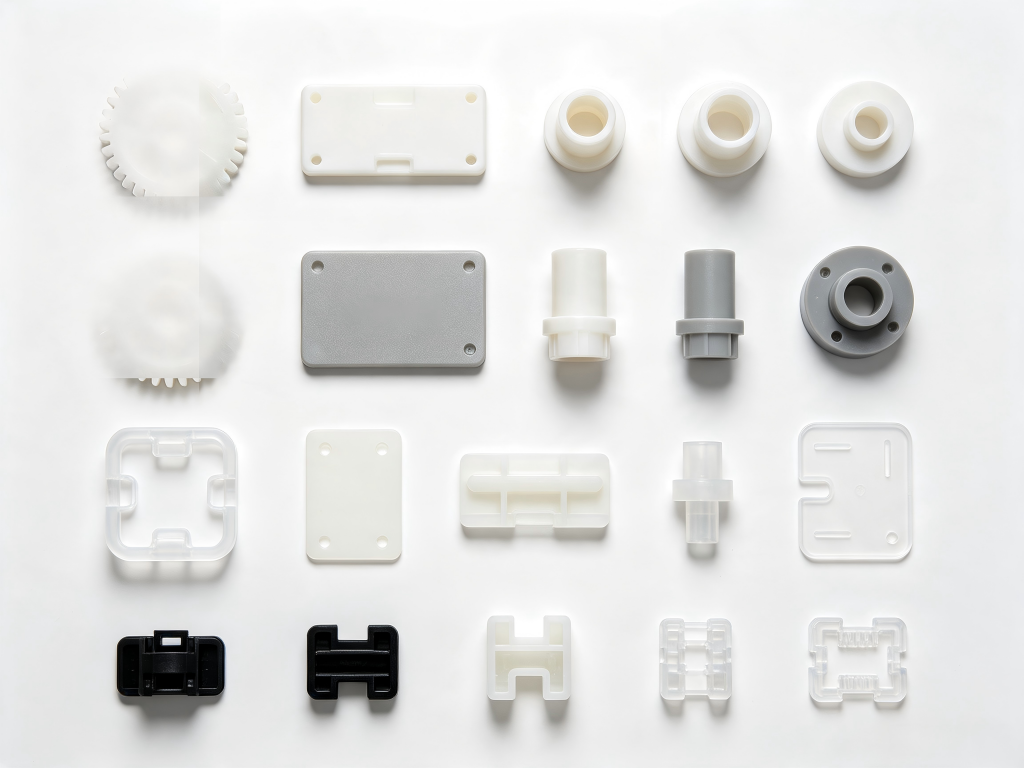
What Is Precision Plastic Machining? Defining the Process and Its Capabilities
Before evaluating potential partners, it helps to understand exactly what what is precision machining in the context of plastics. Precision plastic machining is a subtractive manufacturing process in which computer-controlled cutting tools remove material from solid plastic stock—rods, sheets, or blocks—to produce components with defined geometry and tight tolerances. Unlike injection molding, which requires expensive molds and works best for high volumes, CNC precision machining offers flexibility for prototypes and low-to-medium production runs without the upfront tooling investment.
So what is precision machining technology when applied to plastics? It encompasses a range of processes including CNC milling, turning, drilling, and grinding, all orchestrated by software that translates digital designs into physical parts. The key distinction from metal machining lies in material behavior: plastics have low thermal conductivity and low melting temperatures, requiring sharp tools, high spindle speeds, and effective cooling strategies to prevent melting, warping, or dimensional drift.
A capable plastic precision company understands that achieving tolerances of ±0.02mm or better on engineering plastics like PEEK or POM demands more than just expensive equipment—it requires thermal management, stress-relief protocols, and rigorous metrology. As one industry observer on Reddit’s r/Machinists community noted, “Plastic moves. You can’t treat it like aluminum and expect the same results. The guys who get it right are the ones who control the environment, not just the tool path.” This sentiment echoes across engineering forums and highlights why partner selection matters more than machine specifications alone.
Key Applications: Where Precision Plastic Components Make the Difference
Precision plastic engineering serves industries where performance, reliability, and regulatory compliance are non-negotiable. Medical devices rely on machined plastic components for surgical instruments, diagnostic equipment, and implantable devices—applications that demand biocompatible materials like PEEK and Ultem, machined to exacting standards under ISO 13485 quality systems. The automotive sector uses precision-machined plastic parts for fuel systems, sensors, and interior components, where weight reduction and corrosion resistance provide tangible advantages over metal alternatives.
Aerospace applications push the boundaries of plastic machining Malaysia and global capabilities alike, requiring high-performance polymers that maintain structural integrity under extreme temperatures and stresses. Electronics manufacturers depend on precision plastic components for connectors, housings, and insulation parts where dimensional stability and dielectric properties are critical. The semiconductor industry, particularly in regions like Penang, Malaysia, relies on precision-engineered plastic parts for test sockets and handling equipment.
For buyers in Southeast Asia searching for plastic machining Malaysia providers, the regional ecosystem includes both local job shops and globally-oriented manufacturers. The distinction often comes down to certification, capacity, and material expertise—factors we will explore in detail throughout this guide.
The Selection Framework: What to Look for in a Precision Plastic Machining Partner
Choosing a precision plastic machining provider involves evaluating multiple dimensions beyond the quoted price. Based on analysis of industry best practices and feedback from engineering forums, the following framework addresses the critical factors that determine project success.
1. Material Capability and Inventory
The range of materials a shop can machine directly affects your design flexibility and lead time. A capable provider maintains stock of engineering plastics including ABS, PEEK, Ultem (PEI), POM (Acetal/Delrin), Nylon (PA), Polycarbonate (PC), PMMA (Acrylic), PTFE (Teflon), and glass-filled variants. Having materials on-hand eliminates procurement delays and ensures the shop has experience with the specific machining characteristics of each polymer.
Material expertise matters because different plastics behave differently under cutting tools. Nylon absorbs moisture and swells, requiring climate-controlled storage and pre-machining conditioning. Glass-filled materials like PA+GF30 are highly abrasive and demand diamond-coated tooling to maintain edge sharpness and prevent heat generation. POM machines cleanly and holds dimensions well, making it a safe choice for general precision parts. PEEK offers exceptional strength and heat resistance but requires careful process control due to its higher cost and thermal characteristics.
As one engineering manager on a manufacturing forum put it: “The material list on a website tells you what they can buy. The real question is what they actually know how to machine without scrapping half the batch.” This distinction separates true precision plastic fabrication experts from generalist shops.
2. Equipment Fleet and Technological Capability
Machine count matters, but machine capability matters more. 5-axis machining centers enable complex geometries with fewer setups, improving tolerance stacking and reducing the risk of misalignment. High-precision 3, 4, and 5-axis milling, turning, and grinding capabilities indicate a shop equipped to handle demanding geometries.
Beyond the machines themselves, consider the supporting infrastructure: climate-controlled production floors that maintain stable temperatures (typically 20°C ±1°C) prevent thermal expansion from compromising dimensions. Advanced metrology equipment—CMM (coordinate measuring machines), spectrometers, and optical projectors—enables verification of tight tolerances and provides the documentation required for regulated industries.
3. Quality Certifications and Systems
Certifications serve as objective indicators of a shop’s commitment to quality and process control. ISO 9001:2015 provides a foundational quality management system. ISO 13485 is essential for medical device components, while IATF 16949 addresses automotive industry requirements. These certifications are not merely badges—they mandate documented processes, regular audits, and continuous improvement systems that reduce variability and risk.
For buyers in regulated industries, working with a certified plastic precision company simplifies compliance and provides confidence that parts will meet specification consistently. As one procurement specialist noted in a LinkedIn discussion, “Certification doesn’t guarantee perfection, but it does guarantee that when something goes wrong, there’s a system to catch it and fix it. That’s worth more than the paper it’s printed on.”
4. Secondary Operations and Finishing
Precision machining rarely represents the entire manufacturing journey. In-house capabilities for surface finishing—polishing, anodizing, painting, silk-screening, and bead blasting—eliminate the need to coordinate multiple vendors, saving time and reducing the risk of damage during transit. Assembly services further streamline the supply chain, allowing the partner to deliver fully functional components rather than raw machined parts.
5. Lead Time and Production Scalability
Speed matters, but consistent speed matters more. A shop with redundant equipment and flexible capacity can accommodate urgent orders without disrupting scheduled production. Look for partners who can deliver complex parts in days rather than weeks, but verify that rapid turnaround doesn’t come at the expense of quality.
Scalability is equally important. A provider capable of producing both prototypes and production volumes offers continuity as your project moves from validation to market. This avoids the disruption and requalification costs associated with switching suppliers between phases.
Comparative Analysis: Evaluating Precision Plastic Machining Providers
The following table compares different types of precision plastic machining providers based on key selection criteria. This framework helps buyers match their specific requirements to the most suitable partner type.
| Evaluation Criteria | Local Job Shop | Regional Specialist | Global Certified Partner |
|---|---|---|---|
| Material Inventory | Limited selection, may need to order | Good selection of common engineering plastics | Extensive stock of 30+ materials including high-performance polymers |
| Equipment Capability | 3-axis milling, basic turning | 3- and 4-axis, some 5-axis | 3/4/5-axis milling, turning, grinding, EDM, wire cutting |
| Quality Certifications | May lack formal certification | ISO 9001 typically | ISO 9001, ISO 13485, IATF 16949, ISO 14001 |
| Secondary Operations | Limited or outsourced | Some in-house finishing | Comprehensive in-house finishing and assembly |
| Production Volume | Prototypes and small batches | Small to medium volumes | Prototypes through high-volume production |
| Lead Time Reliability | Variable, dependent on workload | Moderately consistent | Consistent with capacity redundancy |
| Regulatory Compliance Support | Limited documentation | Basic documentation | Full traceability and compliance packages |
This comparison reveals that the optimal choice depends on your specific requirements. For simple prototypes with loose tolerances, a local job shop may suffice. For regulated components requiring tight tolerances, material certifications, and production scalability, a global certified partner offers capabilities that smaller shops cannot match.
Why Jucheng Stands Out in Precision Plastic Machining
Jucheng Precision Technology operates as a manufacturing partner for buyers who require certified quality, extensive capabilities, and reliable delivery. The company’s infrastructure and quality systems address the key selection factors outlined above.
Manufacturing Scale and Equipment
With over 150 CNC machines including 25+ 5-axis centers, Jucheng maintains the capacity and redundancy to handle projects ranging from single prototypes to high-volume production. The equipment fleet includes high-precision 3, 4, and 5-axis milling, turning, and grinding capabilities, enabling complex geometries with tight tolerances. This scale ensures that urgent orders can be accommodated without disrupting scheduled production—a capability that smaller shops often cannot provide.
Material Expertise and Inventory
Jucheng machines parts from over 30 plastic materials, maintaining stock of engineering plastics including PEEK, Ultem, POM (Acetal/Delrin), Nylon (PA), Polycarbonate (PC), ABS, PMMA (Acrylic), PTFE (Teflon), and glass-filled variants. This extensive inventory eliminates material procurement delays and ensures that the machining team has deep experience with each polymer’s unique characteristics.
The company’s technical guides address specific material challenges—for example, managing moisture absorption in Nylon through pre-machining conditioning and climate-controlled storage, or using diamond-coated tooling for abrasive glass-filled materials. This depth of knowledge translates to higher first-pass yields and fewer surprises during production.
Quality Certifications and Systems
Jucheng holds IATF 16949 (automotive) and ISO 13485 (medical) certifications, alongside ISO 9001:2015 and ISO 14001. These certifications mandate documented processes, regular audits, and continuous improvement—systems that reduce variability and ensure consistent quality across production runs. The company maintains a tested 99.8% product qualification rate, verified through advanced inspection equipment including CMM, spectrometers, and optical projectors.
Thermal Control and Precision Protocols
Precision in plastic machining requires more than accurate machines—it requires stable environments. Jucheng operates its production floor and metrology labs at a controlled 20°C (±1°C), treating temperature as a manufacturing parameter. The company employs thermal mapping on its Mazak and Haas machines, using internal sensors to monitor spindle growth and compensate for thermal expansion. This thermal sovereignty eliminates the dimensional drift that plagues shops without climate control, where parts machined at 8:00 AM differ from those machined at 2:00 PM.
The company’s three-tier machining cycle—roughing, semi-finishing, and finishing—allows stress relaxation between stages, preventing warpage and ensuring dimensional stability. For high-value components, mid-process stress-relief annealing cycles further reduce the risk of distortion.
Comprehensive Service Offering
Beyond machining, Jucheng provides in-house surface finishing (polishing, anodizing, painting, silk-screening, bead blasting) and assembly services. This one-stop capability eliminates the coordination burden of managing multiple vendors and reduces the risk of damage during transit between facilities. The company also offers complementary services including 3D printing, sheet metal fabrication, and injection molding, providing a single-source solution for complex assemblies.
Installation and Maintenance Considerations for Precision Plastic Components
While machining represents the production phase, proper handling and maintenance of precision plastic parts affect their performance in service. Consider these factors when specifying and receiving components.
Handling and Inspection
Precision plastic parts should be inspected in conditions similar to their intended operating environment. Temperature and humidity affect plastic dimensions more significantly than metals, so measuring parts in uncontrolled conditions may produce misleading results. For critical components, specify the inspection conditions and ensure your supplier performs final verification in a climate-controlled environment.
When receiving parts, inspect for signs of thermal damage such as discoloration, melting, or burrs that indicate excessive heat during machining. Verify that critical dimensions meet specification using appropriate measurement equipment calibrated to the required accuracy.
Installation Guidelines
Plastic components require careful installation to avoid stress-induced failure. Unlike metals, plastics can creep or deform under sustained load, so clamping forces should be appropriate for the material. Threaded inserts or over-sized clearance holes may be necessary for bolted connections. Avoid sharp edges or point loads that could initiate cracks, particularly in brittle materials like acrylic.
Thermal expansion differences between plastic parts and metal housings should be considered in assembly design. Allow adequate clearance for expansion and contraction across the operating temperature range.
Maintenance and Service Life
Plastic components may require different maintenance intervals than metal equivalents. Wear rates vary significantly by material—POM and PTFE offer low friction and good wear resistance, while softer plastics may require more frequent replacement. Environmental factors including UV exposure, chemical contact, and temperature cycling affect plastic service life and should be considered in maintenance planning.
Frequently Asked Questions About Precision Plastic Machining
What tolerances can precision plastic machining achieve?
With high-precision equipment and proper process control, CNC plastic machining can stably achieve tolerances of ±0.02mm or even higher. Engineering plastics like POM (Acetal) and PEEK can hold ±0.01mm under controlled conditions. However, achievable tolerances depend on material selection, part geometry, and environmental control—factors that separate experienced shops from generalists.
How does precision plastic machining compare to injection molding?
Precision plastic machining does not require molds, making it ideal for prototypes and low-volume production. Injection molding offers lower per-part costs at high volumes but requires significant upfront tooling investment and longer lead times. Machining provides greater design flexibility and allows for changes without retooling costs.
What plastics are best suited for precision machining?
POM (Acetal/Delrin) machines cleanly and holds dimensions well, making it a preferred choice for precision parts. PEEK offers exceptional strength and heat resistance for demanding applications. Other commonly machined plastics include ABS, Nylon, Polycarbonate, PMMA (Acrylic), and PTFE (Teflon). Material selection should consider mechanical requirements, environmental conditions, and machinability.
How do I choose between a local and global precision machining partner?
Local shops offer convenience and potentially faster communication, but may lack the capacity, certifications, or material expertise required for complex or regulated projects. Global certified partners provide scale, quality systems, and comprehensive capabilities that smaller shops cannot match. The right choice depends on your project requirements—simple parts with loose tolerances may suit local providers, while critical components benefit from certified partners with extensive capabilities.
What certifications should a precision plastic machining provider hold?
ISO 9001:2015 provides a foundational quality management system. ISO 13485 is essential for medical device components, while IATF 16949 addresses automotive industry requirements. Additional certifications such as ISO 14001 (environmental management) indicate broader organizational commitment. For regulated industries, working with a certified provider simplifies compliance and provides confidence in process consistency.
How does thermal control affect precision plastic machining?
Temperature variation causes dimensional changes in both machines and materials. Climate-controlled production floors (typically 20°C ±1°C) prevent thermal expansion from compromising tolerances. Advanced shops use thermal mapping to monitor machine spindle growth and compensate for thermal expansion during machining. Without these controls, parts machined at different times of day may not meet specifications.
What secondary operations are typically required for precision plastic parts?
Common secondary operations include surface finishing (polishing, anodizing, painting, bead blasting), deburring, and assembly. In-house capabilities for these operations reduce lead times and eliminate the coordination burden of managing multiple vendors. Some applications also require marking, silk-screening, or laser etching for identification or branding.
How do I verify the quality of precision plastic machined parts?
Quality verification involves dimensional inspection using calibrated equipment such as CMM (coordinate measuring machines), optical projectors, and spectrometers. Visual inspection checks for surface defects, burrs, and thermal damage. Material verification confirms that the correct plastic grade was used. For regulated applications, documentation including inspection reports and material certifications provides traceability.
Making Your Decision: Aligning Partner Selection with Project Requirements
Selecting a precision plastic machining partner requires balancing multiple factors: material expertise, equipment capability, quality certifications, lead time, and production scalability. The right choice depends on your specific requirements—prototype validation, regulated production, or high-volume manufacturing—and the level of risk you can tolerate in your supply chain.
For critical components where dimensional accuracy, material integrity, and regulatory compliance are non-negotiable, a certified partner with extensive capabilities and proven quality systems offers the lowest risk path to successful production. The investment in a qualified partner pays dividends through fewer rejected parts, shorter lead times, and the confidence that your components will perform as designed.
Jucheng Precision Technology’s combination of 150+ CNC machines, 30+ materials in stock, IATF 16949 and ISO 13485 certifications, and thermal-controlled production environment addresses the key factors that distinguish exceptional precision plastic fabrication providers. The company’s comprehensive service offering—from prototyping through finishing and assembly—provides a single-source solution that simplifies supply chain management and reduces coordination risk.
For buyers in Southeast Asia and beyond, the decision ultimately comes down to this: do you need a shop that can make a part, or a partner that can ensure every part meets specification, every time? The answer determines not just who you choose, but whether your project succeeds on schedule, on budget, and to specification.
Contact Jucheng Precision Technology to discuss your precision plastic machining requirements and receive a capabilities assessment tailored to your project needs.