
The landscape of modern healthcare relies heavily on the seamless integration of electronics and mechanical protection. At the heart of this synergy lies medical enclosures machining, a specialized manufacturing sector dedicated to producing the protective housings for critical diagnostic and surgical devices. Whether it is a handheld ultrasound unit or a stationary MRI monitoring system, the integrity of the enclosure determines the longevity and safety of the internal components. For global medical device manufacturers, partnering with a precision-driven provider like jucheng ensures that these complex requirements are met with exacting standards.
In the high-stakes environment of a surgical suite or an intensive care unit, there is no room for error. The medical enclosures machining process must account for extreme sterilization protocols, electromagnetic interference (EMI) shielding, and ergonomic functionality. This guide explores the depths of medical machining, offering insights into material selection, technical specifications, and the strategic advantages of choosing a high-tier CNC partner for your medical infrastructure needs.
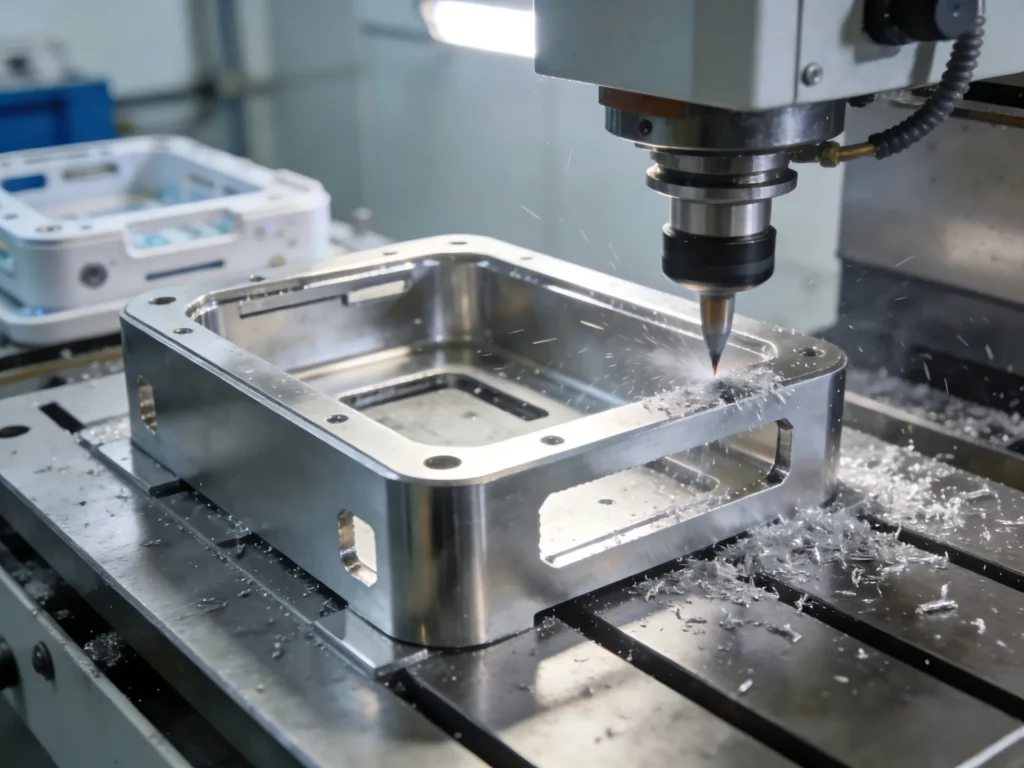
Section 1: Understanding Medical Enclosures Machining and Its Core Principles
What exactly defines medical enclosures machining? In the simplest terms, it is the subtractive manufacturing process used to create custom-shaped housings, chassis, and frames specifically designed for medical instruments. Unlike standard industrial enclosures, medical versions require a higher level of biocompatibility, corrosion resistance, and structural precision. CNC (Computer Numerical Control) machining remains the preferred method for these components due to its ability to handle tough materials while maintaining tolerances as tight as +/- 0.005mm.
The fundamental principle of this process involves taking a solid block of medical-grade material—be it aluminum, stainless steel, or high-performance plastics like PEEK—and using high-speed cutting tools to mill or turn the desired shape. The medical enclosures machining process is inherently iterative. It often begins with advanced CAD/CAM modeling to simulate how the enclosure will dissipate heat or withstand impact. For companies like jucheng, this stage is critical for identifying potential failure points before a single piece of material is cut. By utilizing multi-axis CNC machines, engineers could produce complex geometries that would be impossible with traditional casting or stamping methods.
The Subtractive Advantage in Medical Manufacturing
One might wonder why CNC machining is chosen over injection molding for medical housings. While molding is excellent for mass production, medical enclosures machining offers unparalleled flexibility for low-to-medium volume production and rapid prototyping. It allows for the use of materials that cannot be easily molded, such as aerospace-grade aluminum or surgical-grade stainless steel. Furthermore, the structural integrity of a machined part is often superior because it maintains the grain structure of the original metal, providing better protection for sensitive medical sensors.
Section 2: Critical Application Scenarios Across the Healthcare Industry
The versatility of medical enclosures machining allows it to serve a vast array of sub-sectors within the medical field. Each application demands a different set of physical and chemical properties from the housing.
- Diagnostic Imaging Equipment: Large-scale enclosures for MRI, CT, and X-ray components. These require exceptional structural stability and often include lead-lined compartments or specific aluminum alloys to manage thermal loads and radiation.
- Handheld Diagnostic Devices: Portable blood analyzers or ultrasound probes require lightweight yet durable enclosures. Here, medical enclosures machining often focuses on ergonomic shapes and high-strength plastics or lightweight alloys.
- Surgical Instrumentation: Cases for robotic surgery arms or electronic scalpels must be able to withstand the harsh environment of an autoclave. These are typically machined from 316L stainless steel or titanium.
- Patient Monitoring Systems: Bedside monitors require enclosures with integrated mounting points and cooling vents, often finished with antimicrobial coatings to prevent the spread of hospital-acquired infections.
- Laboratory Automation: Precision housings for liquid handling robots and genomic sequencers where high-speed movement requires stiff, vibration-dampening enclosures.
In each of these scenarios, the medical enclosures machining process is adapted. For instance, in laboratory settings, the focus might be on chemical resistance to reagents, whereas in surgical settings, the focus shifts to sterilization cycles. Discussions on professional forums like Reddit often highlight that the primary challenge in these applications is not just the initial build, but how the enclosure holds up after years of chemical cleaning and physical wear.
Section 3: Essential Factors for Selecting a Machining Partner
Choosing a vendor for medical enclosures machining is a strategic decision that impacts the regulatory approval and market success of your device. Several key factors must be evaluated to ensure the partner can meet the rigorous demands of the medical industry.
1. Precision and Tolerance Capabilities
Medical electronics are shrinking, requiring smaller and more complex internal layouts. Your machining partner must demonstrate the ability to hold extremely tight tolerances over long production runs. When reviewing a provider like jucheng, look for their metrology reports and their investment in high-end inspection tools like CMM (Coordinate Measuring Machines).
2. Material Science Expertise
The choice of material dictates the success of the medical enclosures machining process. A qualified partner should be able to advise on the trade-offs between different grades of materials. For example, while Grade 5 Titanium offers incredible strength-to-weight ratios, it is notoriously difficult to machine. An expert shop will have the specialized tooling and cooling systems necessary to work with such materials without compromising the part’s integrity.
3. Regulatory Compliance and Quality Certification
In the medical world, ISO 13485 is the gold standard. This certification ensures that the manufacturer maintains a quality management system specifically for medical devices. Additionally, traceability is paramount. Every block of raw material used in medical enclosures machining should come with a mill test report (MTR) to prove its origin and composition.
4. Technical Specification Comparison Table
To assist in your selection process, the following table compares common materials used in medical housings:
| Material Type | Primary Benefit | Machining Complexity | Common Application |
|---|---|---|---|
| Aluminum 6061/7075 | Lightweight, Excellent Heat Dissipation | Low to Medium | Portable diagnostic tools, Imaging frames |
| Stainless Steel 316L | Corrosion resistance, Bio-inert | High | Surgical tools, Implantable housings |
| PEEK (Polyetheretherketone) | Radiolucent, Autoclavable plastic | Medium | MRI-compatible tools, Spinal implants |
| Titanium Grade 5 | Extreme strength, Biocompatible | Very High | Orthopedic device housings |
As noted by various industry experts on Facebook engineering groups, the “cheapest” quote often results in the highest long-term costs due to failed inspections or poor surface finishes that harbor bacteria. Therefore, prioritizing quality and technical capability over price is essential in medical enclosures machining.
Section 4: The Medical Enclosures Machining Process: A Step-by-Step Overview
Understanding the medical enclosures machining process helps engineers design parts that are more cost-effective and easier to manufacture. The workflow at a high-end facility like jucheng typically follows a structured path to ensure zero-defect output.
- Design for Manufacturing (DFM) Review: Engineers analyze the CAD models to suggest modifications that could reduce tool wear or machining time without affecting functionality.
- Material Sourcing and Verification: Medical-grade alloys are procured. Before medical enclosures machining begins, the material undergoes verification to ensure it meets the required chemical specifications.
- CNC Programming: Using advanced CAM software, the toolpaths are optimized. This includes selecting the right spindle speeds and feed rates to prevent material warping, especially in thin-walled enclosures.
- Primary Machining (Milling/Turning): The enclosure is shaped. Multi-axis machining may be used to create complex features like internal threads, cooling fins, or intricate port openings in a single setup.
- Deburring and Surface Finishing: Any sharp edges (burrs) are removed. Surface treatments such as anodizing, passivation (for stainless steel), or electropolishing are applied to enhance corrosion resistance and ensure the surface is easy to disinfect.
- Final Inspection: Using CMM and optical comparators, the finished part is verified against the original blueprint. This is the final gate in the medical enclosures machining process before the part is cleaned and packaged.
Each step may be influenced by the specific needs of the device. For example, if the enclosure is meant for an EMI-sensitive environment, the machining might include specific pockets for conductive gaskets or EMI-shielding coatings.
Section 5: Installation, Maintenance, and Longevity of Machined Enclosures
Once the medical enclosures machining is complete and the parts are delivered, the focus shifts to assembly and long-term care. A perfectly machined housing can still fail if not installed or maintained correctly.
Installation Best Practices:
When assembling a medical device, the torque applied to fasteners on a machined enclosure is critical. Over-tightening can stress the material, leading to stress-corrosion cracking over time, especially in aluminum. Engineers should use calibrated tools and consider thread-locking compounds that are compatible with medical sterilization chemicals. Additionally, ensuring the integrity of seals and gaskets is vital to maintain the IP (Ingress Protection) rating of the enclosure.
Routine Maintenance and Cleaning:
Medical housings are subjected to aggressive cleaning agents like isopropyl alcohol, bleach, or hydrogen peroxide vapors. During the medical enclosures machining process, the choice of finish (like Type III hard-coat anodizing) is designed to resist these chemicals. However, maintenance teams should regularly inspect for scratches or chips in the finish. A compromise in the protective layer could lead to oxidation, which might contaminate the sterile field or damage the sensitive electronics inside.
Users on platforms like LinkedIn often discuss how “preventative maintenance” of the enclosure itself—checking for seal degradation and hinge wear—can extend the life of a million-dollar medical machine by several years. It is helpful to provide a maintenance log with every device that specifically mentions the care of its machined housing.
Section 6: FAQ – Frequently Asked Questions About Medical Enclosures Machining
Q1: What is the best material for a lightweight medical enclosure?
Aluminum 6061 is often the preferred choice for medical enclosures machining when weight and heat dissipation are primary concerns. If extreme durability or chemical resistance is needed, medical-grade plastics like PEEK or lightweight titanium alloys could be considered.
Q2: How do you ensure the enclosure is EMI/RFI shielded?
During the medical enclosures machining process, we can design the housing with overlapping joints or “tongue-and-groove” features. Additionally, applying conductive coatings or using inherently conductive materials like aluminum helps mitigate electromagnetic interference.
Q3: Can CNC machining handle the complex internal geometries required for medical electronics?
Yes, 5-axis CNC machining allows for incredibly complex internal features. This is one of the main reasons why medical enclosures machining is preferred over other methods; it allows for the integration of mounting bosses, heat sinks, and cable routing paths directly into the chassis.
Q4: Is it possible to machine enclosures that are completely waterproof?
Absolutely. By achieving high surface smoothness and precision-machining grooves for O-rings or custom gaskets, we can create enclosures that meet IP67 or even IP68 standards for submersion.
Q5: What certifications should I look for in a machining shop?
At a minimum, ISO 9001 is required, but for medical-specific parts, ISO 13485 is highly recommended. You should also ensure they are compliant with RoHS and REACH standards for material safety.
Q6: How long does the medical enclosures machining process typically take?
Lead times vary based on complexity and material availability. Typically, prototyping takes 1-2 weeks, while production runs may take 4-8 weeks. jucheng offers streamlined workflows to minimize these timelines for critical projects.
Q7: Can you machine enclosures from transparent materials?
Yes, we can use clear plastics like Polycarbonate or Acrylic. However, achieving optical clarity after medical enclosures machining requires specialized polishing techniques or vapor polishing.
Section 7: Why Choose Jucheng for Your Medical Enclosures Machining?
In the competitive world of medical device manufacturing, jucheng stands out as a beacon of precision and reliability. Our approach to medical enclosures machining is rooted in a deep understanding of the life-saving nature of the products we help create. We don’t just “cut metal”; we provide a comprehensive engineering partnership that starts with your initial concept and ends with a finished, validated product.
Advanced Technology and Expertise:
Our facility is equipped with the latest multi-axis CNC centers, capable of executing the most complex medical enclosures machining process with repeatable accuracy. Our team of engineers has years of experience navigating the specific challenges of medical materials, from the toughness of Stainless 316 to the delicate nature of thin-walled aluminum housings.
Commitment to Quality:
At jucheng, quality is not just a department—it is a culture. We maintain rigorous inspection protocols and full material traceability, ensuring that every enclosure we produce meets the high standards required by health authorities worldwide. Whether you are a startup or an established global brand, our scalable production capabilities allow us to grow with your needs, providing consistent quality from the first prototype to the ten-thousandth unit.
Customer-Centric Innovation:
We understand that the medical market moves fast. Our agile manufacturing processes and expert DFM feedback help you bring your products to market quicker. By optimizing the medical enclosures machining for efficiency and performance, we help reduce your overall costs while maintaining the premium feel and function your customers expect. When you choose jucheng, you are choosing a partner dedicated to your success and the safety of the patients who rely on your technology.
For more information on our capabilities, you may visit authoritative resources on ISO 13485 standards or explore the latest trends in Modern Machine Shop practices. To start your next project, contact the experts at jucheng today.
Ready to Elevate Your Medical Device Protection?
Expert medical enclosures machining is just a click away. Whether you need a high-precision prototype or a large-scale production run, our team is ready to assist with your most challenging designs.