
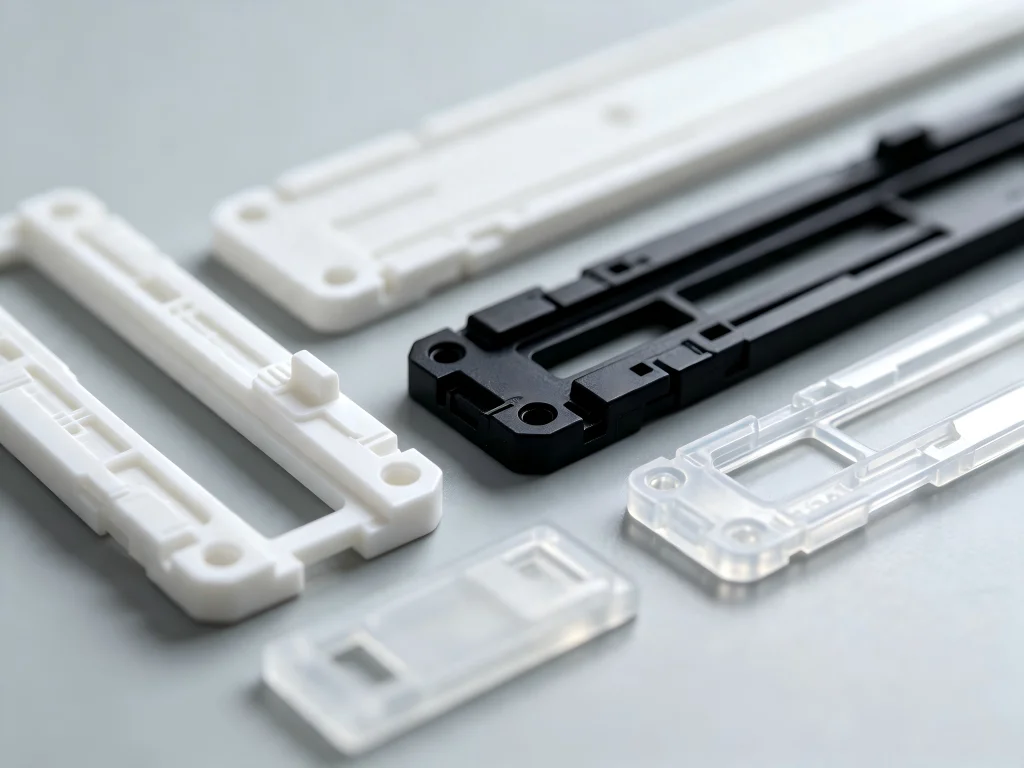
The Real-World Problem: Why Machined Plastic Components Fail Expectations
Walk into any engineering department that has sourced machined plastic parts from overseas suppliers, and you will hear similar frustrations. Parts arrive out of tolerance because the material absorbed moisture during shipping. Surface finishes look nothing like the samples. Lead times stretch from four weeks to twelve, with no clear communication. These are not isolated incidents—they reflect fundamental gaps in how many CNC shops approach plastic machining.
A recurring theme across engineering forums and Reddit communities like r/CNC and r/Machinists centers on one question: “Why do my plastic parts warp after machining?”. The answer lies in how plastics behave differently from metals. Unlike aluminum or steel, engineering plastics retain heat, absorb moisture, and release internal stresses when material is removed. A shop that primarily machines metals may not adjust its approach for these properties—and the result is components that fail to meet specifications.
Another persistent complaint involves material selection. Engineers often ask in forums like “Which plastic works best for CNC machining?”. The responses vary widely, reflecting the reality that no single material suits every application. Polycarbonate offers impact resistance and clarity. POM (Delrin) provides low friction and dimensional stability. PEEK withstands high temperatures and aggressive chemicals. Yet many procurement teams lack clear guidance on matching material properties to application requirements—and suppliers rarely offer the depth of expertise needed to make informed choices.
The Solution: How CNC Plastic Machining Addresses These Challenges
CNC plastic machining offers a compelling alternative to injection molding when you need custom machined plastic components with tight tolerances, complex geometries, or low to medium production volumes. Unlike molding, which requires expensive tooling and long lead times, CNC machining produces parts directly from plastic stock—eliminating mold costs and enabling rapid design iterations.
The process works by securing a plastic workpiece to a CNC machine table, then using computer-controlled cutting tools to remove material according to a 3D CAD model. This subtractive manufacturing approach achieves tolerances as tight as ±0.005mm, surface finishes down to Ra 0.8μm, and compatibility with over 30 engineering plastics.
At Jucheng Precision, a manufacturer with over a decade of experience in CNC plastic machining, the approach to solving these challenges rests on four pillars:
1. Material Conditioning and Thermal Management
Plastics like nylon (PA) are notoriously hygroscopic—they absorb moisture from the air and swell. A part machined to precise tolerances in a dry workshop may grow out of specification when exposed to normal humidity. Professional CNC shops address this through pre-machining conditioning: storing nylon stock in climate-controlled environments or performing mild annealing to stabilize the material before cutting.
Heat management presents another critical factor. Cutting friction generates significant heat, and plastics retain it far longer than metals. The solution involves high-speed machining with light, fast passes—high RPM combined with high feed rates—to remove material quickly and prevent heat buildup. Instead of traditional cutting fluids that plastics may absorb, shops often use compressed air to cool the cutting zone and evacuate chips.
2. Dedicated Tooling Strategies
Machining plastics requires tools that are extremely sharp, with polished flutes and high rake angles to slice rather than push the material. This minimizes heat and produces manageable chips. For glass-filled materials like PA+GF30, the glass fibers are highly abrasive and rapidly dull standard cutting tools. Professional shops use diamond-coated or polycrystalline diamond (PCD) tools designed for extreme abrasion resistance. While these tools cost more upfront, they maintain sharp edges longer, reducing heat and ensuring superior surface finish.
3. Fixturing and Workholding
Plastics crack under excessive clamping force. They also release internal stress when material is removed, leading to warpage if not properly secured. Experienced machinists use vacuum tables or double-sided tape fixtures for flat parts to distribute pressure evenly. For complex geometries, specialized fixturing maintains part stability without inducing stress that compromises final dimensions.
4. Rigorous Quality Control
Consistent quality in machined plastic components demands more than good intentions—it requires measurement. Jucheng Precision maintains a metrology lab equipped with coordinate measuring machines (CMM), optical comparators, surface profilometers, and hardness testers. Every part undergoes in-process and final inspections to verify it meets specifications. This commitment to quality is backed by ISO 9001:2015, ISO 14001, ISO 13485, and IATF 16949 certifications.
Core Applications: Where Machined Plastic Components Deliver Value
Plastic machined parts serve critical roles across diverse industries, each with distinct requirements for material properties, precision, and regulatory compliance.
Medical Devices and Healthcare
The medical sector demands machined plastic parts that meet biocompatibility standards, resist sterilization processes, and maintain dimensional stability under varying conditions. Jucheng Precision produces operational prototypes and production components for medical devices using 3 and 5-axis micro-milling and turning. Materials like PEEK, Ultem (PEI), and medical-grade acrylic are common choices for surgical instruments, diagnostic equipment housings, and implantable device components. ISO 13485 certification ensures compliance with medical device quality management requirements.
Automotive Systems
Automotive applications for machined plastic components range from functional prototypes to production parts. CNC machining produces taillight lenses, instrument cluster covers, interior ambient lighting components, and various mechanical parts. The ability to create complex 3D shapes, pockets, and undercuts in plastic blocks makes CNC machining ideal for automotive lighting and interior components. Jucheng Precision supports automotive clients from prototype verification through low-volume production, with tolerances down to ±0.01mm and global delivery within days.
Electronics and Consumer Products
Consumer electronics rely on machined plastic parts for enclosures, light guides, display covers, and structural components. PMMA (acrylic) offers exceptional optical clarity, transmitting up to 92% of visible light, making it ideal for lenses and display screens. Polycarbonate provides impact resistance for durable housings. The low-volume production capability of CNC machining supports product development cycles where design iterations occur frequently.
Industrial Equipment and Machinery
Industrial applications demand machined plastic components that withstand mechanical stress, chemical exposure, and temperature extremes. POM (acetal) provides low friction and high stiffness for gears and bearings. Nylon offers excellent strength and wear resistance. PTFE (Teflon) delivers exceptional chemical resistance and low friction. These materials replace metal components where weight reduction, corrosion resistance, or self-lubricating properties are advantageous.
How to Choose the Right Machined Plastic Parts Supplier
Selecting a partner for CNC plastic machining requires evaluating capabilities that directly impact part quality, cost, and delivery reliability. The following comparison table illustrates how Jucheng Precision’s capabilities align with common procurement requirements.
| Selection Criterion | Industry Standard | Jucheng Precision Capability | Why It Matters for Your Project |
|---|---|---|---|
| Precision and Tolerances | ±0.01mm to ±0.05mm | ±0.005mm typical | Tighter tolerances mean parts fit assemblies correctly, reducing rework and scrap. |
| Material Range | 10-20 plastic types | 30+ engineering plastics | More material options enable optimal performance for your specific application. |
| Equipment Scale | 10-50 CNC machines | 150+ CNC machines (25+ 5-axis) | Larger capacity means shorter lead times and ability to handle complex geometries. |
| Quality Certifications | ISO 9001 | ISO 9001, ISO 14001, ISO 13485, IATF 16949 | Certifications demonstrate commitment to quality management and industry compliance. |
| Lead Time | 3-6 weeks | Quotes within hours, parts in as fast as 4 days | Faster delivery accelerates product development and time-to-market. |
| Surface Finishing | Basic as-machined | Polishing, anodizing, painting, sandblasting, plating, silk-screening | Comprehensive finishing options eliminate need for secondary vendors. |
| Production Volume | Prototype only or mass production only | Prototype to low-volume to mass production | Single-source solution from design validation through production reduces supply chain complexity. |
Key Material Selection Criteria
When specifying machined plastic parts, consider these material properties in relation to your application:
- Mechanical strength: Does the part need to withstand significant physical stress? PEEK and polycarbonate excel here. For lower-stress applications, nylon and ABS offer cost-effective options.
- Temperature resistance: High-temperature environments demand materials like PEEK and PTFE. For standard operating conditions, ABS or polycarbonate may suffice.
- Chemical exposure: PVC provides exceptional resistance to chemicals, corrosion, and flame. Polypropylene resists most acids, alkalis, oils, and solvents.
- Optical clarity: PMMA (acrylic) transmits up to 92% of visible light, making it ideal for lenses and displays. Polycarbonate offers good clarity with higher impact resistance.
- Dimensional stability: POM (acetal) and PEEK achieve the tightest tolerances and best surface finishes among engineering plastics. These materials resist deformation under cutting forces.
- Friction and wear: Nylon and PTFE provide low friction coefficients, making them suitable for moving parts like gears and bearings.
Installation and Maintenance Considerations for Machined Plastic Components
Proper handling of machined plastic parts extends their service life and maintains dimensional integrity. Consider these guidelines:
Installation Best Practices
Unlike metal components that tolerate significant torque, plastic parts require careful installation. Over-tightening fasteners can induce stress that leads to cracking or dimensional changes over time. Use torque-limiting tools and follow manufacturer specifications for clamping force. For assemblies with multiple plastic components, account for thermal expansion differences between materials. Plastics typically have higher coefficients of thermal expansion than metals, so clearance gaps may need adjustment for temperature variations.
Maintenance and Inspection
Plastic machined parts benefit from regular visual inspection for signs of wear, discoloration, or dimensional changes. Nylon components may absorb moisture and swell over time, affecting fit in assemblies. If parts operate in humid environments, consider specifying glass-filled nylon (PA+GF30) for improved dimensional stability. PTFE components maintain their properties across wide temperature ranges but may creep under sustained load—periodic torque checks on fasteners can compensate for any settling.
Storage and Handling
Store plastic components in climate-controlled environments to minimize moisture absorption and thermal cycling. Avoid exposure to solvents, especially for acrylic (PMMA), which can develop stress cracking when in contact with alcohol or solvent-based fluids. Handle parts with clean gloves to prevent contamination that could affect surface finish or optical clarity.
Frequently Asked Questions About Machined Plastic Components
What is the difference between machined plastic parts and injection molded plastic parts?
Machined plastic components are produced by removing material from a solid plastic block using CNC cutting tools. Injection molded parts are formed by injecting molten plastic into a mold cavity. Machining requires no mold tooling, making it ideal for prototypes and low-volume production. Injection molding becomes more cost-effective at higher volumes because the per-part cost decreases significantly once the mold is made.
What are the typical tolerances for CNC machined plastic parts?
Most CNC plastic machining services achieve tolerances of ±0.005 inches as a baseline. With high-stability materials like POM, PEEK, and acrylic, tolerances can tighten to ±0.005mm. The achievable tolerance depends on the material’s dimensional stability, the part’s geometry, and the machining strategy employed.
What plastics are easiest to CNC machine?
POM (acetal/Delrin), acrylic (PMMA), and polycarbonate (PC) are among the most machinable plastics. POM machines cleanly with excellent chip formation and dimensional stability. Acrylic can be machined to high optical clarity with proper tooling. Polycarbonate offers good machinability with impact resistance. Softer plastics like polyethylene and polypropylene are more challenging because the material tends to push rather than cut cleanly.
What is the HS code for machined plastic parts?
The Harmonized System (HS) code for machined plastic parts typically falls under Chapter 39, heading 392690—”Other articles of plastics and articles of other materials of headings 39.01 to 39.14″. Specific subheadings include 3926901000 for floats for fishing nets, 3926905300 for transmission belts, and 3926909900 for other plastic articles. For parts that are integral components of machinery, classification may fall under Section XVI (Machinery) or Section XVII (Vehicles).
How does plastic CNC machining compare to metal CNC machining?
Both processes use the same fundamental CNC principles, but plastic machining requires different approaches to tooling, speeds, feeds, and cooling. Plastics retain heat and can melt or warp if cutting parameters are not optimized. Metals dissipate heat more readily and generally tolerate higher cutting forces. Plastic machining typically uses sharper tools, higher spindle speeds, and lighter cuts to prevent heat buildup. Workholding also differs—plastics require lighter clamping forces to avoid stress-induced distortion.
When should I choose CNC machining over 3D printing for plastic parts?
CNC machining produces machined plastic components with superior surface finish, tighter tolerances, and material properties identical to production-grade plastics. 3D printing excels at creating complex internal geometries and rapid iteration but typically achieves lower precision and surface quality. Choose CNC machining when your parts require tight tolerances, high-quality surfaces, or production-grade material properties. Choose 3D printing for concept models, complex organic shapes, or when speed is the primary concern.
How do I prevent warping in machined plastic parts?
Warping occurs when internal stresses release during material removal. To prevent this, specify materials with good dimensional stability like POM or PEEK. Ensure your supplier conditions hygroscopic materials like nylon before machining. Use proper fixturing that secures the part without inducing stress. Finally, consider stress-relieving heat treatment after rough machining but before final finishing passes.
What surface finishes are available for machined plastic parts?
Plastic machined components can achieve various surface finishes: as-machined (Ra 3.2μm) with visible tool marks, smooth (Ra 1.6μm) with minimal visible marks, fine machining (Ra 0.8μm) with manual sanding, and polishing for high-gloss reflective surfaces. Additional finishing options include painting, bead blasting, silk-screening, and laser engraving. Acrylic parts can undergo vapor polishing or hand buffing to achieve optical clarity.
Why Jucheng Precision Stands Out for Machined Plastic Components
When your project demands machined plastic components that meet exacting specifications, the choice of manufacturing partner determines success. Jucheng Precision brings together capabilities that address the full spectrum of procurement challenges.
Manufacturing scale and equipment: With 150+ CNC machines including 25+ 5-axis centers, 30+ sheet metal fabrication units, 50+ industrial 3D printing systems, and 35+ injection molding presses, Jucheng handles projects from single prototypes to production volumes. This equipment density translates to capacity availability and shorter lead times.
Material expertise: Working with over 30 engineering plastics—including ABS, PVC, PC, HDPE, PMMA, PEEK, PPS, nylon, PP, PBT, PEI, POM, PTFE, and Bakelite—Jucheng’s team understands the unique machining requirements of each material. This depth of knowledge prevents common pitfalls like moisture-induced warping, heat-related distortion, and tool wear from abrasive fillers.
Quality assurance: ISO 9001:2015, ISO 14001, ISO 13485, and IATF 16949 certifications demonstrate commitment to quality management across industries. In-process and final inspections using CMM, optical comparators, surface profilometers, and hardness testers ensure every part meets specifications. Typical tolerances of ±0.005mm reflect this rigorous approach.
One-stop service: From prototype verification through mold manufacturing to batch production, Jucheng provides comprehensive support. Surface finishing options include polishing, painting, anodizing, sandblasting, electroplating, and mirror finishing. This eliminates the need to coordinate multiple vendors for different production stages.
Speed and responsiveness: Quotes arrive within hours, and parts ship as fast as 4 days. For time-sensitive projects, this acceleration translates directly to faster time-to-market. The company’s 190+ employees, including 30+ highly skilled personnel, support this rapid response capability.
Confidentiality and trust: Jucheng maintains strict confidentiality measures to protect customer product information. This commitment matters when your designs represent competitive advantages or intellectual property requiring protection.
Whether you are sourcing machined plastic components for a medical device prototype, an automotive production run, or an industrial equipment application, Jucheng Precision offers the technical expertise, manufacturing capacity, and quality systems to deliver reliable results.