
If you have ever watched a carbide end mill fail spectacularly on the first pass, or struggled to hold a tight tolerance on a part that seemed to move between setup and inspection, you already understand the central challenge of D2 tool steel machining. This material offers exceptional wear resistance and dimensional stability—properties that make it indispensable for dies, punches, and forming tools—yet those same characteristics create a machining paradox: the harder the steel, the more difficult it becomes to machine effectively. This guide addresses that paradox head-on, drawing from real-world shop-floor experiences and the latest research to help you achieve consistent, high-quality results with D2.
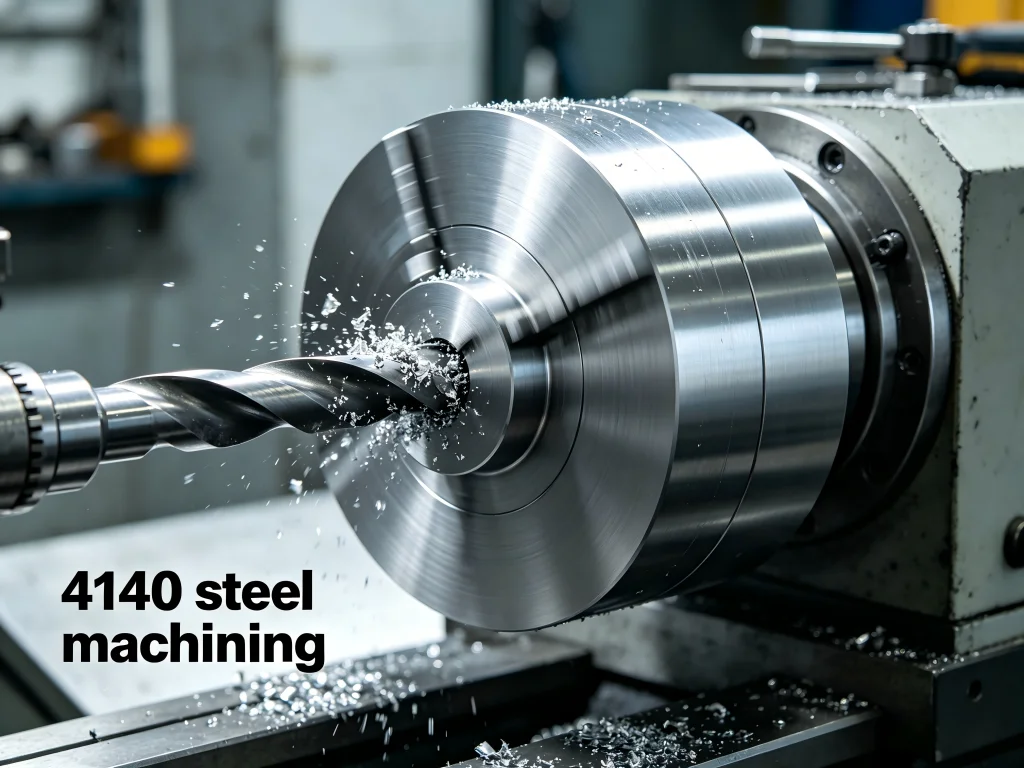
The Problem: Why D2 Tool Steel Machining Breaks Tools and Budgets
Walk into any tool and die shop, and you will hear the same refrain: D2 is tough on tooling. One machinist on Practical Machinist described his first encounter with D2 this way: “I was asked today about machining some 5″ diameter parts out of D2 tool steel and was wondering how easy or hard this stuff will be to machine”. The responses that followed revealed a consensus: D2 is “plenty tough but machinable in the annealed state”. The key phrase there is “annealed state.”
The fundamental problem with machining hardened D2 tool steel is that the material’s high hardness—typically 58 to 62 HRC after heat treatment—causes excessive and rapid tool wear. Research confirms that “milling hardened AISI D2 tool steel (60 HRC), characterized by its high hardness, toughness and wear resistance, presents significant challenges in achieving desired surface quality, minimizing burr formation and tool wear, and ensuring dimensional accuracy”. The high carbon and chromium content that give D2 its wear resistance also make it abrasive, accelerating flank wear on cutting tools.
Beyond tool wear, shops face another insidious challenge: work hardening. As one experienced machinist warned, “Don’t let the tool dwell in the cut because it will work harden”. When a cutting tool rubs rather than cuts, the surface of the D2 work hardens, making subsequent passes even more difficult and further reducing tool life. This creates a vicious cycle that drives up costs, extends lead times, and frustrates even skilled machinists.
Then there is the issue of heat treatment distortion. D2 is an air-hardening steel, meaning it achieves its final hardness through controlled cooling in air after austenitizing. However, the thermal stresses from heat treatment can cause dimensional changes, particularly in complex geometries. If you machine a part to final dimensions before heat treatment, you risk losing those tolerances. If you machine after heat treatment, you face the challenges of hard milling. This is the D2 dilemma.
The Solution: A Systematic Approach to D2 Tool Steel Machining
At Jucheng Precision, we have spent years developing and refining solutions to these challenges. Our approach is not about a single magic bullet—it is about a systematic methodology that addresses every stage of the D2 tool steel machining process, from material selection through to final inspection.
Understanding What D2 Tool Steel Actually Is
Before we discuss solutions, let us clarify what we are working with. D2 tool steel is a high-carbon, high-chromium cold-work tool steel belonging to the D-series of tool steels. Its nominal composition includes approximately 1.55% carbon and 12% chromium, along with smaller amounts of vanadium, molybdenum, and other alloying elements. This chemistry creates a microstructure rich in hard chromium carbides, which provide exceptional wear resistance but also make the material difficult to machine.
D2 is typically supplied in the annealed condition, with a hardness around 217-255 BHN (approximately 26 HRC), which makes initial machining more feasible. After machining, the part is heat-treated—typically air-quenched from around 1010°C and tempered—to achieve its final hardness of 58-62 HRC. This two-stage process (machine-annealed, then harden) is the conventional approach, but it carries the risk of heat-treatment distortion.
An alternative approach, and one where Jucheng excels, is hard milling: machining the D2 after it has been fully hardened. This eliminates heat-treatment distortion entirely because the part is already in its final metallurgical state. However, it requires specialized equipment, tooling, and strategies to manage the extreme cutting forces and tool wear associated with machining material at 58-62 HRC.
It is worth noting that D2 is sometimes confused with similar-sounding grades. Tool steel DF2, for instance, is a different material—a lower-alloyed oil-hardening tool steel with lower hardness and different machinability characteristics. While both are used in tooling applications, they are not interchangeable, and the machining strategies that work for DF2 may not be optimal for D2.
The Hardness Question: How Hard Is D2 Tool Steel, Really?
One of the most common questions we hear is: how hard is D2 tool steel? The answer depends on the heat treatment condition. In the annealed state, D2 measures approximately 26 HRC. After full heat treatment, it reaches 58-62 HRC. This wide range—from relatively soft and machinable to extremely hard and abrasive—is precisely what makes D2 both versatile and challenging.
The hardness directly affects machinability. In the annealed condition, D2 machines similarly to other alloy steels, with recommended surface speeds around 250-300 SFM for roughing operations. In the hardened condition, however, cutting speeds must be reduced significantly, and tooling choices become critical. Research has found that “the most feasible feeds and speeds fall in the ranges 0.08–0.20 mm/rev and 70–120 m/min” when machining hardened D2 with PCBN tools.
The hardness also influences how the material behaves during machining. Hardened D2 is not just harder—it is also more brittle and more prone to edge chipping. This affects everything from tool geometry selection to chip evacuation strategies. Understanding the hardness condition of your D2 is therefore the first step in developing an effective machining strategy.
Core Applications: Where D2 Tool Steel Machining Matters Most
D2 tool steel is not chosen arbitrarily—it is specified for applications that demand exceptional wear resistance and dimensional stability. The material finds extensive use across multiple industries:
- Die and mold making: Blanking dies, forming dies, drawing dies, thread rolling dies, and cold extrusion dies all rely on D2’s ability to maintain tight tolerances under high-stress conditions.
- Cutting tools: Shear blades, slitting cutters, punches, and trim dies benefit from D2’s hardness and wear resistance.
- Precision components: Gauges, master tools, and wear parts require the dimensional stability that D2 provides.
- Medical and aerospace tooling: The material’s combination of hardness and toughness makes it suitable for medical mold machining and aerospace tooling applications.
- Food processing: Knives and cutting implements for food processing leverage D2’s wear resistance and corrosion resistance.
Each of these applications places different demands on the machining process. A blanking die, for instance, may require intricate internal geometries and sharp corners, while a shear blade might be simpler in form but demands exceptional surface finish. The machining strategy must be tailored to the specific application—there is no one-size-fits-all approach to D2 tool steel machining.
Implementation: How to Machine D2 Tool Steel Successfully
Tool Selection: The Foundation of Success
The single most important decision in D2 tool steel machining is tool selection. Using the wrong tool guarantees failure; using the right tool makes success possible. For annealed D2, carbide tooling is generally sufficient, with coated carbide providing enhanced tool life. As one machinist noted, “I always started at 250 SFM with unhardened D-2 using indexable tooling for turning”.
For hardened D2, the tooling requirements become more demanding. Several options are available:
- PCBN (Polycrystalline Cubic Boron Nitride): PCBN tools offer excellent performance on hardened D2, with research showing feasible cutting speeds of 70-120 m/min. PCBN is particularly effective for finishing operations where surface finish and dimensional accuracy are critical.
- Coated carbide: Advanced coatings such as TiCN + AlO + TiN can significantly improve carbide tool life when machining hardened D2. Coated carbide is more economical than PCBN and may be suitable for roughing or less demanding applications.
- Cermet: While cermet tools are sometimes used, research suggests their performance on D2 is “poor” compared to other options.
- Ceramic: Mixed ceramic inserts offer another alternative, though their performance must be evaluated against PCBN and coated carbide for specific applications.
For hole-making operations in hardened D2, conventional drilling is problematic due to the material’s hardness and abrasiveness. Research has found that “helical milling is found to facilitate hole-making in hardened D2 tool steel with an order of magnitude improvement in tool life”. This approach uses a milling tool to interpolate the hole, distributing the cutting forces and reducing tool wear.
EDM (Electrical Discharge Machining) and wire EDM (WEDM) are also viable alternatives for machining hardened D2, particularly for complex geometries or features that are difficult to access with conventional cutting tools. However, these processes are slower and more expensive than conventional machining, making them suitable primarily for finishing operations or for materials that cannot be machined conventionally.
Speeds, Feeds, and Cutting Parameters
Getting the speeds and feeds right is essential for successful D2 tool steel machining. The recommendations vary depending on the hardness condition and the specific operation:
For annealed D2 (approximately 26 HRC), experienced machinists recommend starting at 250-300 SFM for roughing, with slightly higher speeds for finishing. Feed rates should be relatively coarse for roughing, with finish cuts of not less than 0.015″ until you develop a feel for how the material behaves. Flood coolant is essential to manage heat and flush chips.
For hardened D2 (58-62 HRC), the parameters change dramatically. Research indicates that feasible cutting speeds fall in the range of 70-120 m/min (approximately 230-395 SFM) with PCBN tools. Feed rates of 0.08-0.20 mm/rev are recommended, with 0.14 mm/rev for finishing and 0.20 mm/rev for roughing. Depth of cut should be kept moderate to avoid excessive cutting forces.
These parameters are starting points, not absolute rules. The optimal settings will depend on your specific machine, tooling, workpiece geometry, and coolant conditions. It is always wise to start conservatively and gradually increase parameters while monitoring tool wear and surface quality.
Workholding and Setup Considerations
D2 tool steel machining places unique demands on workholding and setup. The material’s tendency to work harden means that any vibration or chatter can rapidly degrade tool life and surface quality. Rigid workholding is essential, as is a machine with sufficient stiffness and damping.
For annealed D2, standard workholding practices are generally sufficient. However, for hardened D2, the cutting forces are higher, and the consequences of workpiece movement are more severe. Hydraulic or mechanical clamping with sufficient holding force is recommended, and fixtures should be designed to minimize overhang and maximize rigidity.
Thermal management is another critical consideration. The heat generated during D2 tool steel machining can cause thermal expansion of the workpiece, leading to dimensional inaccuracies. Using flood coolant helps manage temperature, but it is also important to allow the workpiece to stabilize at room temperature before final inspection.
Quality Control and Inspection
The high hardness of D2 means that inspection can be challenging. Traditional contact inspection methods may be impractical for hardened surfaces, and the material’s hardness can make it difficult to achieve accurate measurements. Non-contact inspection methods, such as optical comparators or CMM with appropriate probes, may be necessary.
Surface finish is another critical quality parameter. Research has shown that achieving desired surface quality on hardened D2 “presents significant challenges”. The optimal milling parameters must be carefully selected to minimize surface roughness while balancing tool wear and productivity.
Key Selection Factors for D2 Tool Steel Machining
When selecting a partner for D2 tool steel machining, several factors should guide your decision. These considerations go beyond simple cost comparisons and address the fundamental requirements for successful D2 machining:
Machine Capability and Rigidity
D2 tool steel machining places exceptional demands on machine tools. The cutting forces are high, and the material is unforgiving of machine deflection or vibration. A machine with sufficient spindle power, rigidity, and damping is essential, particularly for hard milling operations. As one machinist noted, working with D2 requires a machine with adequate taper and power—”that machine a 40 taper I take it?”.
For hard milling of D2 at 58-62 HRC, machines with high spindle speeds, rigid construction, and advanced cooling systems are recommended. The machine should also have sufficient thermal stability to maintain accuracy over long machining cycles.
Tooling Expertise and Inventory
Successful D2 tool steel machining requires access to the right tooling. This means not just having carbide or PCBN tools on hand, but knowing which grades, geometries, and coatings work best for specific D2 applications. A machining partner with deep tooling expertise can recommend the optimal tool for each operation, reducing trial-and-error and accelerating production.
Tooling inventory is also important. D2 is abrasive, and tool wear is inevitable. Having replacement tools readily available minimizes downtime and keeps production moving.
Quality Management Systems
Precision machining of D2 demands rigorous quality control. A partner with robust quality management systems—such as IATF 16949 certification—demonstrates a commitment to consistency and traceability. This is particularly important for industries like automotive, aerospace, and medical, where part quality is non-negotiable.
Integrated Capabilities
The most effective D2 tool steel machining partners offer integrated capabilities that go beyond cutting metal. Heat treatment, grinding, EDM, and inspection services all contribute to a streamlined workflow. Jucheng, for example, integrates heat treatment into the manufacturing workflow, ensuring that parts transition seamlessly from machining to hardening without the delays and coordination challenges of outsourcing.
Why Jucheng for D2 Tool Steel Machining
At Jucheng Precision, we have built our reputation on solving the toughest machining challenges—and D2 tool steel is one of the toughest. Our approach combines advanced equipment, deep expertise, and a commitment to quality that spans every stage of the manufacturing process.
We specialize in hard milling of D2 tool steel, machining parts after they have been fully hardened to eliminate heat-treatment distortion entirely. Our rigid CNC machines and advanced coating technologies allow us to achieve tight tolerances and excellent surface finishes on material at 58-62 HRC. For customers who prefer the conventional approach, we also offer precision machining of annealed D2, followed by in-house heat treatment and finishing.
Our capabilities extend beyond milling. We offer CNC turning, turning-milling combination, wire EDM, surface grinding, and precision grinding, providing a complete solution for D2 tool steel components. From prototyping through to production, we maintain the same rigorous quality standards, backed by IATF 16949 certification.
What truly sets Jucheng apart, however, is our understanding of the material. We do not just machine D2—we have studied its behavior, experimented with different tooling and parameters, and refined our processes over years of hands-on experience. When you bring a D2 project to Jucheng, you are not just getting machining capacity; you are getting machining expertise.
Installation and Maintenance Considerations
While installation and maintenance are typically the responsibility of the end user, some considerations are worth noting for anyone specifying D2 tool steel components:
D2 tool steel components should be handled with care during installation. The material’s high hardness means it is more brittle than softer steels, and impact or shock loading can cause cracking or chipping. Proper alignment and fit are essential to avoid stress concentrations that could lead to premature failure.
For maintenance, D2 components benefit from regular inspection and, where appropriate, lubrication. The material’s wear resistance means that components typically have long service lives, but they are not indestructible. Monitoring wear patterns and replacing components before they fail can prevent costly downtime.
When D2 components do require repair or rework, the same machining challenges apply. Hard milling, EDM, or grinding may be necessary, and the same tooling and parameter considerations discussed earlier remain relevant.
Frequently Asked Questions About D2 Tool Steel Machining
1. Is D2 tool steel difficult to machine?
Yes, D2 is considered difficult to machine, particularly in the hardened condition. Its high hardness and abrasiveness cause rapid tool wear, and its tendency to work harden requires careful control of cutting parameters. However, in the annealed condition, D2 is machinable with appropriate tooling and parameters.
2. What is the best tooling for D2 tool steel machining?
For annealed D2, coated carbide tooling is generally sufficient. For hardened D2, PCBN tools offer the best performance, followed by coated carbide with advanced coatings. The specific tool grade, geometry, and coating should be selected based on the operation (roughing vs. finishing) and the specific D2 hardness.
3. How hard is D2 tool steel after heat treatment?
D2 typically achieves a hardness of 58-62 HRC after full heat treatment. The exact hardness depends on the specific heat treatment parameters, including austenitizing temperature, quench rate, and tempering temperature.
4. Can D2 tool steel be machined after hardening?
Yes, D2 can be machined after hardening through processes such as hard milling, grinding, and EDM. Hard milling requires specialized tooling (PCBN or advanced coated carbide) and careful parameter selection. Grinding and EDM are also viable options for hardened D2.
5. What is the difference between D2 and DF2 tool steel?
D2 and DF2 are different tool steel grades. D2 is a high-carbon, high-chromium air-hardening steel with excellent wear resistance. DF2 is a lower-alloyed oil-hardening tool steel with lower hardness and different machinability characteristics. They are not interchangeable, and the machining strategies differ between the two.
6. What are the typical applications of D2 tool steel?
D2 is used extensively in die and mold making (blanking, forming, drawing, and thread rolling dies), cutting tools (shear blades, slitters, punches), precision components (gauges, wear parts), and tooling for medical and aerospace applications.
7. What cutting speeds are recommended for D2 tool steel machining?
For annealed D2, recommended surface speeds are 250-300 SFM for roughing. For hardened D2, speeds of 70-120 m/min (approximately 230-395 SFM) are recommended with PCBN tools. These are starting points and should be adjusted based on specific conditions.
8. Does D2 tool steel work harden during machining?
Yes, D2 has a tendency to work harden if the cutting tool dwells in the cut or if improper speeds and feeds are used. Work hardening makes subsequent passes more difficult and accelerates tool wear, so it is important to maintain consistent cutting action and avoid rubbing.
Conclusion
D2 tool steel machining presents real challenges—high hardness, abrasiveness, work hardening, and the risk of heat-treatment distortion. But these challenges are not insurmountable. With the right tooling, parameters, equipment, and expertise, D2 can be machined to tight tolerances and excellent surface finishes, delivering components that perform reliably in demanding applications.
The key is to approach D2 with respect and preparation. Understand the material’s properties and how they change with heat treatment. Select tooling that is up to the task. Control speeds and feeds carefully. And partner with a machining provider that has the experience and capabilities to handle the unique demands of D2 tool steel machining.
At Jucheng Precision, we have made that commitment. We have invested in the equipment, developed the processes, and built the expertise to machine D2 tool steel successfully—whether in the annealed condition or after hardening. If you are facing a D2 machining challenge, we would welcome the opportunity to discuss how we can help.
Contact Jucheng Precision today to discuss your D2 tool steel machining project. From prototyping through production, we deliver precision, quality, and reliability that you can count on.