
Choosing the right surface finish for your precision CNC parts can feel like navigating a minefield of trade-offs. Do you prioritize corrosion resistance or dimensional accuracy? Do you opt for the classic matte look of black oxide coating or the superior protection of zinc plating? These questions emerge daily on engineering forums and procurement meetings, and the answers depend entirely on your part’s end-use environment. In this guide, we will break down the key decision factors, compare performance metrics side-by-side, and help you determine which finish—or combination of finishes—best aligns with your technical requirements and budget constraints.
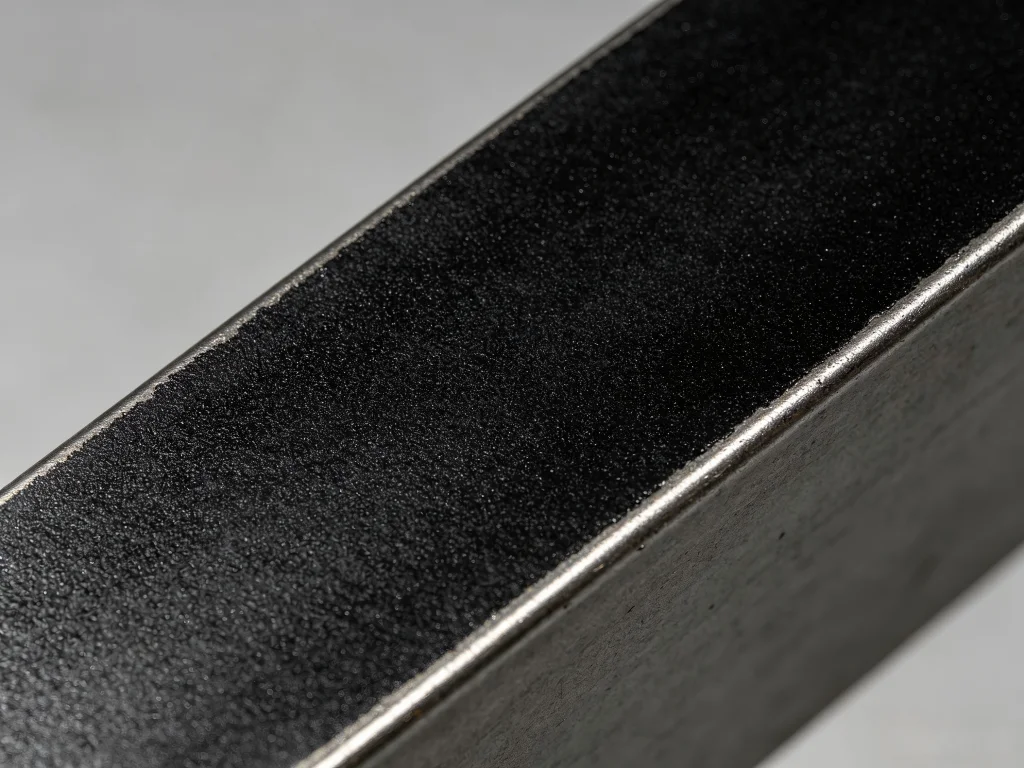
Understanding the Two Finishes: What You Are Really Buying
Before diving into the comparison, it helps to understand that black oxide coating and zinc plating protect steel parts through fundamentally different mechanisms. They are not direct substitutes for one another but rather different tools for different jobs.
How Black Oxide Coating Works: A Chemical Conversion That Preserves Precision
Black oxide coating (often called blackening or black passivation) is a chemical conversion coating. Rather than depositing a separate layer of material onto the part, the process chemically reacts with the steel surface to form magnetite (Fe₃O₄). This black oxide layer is exceptionally thin—typically measuring between 0.5 and 2 microns (approximately 0.00002 to 0.00008 inches). Because the coating is formed from the base metal itself, it adds virtually no measurable thickness to the part. That is why engineers who work with tight tolerances—think H7 or H8 fits for bearings or threaded assemblies—consistently turn to black oxide when they need corrosion protection without dimensional compromise. The process does not introduce hydrogen into the steel matrix, which makes it a safe option for high-strength tool steels that could otherwise suffer from hydrogen embrittlement if electroplated.
How Zinc Plating Works: Sacrificial Protection for Harsh Environments
Zinc plating operates on a completely different principle. It is an electrochemical deposition process that applies a thin layer of metallic zinc onto the steel surface. Unlike black oxide, zinc acts as a sacrificial anode: even if the coating gets scratched, the surrounding zinc will corrode first, protecting the underlying steel. This mechanism provides robust protection in humid or outdoor environments. However, zinc plating builds up a measurable layer—typically between 5 and 25 microns in thickness—which can affect thread fit, press-fit assemblies, and any application where tolerances are tight. The coating can also introduce hydrogen into the steel, requiring post-plate baking to relieve potential hydrogen embrittlement in high-strength components.
As one engineer on Practical Machinist noted, home black oxide is “hit and miss at best”. The same caution applies to any finish: surface preparation is everything. Contamination or poor cleaning can lead to uneven coating, patchy appearance, or premature failure regardless of which finish you choose.
The Core Trade-Off: Protection vs. Precision
When deciding between black oxide coating and zinc plating, you are essentially choosing between two different value propositions. The table below lays out the key performance differences in clear terms.
| Performance Metric | Black Oxide Coating (Oiled) | Zinc Plating (Clear/Yellow Chromate) |
|---|---|---|
| Coating Type | Chemical conversion (magnetite) | Electrodeposited metallic layer |
| Typical Thickness | 0.5–2 μm (negligible) | 5–25 μm (moderate buildup) |
| Dimensional Change | Less than 1 micron | 5–12 microns typical |
| Salt Spray Resistance | 24–48 hours (with oil) | 48–96+ hours (up to 240 hours with chromate) |
| Hydrogen Embrittlement Risk | Low to none | Moderate to high (baking required) |
| Surface Appearance | Matte black, non-reflective | Silver, iridescent yellow/blue, or black |
| Typical Cost | 20–40% lower than zinc plating | Moderate (higher than black oxide) |
| Ideal Environment | Indoor, low-moisture, controlled | Outdoor, high-humidity, wash-down |
The data above tells a clear story. If your primary concern is corrosion resistance in a demanding environment, zinc plating is the functional winner. But if your part requires exacting tolerances and cannot accommodate even a few microns of added material, black oxide coating is often the only viable option.
Critical Decision Factors You Need to Evaluate
Every procurement manager and engineer should assess the following factors before committing to a finish. These are the same questions that come up repeatedly on forums like Reddit and Practical Machinist.
Dimensional Accuracy and Thread Fit
This is arguably the most significant differentiator between the two finishes. For precision components with fine-pitch threads (M6, M8, or smaller), the addition of 5 to 12 microns from zinc plating can cause assembly interference or failed thread gauging. As one industry analysis noted, black oxide is famous for its “zero-build” characteristics, with dimensional change typically less than 1 micron. That means a part machined to a ±5 micron tolerance will still fit perfectly after black oxide coating. With zinc plating, you may need to adjust your pre-plate dimensions or accept a higher reject rate.
Corrosion Resistance Requirements
How will your part be used? Will it be exposed to moisture, road salt, wash-down cycles, or outdoor weather? If the answer is yes, you need to take corrosion resistance seriously. Zinc plating with chromate passivation can provide 96 to 240 hours of salt spray protection before red rust appears. Black oxide coating, in contrast, offers very limited protection on its own. One finishing expert on Finishing.com stated bluntly that “black oxide offers no corrosion resistance at all (except for the oil that is usually put on it)”. When properly sealed with oil, wax, or lacquer, black oxide can achieve 24 to 48 hours of salt spray resistance—adequate for indoor machinery and tooling but insufficient for outdoor or high-humidity applications. A GarageJournal user recounted redoing black oxide on his Camaro’s suspension hardware 15 years ago, noting: “They look horrible now, especially considering it’s a fair-weather vehicle only”.
Hydrogen Embrittlement Concerns
For high-strength steel parts (Grades 10.9, 12.9, or tool steels), hydrogen embrittlement is a real and serious risk. Electroplating processes like zinc plating introduce hydrogen into the steel matrix, which can lead to sudden brittle failure under stress. To mitigate this risk, parts must be baked immediately after plating, typically within four hours. Black oxide coating, as a chemical conversion process, does not introduce hydrogen into the steel. That makes it the safer choice for springs, high-tensile fasteners, and load-bearing components where embrittlement could lead to catastrophic failure.
Visual Appearance and Light Reflection
Sometimes the decision comes down to aesthetics—or more precisely, to glare reduction. The deep, matte black finish of black oxide coating is prized in industries where light reflection must be minimized. Firearms, optical devices, camera components, and military equipment often mandate black oxide because it reduces glare and provides a professional, non-reflective surface. Zinc plating, even in its black chromate variant, typically has a slightly more reflective or iridescent appearance that may not meet certain optical or tactical requirements.
Budget and Production Volume
Cost differences between the two finishes are not trivial. Black oxide coatings generally cost 20 to 40 percent less than zinc plating due to simpler processing, fewer chemical steps, and lower energy requirements. For high-volume production runs, that difference can add up to significant savings. However, the lower price comes with trade-offs in corrosion performance. One industry source noted that “black oxide may be marginally less expensive than zinc plating (again depending on the parts), but it does not offer much corrosion resistance at all”.
Process Transparency: What Happens to Your Parts?
Understanding how each finish is applied helps you hold your supplier accountable. The black oxide coating process typically follows five to seven steps: cleaning, acidifying, rinsing, immersion in the blackening bath (typically at 135-150°C for hot black oxide), and post-treatment sealing with oil, wax, or lacquer. The hot black oxide process produces the most durable and uniform finish, which is why professional manufacturers like Jucheng rely on it for critical components. Cold black oxide, sometimes sold as DIY kits, is less durable and not suitable for high-wear applications.
Zinc plating involves degreasing, pickling, electroplating in a zinc bath, rinsing, and typically applying a chromate conversion coating for enhanced corrosion resistance. The entire process takes longer and requires more precise control of current density and bath chemistry. Any interruption or contamination can lead to uneven plating, poor adhesion, or reduced corrosion performance.
Application Scenarios: Which Finish Fits Your Use Case?
The table below maps common application scenarios to the recommended finish. These recommendations come from real-world engineering feedback across multiple industries.
- Precision gears, optical components, firearm parts, threaded fasteners: Choose black oxide coating. The negligible dimensional change preserves tight tolerances, and the matte finish reduces glare where needed.
- Outdoor fasteners, automotive chassis components, construction hardware: Choose zinc plating. The sacrificial protection and salt spray resistance are essential for humid or corrosive environments.
- Aerospace connectors, high-strength tool steel parts, springs: Choose black oxide coating. The absence of hydrogen embrittlement risk makes it the safe choice for critical stress-bearing components.
- Marine equipment, wash-down machinery, outdoor electrical enclosures: Consider zinc plating with a sealant, or explore more robust options like powder coating or galvanizing.
- Consumer electronics housings, decorative hardware, indoor machinery guards: Either finish could work, but black oxide often wins on cost and appearance for indoor applications.
Why Jucheng Delivers Confidence in Precision Finishing
When you choose a finish as thin and precise as black oxide coating, your supplier’s process control makes all the difference. Jucheng integrates the hot black oxide process directly into the CNC machining workflow, ensuring that parts retain their tight tolerances and achieve a uniform, durable, low-glare finish. Unlike suppliers who treat finishing as an afterthought, Jucheng manages the entire finishing process either in-house or through certified aerospace and medical-grade partners. That means no logistical headaches, no handoffs to unknown vendors, and no surprises when parts come back.
Jucheng also employs strict quality control protocols, including thickness testing using eddy-current and ultrasonic gauges, adhesion testing per ASTM D3359, and salt spray testing to validate corrosion resistance. The company’s finishes are RoHS and REACH compliant for global export, which matters when your parts are destined for European or North American markets. With a fleet of 25 high-precision 5-axis Haas and Mazak CNC machines and advanced metrological inspection capabilities, Jucheng has built a reputation for delivering parts that fit perfectly after finishing.
As one customer noted on the Practical Machinist forum, the most important thing in black oxide is getting the parts clean—”use nothing but distilled water for cleaning and for the process itself”. Jucheng follows rigorous cleaning protocols because they know that contamination is the fastest path to a patchy, uneven finish. That attention to detail is what separates a professional black oxide finish from a DIY touch-up that fails within months.
Frequently Asked Questions About Black Oxide Coating and Zinc Plating
1. Can black oxide coating be applied to stainless steel?
Yes, but it requires a specialized process. Standard hot black oxide baths designed for carbon steel will not work effectively on stainless steel. Specialized mid-temperature processes, such as the Tru Temp Stainless system, operate at 200-210°F and can produce a durable black finish on 200, 300, and 400 series stainless alloys, as well as 17-4 PH. These processes typically include an activation step with a dilute muriatic acid solution before the blackening bath. However, achieving uniform coverage on stainless can be challenging. One user on Practical Machinist reported that a first production lot of black oxide on 304 SS parts came back with “quite a few missing spots/regions” and inconsistent coverage across the batch. If you need black oxide on stainless steel, work with a finisher who has proven experience with the specific alloy you are using.
2. How thick is black oxide coating?
The black oxide layer typically measures between 0.5 and 2 microns (approximately 0.00002 to 0.00008 inches). MIL-DTL-13924, the military specification for black oxide coatings on ferrous metals, specifies thickness between 0.000005 and 0.000010 inches for certain classes. This extremely thin profile is what makes black oxide nearly dimensionally neutral and ideal for precision components with tight tolerances.
3. What is the typical price per kg for black oxide coating?
Pricing for black oxide coating varies based on part size, complexity, volume, and geographic location. As a general benchmark, black oxide costs approximately 20 to 40 percent less than zinc plating due to simpler processing and fewer chemical steps. For specific pricing per kilogram, it is best to request a quote from your finishing provider with your part geometry and quantity. Keep in mind that small, intricate parts may have higher per-unit finishing costs due to handling and fixturing requirements.
4. Does black oxide coating wear off over time?
Yes, black oxide coatings can wear away with abrasion or repeated contact. As one user on a multitool forum observed, “Black Oxide coatings tend to wear away and will never be as durable as anodizing or DLC”. However, the rate of wear depends heavily on the application. For parts that see light use or remain in controlled environments, black oxide can last for many years. For high-wear surfaces or components subject to frequent handling, the coating may show signs of wear relatively quickly. The oil, wax, or lacquer sealant used as a topcoat also wears over time and may need reapplication to maintain corrosion protection.
5. Can I do black oxide coating at home using a kit?
You can, but you should manage your expectations. Cold black oxide kits sold for home use produce a finish that is less durable and less uniform than professional hot black oxide. As one Practical Machinist user noted after trying multiple brands: “home black oxide is hit and miss at best, you will never get the results the hot process offers”. Professional hot black oxide requires precise temperature control (typically 135-150°C), proper bath chemistry maintenance, and thorough cleaning procedures that are difficult to replicate in a home workshop. For critical components, outsourcing to a professional finishing house is almost always the better choice.
6. Does black oxide coating provide corrosion resistance?
On its own, black oxide offers very limited corrosion protection. The conversion layer is porous and does not act as a barrier against moisture. The corrosion resistance comes almost entirely from the post-treatment sealant—oil, wax, or lacquer—that fills the pores and repels water. Without proper sealing, black oxide can fail in less than 12 hours in humid environments. With oil or wax sealing, black oxide typically provides 24 to 48 hours of salt spray resistance. That makes it suitable for indoor applications and controlled environments but not for outdoor exposure or high-humidity conditions.
7. What is the difference between black oxide vs black zinc?
Black oxide is a chemical conversion coating that transforms the steel surface into magnetite, with negligible dimensional change and a matte black appearance. Black zinc is zinc plating with a black chromate conversion coating applied on top. Black zinc provides much better corrosion resistance than black oxide, but it also adds measurable thickness (typically 5-12 microns) and has a slightly different visual appearance—sometimes described as more iridescent or slightly reflective. Black zinc is also more expensive than black oxide. One finishing expert noted that “black zinc is more expensive but far more corrosion resistant than black oxide”. The choice between them comes down to whether you need superior corrosion protection (choose black zinc) or absolute dimensional precision (choose black oxide).
8. Can black oxide coating be removed and reapplied?
Yes, black oxide coating can be stripped using chemical methods such as immersion in a dilute acid solution. However, reworking black oxide is not always straightforward. The stripping process may affect the surface finish of the base metal, and multiple stripping cycles could alter critical dimensions. If you have a batch of parts with patchy or uneven black oxide coverage, it is generally better to work with your finisher to identify the root cause—whether it was contamination, bath chemistry imbalance, or temperature variation—rather than simply stripping and redoing the coating. As one engineer noted, “If we don’t yet know where the variations are coming from, I am not sure if rework might help”.
Ready to Decide on the Right Finish for Your Precision Parts?
Whether your project demands the dimensional precision of black oxide coating or the robust corrosion protection of zinc plating, Jucheng can deliver consistent, high-quality results. Upload your CAD files today to receive a detailed finishing recommendation and a competitive quote within 24 hours.
File types accepted: STEP, STP, IGES, IGS, SLDPRT, 3DM, SAT, X_T. Part size up to 1500×1500×1500 mm.