
شهدت صناعة الطائرات بدون طيار (UAV) العالمية تحولاً جذرياً في متطلبات السلامة الهيكلية والأداء على مدى العقد الماضي. وفي قلب هذا التطور يكمن إطار الدرون المُشغَّل بالتحكم الرقمي بالحاسوب (CNC), ، وهو مكوّن حاسم يحدد ديناميكيات الطيران وسعة الحمولة ومتانة الطائرات بدون طيار الحديثة. سواء كنت تطوّر طائرة تفتيش صناعية أو طائرة سباق متعددة الدوارات عالية السرعة، فإن العمود الفقري الهيكلي لطائرتك يجب أن يُهندَس بدقة مطلقة. يستكشف هذا الدليل العالم المعقد للتصنيع بالتحكم الرقمي بالحاسوب (CNC) لهياكل الطائرات بدون طيار، موضحاً كيف تخلق عمليات التصنيع بالإزالة الأساس للجيل القادم من تقنيات الطيران.
فهم إطار الدرون المُشغَّل بالتحكم الرقمي بالحاسوب (CNC): التعريف والمبادئ
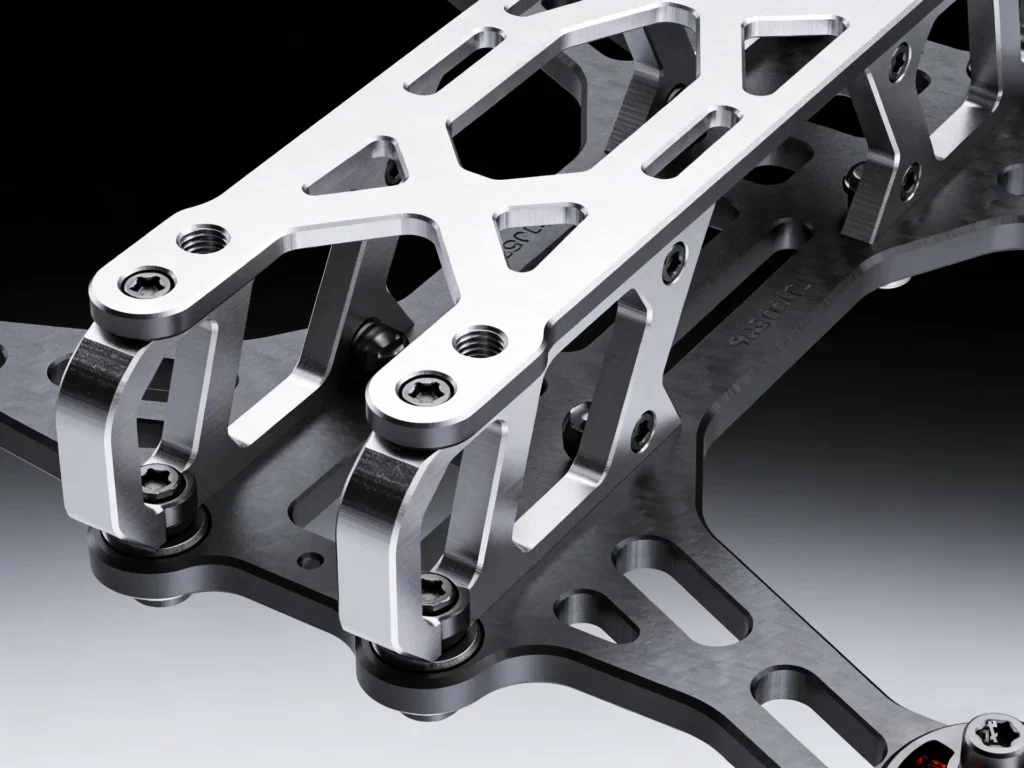
A إطار الدرون المُشغَّل بالتحكم الرقمي بالحاسوب (CNC) يشير إلى هيكل طائرة بدون طيار (UAV) أو مكوّن هيكلي مُنتَج من خلال التصنيع بالتحكم الرقمي بالحاسوب (CNC). وعلى عكس البلاستيك المصبوب أو الألواح المقطوعة يدوياً، تُنحت هذه الإطارات من كتل أو ألواح صلبة من مواد عالية الأداء مثل الألومنيوم بدرجة الطيران أو ألياف الكربون الفاخرة. وتستخدم العملية أدوات قطع متخصصة تتبع مساراً رقمياً مبرمجاً، مما يضمن أن كل ملليمتر من التصميم يطابق النموذج ثلاثي الأبعاد الأصلي.
يكمن مبدأ العمل في التصنيع بالإزالة. يحرّك المغزل عالي السرعة لقمة كربيدية عبر قطعة العمل لإزالة المواد الزائدة. وفي تطبيقات الطائرات بدون طيار، يتيح ذلك إنشاء تصاميم “تجاويف” معقدة—حيث تُزال المواد الداخلية لتقليل الوزن دون التضحية بالصلابة الهيكلية. وغالباً ما تُناقش هذه المستوى من التعقيد في الأوساط المهنية مثل مجتمع Reddit r/UAVNavigation، حيث يؤكد المهندسون أن نسبة الصلابة إلى الوزن لـ إطار الدرون المُشغَّل بالتحكم الرقمي بالحاسوب (CNC) لا مثيل لها مقارنة بطرق التصنيع التقليدية. وباستخدام تقنية CNC، يمكن للمصممين تطبيق سماكات جدارية متغيرة ونقاط تركيب مدمجة كان من المستحيل تحقيقها من خلال الطباعة ثلاثية الأبعاد أو القولبة بالحقن بنفس مستوى القوة.
سيناريوهات التطبيق الأساسية: حيث تلتقي الدقة بالهدف
تعدد استخدامات إطار الدرون المُشغَّل بالتحكم الرقمي بالحاسوب (CNC) يجعلها الخيار المفضل في عدة صناعات عالية المخاطر. ولأن هذه الإطارات يمكن تخصيصها لاستيعاب مستشعرات وأنظمة طاقة محددة، فإنها تعمل كـ“هيكل عظمي” لمختلف مهام الطيران.
- المراقبة الزراعية: تتطلب طائرات الرش الواسع النطاق للمحاصيل والتصوير متعدد الأطياف إطارات قادرة على تحمل الحمولات السائلة الثقيلة والاهتزاز المستمر. ويوفر إطار الدرون المُشغَّل بالتحكم الرقمي بالحاسوب (CNC) الصلابة اللازمة لضمان بقاء المستشعرات معايرة خلال ساعات الطيران الطويلة في البيئات الرطبة.
- فحص البنية التحتية: يجب أن تعمل الطائرات بدون طيار المستخدمة في فحص الجسور وخطوط الكهرباء وتوربينات الرياح في ظروف رياح عالية. تتيح دقة التصنيع باستخدام الحاسب الآلي (CNC) تصاميم أذرع انسيابية تقلل من السحب وتعزز استقرار الطيران.
- التصوير السينمائي والإعلام: تعتمد طائرات التصوير السينمائي الاحترافية التي تحمل كاميرات RED أو Arri الثقيلة على مكونات مشغّلة بتقنية CNC للقضاء على رنين الهيكل، والذي قد يُدخل تأثيرات “الجيلي” في لقطات الفيديو.
- الجيش والدفاع: تتطلب الطائرات بدون طيار التكتيكية نشرًا سريعًا ومتانة فائقة. تضمن الهياكل المشغّلة المصنوعة من ألومنيوم 7075 أو ألياف الكربون عالية المعامل قدرة المركبة على تحمل الهبوط العنيف والمناورات عالية الجاذبية.
- البحث والإنقاذ (SAR): في عمليات البحث والإنقاذ، غالبًا ما تحمل الطائرات بدون طيار كاميرات حرارية وحاويات توصيل. تضمن موثوقية إطار الدرون المُشغَّل بالتحكم الرقمي بالحاسوب (CNC) عدم فشل الهيكل الميكانيكي أثناء مهام الإنقاذ الحرجة.
عوامل الشراء الحاسمة: اختيار حل الطائرات بدون طيار بتقنية CNC
عند توريد إطار الدرون المُشغَّل بالتحكم الرقمي بالحاسوب (CNC), ، يجب على مسؤولي المشتريات وكبار المهندسين النظر إلى ما هو أبعد من السعر. يتناسب أداء الطائرة طرديًا مع جودة عملية التشغيل الآلي. على منصات مثل “FPV Engineering Group” على فيسبوك، يذكر الطيارون المخضرمون غالبًا أن “الهياكل الرخيصة تؤدي إلى حوادث تحطم مكلفة”. لتجنب ذلك، ضع في اعتبارك العوامل التالية:
1. اختيار المواد ودرجتها
ليست كل ألياف الكربون أو الألومنيوم متساوية. للحصول على إطار الدرون المُشغَّل بالتحكم الرقمي بالحاسوب (CNC), عالي الأداء، يجب البحث عن ألياف الكربون T700 أو T800 لقوتها الشدية الفائقة. إذا تطلب تصميمك الألومنيوم، فإن 6061-T6 هو المعيار، لكن 7075-T6 يوفر نسبة قوة إلى وزن أعلى لنقاط الإجهاد الحرجة مثل حوامل المحركات.
2. Dimensional Tolerances
The precision of the motor mounting holes and arm joints is vital. A reputable manufacturer like jucheng maintains tolerances as tight as +/- 0.01mm. This ensures that motors are perfectly vertical, preventing unwanted yaw drift and heating issues in the electronic speed controllers (ESCs).
3. Surface Finish and Edge Treatment
Raw CNC cuts can leave sharp edges that fray wiring or cause stress concentrations. High-quality frames feature chamfered edges and smooth surface finishes (such as matte or glossy coating for carbon, or anodizing for aluminum). This not only improves aesthetics but also enhances the longevity of the electrical components.
4. Lead Time and Prototyping Capabilities
In the fast-paced UAV market, the ability to iterate designs quickly is a competitive advantage. You need a partner who can move from a CAD file to a finished إطار الدرون المُشغَّل بالتحكم الرقمي بالحاسوب (CNC) prototype in days, not weeks.
Technical Comparison: Materials for CNC Drone Frames
Choosing the right material for your إطار الدرون المُشغَّل بالتحكم الرقمي بالحاسوب (CNC) involves balancing weight, strength, and cost. The following table compares the most common materials used in professional CNC drone manufacturing.
| Material Type | Strength-to-Weight | Vibration Dampening | Cost Impact | Best Use Case |
|---|---|---|---|---|
| 3K Carbon Fiber | ممتاز | عالية | متوسط | FPV Racing, Light Industrial |
| Aluminum 6061-T6 | جيد | منخفض | منخفض | Heavy-lift landing gear, heat sinks |
| ألومنيوم 7075-T6 | Very High | متوسط | عالية | High-stress structural joints |
| Titanium Grade 5 | Supreme | متوسط | Very High | Specialized military/aerospace |
Installation and Maintenance: Keeping Your Frame Flight-Ready
Even the best إطار الدرون المُشغَّل بالتحكم الرقمي بالحاسوب (CNC) requires proper assembly and care to maintain its structural integrity over time. Fatigue and vibration are the primary enemies of any aircraft structure.
Step-By-Step Installation Tips
When assembling your drone, use a calibrated torque wrench for all frame bolts. Over-tightening can crush carbon fiber layers or strip aluminum threads, while under-tightening leads to frame resonance. Applying a small amount of medium-strength thread locker to every screw is a common recommendation among the Reddit r/drones community to prevent screws from backing out due to motor frequency vibrations.
Maintenance Routine
Regularly inspect your إطار الدرون المُشغَّل بالتحكم الرقمي بالحاسوب (CNC) for delamination or hairline cracks, especially after a hard landing. For aluminum components, check for any signs of bending or stress whitening. A quick wipe-down with isopropyl alcohol after flying in dusty or humid conditions will prevent corrosion on metal parts and keep the carbon fiber looking pristine. If your frame utilizes integrated vibration dampening balls, ensure they have not become brittle or torn.
Why Choose Jucheng for Your Drone Frame Needs?
When it comes to manufacturing a إطار الدرون المُشغَّل بالتحكم الرقمي بالحاسوب (CNC), jucheng stands out as a leader in the precision machining industry. With years of experience serving the aerospace and robotics sectors, jucheng understands that there is zero margin for error in UAV flight.
The technical team at jucheng utilizes state-of-the-art multi-axis CNC machines that can produce complex geometries in a single setup. This reduces the accumulation of errors and ensures that every إطار الدرون المُشغَّل بالتحكم الرقمي بالحاسوب (CNC) leaving the facility meets rigorous quality standards. Furthermore, jucheng offers a comprehensive suite of post-processing options, including bead blasting, hard-coat anodizing, and custom laser engraving for branding.
Our commitment to quality is backed by ISO certifications, ensuring that our production processes are consistent and traceable. Whether you need a single custom prototype or a high-volume production run of 10,000 units, jucheng provides the scalability and technical support required to bring your UAV project to life. By choosing us, you are not just getting a parts supplier; you are gaining a strategic partner dedicated to optimizing your drone’s flight performance through superior mechanical engineering.
الأسئلة الشائعة (FAQ)
1. Is carbon fiber or aluminum better for a إطار الدرون المُشغَّل بالتحكم الرقمي بالحاسوب (CNC)?
It depends on the application. Carbon fiber is generally preferred for the main plates and arms because it is lighter and absorbs vibrations better. Aluminum is often used for motor mounts or central “core” blocks where heat dissipation and thread strength are more important.
2. How does CNC machining compare to 3D printing for drone frames?
While 3D printing is great for rapid prototyping of non-structural covers, it cannot match the strength and heat resistance of a إطار الدرون المُشغَّل بالتحكم الرقمي بالحاسوب (CNC). CNC parts are isotropic (equally strong in all directions), whereas 3D prints are often weak between layers.
3. What tolerances should I expect from a professional CNC service?
A high-end provider like jucheng typically offers tolerances between +/- 0.01mm to +/- 0.05mm. For drone frames, this is particularly important for the distance between motor centers to ensure flight controller algorithms work correctly.
4. Can I get a إطار الدرون المُشغَّل بالتحكم الرقمي بالحاسوب (CNC) with custom branding?
Yes. Most professional CNC shops offer laser engraving or CNC engraving. At jucheng, we can add logos, serial numbers, or motor orientation markings directly onto the frame components during the manufacturing process.
5. Why is the edge chamfering important for carbon fiber frames?
Chamfering removes the sharp 90-degree edge of the carbon fiber. This prevents the layers from delaminating during an impact and protects the silicone insulation of your power wires from being sliced by the sharp carbon edge.
6. How do I minimize weight in my frame design?
Utilize “pocketing” techniques where the center of thick parts is milled out, leaving a structural “I-beam” or rib pattern. This is a common feature in a well-engineered إطار الدرون المُشغَّل بالتحكم الرقمي بالحاسوب (CNC) to maintain rigidity while shedding unnecessary grams.
7. Does jucheng provide material certifications?
Absolutely. We provide full material traceability and certifications (MTRs) upon request to ensure that the إطار الدرون المُشغَّل بالتحكم الرقمي بالحاسوب (CNC) you receive is made from exactly the grade of material specified in your design.
For more information on how we can assist with your next UAV project, please visit our official website or contact our engineering team directly.