The Dawn of a New Era in Prosthetics
For centuries, the creation of prosthetic limbs has been a profoundly human craft, blending medical science with artisanal skill. However, the quest for perfection—limbs that are not just functional but truly integrated with the human body and spirit—has driven innovation into the realm of high technology. Enter precision robotic machining, a transformative force that is redefining the standards of prosthetic design, fabrication, and, ultimately, patient outcomes. This advanced manufacturing approach leverages the unerring accuracy and repeatability of industrial robots and CNC systems to craft prosthetic components with microscopic precision, enabling a future where artificial limbs are more comfortable, capable, and personalized than ever before.
What is Robotic Limb Machining?
At its core, robotic limb machining is the application of automated, computer-controlled systems to manufacture the structural and functional components of prosthetic limbs. This goes far beyond simple automation. It involves a sophisticated workflow where digital designs, often derived from 3D scans of a patient's residual limb, are translated into machining instructions for multi-axis robotic arms or high-precision CNC (Computer Numerical Control) mills and lathes. These machines then sculpt the final products from advanced materials like titanium alloys, carbon fiber composites, and medical-grade polymers.
The Integrated Workflow: From Scan to Socket
The process is a seamless digital thread:
- 3D Scanning & Digital Modeling: A high-resolution 3D scan of the residual limb creates a perfect digital model. Prosthetists and engineers then use specialized software to design the socket—the critical interface between limb and prosthesis—and other components, optimizing for weight distribution, pressure points, and anatomical fit.
- CAM Programming: The finalized 3D model is processed by Computer-Aided Manufacturing (CAM) software, which generates the complex toolpaths the robot will follow. This includes calculations for speed, feed rate, and depth of cut for different materials.
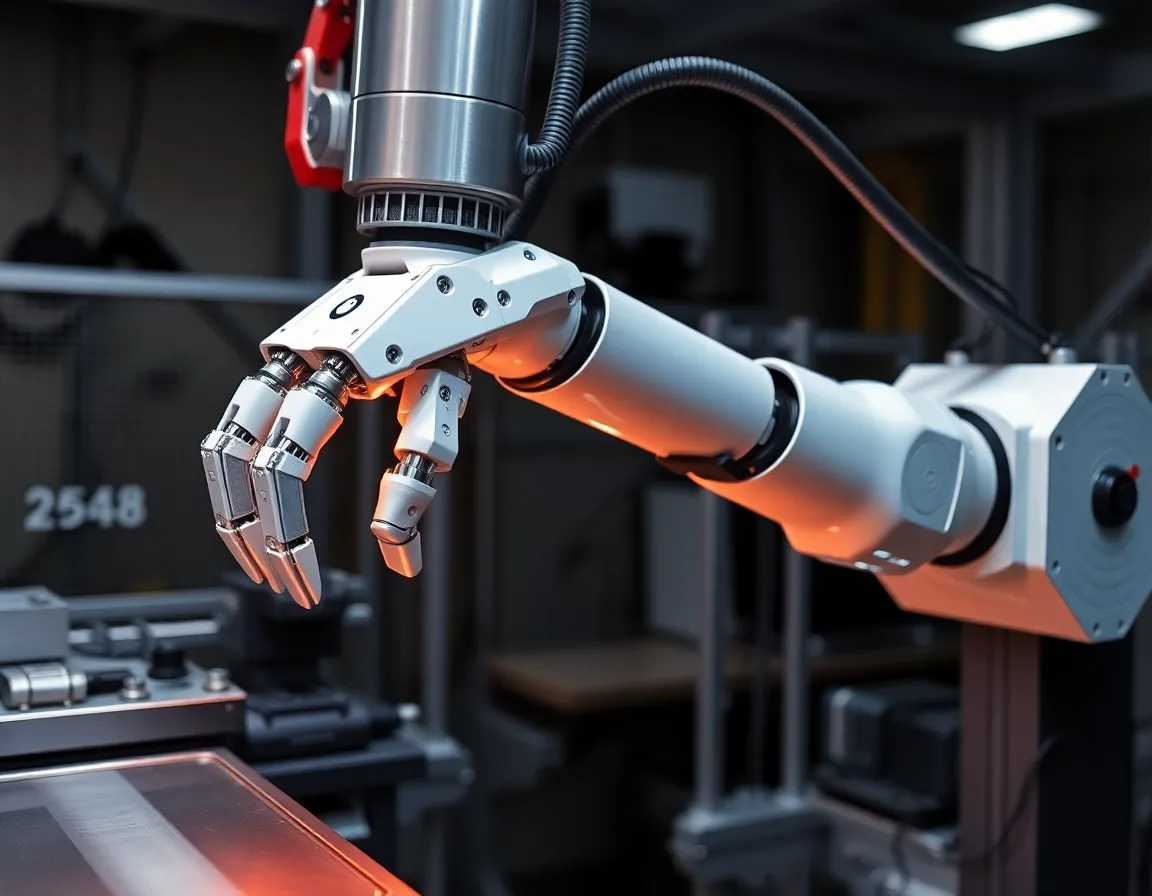
- Precision Machining: A multi-axis robotic arm, equipped with a machining spindle, executes the program. With sub-millimeter (often micron-level) accuracy, it carves out a socket from a solid block of material or fabricates intricate structural components like pylons, adapters, and joint mechanisms.
- Finishing & Assembly: The machined parts undergo finishing processes—smoothing, polishing, coating—before being assembled with electronic, hydraulic, or myoelectric systems to create the final, functional prosthesis.
The Unmatched Benefits of Robotic Precision
The shift from manual fabrication and casting to digital robotic machining delivers a cascade of advantages that directly impact the prosthetic wearer's quality of life.
Unprecedented Fit and Comfort
The single most important factor in a successful prosthesis is the fit of the socket. A poorly fitted socket can cause pain, skin breakdown, and rejection of the device. Robotic machining eliminates the inconsistencies of hand-lamination and plaster molding. It reproduces the exact digital design every time, ensuring a perfect match to the patient's unique anatomy. This allows for sophisticated geometric designs, such as targeted load-bearing areas and precise reliefs for sensitive nerves or bones, which are incredibly difficult to achieve manually.
Enhanced Strength and Lightweight Design
Through techniques like topological optimization (software that designs material layout for optimal strength-to-weight ratio) and the ability to machine complex internal lattice structures, robotic manufacturing can produce components that are both exceptionally strong and remarkably light. This reduces the metabolic cost of walking for lower-limb amputees and decreases fatigue for all users, encouraging greater use of the prosthesis.
Material Versatility and Performance
Robotic systems can handle a vast array of advanced materials. They can precisely mill tough titanium for durable joint components, trim and drill carbon fiber composites for ultra-light, rigid frames, and shape specialized polymers for flexible, impact-absorbing elements. This enables the creation of hybrid prostheses that leverage the best properties of multiple materials in a single, integrated device.
Speed, Scalability, and Consistency
Once the digital design is finalized, production is fast and repeatable. This reduces the lead time from measurement to delivery, getting patients into their new limbs quicker. It also ensures that replacement parts or duplicate limbs are identical to the original, a crucial factor for athletes or active individuals who rely on consistent equipment performance.
Applications and Innovations in Modern Prosthetics
Precision machining is not limited to one type of prosthesis; it is revolutionizing the entire field.
- Custom Sockets for All Amputation Levels: From transradial (below-elbow) to transfemoral (above-knee) and beyond, robotic machining creates patient-specific sockets that are the gold standard for comfort and suspension.
- Bionic and Myoelectric Limbs: The sophisticated internal housings for motors, sensors, and AI processors in advanced bionic limbs require exacting tolerances. Robotic machining fabricates the complex chassis that seamlessly integrates these electronic systems with the mechanical structure.
- High-Performance Sports Prosthetics: The "blades" used by Paralympic runners and specialized limbs for cycling, climbing, or swimming are masterpieces of biomechanical engineering. Machining allows for the fine-tuning of flex patterns, energy return, and aerodynamic profiles to maximize athletic performance.
- Pediatric Prosthetics: Children outgrow prosthetics rapidly. The digital model can be easily modified and re-machined as the child grows, making adjustments more affordable and less disruptive than completely remanufacturing a device by hand.
Best Practices and Future Horizons
To fully realize the potential of this technology, certain best practices are essential. The process must remain fundamentally patient-centric; the robot is a tool that enhances, not replaces, the clinical expertise of the prosthetist. Close collaboration between the medical team, design engineers, and machining technicians is paramount. Furthermore, rigorous quality control—using coordinate measuring machines (CMM) to verify part dimensions—ensures the digital precision translates flawlessly to the physical world.
The future is even more interconnected. We are moving toward closed-loop digital ecosystems where sensor data from a worn prosthesis informs the next design iteration, which is then manufactured robotically. Additive manufacturing (3D printing) is beginning to complement subtractive machining, with robots potentially performing hybrid processes. Advances in AI-driven generative design will create prosthetic components that look and perform like organic structures, optimized by algorithms that mimic bone growth.
The Human-Machine Partnership
Ultimately, precision robotic machining in prosthetics represents the perfect synergy of human empathy and machine accuracy. It frees clinicians and technicians from labor-intensive manual tasks, allowing them to focus on patient care, design innovation, and the nuanced art of rehabilitation. By delivering a level of customization and performance previously unimaginable, this technology is not just manufacturing better limbs; it is restoring capability, dignity, and hope with unprecedented fidelity, one precisely machined part at a time.