The Silent Symphony of Steel: Why Precision Machining Defines Humanoid Robotics
The dream of creating a humanoid robot that moves with the fluid grace and dexterity of a human is one of engineering's most formidable challenges. While breakthroughs in artificial intelligence and sensor technology capture headlines, the physical embodiment of that intelligence—the skeleton, joints, and limbs—relies on a less-heralded but equally critical discipline: precision machining. The creation of humanoid robot parts is not merely about manufacturing components; it is the art of sculpting the fundamental building blocks of lifelike motion. Every subtle turn of a wrist, every balanced step, and every precise grip is ultimately governed by the microscopic tolerances and impeccable surface finishes achieved in the machining workshop.
The Anatomy of a Machine: Key Humanoid Components Demanding Precision
Humanoid robots are complex assemblies of interdependent systems. The structural and mechanical parts, often hidden beneath synthetic skin or sleek housings, bear the full responsibility of replicating human biomechanics. These components can be broadly categorized, each presenting unique machining challenges.
Structural Frames and Housings
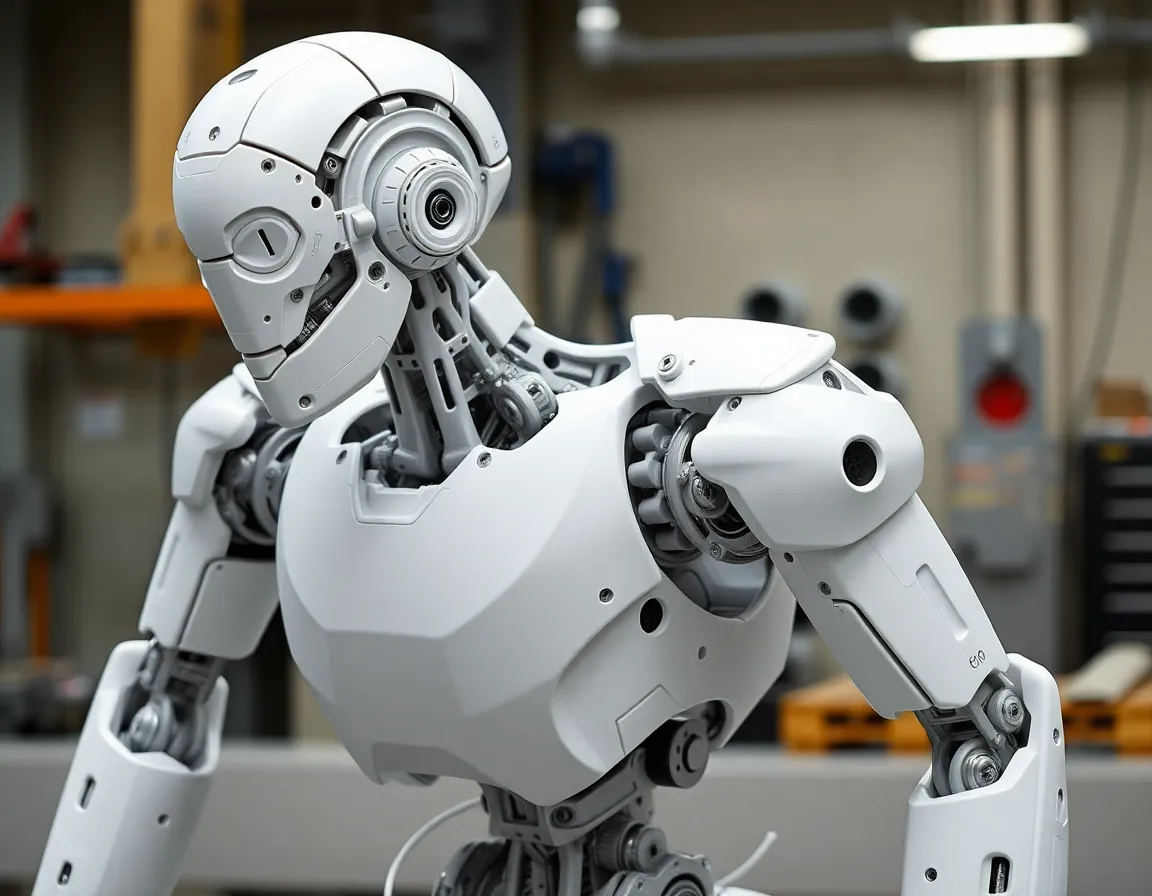
Acting as the robot's skeleton, these parts provide the foundational rigidity and mounting points for all other systems. They are typically machined from high-strength, lightweight alloys like aluminum 7075 or titanium 6Al-4V. The machining process must achieve exceptional dimensional stability to ensure perfect alignment of bearings, actuators, and wiring conduits. Any warping or inaccuracy in a chest cavity or hip structure can lead to cascading misalignments, causing binding, excessive wear, and energy inefficiency.
Joint Assemblies: The Pivots of Motion
This is where precision becomes non-negotiable. Joints like those in the shoulder, hip, knee, and wrist are marvels of compact engineering. They often involve:
- Harmonic Drive Gears/Cycloidal Drives: These high-ratio, zero-backlash gear components require machining with sub-micron level accuracy. Their complex, thin-walled flexsplines and wave generators demand 5-axis CNC machining to create the intricate tooth profiles that enable smooth, powerful, and precise rotation without the "slop" found in conventional gears.
- Custom Bearing Housings: The seats for precision cross-roller or angular contact bearings must be machined to tolerances often within ±0.005mm. The roundness, perpendicularity, and surface finish of these housings directly determine bearing life, rotational smoothness, and the elimination of unwanted vibration.
- Output Flanges and Adapters: These parts transmit torque from the gearbox to the limb. They require perfect concentricity and bolt hole patterns to ensure force is transferred evenly, preventing stress concentrations that could lead to catastrophic failure.
End-Effectors: Hands and Fingers
Machining for robotic hands represents the apex of the craft. Phalanges (finger bones) must be incredibly small, strong, and lightweight, often incorporating internal channels for tendon routing or sensor wires. The complex, organic curves and multi-axis pivot points of finger joints are almost exclusively the domain of advanced 5-axis CNC milling, which can sculpt these shapes from a solid block of metal in a single, precise setup.
The Machining Arsenal: Technologies Enabling Robotic Finesse
Producing these mission-critical parts requires a suite of advanced manufacturing technologies, each selected for its ability to meet stringent specifications.
5-Axis CNC Machining
The workhorse of humanoid part manufacturing. Unlike 3-axis machines, 5-axis CNC allows the cutting tool to approach the workpiece from virtually any direction in a single operation. This is indispensable for the complex, contoured geometries of joint housings and skeletal links. It eliminates the need for multiple setups, which can introduce alignment errors, and allows for smoother surface finishes on organic shapes.
Micro-Machining and Swiss-Type Lathes
For the tiny, intricate components within sensor units, finger joints, or miniature connectors, micro-machining is essential. Using tools sometimes smaller than a human hair, this process can create features with tolerances in the single-digit micron range. Swiss-type lathes, which feed bar stock through a guide bushing, are perfect for producing long, slender, and precise shafts, pins, and screws used throughout the robot's articulation system.
Metrology and Quality Assurance
Machining to these standards is futile without verification. State-of-the-art metrology tools like Coordinate Measuring Machines (CMM), laser scanners, and optical comparators are used to validate every dimension, form, and position. This data not only confirms part quality but is often fed back to the CNC machine to compensate for tool wear, ensuring consistency from the first part to the thousandth.
The Tangible Benefits: Why No Compromise is Possible
The immense investment in precision machining yields transformative benefits for humanoid robot performance.
- Lifelike, Fluid Movement: Tight tolerances and near-zero backlash in joints translate directly to smooth, human-like motion. This is critical for dynamic balance, dexterous manipulation, and safe interaction in human environments.
- Energy Efficiency and Durability: Perfectly mated components minimize friction and parasitic power losses. Properly aligned bearings and gears distribute load evenly, dramatically extending the operational life of the robot and reducing maintenance.
- Weight Optimization: Precision machining allows designers to use topology optimization software to create complex, lightweight lattice or organic structures that are impossible to cast or mold. Every gram saved in the frame means more payload capacity or longer battery life.
- Reliability and Safety: A robot working alongside humans must be inherently safe. Precision-machined parts ensure predictable performance and structural integrity, reducing the risk of unexpected component failure that could lead to a collapse or uncontrolled movement.
Applications and Future Horizons
The impact of precision-machined humanoid parts is being felt across several frontier domains. In advanced manufacturing, they enable robots to perform delicate assembly tasks alongside human workers. In healthcare and rehabilitation, exoskeletons and robotic prosthetics rely on these same machining principles to provide natural, supportive movement. For hazardous environment exploration—from disaster zones to space—humanoids with robust, precisely articulated limbs can navigate unstructured terrain where wheeled robots fail.
Looking ahead, the synergy between machining and design is growing tighter. The rise of generative design and additive manufacturing (3D printing) is creating new paradigms. While metal 3D printing can produce previously impossible geometries, these parts often require precision CNC machining as a secondary process to achieve the critical tolerances on bearing seats and mating surfaces. The future likely lies in hybrid manufacturing, where the shape-making freedom of additive processes is combined with the flawless accuracy of subtractive machining.
Best Practices in Machining for Humanoid Robotics
Success in this field hinges on more than just owning advanced machines. It requires a holistic culture of precision.
- Material Science Partnership: Close collaboration with material scientists is key to selecting alloys or composites that offer the optimal strength-to-weight ratio, stiffness, and fatigue resistance for each specific component.
- Design for Manufacturability (DFM): Engineers and machinists must collaborate from the earliest design stages. This ensures parts are not only functional but can also be machined efficiently, held securely, and measured accurately.
- Rigorous Process Control: Every variable—from toolpath strategy and cutting tool selection to coolant temperature and machine calibration—must be documented, controlled, and continuously optimized. Statistical Process Control (SPC) is used to predict and prevent deviations.
- Investment in Talent and Technology: This is a field driven by highly skilled machinists, programmers, and engineers. Continuous training, coupled with strategic investment in the latest machining and metrology technology, is not an expense but a prerequisite for staying at the cutting edge.
In conclusion, the quest for lifelike robot movement is won or lost at the micron level. Precision machining is the unsung enabler, transforming digital designs into the physical reality of silent gears, flawless spheres, and perfectly balanced limbs. It is the discipline that allows a humanoid robot to rise from a concept in code to an entity that can walk among us, its every movement a testament to the exquisite precision hidden within its metal bones. As humanoids step further into our world, the demand for even greater levels of machining artistry will only intensify, quietly shaping the future of robotics one perfect part at a time.