The Silent Revolution in Robotic Motion
In the quest for ever-greater precision, speed, and reliability in robotics, the choice of transmission component is paramount. While traditional gearboxes have served industry for decades, a unique technology has emerged as the gold standard for high-performance applications: the harmonic drive. This ingenious mechanism, also known as a strain wave gear, represents a paradigm shift in motion control, enabling the sophisticated capabilities of modern precision robotics. From the delicate arms of surgical robots to the rugged joints of space exploration rovers, harmonic drives provide the foundational performance that makes advanced automation possible.
What is a Harmonic Drive?
A harmonic drive is a specialized gearing component that provides exceptionally high reduction ratios in a compact, lightweight package with zero backlash and high torque capacity. Its operation is based on the principle of elastic dynamics, a significant departure from the rigid interactions of conventional gears. The system was invented in 1957 by C.W. Musser and has since evolved into a critical component for aerospace, industrial automation, and robotics.
Core Components and How It Works
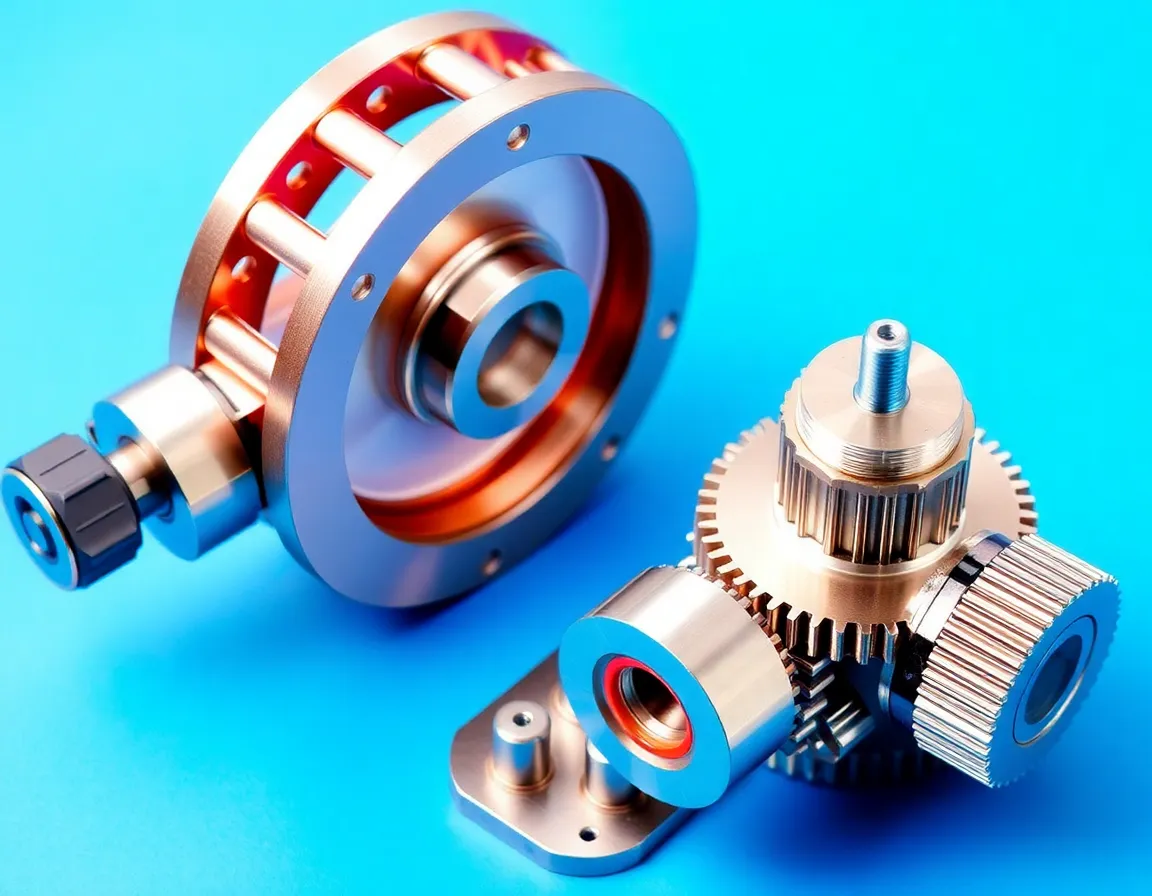
The magic of a harmonic drive lies in the interaction of its three primary elements:
- The Wave Generator: An elliptical ball bearing assembly that is inserted into the flexspline. It is typically connected to the input source (e.g., a servo motor).
- The Flexspline: A thin-walled, flexible cup-shaped component with external teeth on its rim. It deflects elastically under the force of the wave generator.
- The Circular Spline: A rigid, ring-shaped gear with internal teeth. It has two more teeth than the flexspline and is usually fixed to the housing or acts as the output.
The process begins as the wave generator (input) rotates, causing the elliptical shape to deform the flexible flexspline. This deformation engages the teeth of the flexspline with the teeth of the circular spline at two opposite points across the major axis of the ellipse. Because the flexspline has fewer teeth than the circular spline, for every full rotation of the wave generator, the flexspline rotates a small amount backward relative to the circular spline. This differential creates a very high gear reduction ratio in a single stage, often ranging from 30:1 to over 300:1. The motion is smooth, continuous, and characterized by a high number of teeth in simultaneous contact.
Key Advantages for Precision Robotics
The unique operating principle of harmonic drives translates into a suite of compelling advantages that directly address the most stringent demands of robotic design.
Zero Backlash and Exceptional Positioning Accuracy
Backlash—the slight movement between mating gear teeth when direction is reversed—is the enemy of precision. In robotics, it causes positioning errors, vibration, and reduces repeatability. Harmonic drives are renowned for their near-zero backlash. Because the flexspline teeth are in constant, pre-stressed contact with the circular spline teeth, there is no room for free play. This ensures that when a robotic joint is commanded to move to a specific angle, it arrives at that exact location consistently, which is critical for tasks like circuit board assembly, laser cutting, and精密 inspection.
High Torque-to-Weight Ratio and Compact Design
Robotic arms, especially those mounted on mobile platforms or collaborative robots (cobots), benefit immensely from lightweight components. Harmonic drives pack a significant torque output into a remarkably small and lightweight package. The single-stage high reduction ratio eliminates the need for bulky, multi-stage gear trains. This allows designers to create more slender, agile robot arms that can carry substantial payloads without being overburdened by the weight of their own drive systems, improving dynamic performance and energy efficiency.
High Single-Stage Reduction Ratios
The ability to achieve reduction ratios as high as 320:1 in a single, co-axial stage simplifies mechanical design dramatically. It reduces part count, minimizes potential failure points, and maintains a compact form factor. This high reduction allows designers to use smaller, higher-speed motors (which are often more efficient and cost-effective) while still achieving the low-speed, high-torque output required for robotic joints.
Excellent Repeatability and Torsional Stiffness
Beyond accuracy, repeatability—the ability to return to the same position time after time—is vital. The elastic pre-load in the harmonic drive ensures outstanding repeatability. Furthermore, harmonic drives exhibit high torsional stiffness, meaning they resist twisting under load. This stiffness minimizes deflection when the robot is holding a payload or applying force, ensuring the end-effector remains precisely where it is programmed to be, even under varying loads.
Minimal Vibration and Quiet Operation
The smooth, rolling action of the teeth engagement, combined with the high number of teeth in contact at any moment, results in very low vibration and exceptionally quiet operation. This is a significant advantage for cobots working alongside humans, medical robots in operating rooms, and any application where noise pollution is a concern.
Applications in Modern Robotics
The advantages of harmonic drives make them indispensable across a wide spectrum of robotic applications.
- Industrial Robotics: Used extensively in the joints of articulated arm robots for welding, painting, material handling, and assembly, where precision and reliability are non-negotiable.
- Collaborative Robots (Cobots): Their compact size, lightweight, and smooth, quiet operation make them ideal for the joints of cobots designed to work safely alongside human workers.
- Semiconductor and Electronics Manufacturing: The zero-backlash and extreme accuracy are crucial for handling fragile wafers, placing micro-components, and performing精密 inspection.
- Medical and Surgical Robotics: In systems like robotic-assisted surgical platforms, harmonic drives provide the flawless, tremor-free motion and pinpoint accuracy required for minimally invasive procedures.
- Aerospace and Space Robotics: The high torque density, reliability, and vacuum-compatible designs (when properly lubricated) make them perfect for satellite antenna positioning, rover joints, and robotic systems on space stations.
Best Practices and Considerations for Implementation
While harmonic drives offer tremendous benefits, optimal performance requires careful consideration during integration.
Proper Sizing and Load Management
Harmonic drives must be correctly sized for the application's peak and continuous torque, as well as moment loads. Overloading can lead to premature fatigue of the flexspline. It is critical to consider not just the nominal load, but also shock loads and emergency stop scenarios. Using a drive with an adequate safety factor is recommended.
Lubrication and Thermal Management
Lubrication is vital for minimizing wear, managing heat, and ensuring long service life. The correct grease or oil must be selected based on operating speed, temperature, and environment (e.g., food-grade, vacuum). For high-cycle or high-torque applications, thermal management through cooling fins, forced air, or even liquid cooling may be necessary to prevent overheating and lubricant breakdown.
Mounting and Alignment
Precise mounting and shaft alignment are crucial. Misalignment can induce additional stresses, reduce bearing life, and negatively impact performance. Manufacturers provide strict tolerances for mounting surfaces and recommend precise coupling methods to protect the unit from external forces and moments.
Understanding Lifetime and Maintenance
The flexspline is a fatigue-critical component with a finite life, typically defined in millions of cycles under specified load conditions. Understanding the duty cycle and calculating the expected life is essential for predictive maintenance. While harmonic drives are often considered maintenance-free for long periods, regular inspection and eventual re-lubrication or replacement should be part of a long-term reliability plan.
Conclusion: The Indispensable Gear for the Robotic Future
Harmonic drive components are far more than just another type of gearbox; they are a foundational technology that enables the very capabilities we associate with advanced precision robotics. By delivering a unique combination of zero backlash, compact high-torque design, and exceptional accuracy, they solve critical engineering challenges that conventional transmissions cannot. As robotics continues to advance into more delicate, demanding, and collaborative roles—from factory floors to deep-space missions and into the human body—the harmonic drive will remain at the heart of the motion systems that make it all possible. For engineers designing the next generation of robots, understanding and leveraging the advantages of harmonic drive technology is not just an option; it is a strategic imperative for achieving peak performance.