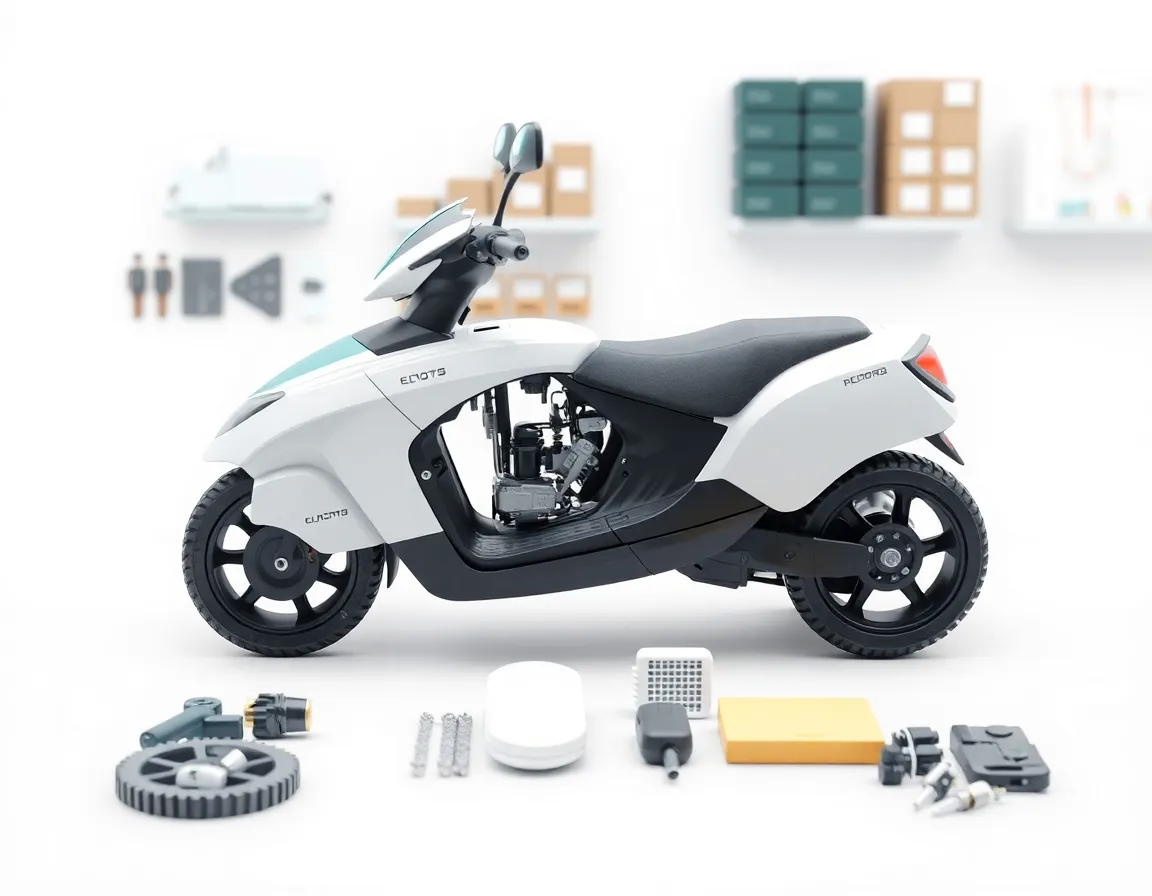
The rise of autonomous delivery is transforming last-mile logistics, from hot meals arriving at your doorstep to critical medical supplies reaching remote clinics. At the heart of this quiet revolution are delivery robots—sophisticated machines navigating our sidewalks and streets. However, the reliability and efficiency of an entire fleet hinge on the performance of its individual components. For fleet operators, understanding and sourcing the right delivery robot parts is not just maintenance; it's a core strategic operation. This article delves into the essential parts that keep your delivery robot fleet rolling, ensuring optimal uptime, safety, and return on investment.
The Core Systems: Breaking Down the Delivery Robot
A delivery robot is a symphony of integrated systems, each relying on specialized parts. We can categorize these into several key functional groups.
1. Perception and Navigation Suite
This is the robot's sensory system, allowing it to perceive and understand its environment. Key parts include:
- LiDAR (Light Detection and Ranging): Often the primary sensor, LiDAR units emit laser pulses to create precise, real-time 3D maps of the surroundings. They are critical for obstacle detection, localization, and path planning.
- Cameras: A suite of cameras (monocular, stereo, and 360-degree) provides visual data for traffic light recognition, lane detection, reading street signs, and capturing video evidence. They often work in tandem with LiDAR.
- Ultrasonic Sensors: These short-range sensors are vital for close-quarter maneuvering, detecting immediate obstacles like curbs, low-lying objects, or people suddenly stepping close.
- GNSS Module (Global Navigation Satellite System): While not sufficient alone in urban canyons, GPS/GLONASS/Galileo receivers provide a global position fix, which is fused with other sensor data for localization.
- IMU (Inertial Measurement Unit): This part tracks the robot's acceleration, orientation, and rotational rates. It is crucial for dead reckoning and stabilization when other signals are temporarily lost.
2. Locomotion and Drivetrain
This system translates digital commands into physical movement. Its durability directly impacts fleet availability.
- Hub Motors or Drive Motors: Electric motors integrated into the wheels (hub motors) or connected via drivetrains provide propulsion. Their torque, efficiency, and waterproof ratings are key specifications.
- Wheels and Tires: Designed for mixed terraines like pavement, grass, and light gravel. Options include solid rubber tires (puncture-proof but harder ride) and air-filled tires (better suspension but maintenance risk). Tread pattern and material compound affect traction and wear.
- Suspension System: Springs, shock absorbers, or flexible chassis elements protect the sensitive payload and internal electronics from vibrations and impacts caused by uneven surfaces.
- Steering Actuators: For robots using Ackermann or differential steering, precise electromechanical actuators control wheel angle, enabling smooth turns and course corrections.
- Braking System: A failsafe braking mechanism, often regenerative (using the motor) plus a mechanical brake, is essential for safety and control during descents or emergency stops.
3. Compute and Communication Hardware
The robot's "brain" and its connection to the fleet management system.
- Onboard Computer (AI Compute Unit): A ruggedized, high-performance computer processes terabytes of sensor data in real-time using machine learning models for perception and decision-making. This part requires significant processing power and often specialized AI accelerators.
- Connectivity Modules: 4G/5G modems maintain constant communication with the fleet operations center, allowing for remote monitoring, live updates, and real-time route adjustments. Fallback options like Wi-Fi are also common.
- Power Distribution Board (PDB): Manages and distributes power from the battery to all subsystems, ensuring stable voltage and protecting against surges or shorts.
4. Payload and Customer Interface
These parts define the service experience and secure the cargo.
- Secure Compartment: The cargo hold, often with temperature control (heated or cooled) for food and pharmaceuticals. Latching mechanisms can be electronic (solenoid locks) for customer app-based access or mechanical.
- User Interface Panel: A touchscreen or simple button interface allows users to identify themselves (e.g., via PIN) and open the compartment. Status LEDs and speakers provide visual and auditory cues.
- Payload Bay Sensors: Weight sensors confirm pickup/delivery, while internal cameras may verify cargo integrity and prevent tampering.
The Unsung Hero: Power System
No part is more critical to operational range and uptime than the power system. It consists of:
- Lithium-ion Battery Packs: High-energy-density batteries provide the necessary endurance. Their management is crucial.
- Battery Management System (BMS): This intelligent module monitors cell voltage, temperature, and state of charge, ensuring safe operation, preventing over-discharge, and balancing cells for longevity.
- Charging Ports & Hardware: Robust, waterproof connectors and onboard charging circuitry enable fast, safe, and automated docking station charging.
A well-designed power system, with easily swappable battery packs, can keep robots in service nearly 24/7, with depleted batteries charging offline while fresh ones are installed.
Best Practices for Parts Management and Fleet Operations
Procuring parts is only the beginning. Effective lifecycle management is what separates a profitable fleet from a stranded one.
Strategic Spare Parts Inventory
Maintain a strategic inventory based on Mean Time Between Failures (MTBF) data and criticality. High-wear items like tires, bumper sensors, and compartment latches should always be in stock. For expensive, low-failure-rate parts like LiDAR, consider vendor repair agreements or holding a smaller number of spares shared across the fleet.
Emphasis on Modularity and Ease of Repair
When selecting a robot platform, prioritize designs with modular parts that can be replaced in the field with minimal tools and training. A modular drivetrain that can be swapped in 10 minutes saves hours of downtime compared to a fully integrated system that requires depot-level service.
Predictive Maintenance Through Data Analytics
Leverage the data your robots already generate. Monitor motor current draw, battery health trends, and sensor error rates. Anomalies can predict failures before they happen, allowing you to schedule maintenance proactively and replace parts during planned downtime, not in the middle of a delivery peak.
Supplier Relationships and Long-Term Support
Establish strong partnerships with your robot manufacturer and key component suppliers. Ensure access to firmware updates, technical documentation, and a clear supply chain for parts over the expected 5-7 year lifespan of your fleet. Consider the total cost of ownership, not just the upfront part price.
Conclusion: Parts as the Foundation of Fleet Success
Viewing delivery robot parts as mere consumables is a costly oversight. They are the fundamental building blocks of your service's reliability, safety, and scalability. A deep understanding of the perception suite, drivetrain, compute hardware, and power system empowers operators to make informed decisions, from initial procurement to daily field operations. By implementing a robust strategy for parts inventory, modular repair, and predictive maintenance, fleet managers can maximize robot availability, control operational costs, and ensure that their autonomous delivery service delivers not just packages, but consistent value and trust. In the competitive landscape of last-mile automation, the best-managed parts inventory is a silent but formidable competitive advantage.