The Unseen Backbone: CNC Machining in Drone Frame Fabrication
In the high-stakes world of drone performance, from blistering FPV racing to demanding cinematography, the frame is the silent hero. It is the foundational skeleton upon which every component is mounted, and its characteristics dictate the very personality of the aircraft. While injection-molded plastic and carbon fiber layups dominate the consumer market, a segment of enthusiasts and professionals demand something more: the precision and bespoke nature of CNC machined drone frames. This manufacturing process sits at the heart of a critical engineering trade-off: the relentless pursuit of the optimal balance between uncompromising strength and minimal weight.
What is a CNC Machined Drone Frame?
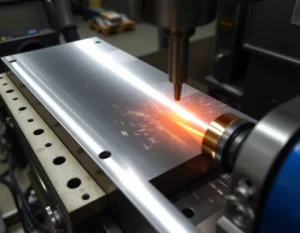
CNC (Computer Numerical Control) machining is a subtractive manufacturing process. It starts with a solid block of material—known as a billet or blank—and uses computer-controlled cutting tools to precisely remove material, sculpting the final part. For drone frames, this means a design is created in CAD (Computer-Aided Design) software, and that digital blueprint directs the CNC machine to mill out arm mounts, motor holes, electronic compartments, and every intricate cutout from a single piece of material or a set of plates.
The most common materials used are:
- Aerospace-Grade Aluminum (e.g., 6061-T6, 7075): The industry standard, offering an excellent blend of strength, weight, machinability, and cost.
- Titanium: Used for ultra-high-performance or specialty frames, providing exceptional strength-to-weight ratio and vibration damping, but at a significant cost and machining difficulty.
- High-Density Plastics (e.g., Delrin): Less common, used for specific non-structural components or in applications where electrical insulation is critical.
Unlike a carbon fiber frame, which is built up from layers of fabric and resin, a CNC machined frame is born from solid metal, leading to fundamentally different mechanical properties and design philosophies.
The Crucible of Performance: Strength vs. Weight
Every gram matters in drone flight. Weight directly impacts flight time, agility, acceleration, and the power required from motors and batteries. Yet, a frame must be robust enough to withstand crashes, resist flex under high-G maneuvers, and provide a stable platform for sensitive components like cameras and flight controllers. This is the central dichotomy.
The Case for Unyielding Strength
Strength in a CNC machined frame isn't just about surviving a crash—though that is a major benefit. It encompasses several key advantages:
- Rigidity and Vibration Damping: A stiff frame minimizes flex, which is crucial for flight performance and video quality. Flex can cause oscillations that the flight controller must constantly correct, wasting energy and creating "jello" effect in camera footage. The inherent density of metals like aluminum provides superior vibration damping compared to some carbon fiber, leading to cleaner sensor data.
- Impact Resistance: While they may bend, high-quality aluminum frames rarely shatter. A bent arm can often be straightened, and components are typically mounted on replaceable plates. The metal absorbs and distributes impact energy in a way brittle carbon sometimes cannot.
- Precision and Consistency: Every CNC-machined frame from a batch is identical to microscopic tolerances. This ensures perfect motor alignment (critical for smooth flight), consistent screw fits, and predictable performance. There is no risk of delamination or voids as can occur in composite layups.
- Modularity and Repair-ability: Designs often use a "stack" of plates. A damaged arm or top plate can be replaced individually without scrapping the entire frame, a cost-effective benefit for heavy users.
The Burden of Weight
The primary trade-off for this fortress-like construction is mass. Metal is denser than carbon fiber. A typical 5-inch CNC aluminum quadcopter frame might weigh 150-250 grams, while a comparable carbon fiber frame could be 80-120 grams. This difference has cascading effects:
- Reduced Flight Time: More weight requires more energy to keep aloft, directly draining the battery faster.
- Altered Flight Characteristics: A heavier craft has more momentum. It may feel more stable and "locked in" in fast forward flight but can be less nimble in rapid directional changes, flips, and rolls compared to a featherweight carbon equivalent.
- Increased Stress on Components: Heavier frames demand more from motors and ESCs (Electronic Speed Controllers), which must work harder to achieve the same thrust-to-weight ratio, potentially leading to higher operating temperatures.
The engineer's challenge is to strategically remove material only where it is not needed, creating a lattice of strength that leaves behind the lightest possible structure.
Engineering the Balance: Design and Machining Best Practices
Creating a high-performance CNC drone frame is an exercise in intelligent compromise and advanced design. Leading manufacturers employ several key strategies to tip the strength-to-weight ratio in their favor.
Strategic Material Removal and Topology Optimization
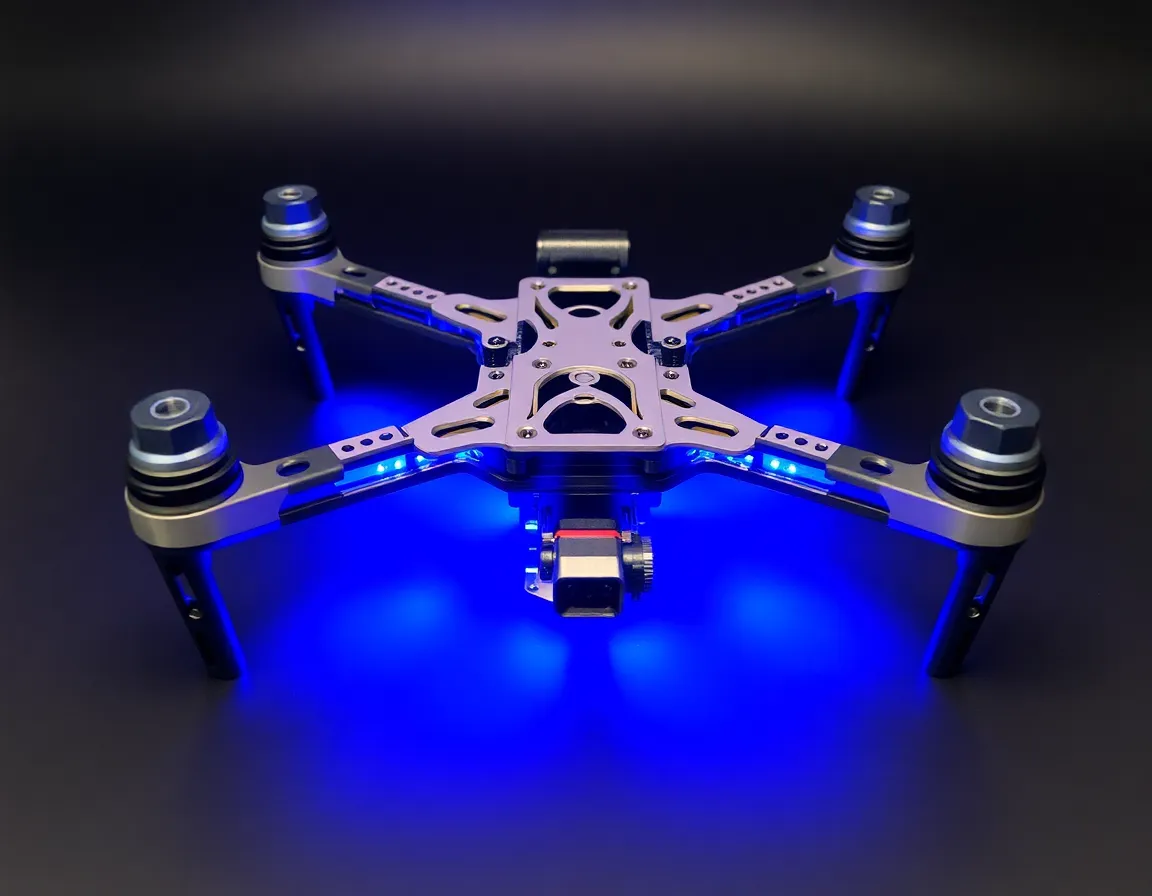
This is where CAD engineering shines. Using finite element analysis (FEA) software, designers can simulate stress loads on the frame during flight and crashes. The software identifies areas of high stress (which need material) and areas of low stress (where material is superfluous). The result is frames with intricate, organic-looking cutouts, ribbed sections, and tapered arms that look skeletal but are engineered for maximum efficiency. Every gram of metal is there for a reason.
Material Choice and Thickness
Selecting the right alloy is the first decision. 7075 aluminum, for instance, is significantly stronger than 6061, allowing for thinner arm profiles or larger cutouts without sacrificing durability, thus saving weight. The thickness of the base plates (e.g., 1.5mm, 2mm, 3mm) is also a critical variable, with thinner plates saving weight but requiring more sophisticated reinforcement through design.
Integrated Design and Component Protection
CNC machining allows for features that are difficult with other methods. This includes integrated standoffs, custom-shaped camera cages, and protected slots for cables. A well-designed frame will have the stack (flight controller, ESCs) and battery mounted low and centered to improve the center of gravity, and the arms will be designed to act as a first line of defense, protecting expensive electronics in a crash.
Applications: Where CNC Machined Frames Soar
Given their unique profile, CNC machined frames are not a one-size-fits-all solution. They excel in specific, demanding niches:
- Heavy-Lift and Professional Cinematography Drones: For drones carrying RED cameras or specialized LiDAR sensors, the vibration damping, rigidity, and absolute reliability of a machined frame are paramount. The weight penalty is less critical than the stability and safety of expensive payloads.
- Industrial and Enterprise Applications: Drones used for inspection, mapping, or agriculture often face harsh environments. The ruggedness, repairability, and consistency of a CNC frame make it a preferred choice for commercial operators where downtime is costly.
- High-End FPV and Racing (Specific Builds): While pure weight is king in racing, some pilots in "unlimited" or heavy-duty freestyle classes prefer the indestructible feel and precise handling of a well-designed aluminum frame. The psychological confidence of a nearly unbreakable craft can be a performance enhancer in itself.
- Prototyping and Custom One-Off Builds: The flexibility of CNC machining makes it ideal for prototyping new drone concepts or building a single, custom frame for a research project or unique application, where the cost of molding carbon fiber would be prohibitive.
Conclusion: A Calculated Choice for Demanding Skies
The debate between CNC machined frames and their carbon fiber counterparts is not about which is universally better, but which is better for the specific mission. The CNC machined frame stands as a testament to precision engineering, offering unparalleled rigidity, durability, and consistency at the cost of added grams.
Choosing a CNC frame is a conscious decision to prioritize resilience and stability over absolute minimal weight. It is the choice of the professional who cannot afford a frame failure mid-shoot, the industrial operator who needs a tool that can take a beating, and the enthusiast who values the artistry of machined metal and the confidence it inspires. In the endless calculus of drone design, where every decision is a trade-off, the CNC machined frame proves that sometimes, the strongest foundation is worth carrying a little extra weight.