
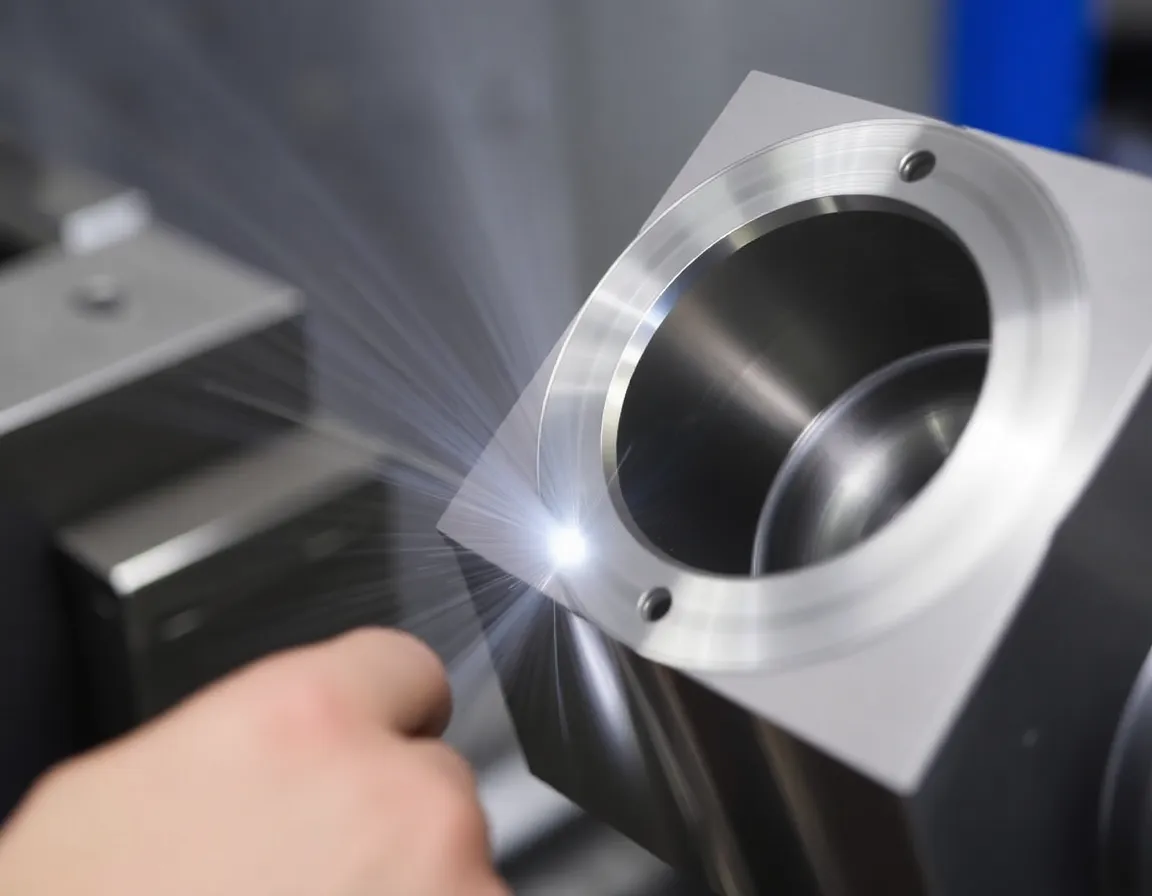
The Titanium Challenge: Why Machining Demands Respect
Titanium alloys stand as titans in the world of advanced materials, offering an unparalleled strength-to-weight ratio, exceptional corrosion resistance, and biocompatibility. These properties make them indispensable in aerospace, medical, automotive, and defense industries. However, the very characteristics that make titanium so desirable also make it notoriously difficult to machine. Successfully mastering titanium machining is not just a skill—it's a competitive advantage. This comprehensive guide delves into the strategies, tools, and cost-management techniques essential for turning this challenging material into precision components efficiently and profitably.
Understanding the Titanium Machining Conundrum
Before diving into techniques, it's crucial to understand why titanium alloys like Ti-6Al-4V (Grade 5) pose such a challenge. Titanium's poor thermal conductivity is the primary culprit. During machining, most of the heat generated cannot escape through the chips or the workpiece. Instead, it concentrates at the cutting edge, leading to rapid tool wear and potential workpiece damage. Furthermore, titanium maintains its strength at high temperatures, causing high cutting pressures, and its chemical reactivity can lead to galling and welding to the tool. Overcoming these hurdles requires a systematic approach focused on managing heat and force.
Key Material Properties to Counteract
- Baixa Condutividade Térmica: Heat stays at the tool-workpiece interface.
- High Strength at Elevated Temperatures: The material doesn't soften when cut.
- Chemical Reactivity: Can react with tool materials, causing adhesion and diffusion wear.
- Low Modulus of Elasticity: Prone to deflection and vibration, affecting tolerance and surface finish.
Strategic Speed and Feed: The Heart of Titanium Machining
Contrary to intuition, the key to machining titanium is not brute force or high speed, but strategic, controlled aggression. The goal is to remove material efficiently while keeping the cutting edge cool and engaged productively.
Adopting the Right Cutting Parameters
The golden rule is to maintain a consistent chip load. This often means running at lower surface speeds (SFM) than you would for steel, but with higher feed rates. A light depth of cut with a high feed rate can be more effective than a heavy, slow cut, as it engages a fresh, sharp section of the cutting edge more frequently and helps carry heat away in the chip. For roughing Ti-6Al-4V, surface speeds typically range from 60-150 SFM, while finishing might reach 200-300 SFM with appropriate tooling. Always prioritize feed per tooth over spindle speed.
The Critical Role of Radial Engagement
Employing trochoidal or dynamic milling strategies is highly effective. These paths use a small radial engagement (e.g., 5-15% of the tool diameter) with a full axial depth of cut. This allows for dramatically increased feed rates while distributing heat along a longer section of the cutting edge and reducing the radial forces that cause deflection. The tool is almost always moving, preventing it from sitting in the cut and generating excessive heat.
Tooling Up for Success: Geometry, Material, and Holding
Selecting the correct tool is non-negotiable. Compromising here will lead to tool failure, poor surface finish, and increased cost.
Seleção de Ferramentas de Corte
Geometria da Ferramenta: Use sharp, positive-rake angles to reduce cutting forces and heat. Tools should have polished flutes and large core diameters for rigidity. A reduced neck length is also beneficial for limiting deflection.
Material da Ferramenta: Uncoated micro-grain carbide is often the best choice for its sharp edge strength and resistance to thermal shock. For more aggressive applications, PVD (Physical Vapor Deposition) coatings like TiAlN (Aluminum Titanium Nitride) or AlTiN (Titanium Aluminum Nitride) provide a hard, thermally insulating barrier. Polycrystalline Diamond (PCD) tools are excellent for finishing operations on non-reactive titanium alloys, offering extreme wear resistance.
Toolholding and Machine Stability
Vibration is the enemy. Use the most rigid setup possible: hydraulic or shrink-fit chucks are superior to collet chucks for end mills. Ensure the workpiece is clamped securely to dampen chatter. The machine tool itself must be robust, with high torque at low RPMs, excellent rigidity, and a pressurized through-spindle coolant system. A machine with a weak spindle or frame will struggle immensely with titanium.
Taming the Heat: Coolant Strategy is Paramount
Effective heat management separates adequate titanium machining from exceptional titanium machining. Flood coolant is essential, but its application must be strategic.
- High Pressure and High Flow: Use a system capable of at least 1,000 PSI to penetrate the cutting zone and break the chip, effectively evacuating heat.
- Through-Tool Coolant: This is highly recommended. It delivers coolant directly to the hottest point, lubricating the cutting edge and ejecting chips from deep cavities.
- Coolant Type: Use a high-quality, chlorine-free synthetic or semi-synthetic coolant designed for difficult-to-machine alloys. Maintain proper concentration and pH to prevent bacterial growth and ensure optimal lubrication.
Practical Cost-Control and Best Practices
Machining titanium is expensive. Controlling cost isn't just about buying cheaper tools; it's about optimizing the entire process for maximum efficiency and tool life.
Process Optimization for Cost Efficiency
Minimize Air Cutting: Optimize toolpaths to keep the tool engaged in productive cutting. Use CAM software with high-efficiency machining modules.
Staging and Workholding: Design fixtures that allow for multiple parts to be machined in a single setup, reducing handling and non-cut time.
Tool Life Management: Implement a consistent tool monitoring program. Track tool life and change tools proactively based on historical data, not just after failure. This prevents scrapped parts.
análise de Design para Manufaturabilidade (DFM)
Collaborate with designers early. Small design changes can drastically reduce machining difficulty. Suggest adding radii instead of sharp internal corners, avoiding deep, narrow cavities, and specifying tolerances that are "as loose as functionally possible." Every tight tolerance adds cost exponentially in titanium.
Smart Sourcing and Stock Selection
Purchase material as close to net shape as possible (forgings, near-net-shape castings) to minimize the volume of expensive titanium that needs to be turned into chips. Also, consider the alloy grade carefully; sometimes a more machinable grade like Ti-5Al-2.5Sn or "dual-phase" alloys can be substituted without compromising critical properties.
Conclusion: Mastering the Metal of the Future
Machining titanium alloys is a discipline that demands respect, knowledge, and precision. Mastery is achieved not by finding a single magic solution, but by harmonizing a suite of best practices: strategic speeds and feeds, impeccable tooling selection, aggressive coolant application, and rigid setup. By viewing cost control as an integral part of the process—from DFM to toolpath optimization—shops can transform titanium from a daunting challenge into a reliable, profitable part of their portfolio. As industries continue to push for lighter, stronger, and more durable components, the ability to efficiently machine titanium will remain a cornerstone of advanced manufacturing expertise.